Tag Archives: Mosquito TNT

Tougher Than Tom’s Mosquito TNT review

I tested the Mosquito TNT in my Pennsylvania yard and have concluded that they do not control mosquitoes. Moreover, they kill a considerable number of non-target organisms, including pollinators, and provide a habitat for developing flies that feed on the decaying carcasses of previous victims. My full review is below. I include instructions for reporting the product to federal and state regulators, plus tips on how to get your money back if the company refuses to honor its refund policy.
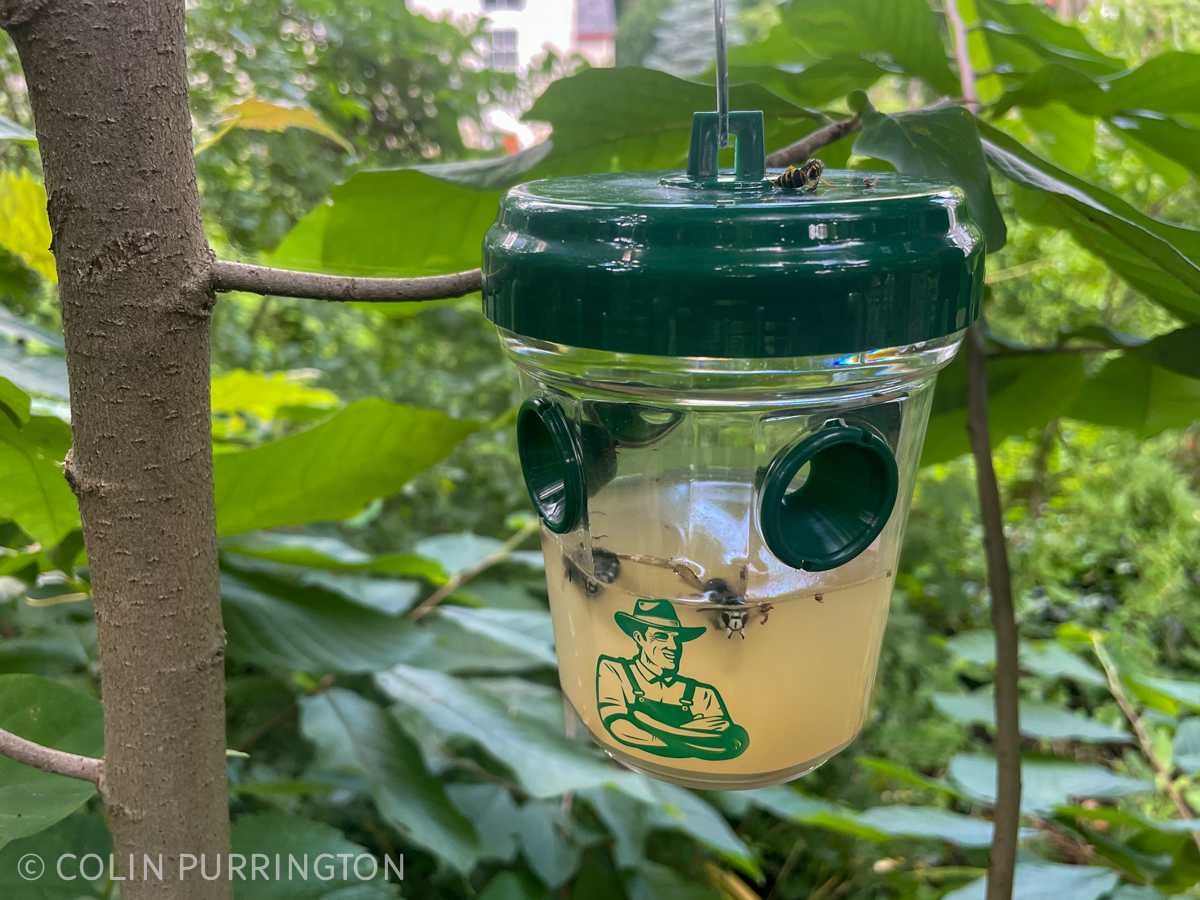
Marketing claims

The company says the four-trap kit ($39.99 plus tax) will make a 1-acre yard “mosquito-free” for 30 days. At the end of this period you dump out the contents and add fresh bait (sold separately for $19.99).

Marketing materials assert that female mosquitoes are attracted to the containers because they emit carbon dioxide, which is produced by two pairs of “inert” (i.e., not inert) ingredients (yeast and D-glucose; sodium bicarbonate and citric acid). The active ingredient, sodium lauryl sulfate is said to make them drown faster.

Note that in reality the device would not be able to produce enough CO2 to attract mosquitoes, and certainly not for 30 days. And the active ingredient, sodium lauryl sulfate, is not listed anywhere in the primary literature as a chemical that can kill adult mosquitoes.
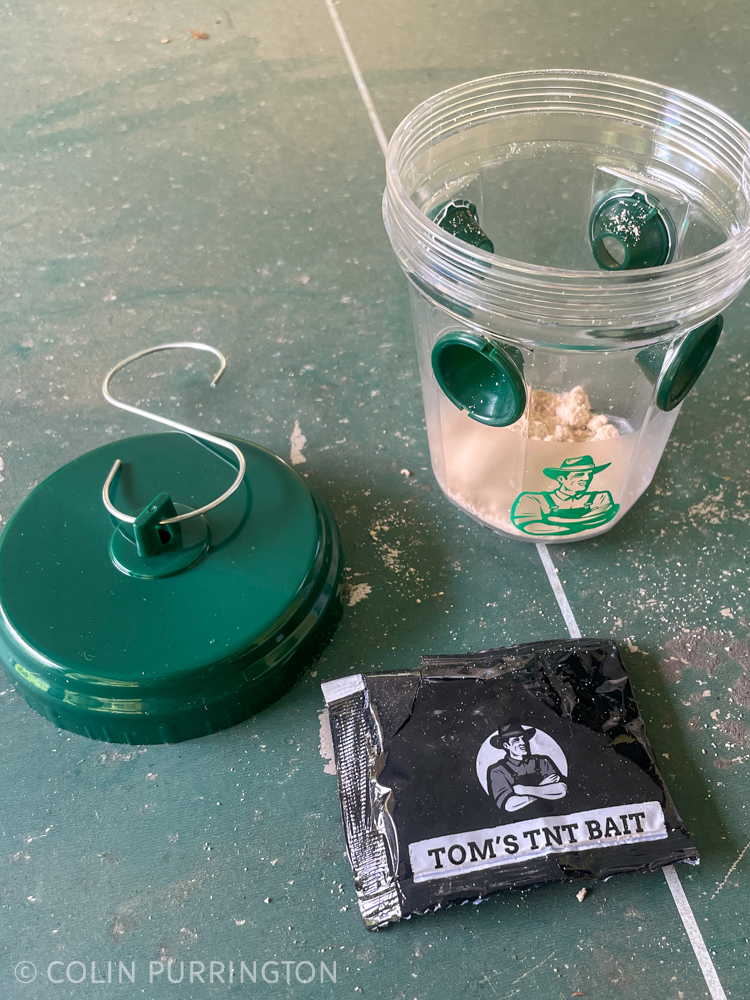
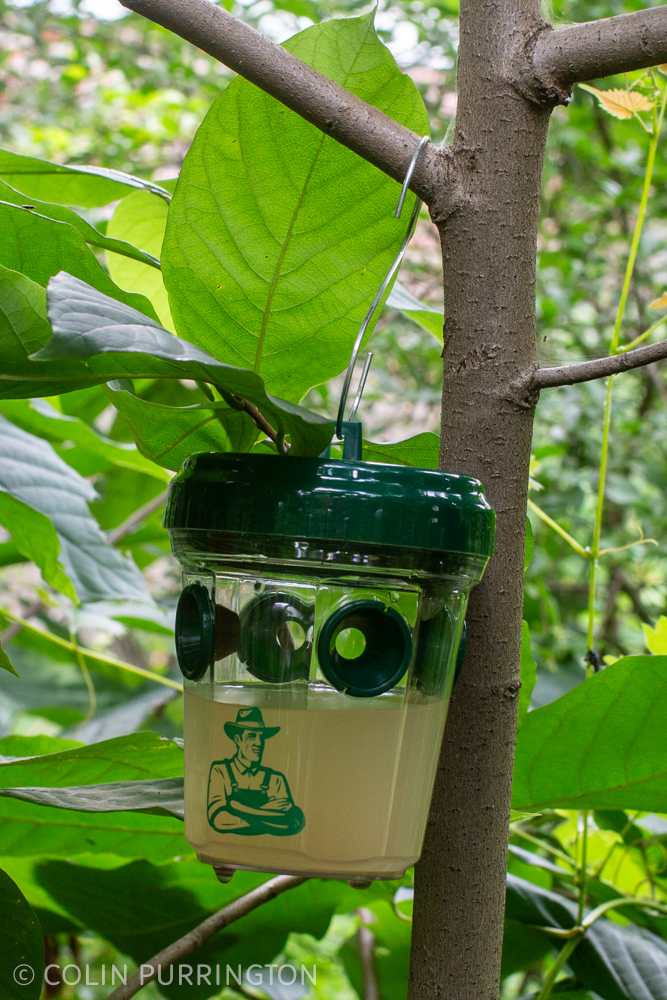
My test results

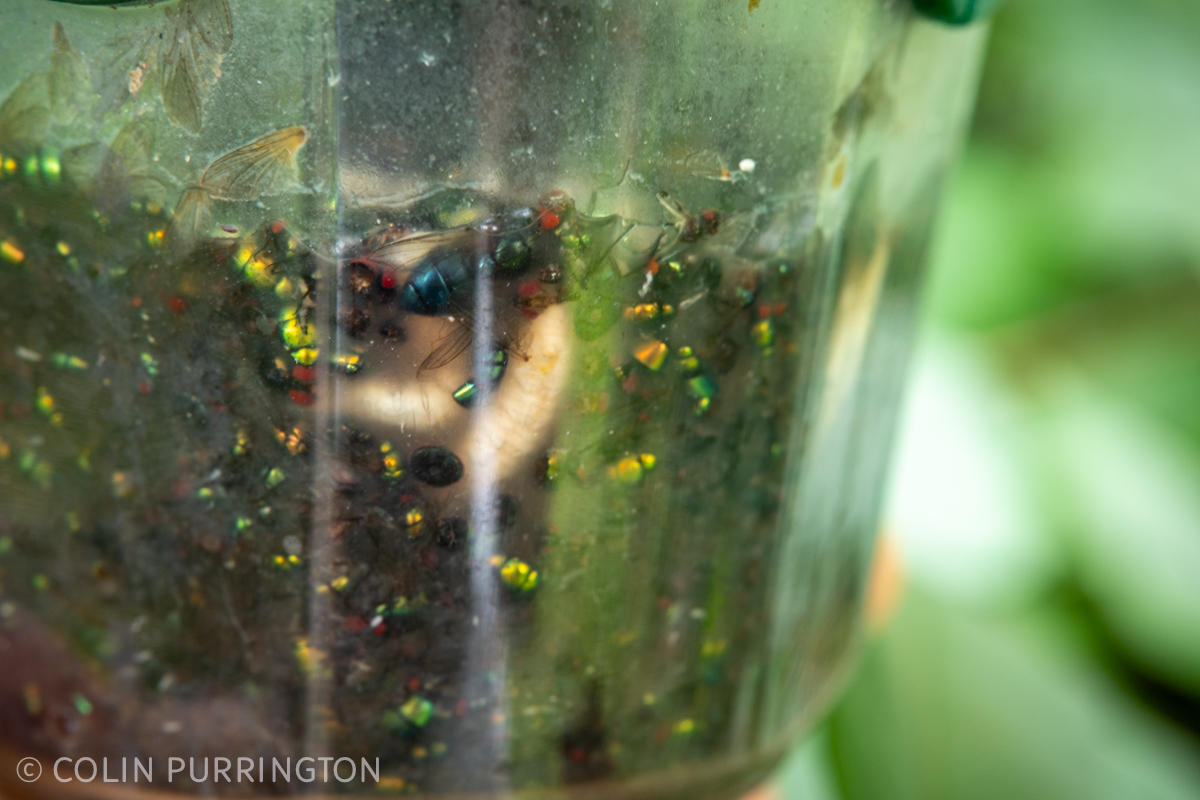
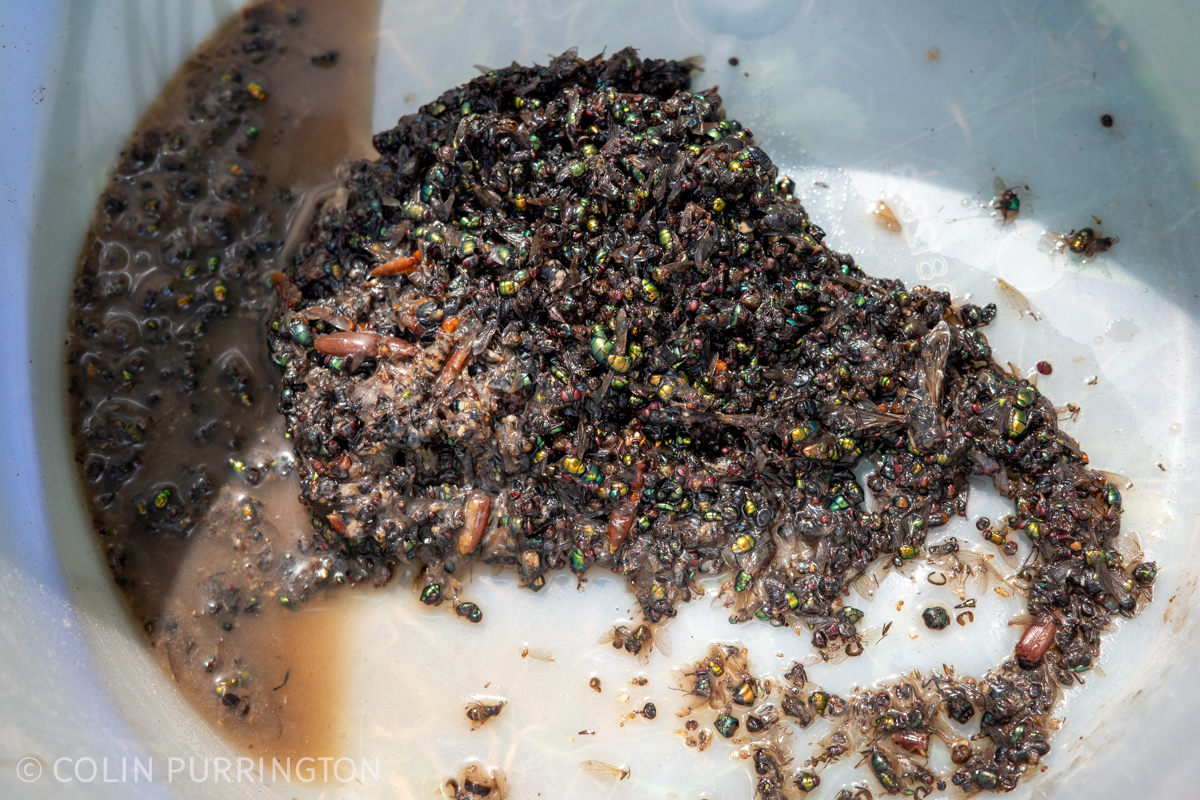
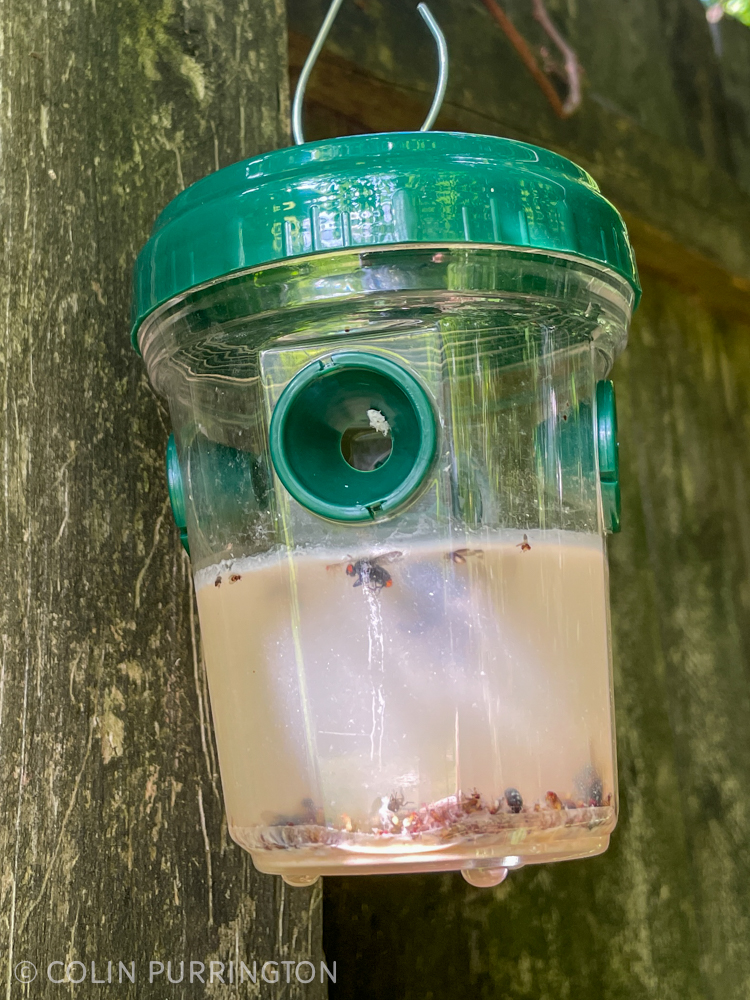
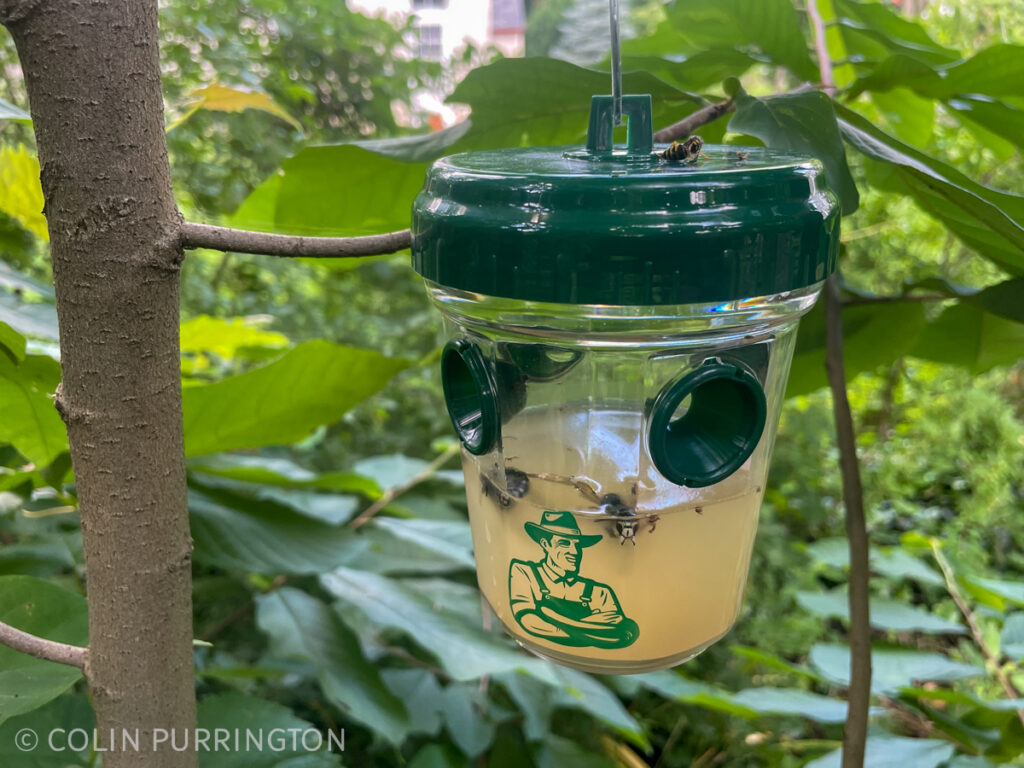
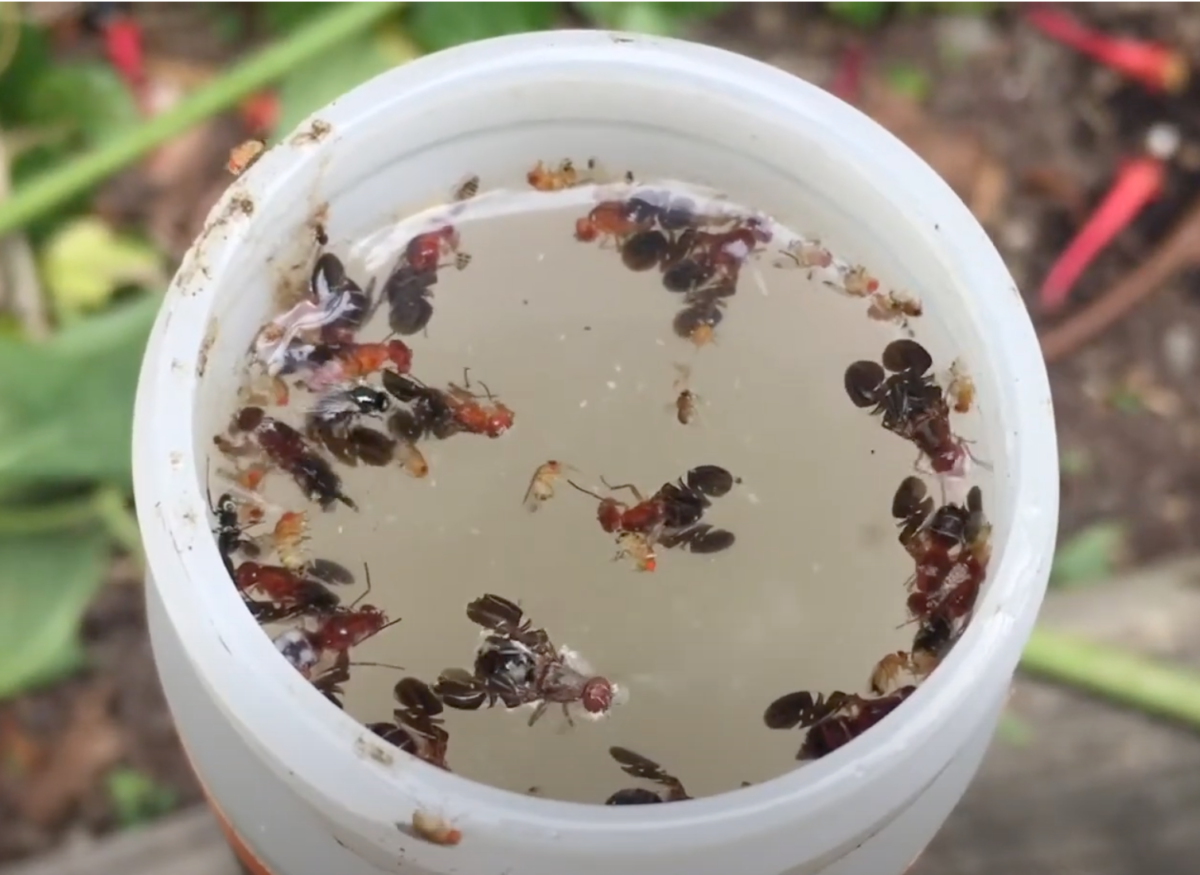
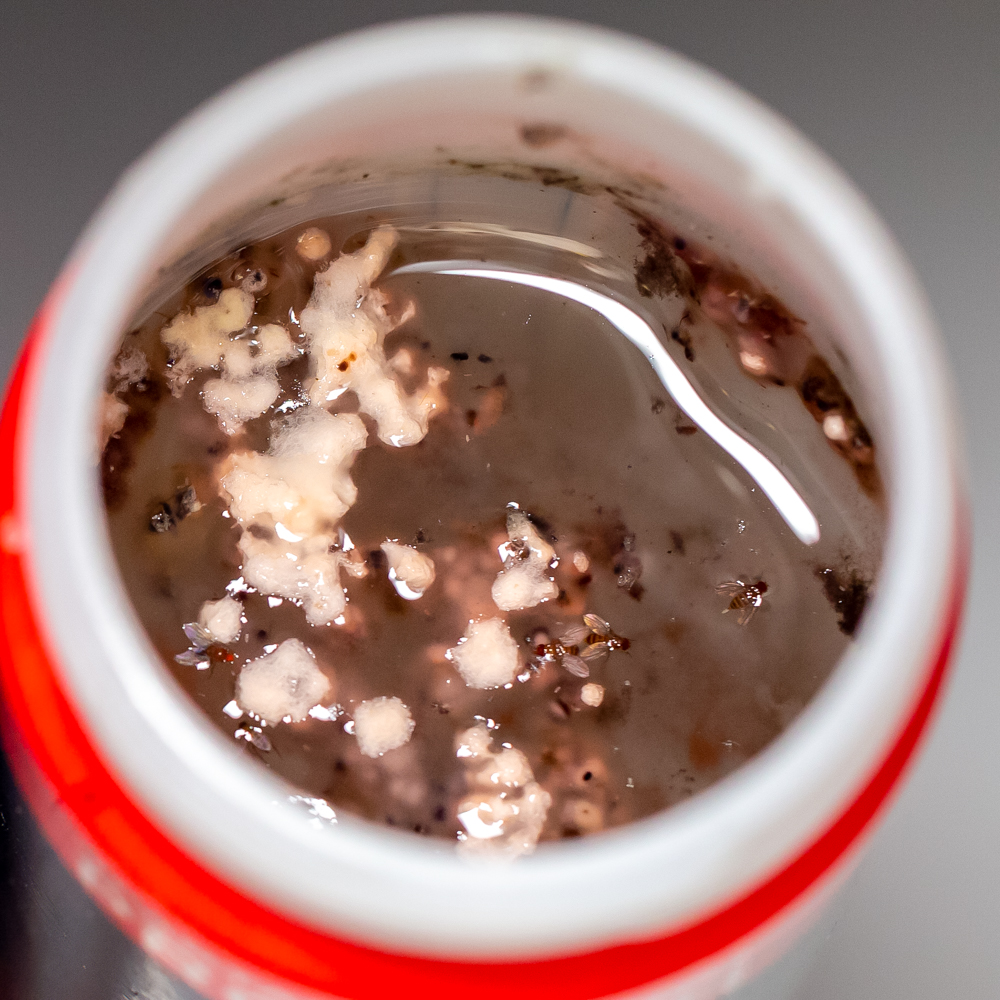
I took photographs of the four traps every several days as a way to record what types of insects were being killed. By far the most common were flies (fruit flies, blow flies, picture-winged flies, etc.), wasps (yellowjackets and hornets), earwigs, and beetles. Initially they were attracted by the sugar and yeast, but eventually the rotting carcasses attracted species that feed on decaying organic matter. Some of these latter individuals laid eggs, resulting in rather large white larvae moving around in the fluid. After about 20 days the stench was enough to make me gag whenever I got close. At no point during my inspections did I notice a single mosquito.
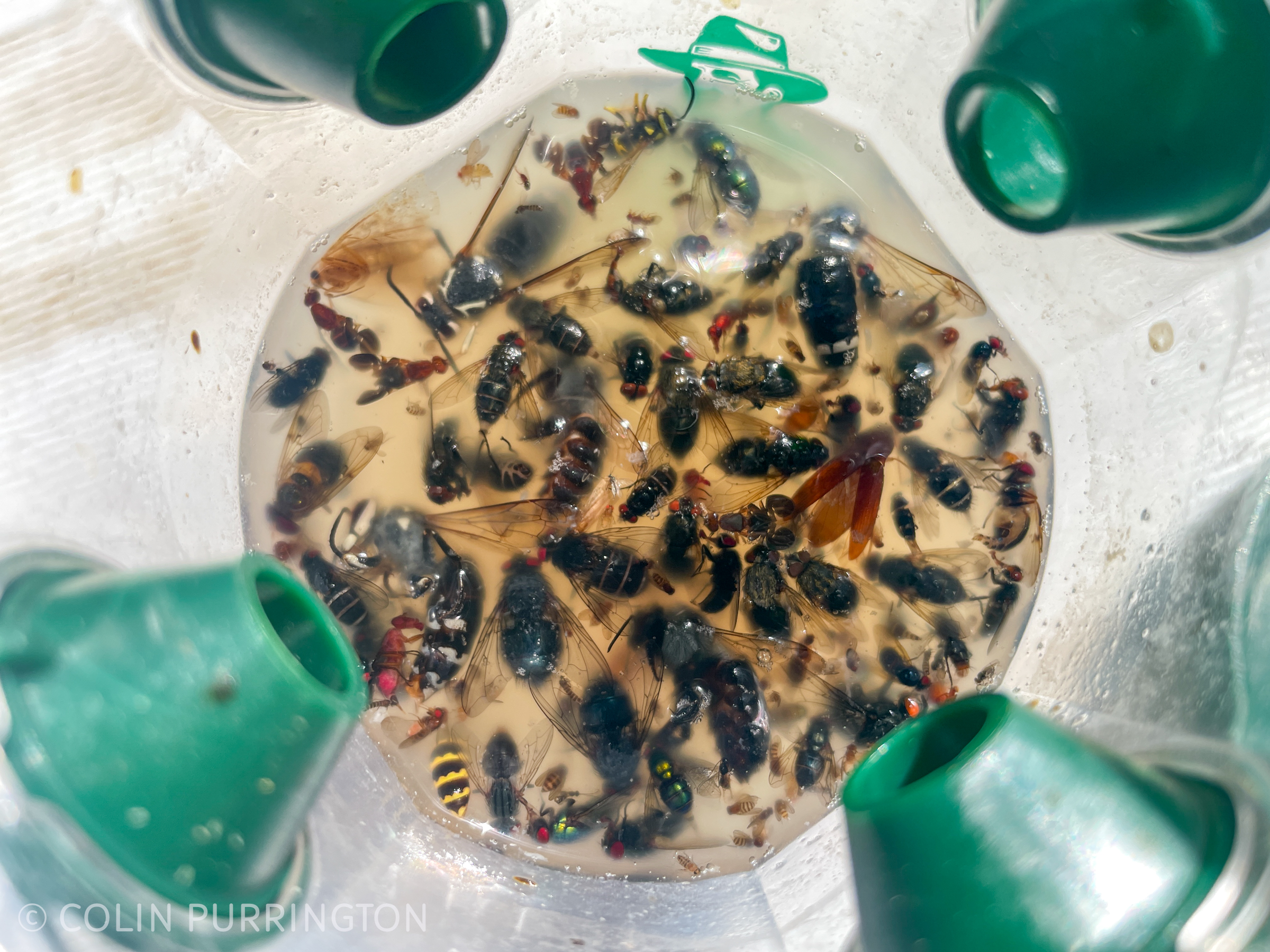
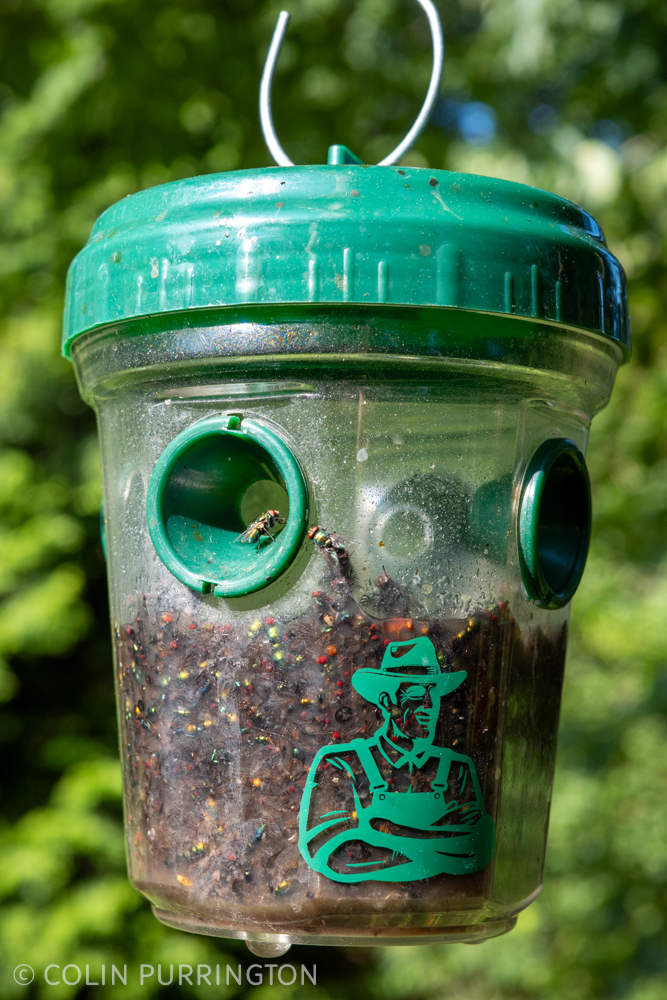
Below are photographs of the other three Mosquito TNTs. Like the trap above, these did not kill any mosquitoes. One had trapped two bumblebees. Although these seemed to attract fewer insects, all contained living fly larvae.
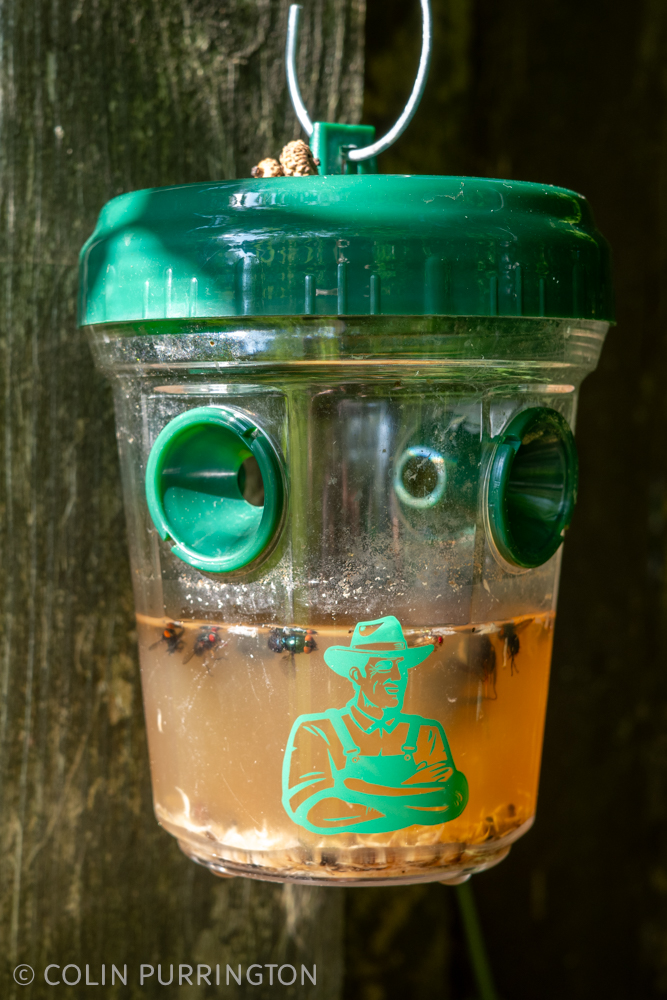
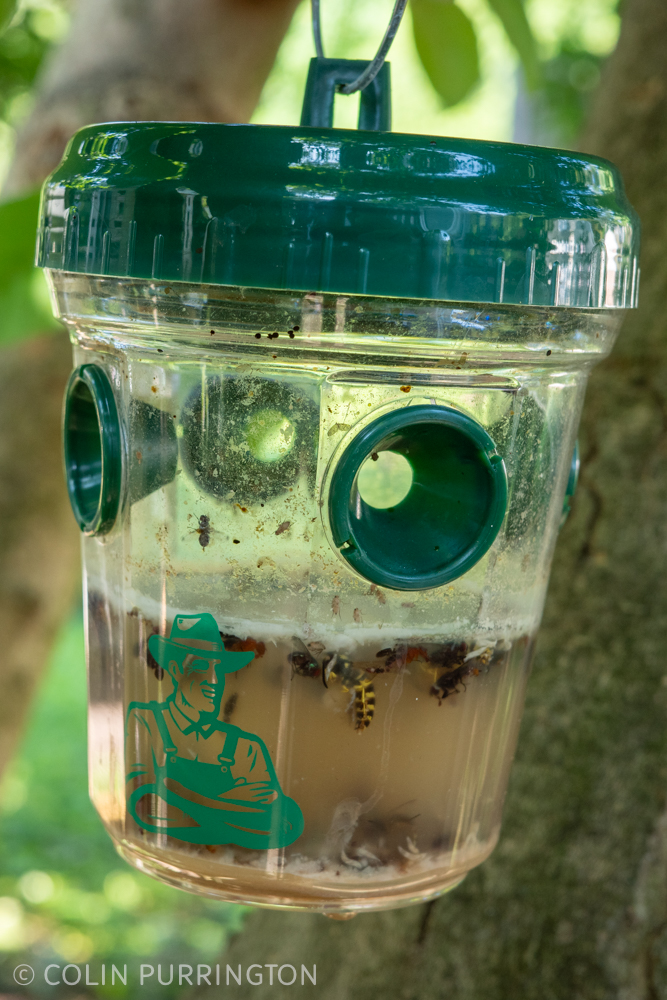
Containers are filled with larvae

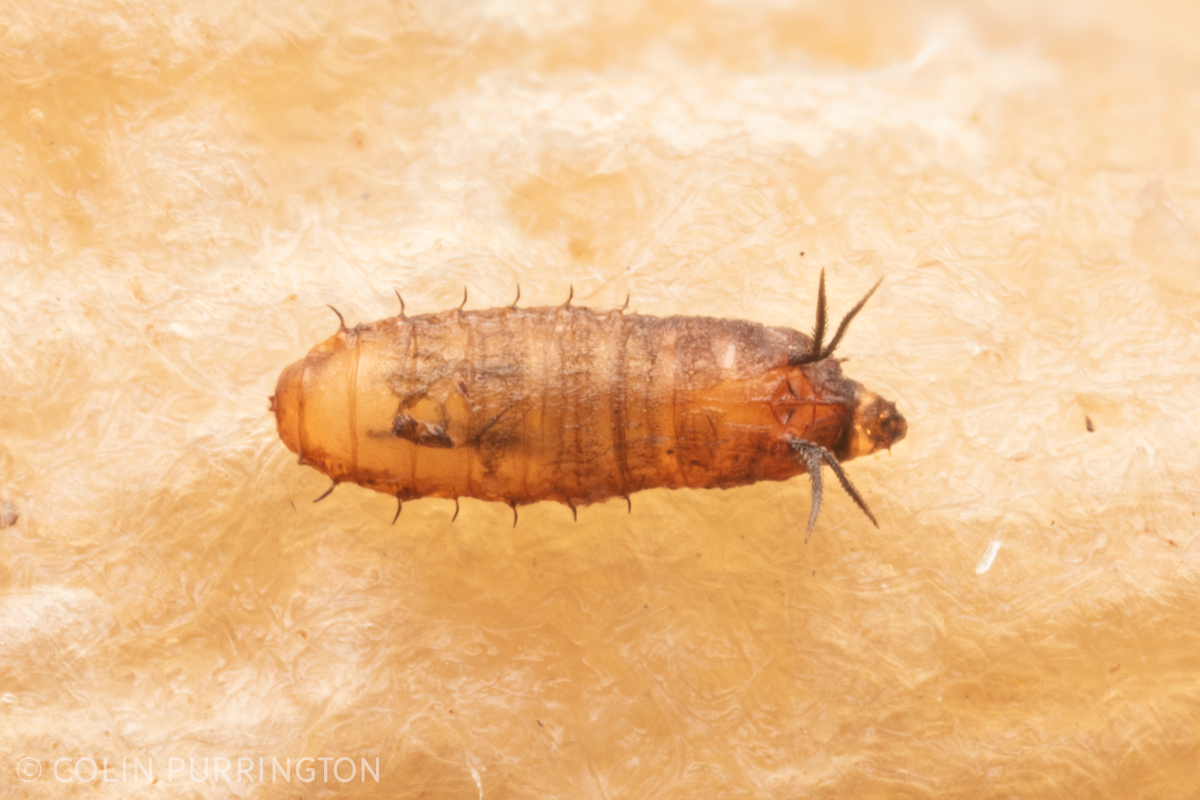
I think the larvae moving around in the fluid might be some sort of shore fly (Ephydridae), in part because they have very prominent posterior respiratory siphons that are characteristic of the family.
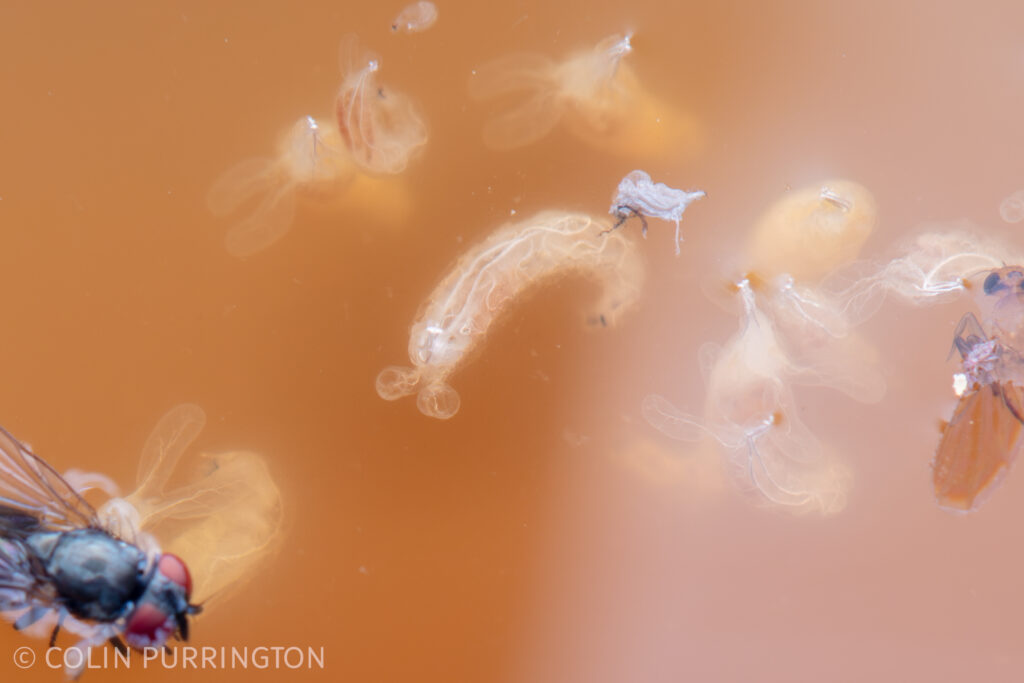
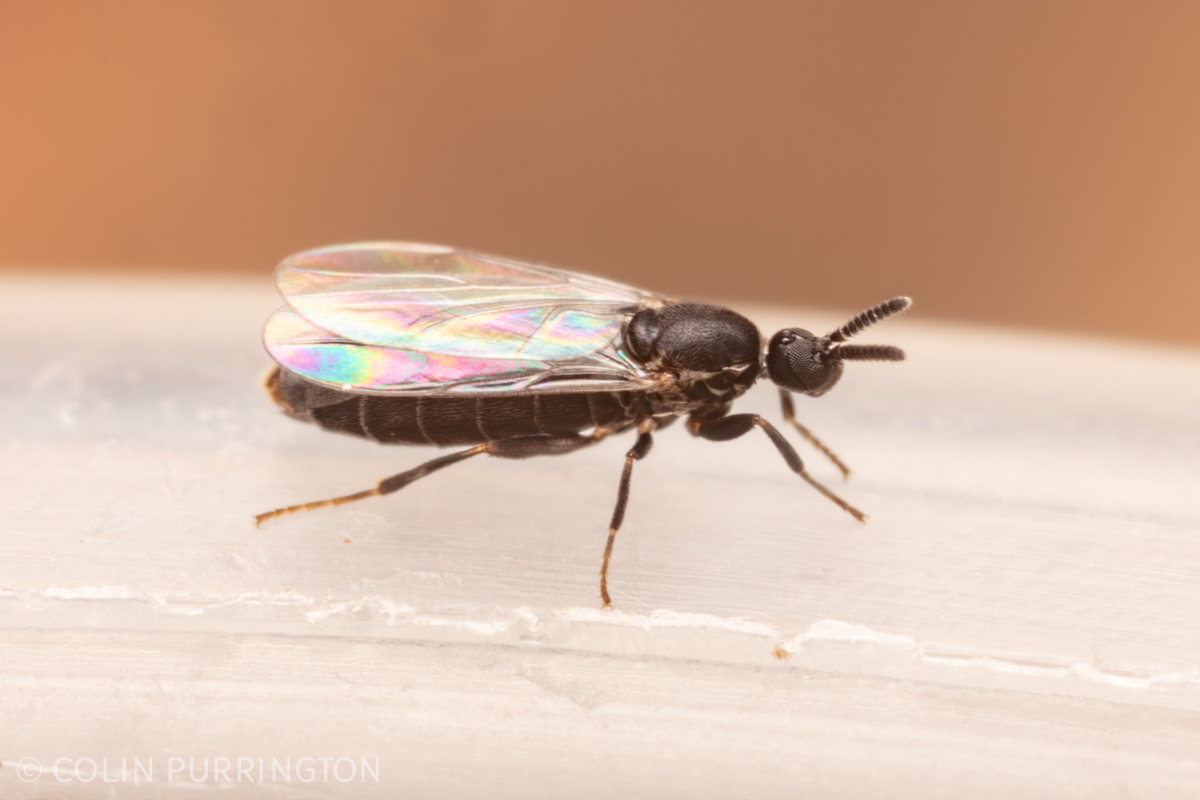
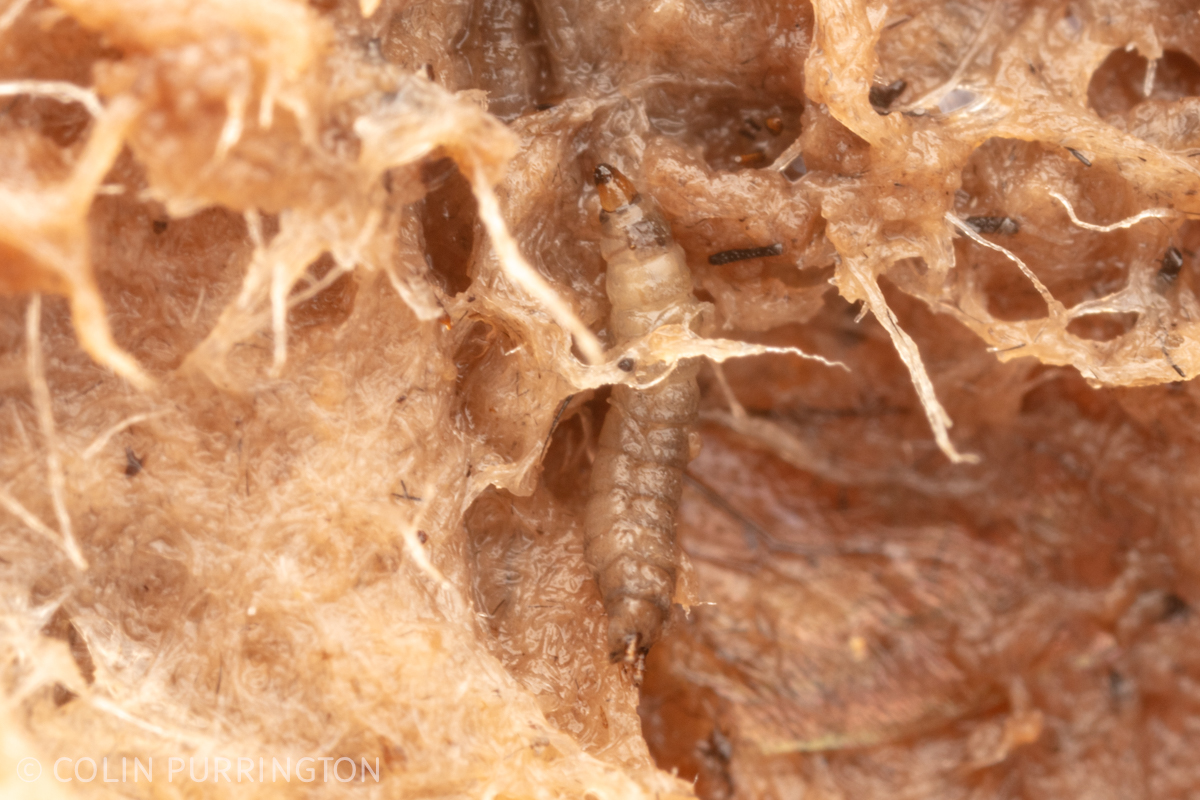
I wasn’t able to rear any of the above to adulthood but did succeed for a different species, below, which I’ve tentatively identified as Coboldia fuscipes, a type of minute scavenger fly (Scatopsidae).
Ads are misleading

Many of Tougher Than Tom’s ads assert that the dead insects inside the traps are mosquitoes, even though the insects appear to be fruit flies, bottle flies, and wasps. I.e., the company uses gaslighting to convince people that traps work even though it is very apparent they do not.

Another tactic is to show images that have been Photoshopped to falsely convey high efficacy. For example, the image below has mosquitoes that were copied from a photograph taken in Germany by Steffen Kugler. It’s unclear whether Tougher Than Tom has legally licensed that photograph.
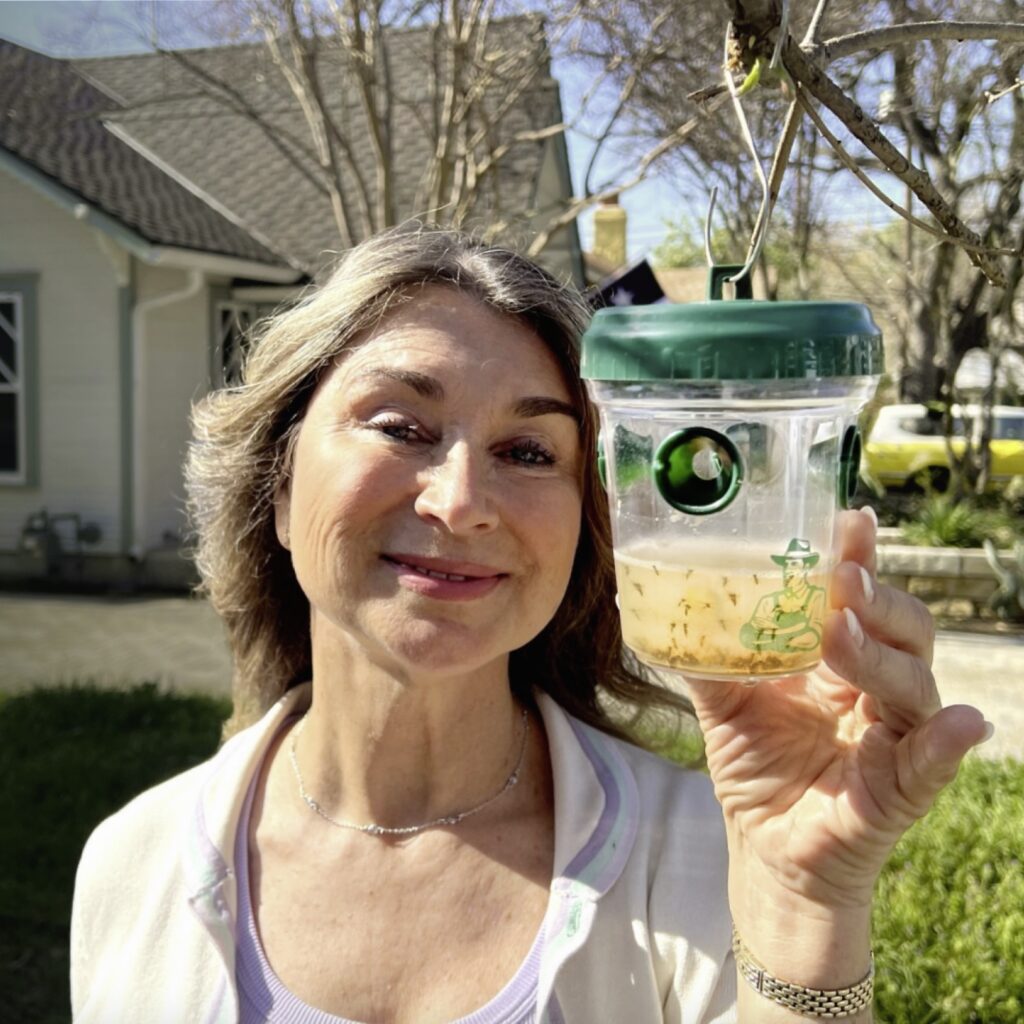
Photoshopped illustration copyright Zachary Snyder Collins of Tougher Than Tom (from Amazon listing).

Tougher Than Tom also uses “user-generated content” (UGC) to push the Mosquito TNT on TikTok, Instagram, and YouTube. Users seem to be following a script that frequently includes how safe the ingredients are, how yards become “mosquito-free,” and how traps eliminate worries over mosquito-borne diseases (all claims that violate FIFRA). None shows mosquitoes inside the Mosquito TNT. The UGCs rarely disclose a financial relationship with the company even though that is required by the FTC.

How to get a refund

Tougher Than Tom has generous return language (“100% guaranteed,” “hassle-free refunds,” “If Tom’s products don’t work for you, you get your money back!“) but tends to ignore refund requests. For those who persist, company then insists that traps need to be mailed to Texas at customer’s expense. To get around these tactics, I highly recommend posting a review on Trustpilot. The company seems to monitor this site and will usually try to appease consumers in an effort to maintain a good standing on the review site. You can also leave reviews at the Better Business Bureau and PissedConsumer.

If that doesn’t work, file a complaint with the Attorney General in your state. You can do this by conducting an internet search for “file complaint with attorney general [your state]” and then submitting a short form. The office will then contact Tougher Than Tom on your behalf, using legal language that may get the company’s attention. It’s easy.

How to file a state or federal complaint

If you’d like to help protect other consumers, you can report the company for making false or misleading claims.

To locate the person in charge of pesticide registration and enforcement in your state, click on this map. These people have the power to revisit a product’s registration status as well as levy fines against the company for shipping to the state without a registration. In your email, provide details of what your traps have captured and attach photographs if possible.

You can also report the company to the EPA and the FTC. For these communications it is also helpful to attach screenshots of the marketing materials that led you to believe that the product eliminated mosquitoes. And if you noticed zero mosquitoes inside your traps, mention that, too.

Here’s the company contact information to share in your report:

Tougher Than Tom
2028 E Ben White Blvd, Suite 240-1328, Austin, TX 78741
(413) 400-0067
owner: Zachary Snyder Collins
zach@simplystrive.com

Further information

  • The Mosquito TNT is a 69-cent wasp trap made in China.
  • I highly recommend reading the consent agreement (PDF) between the company and the EPA. The company had to pay $80,880 in fines for violating federal pesticide laws.
  • The owner of Simply Strive (“Tougher Than Tom”) is Zachary Snyder Collins (photo). He likely got into the mosquito-control business from fellow Austin resident Nick Olnyk, founder of Grandpa Gus, a company that had an identical product lineup before being sold a few years ago. I think Collins copied the “folksy, honest grandpa” marketing schtick from Grandpa Gus.

Where can the Mosquito TNT be sold?

From searching databases and regulations, I think the following states allow the product to be sold: Alaska, Arizona, Arkansas, California, Colorado, Delaware, Florida, Georgia, Hawaii, Idaho, Iowa, Kansas, Kentucky, Michigan, Mississippi, Montana, New Hampshire, New Jersey, New York, North Carolina, North Dakota, Pennsylvania, South Dakota, Texas, Vermont, Virginia, Wisconsin, and D.C.

The search revealed that the following states do not allow sales: Alabama, Connecticut, Illinois, Indiana, Louisiana, Maine, Maryland, Massachusetts, Minnesota, Missouri, Nebraska, Nevada, New Mexico, North Carolina, Ohio, Oklahoma, Oregon, Rhode Island, South Carolina, Tennessee, Washington, West Virginia, and Wyoming.

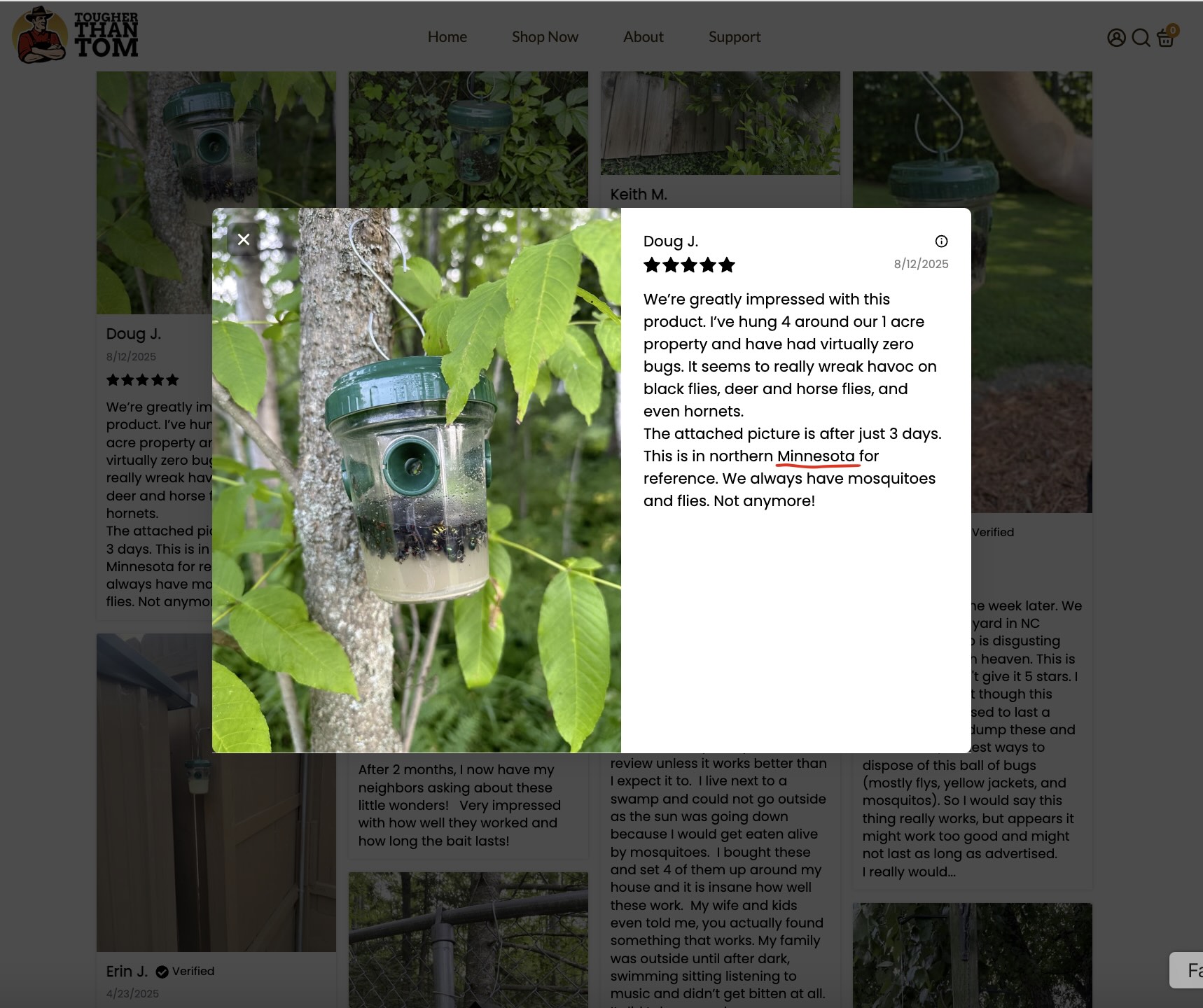
However, Tougher Than Tom’s website indicates that sales are prohibited only in New Mexico and Tennessee. And the company’s Amazon listing says product cannot be shipped to Oklahoma, North Carolina (which allows sales, actually), and Maine. That these two sources list different states suggests that the company is not paying close attention to where the device may legally be shipped. The company is probably regularly shipping the product to states that have denied a registration. E.g., per a review that Tougher Than Tom features on its website, it has shipped the device to Minnesota (jpg screenshot).

Other reviews

Contact

If you have a question, information you think I should provide, or find errors, send me an email.
Yeast-and-sugar mosquito control devices

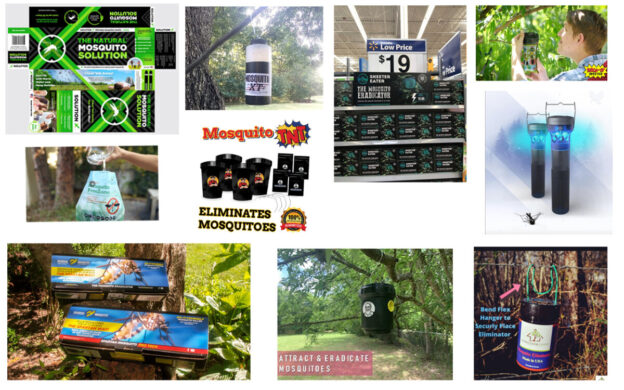
In the United States, nine companies are selling containers filled with water, sugar, and yeast for mosquito control. The marketing pitch is that mosquitoes are attracted by carbon dioxide (produced by yeast consuming the sugar), enter the device through holes, crawl inside, ingest some of the fluid, crawl back up to the holes, exit the container, and then die (e.g., by exploding) due to the effects of a chemical (table salt, boric acid, garlic oil, etc.) dissolved in the fluid. Some of the companies claim their tubes will rid a yard of mosquitoes for three months. I summarize the devices below. You can skip to the end if you just want to know whether they work.

1. Spartan Mosquito Eradicator

First sold in 2016 as the Spartan Mosquito Bomb, the company says these tubes will eradicate up to 95% of mosquito population for up to 90 days. Ingredients are sugar, yeast, and salt (purchaser adds water). I reviewed it in 2019. Below is an infomercial featuring Spartan Mosquito’s Chief Chemist, Chris Bonner:

2. Sock-It Skeeter

It’s identical to the Spartan Mosquito Eradicator except it’s a bag instead of a tube. Contains sugar, yeast, and table salt. Made by Spartan Mosquito but listed under a shell company in Florida (details). Here’s one of the commercials:

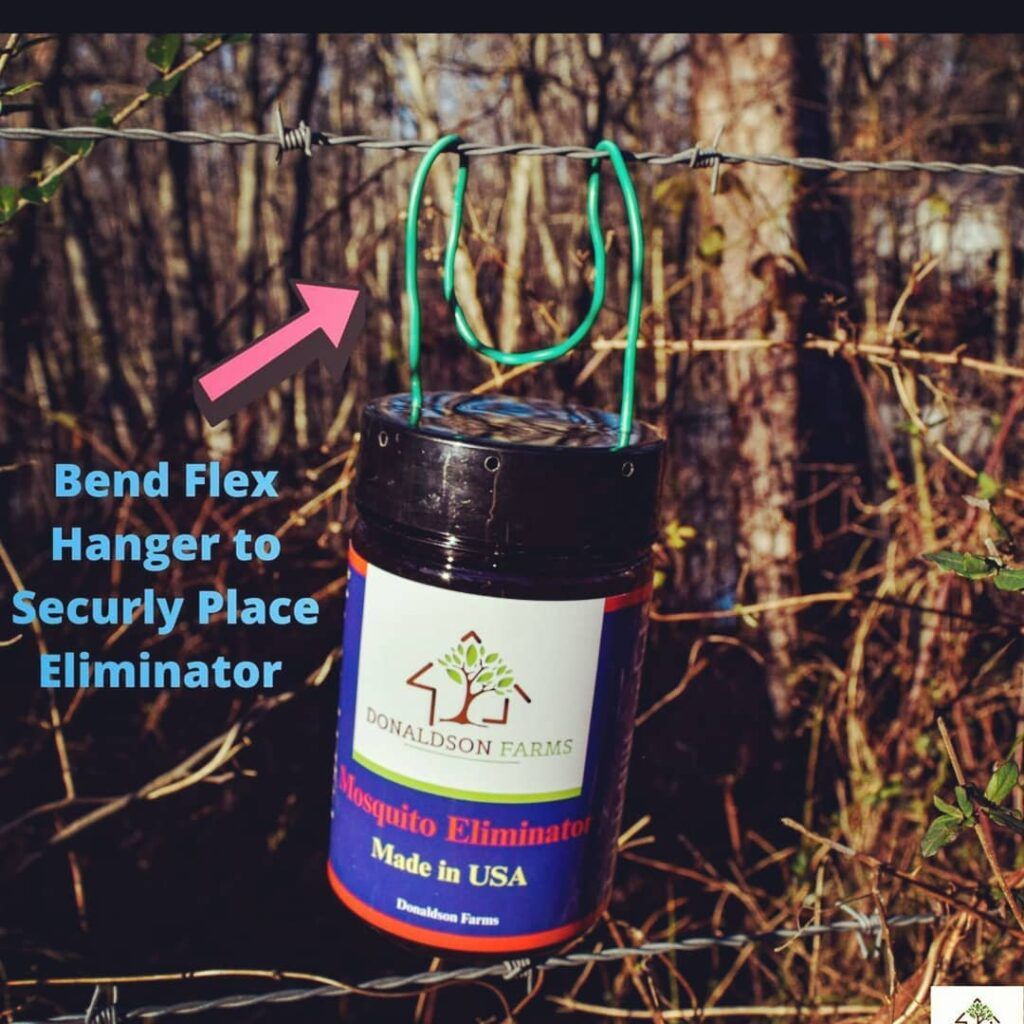
3. Donaldson Farms Mosquito Eliminator

Like the Eradicator, the Eliminator is marketed to rid yard of mosquitoes for 90 days. Contains sugar, yeast, citric acid, calcium carbonate, salt, and sodium lauryl sulfate. This device doesn’t appear to registered in any of the states that require registration. Based in Chattanooga, TN.

Donaldson Farms Mosquito Eliminator

4. Mosquito XT

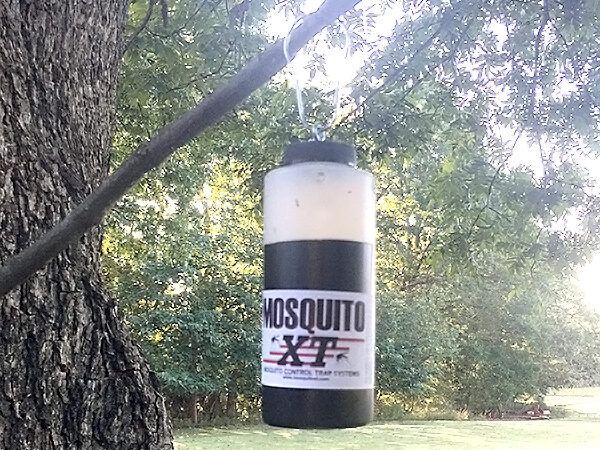
The Mosquito XT contains sugar, yeast, baking soda, and salt. This device doesn’t appear to registered in any of the states that require registration. Based in Paragould, AR (details), the owners run an insurance agency. Here’s a pic from the website:

Mosquito XT

5. Spartan Mosquito Pro Tech

This device is uses boric acid instead of salt as active ingredient, but still contains sugar and yeast (both as unlisted, inactive ingredients). Company says tubes kill mosquitoes for up to 30 days. California banned it after reviewing efficacy data. I reviewed it in 2020. Here’s the inventor, Jeremy Hirsch, on a 25-min Q&A with one of the retailers (note that video glitches out several times):

6. Aion Mosquito Barrier

Company says the tubes “kill and repel” mosquitoes for 90 days. Contains sugar, yeast, and table salt. It was first marketed as The Mosquito Eradicator (picture below). Based in Memphis, TN. Website. Here’s an ad:

7. Skeeter Hawk Backyard Bait Station

Contains sugar, yeast, citric acid, calcium carbonate, and garlic oil. Based in Grand Prairie, TX (details). Below is an ad:

8. Grandpa Gus’s Mosquito Dynamiter

Company claims the device will eradicate up to 95% of mosquitoes for up to 90 days and asserts that mosquitoes “literally explode”. Contains sugar, yeast, and table salt. Made by Vic West Imports of Austin, TX. UPDATE: they’ve stopped making this.

9. Tougher Than Tom’s Mosquito TNT

Originally formulated with salt like Spartan Mosquito Eradicator and the Aion Mosquito Barrier but now lists sodium lauryl sulfate as the active ingredient. Owned by online marketer Zachary Collins of Austin, Texas. Here’s my blog post on the device.

10. Solution X

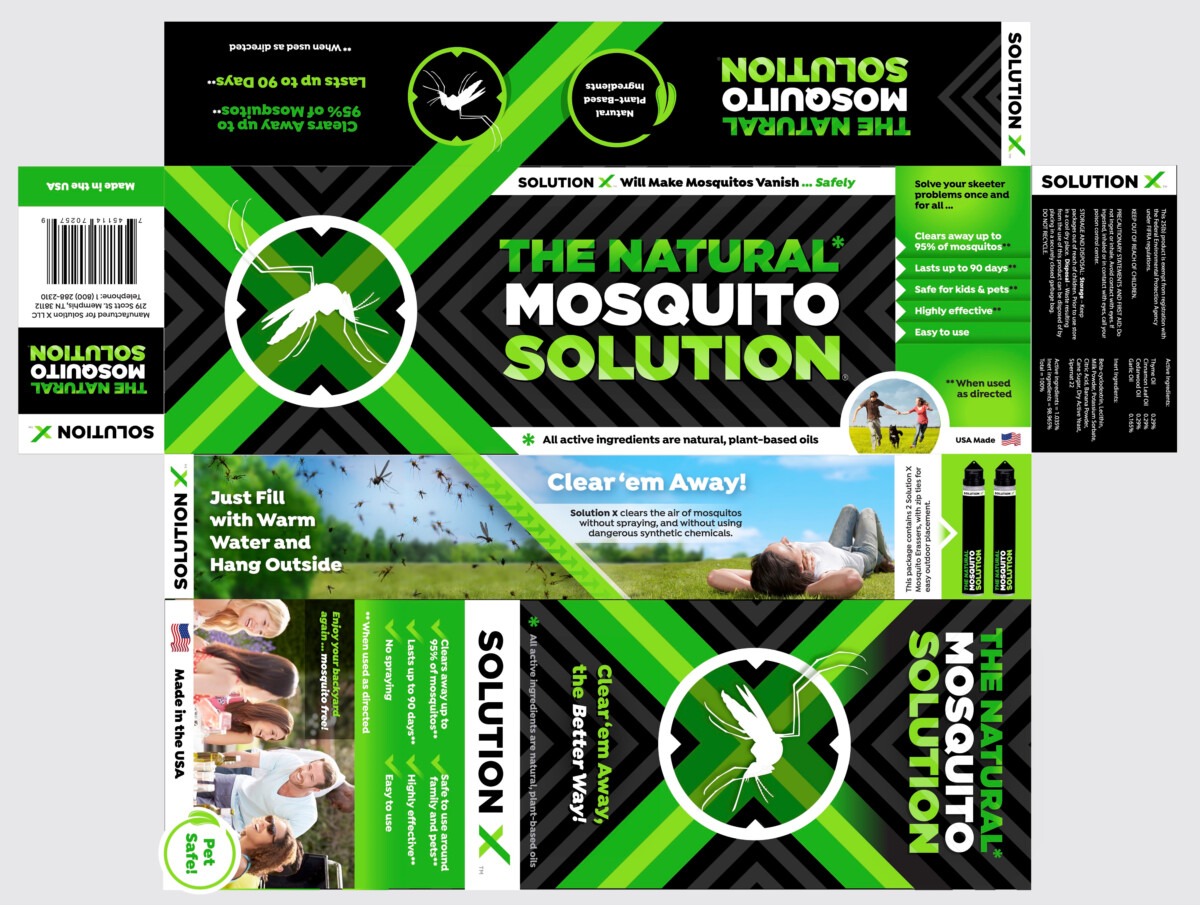
Per the box, “clears away 95% of mosquitoes.” Based in Memphis, TN (details). Parent company is EnviroChem, a distributor of cleaning compounds. I couldn’t find a commercial or a website but here’s the box layout that they send to state pesticide regulators:

11. Greenerways Mosquito-Bite FreeZone

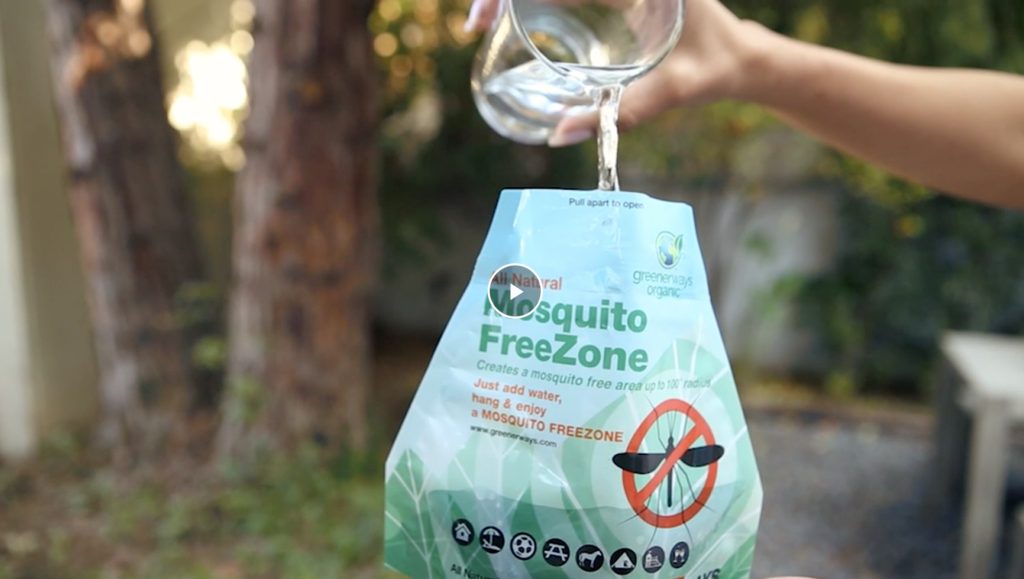
Claims to lure mosquitoes and then jam their receptors, creating a mosquito-free area with 100-foot radius for seven days. Lists soybean oil as the active ingredient, but also has sucrose, yeast, and essential oils. Available on Amazon and many other online retailers. Greenerways LLC is based in Yardley, PA. Here’s a video ad (screenshot below).

Do they work?

To my knowledge, there’s no evidence that any of the above devices kill or repel mosquitoes when they are deployed outside. There’s evidence they don’t work, though. For example, scientists in Florida tested the Spartan Mosquito Eradicator and concluded it wasn’t effective. And scientists have also established that salt water doesn’t kill mosquitoes, so all the devices that list sodium chloride as the active ingredient are not going to work at all. Finally, in my testing of the Spartan Mosquito Pro Tech and the Tougher Than Tom Mosquito TNT, mosquitoes are not even attracted to the containers, which, if generalizable to the other products, makes it unlikely these products would do anything even if they had an active ingredient that is lethal to mosquitoes.

But they do kill insects. Here are photographs showing what is inside a Spartan Mosquito Eradicator (left) and a Spartan Pro Tech (right) after several weeks. Plenty of picture-wing flies, fruit flies, ants, and molds. But no mosquitoes. I’ve never even seen a mosquito come near these tubes.

If you’d like to see the full array of insects and spiders that these tubes killed, I’ve collected them on iNaturalist.

Why are these companies still in business if their products don’t kill mosquitoes?

I think there are four reasons.

  1. Towns, municipalities, and regional health departments often spray adulticides from trucks and airplanes, in the middle of the night, without many residents being aware. And if some of those people have yeast-and-sugar tubes hanging in their yards, they might wrongly assume the lack of mosquitoes is related to the tubes. This scenario is probably common because spraying happens pretty much at the exact time of the year that homeowners place the yeast-and-sugar containers around their yards. For those curious about Mosquito Abatement Districts, this article has a nice summary. You can also ask your local government for details on whether your house is being treated.
  2. Sometimes due to sudden and extended drought conditions, mosquito populations plummet. Again, people might not appreciate that the lack of water is preventing mosquitoes from completing their life cycle and will mistakenly attribute the drop to yeast-and-sugar devices they have deployed around their yards.
  3. Many of the companies encourage homeowners to hang the tubes before the start of the mosquito season. It might seem to some that the tubes are keeping the mosquitoes at bay but in reality it’s because the mosquito season hasn’t started.
  4. Finally, some homeowners spray pyrethroid-based insecticides (like those used by Mosquito Shield and the like) in addition to deploying the yeast-and-sugar contraptions. I’ve seen comments on the internet suggesting that these people believe both are necessary even though in reality the tubes are merely decorative.

Once a person becomes convinced that the tubes work, they are unlikely to abandon that belief even when presented with clear evidence to the contrary. That’s probably especially true if a person tells multiple neighbors that the devices work. I.e., a person becomes personally invested in that belief. Indeed, when the tubes fail in future summers (or during gaps in municipal spraying), true fans of these tubes go to great lengths to blame themselves. For example, they might say, “I don’t think I used the correct temperature of water”, “I may have placed them too close to my house”, or “I should have used a few more tubes.” The companies use the same lines in response to consumer complaints, never acknowledging that the failure is with the tubes themselves.

It’s also worth pointing out that the majority of people who try these tubes conclude that they are ineffective and never buy them again. They lose $50 bucks, or whatever, and chalk it up as a mistake and get on with their lives. Some might pursue a refund but I think most people are too lazy to ask. One of the companies, Spartan Mosquito, even sets its return window to expire 30 days after product is delivered, not after 30 days of use — for a product that is supposed to kill mosquitoes for 30 days, that’s a pretty clever way to make sure nobody can get their money back. I.e., if people try it for 30 days and conclude it’s a garbage product, the return window is already over. And the companies still make a profit because the core subset of true believers (several million Americans in total) will keep spending hundreds of dollars each summer on new tubes. That’s enough to make the owners of these companies millionaires, and explains why multiple companies have entered the market.

People often mention that the reviews for these types of tubes are generally high, and use that fact to argue that the products must, in fact, work. For example, the Spartan Mosquito Pro Tech has a 3.8/5 rating on Amazon. I’m of the opinion, however, that even completely useless products can get ratings like that. For example, OFF! citronella candles get a rating of 4.2 even when “not intended to repel mosquitoes” is prominently displayed on the packaging (that’s correct: citronella candles do not repel mosquitoes).