
I tested the Mosquito TNT in my Pennsylvania yard and concluded that it does not control mosquitoes. Moreover, they kill a considerable number of non-target organisms, including pollinators, provide an ideal habitat for fly larvae that feed on the decaying carcasses of previous victims, and smell bad. My full review is below. If you just want tips for getting your money refunded, you can jump to that part.
The claim
Tougher Than Tom asserts that female mosquitoes are attracted to the containers, and then into the holes, by the carbon dioxide produced by fermentation of sugar by yeast as well as by the reaction between sodium bicarbonate and citric acid. Then they drown, speeded by the active ingredient sodium lauryl sulfate, a surfactant. The company says the four-trap kit will make a 1-acre yard “mosquito-free” for 30 days.
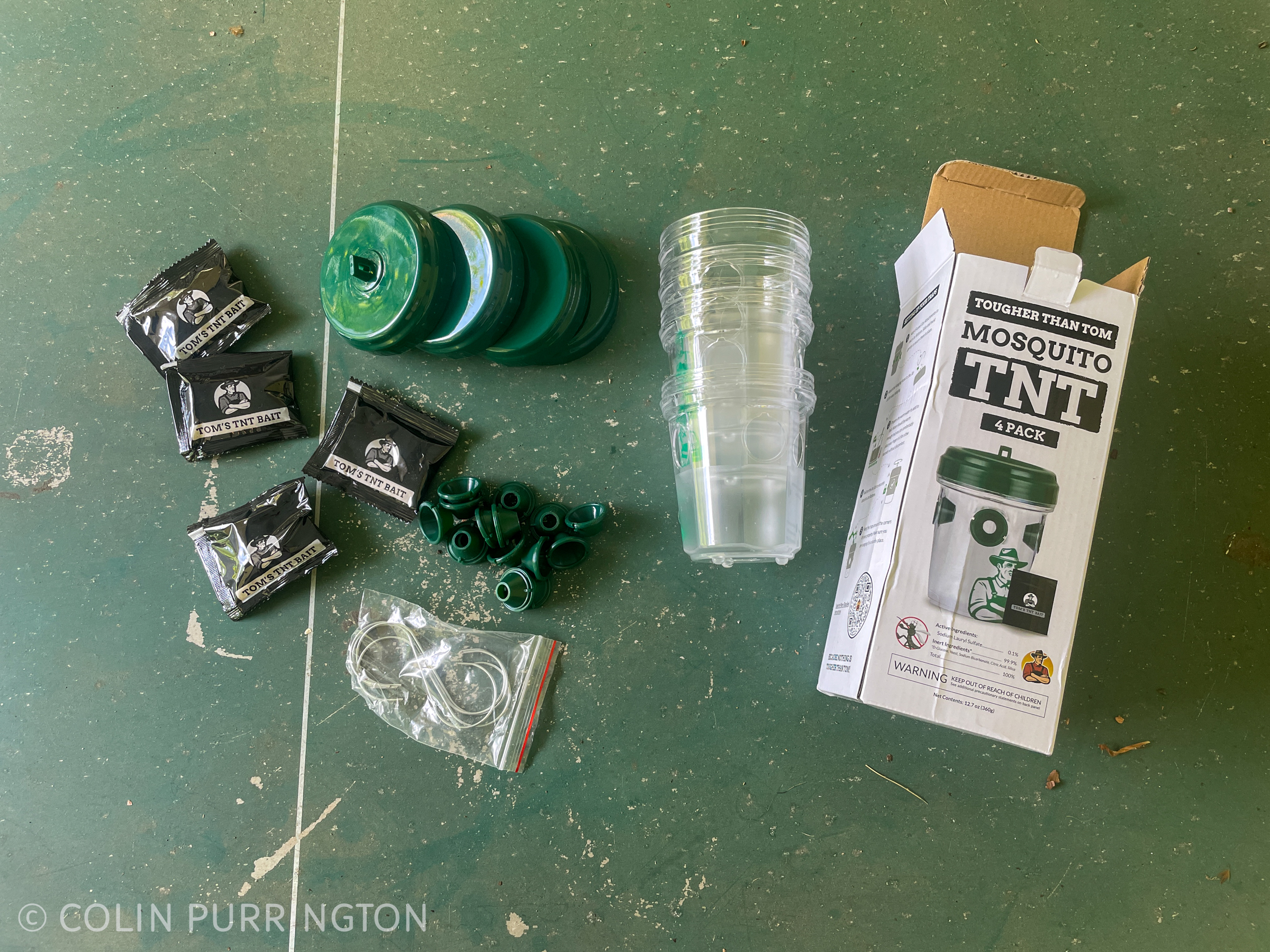
Test results: zero mosquitoes were trapped
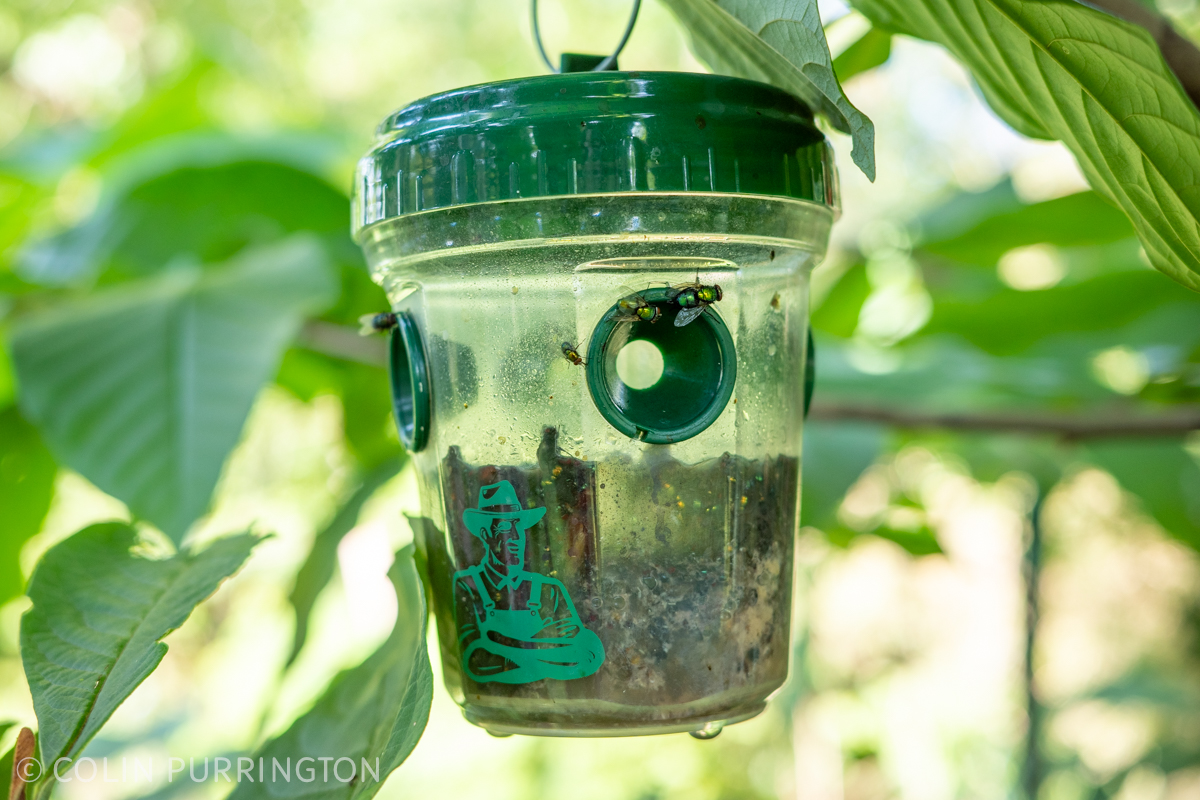
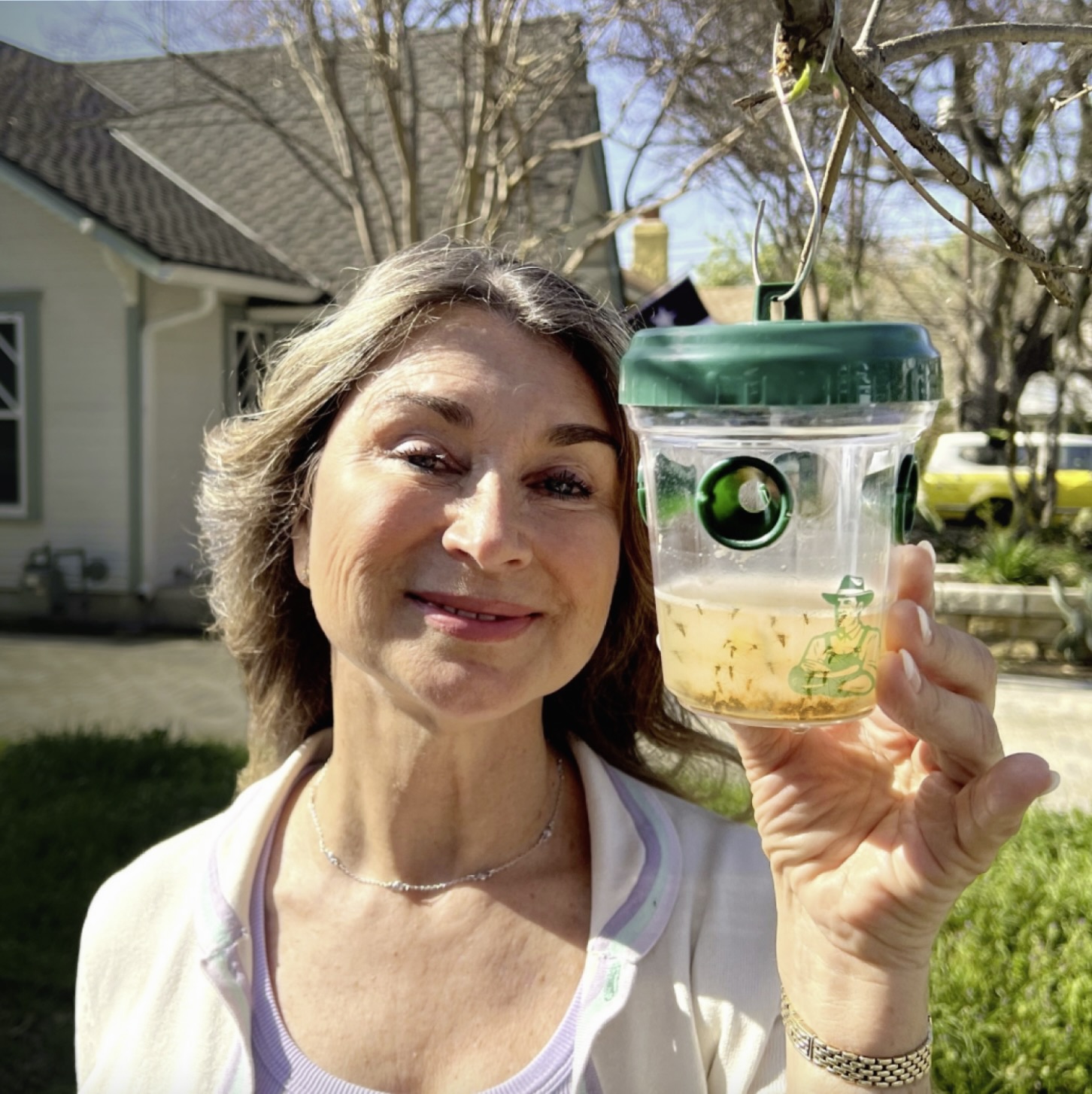
I took photographs of four traps every several days as a way to record what types of insects were being killed. By far the most common were flies (fruit flies, blow flies, picture-winged flies, etc.), wasps (yellowjackets and hornets), earwigs, beetles, and bumblebees. After about 20 days the stench was enough to make me gag whenever I got close. At no point during my inspections did I notice any mosquitoes either inside or near the containers.
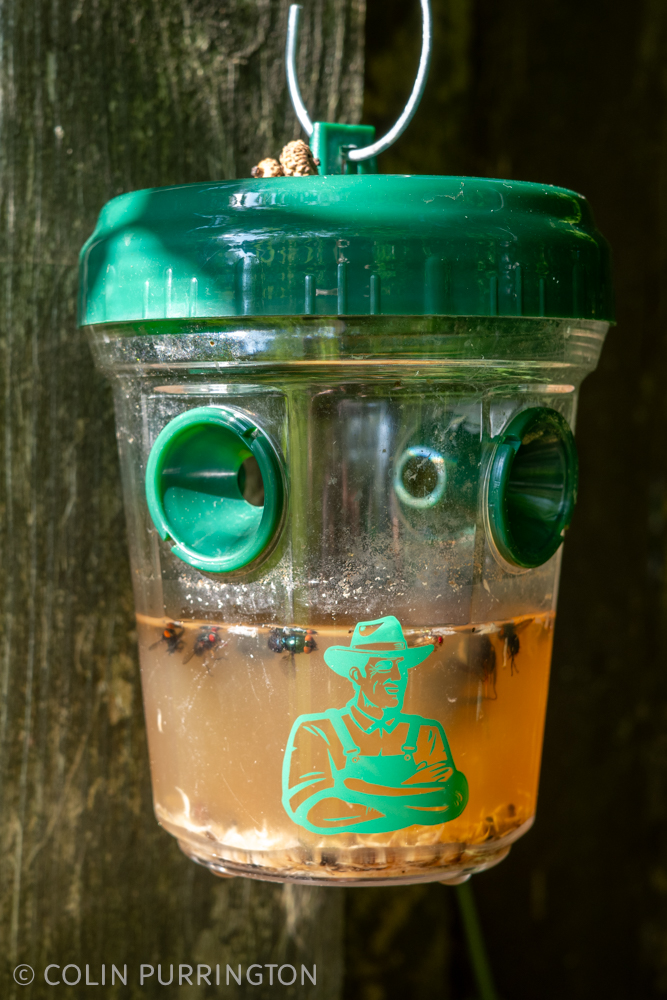
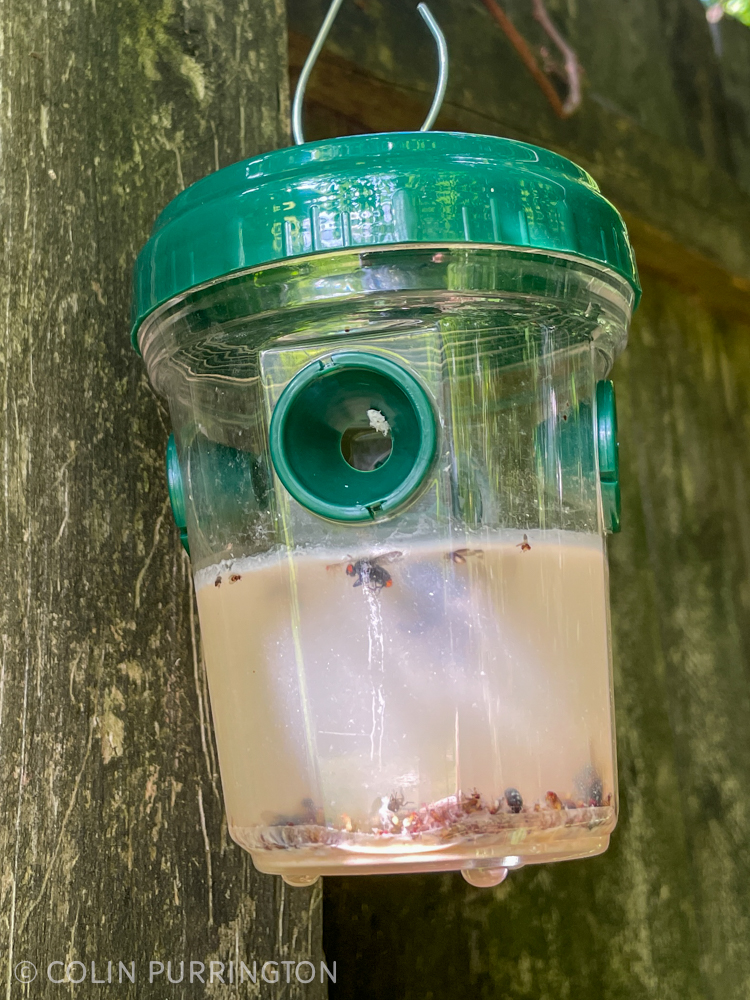
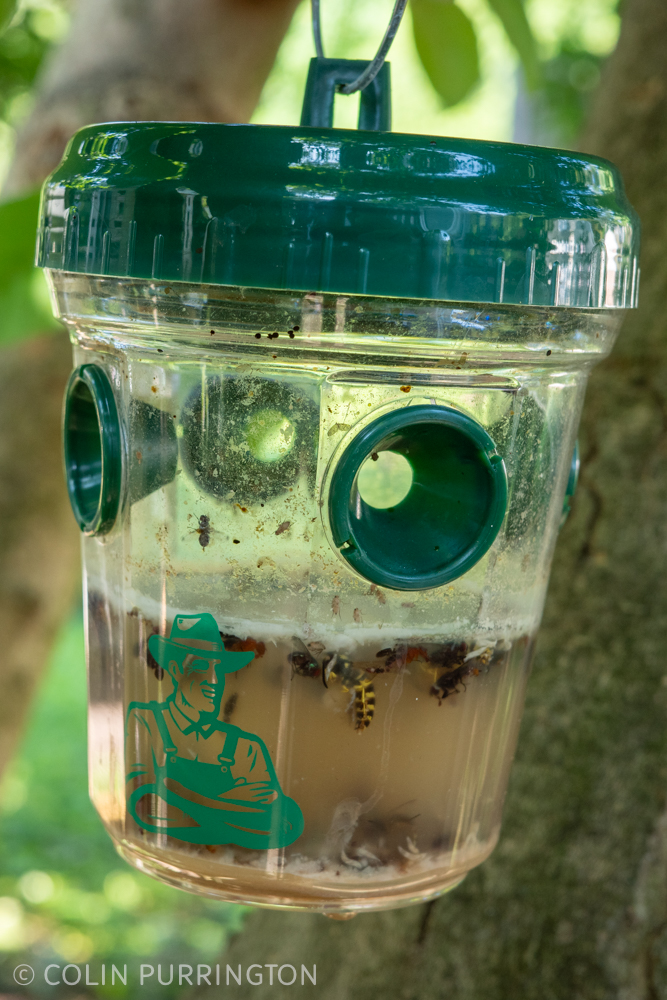
Test results: flies deposited thousands of eggs
After several weeks, the fluid was full of fly larvae. Some were humpbacked flies (Phoridae):
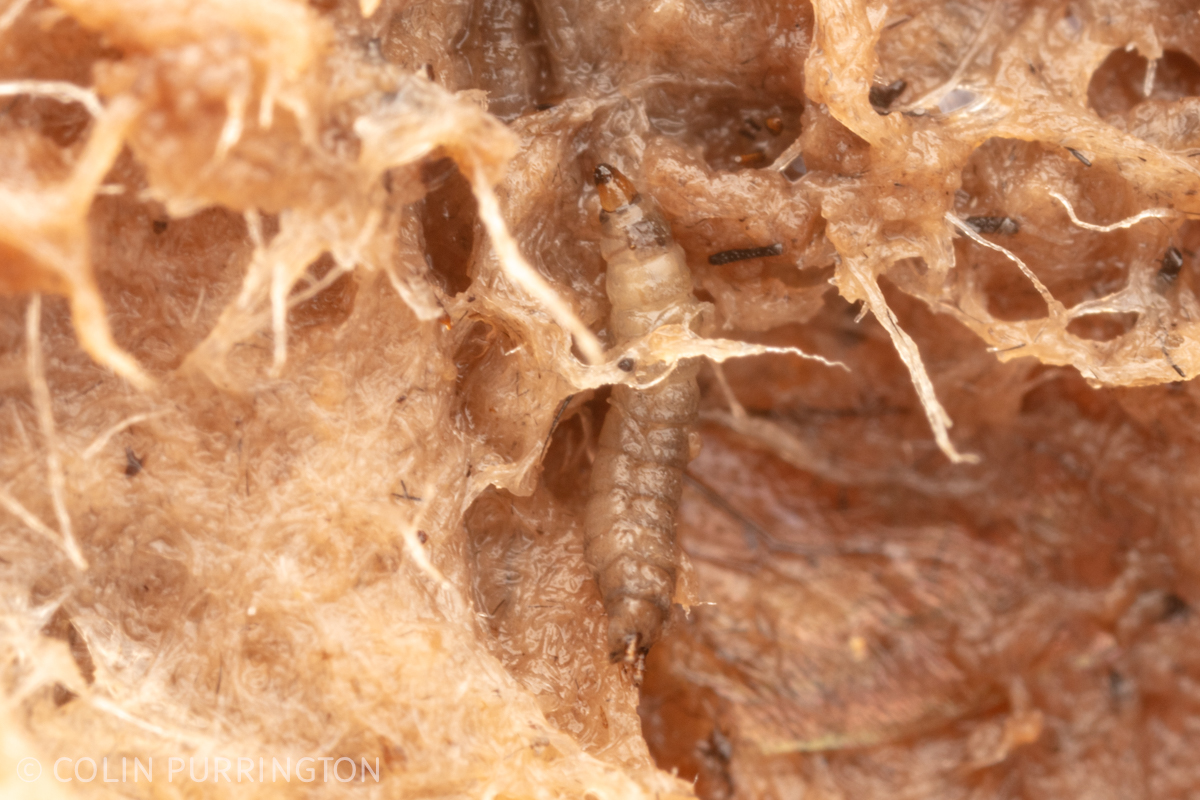
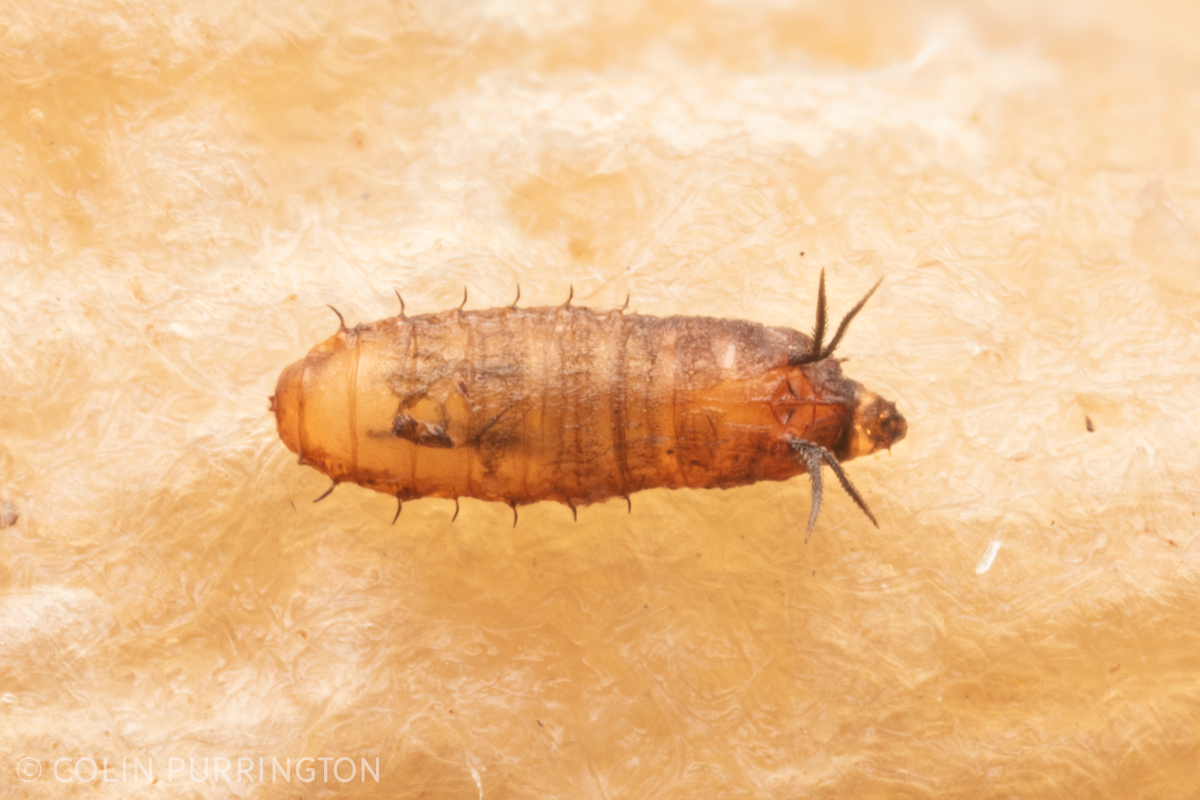
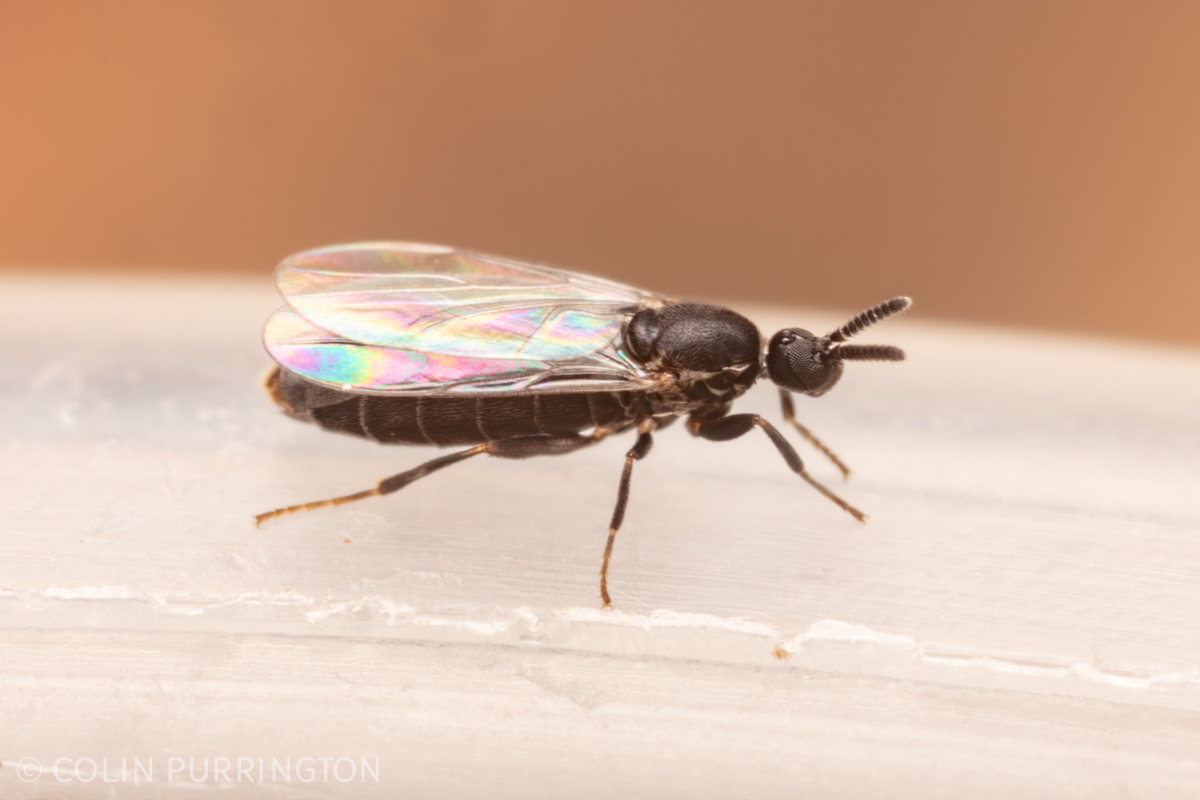
The containers also contained larvae that I eventually identified as Coboldia fuscipes, a type of minute scavenger fly (Scatopsidae). Here are photographs of the larval, pupal, and adult stages.
Why don’t they attract or kill mosquitoes?
Given the very small size of the ingredient packet, not enough carbon dioxide would be produced to attract mosquitoes. To produce the required amount one would need several pounds of sugar. Moreover, traps are not generating heat or emitting certain odors, cues that mosquitoes use to find hosts.
But don’t the ads prove that they work?
Many of Tougher Than Tom’s ads assert that the dead insects inside the traps are mostly mosquitoes. However, when you zoom in on a container it is apparent that the traps contain fruit flies, bottle flies, wasps, and beetles. I have not been able to locate a mosquito inside any of the traps displayed online.
Another tactic is to show images of traps that have been manipulated to include mosquitoes. For example, the image below has mosquitoes that were copied and pasted from a photograph taken in a German laboratory.
A more recent development is to show AI-generated videos that depict mosquitoes trying to get into the holes. Or dozens of mosquitoes trapped and drowning. It should be emphasized that if the traps were capable of attracting mosquitoes, the company would simply use real videos. Here’s an example ad (on Facebook). Here’s a screenshot:
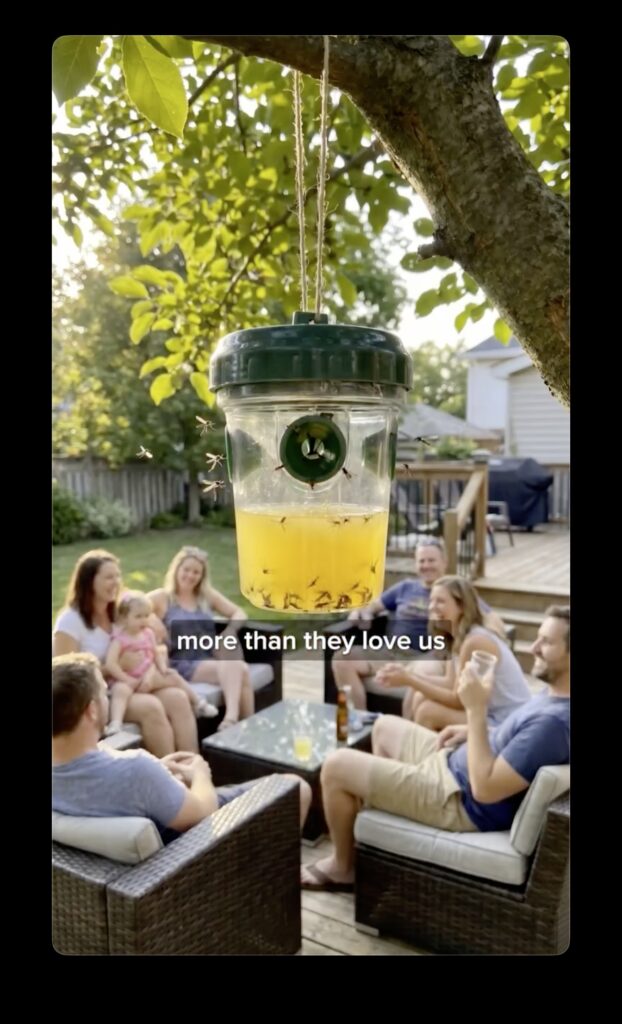
Tougher Than Tom also uses “user-generated content” (UGC) to push the Mosquito TNT on TikTok, Instagram, and YouTube. These people invariably say the product is effective even though it appears they have set them up only moments before and thus would be unable to assess whether population levels have dropped over time. The UGC ads seem to be following a script supplied by Tougher Than Tom that often includes how safe the ingredients are, how yards become mosquito-free, and how traps eliminate worries over mosquito-borne diseases (all claims that violate FIFRA). None shows mosquitoes inside a Mosquito TNT. The UGCs rarely disclose a financial relationship with the company even though that is required by the FTC.
Sale-price fraud
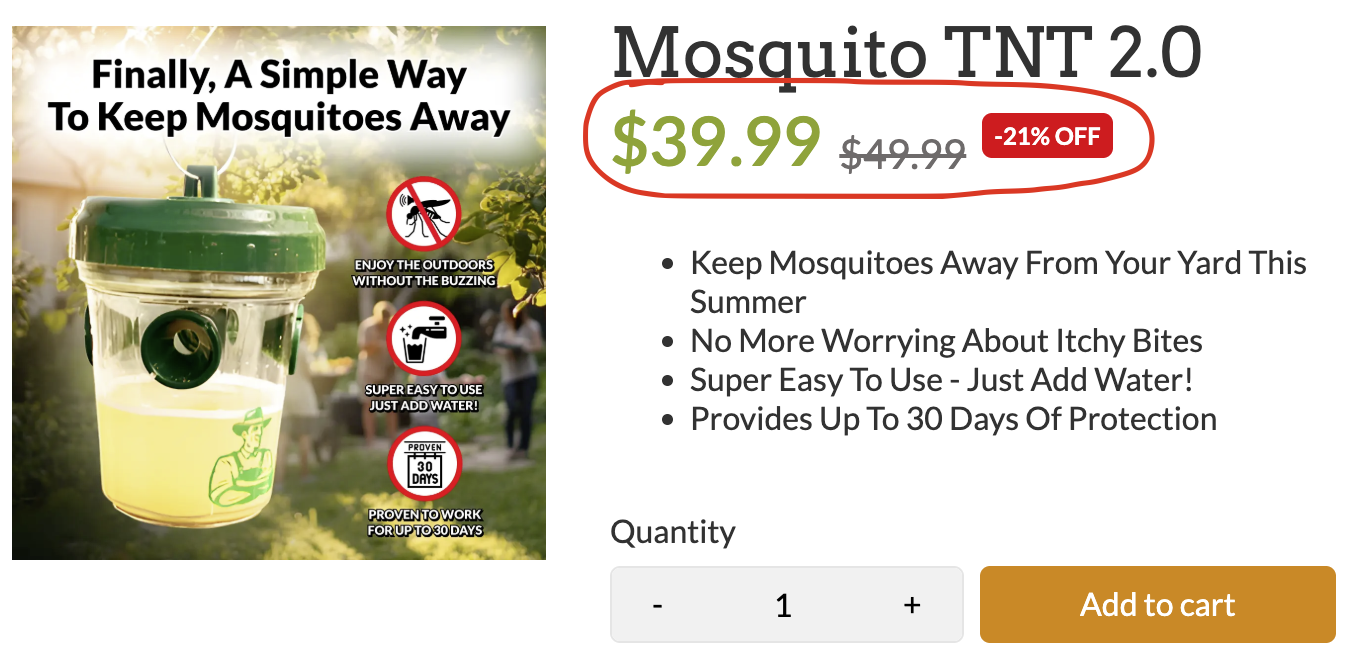
Tougher Than Tom also deceives users about the price of the Mosquito TNT by using strike-through pricing, showing the “sale” price relative to a putative regular price that is there just to make you think you’re getting a great deal. And the discount is “always just about to expire, so act now!” Strike-through pricing is illegal at the federal and state level.
Where it is sold
Per the company’s website the Mosquito TNT can be shipped to all states except New Mexico and Tennessee. However, its Amazon listing says that it cannot be sold in Oklahoma, North Carolina, and Maine. I’m not sure which information is correct.
To get a better sense of where the Mosquito TNT can be sold, I went through pesticide-registration databases for all 50 states, plus D.C. and Puerto Rico. Twelve states appear to prohibit sales of the Mosquito TNT: California, Connecticut, Indiana, Maine, Montana, New Jersey, New Mexico, Oklahoma, Pennsylvania (where I live), Rhode Island, Washington, and West Virginia.
The following states likely allow the Mosquito TNT to be sold: Alabama, Alaska, Arizona, Arkansas, Colorado, Delaware, Florida, Georgia (NA), Hawaii (NA), Idaho, Illinois (NA), Iowa, Kansas, Kentucky, Louisiana, Maryland, Massachusetts (NA), Michigan, Minnesota (NA), Mississippi, Missouri (NA), Nebraska (NA), Nevada, New Hampshire, New York (NA), North Carolina, North Dakota, Ohio, Oregon, South Carolina, South Dakota, Tennessee, Texas (NA), Vermont, Virginia, Wisconsin, Wyoming, D.C., and Puerto Rico. States with “NA” (not applicable) do not require registration of Minimum Risk (25b) pesticides as long as they conform to EPA requirements (e.g., can’t make health claims, can’t make false statements, can’t make misleading statements). Such states merely require the company to assert that its product is in compliance (i.e., nobody confirms that requirements are met).
How to get a refund
Don’t be shy about asking for a complete refund. Here’s the sequence you should follow:
- Ask for a refund via the support dialog on the Tougher Than Tom’s website. Mention your order number and the amount you paid. It would be helpful to quote some of the language on the website about guarantee (“100% guaranteed,” “hassle-free refunds,” “30-day money-back guarantee,” “order with confidence knowing you have Tom’s handshake guarantee,” “If Tom’s products don’t work for you, you get your money back!”). You can also include a link to the money 100% satisfaction guarantee graphic. If you are ignored for more than 24 hours or if they respond with “you need to mail back the unused traps at your expense,” proceed to #2 immediately.
- Send an email to the owner, Zachary Snyder Collins (zach@simplystrive.com), and CC info@simplystrive.com to make sure your message gets seen. Politely ask for a refund and include the response from the support team. Mention that you noticed on Trustpilot and BBB that many people are getting full refunds without needing to send the traps back.
- Post a review on Trustpilot or BBB that details exactly why you are dissatisfied with the product’s performance. Quote some specific wording from one of the many money-back guarantees as well as your order number. Highlight that the company seems to be giving full refunds to others who have left reviews, and that you’d like the same. FYI, Tougher Than Tom often tries to get negative reviews taken down by flagging them for “harmful or illegal content”, so contact Trustpilot and report that, too.
- If company refuses to refund your order in full, file a complaint with your State Attorney General. You can learn about this option by conducting an internet search for “file complaint with attorney general [insert your state]”. Again, mention the specific language about money-back guarantees, and how company is refusing to honor it. The Attorney General (or his/her staff) will then contact the owner of Tougher Than Tom on your behalf. This can work very quickly, especially if you live in a state where the Mosquito TNT cannot legally sold (see above section).
- File a chargeback request with your credit card. You need to do this within 120 days of purchase. You can do this first if you want.

How to file a state or federal complaint
If you’d like to help protect other consumers, report the company for making false or misleading claims. You can also report when Tougher Than Tom ships the device to one of the 11 states that bans it (see full list above).
To locate the person in charge of pesticide registration and enforcement in your state, click on this map. These people have the power to revisit a product’s registration status as well as levy fines against the company for shipping to the state without a registration. In your email, provide details of what your traps have captured and attach photographs if possible.
You can also report the company to the EPA and the FTC. For these communications it is helpful to attach screenshots of the marketing materials with false claims. If you noticed zero mosquitoes inside your traps, mention that, too. And take pics of contents.
If you would like to get a better sense of the company’s past legal troubles I would highly recommend reading the consent agreement reached with the EPA in 2025 that resulted in a $80,800 penalty payment. That’s likely a very small fraction of the profits made by the owner each year.
Here’s the company contact information to share in your report:
Tougher Than Tom
2028 E Ben White Blvd, Suite 240-1328, Austin, TX 78741
(413) 400-0067
Further information
- The official company name is “Simply Strive” and it started as a digital marketing company. Per Zoominfo it is headquartered at 1414 Shore District Dr, Apt 3320, Austin, Texas 78741. Ads are produced in Romania by Paul-Cristian Muresan. People in Colombia, Venezuela, and Serbia contribute to the Facebook page content in some way. To the best of my knowledge the company has no research or testing facilities.
- The containers, which are wasp traps, are manufactured by Xiamen Consolidates Manufacture and Trading Company. Tens of thousands are sent via container ships to various ports in California and Washington and then driven to a warehouse in Akron, Ohio, where orders are fulfilled. Each trap costs approximately $0.69.
- The owner of Tougher Than Tom likely got into the mosquito-control business from fellow Austin resident Nick Olnyk, founder of Grandpa Gus, a company that had an identical product lineup before being sold a few years ago. Collins even copied the “folksy, honest grandpa” marketing schtick from Grandpa Gus. Grandpa Tom is just a marketing fiction, not a real person.
- I think the owner used to be married to Brandi Dugal, the inventor of the Fidget Game for teaching reading. The divorce sparked her to pursue the invention.
Other reviews
- Mandy M. (YouTube)
- Cassie (TikTok)
- Bonnie McConnell (Facebook)
- Trudy Harlow (Facebook)
- Tougher Than Tom Mosquito TNT users (Facebook group)
Contact
If you have a question, information you think I should provide, or find errors, send me an email.