
Category Archives: Health

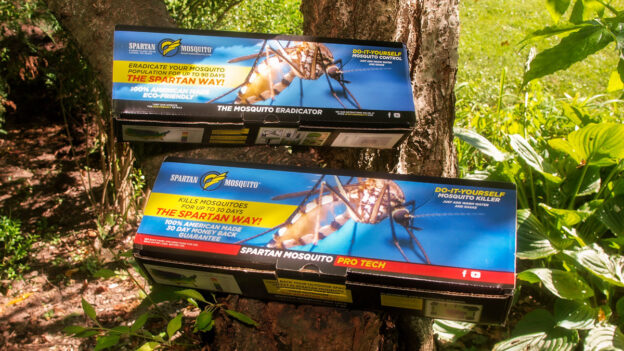
Boxes of Spartan Mosquito Eradicators and Spartan Mosquito Pro Techs.

Spartan Mosquito settles class-action fraud suit for $3.6 million

This week, details of the settlement in the class-action lawsuit against Spartan Mosquito (Hattiesburg, Mississippi) were revealed. The lawsuit accused Spartan Mosquito of falsely advertising that the Spartan Mosquito Eradicator (yeast, sugar, table salt) and the Spartan Mosquito Pro Tech (yeast, sugar, boric acid) attract and kill mosquitoes, and that the company did so with the full knowledge that such claims were false.

Components of the settlement

  1. Spartan Mosquito will pay approximately $3,600,000.
  2. People who purchased either of the products between December 21, 2016 and August 2, 2023 can submit claims for compensation.
  3. Spartan Mosquito will no longer make or sell the Spartan Mosquito Eradicator.
  4. Spartan Mosquito will conduct efficacy tests on the Spartan Mosquito Pro Tech for 18 months, and if testing reveals lack of efficacy the company will change the formulation or cease sales.

Here is the full text of the two non-monetary provisions (bolding mine):

  1. 12.1. As of the Final Effective Date, Defendant will no longer manufacture or sell the Spartan Mosquito Eradicator. However, the Parties acknowledge that some third-party wholesalers, distributors, or retailers outside of Defendant’s control who previously purchased the Spartan Mosquito Eradicator for resale may continue to list the product for sale, and such sales will not be attributed to Defendant for the purposes of this Section 12.1. This Court shall have continuing jurisdiction if a dispute arises between Class Counsel and Defendant concerning Section 12.1.”
  2. 12.2. During the 18-month period following the Final Effective Date, to the extent not already performed, Defendant will conduct research regarding the efficacy of the Spartan Mosquito Pro Tech. Following the 18-month period, to the extent such testing shows a lack of efficacy for the Spartan Mosquito Pro Tech, Defendant will either update the formulation or cease sales of the Spartan Mosquito Pro Tech. This Court shall have continuing jurisdiction if a dispute arises between Class Counsel and Defendant concerning Section 12.2.”

The first part is uninteresting because the company stopped producing and selling the Spartan Mosquito Eradicator in 2020. It made this decision presumably because approximately 18 states had banned sales and more are likely to do that in the future. More importantly, the company decided to advertise that the new version (Pro Tech) needed to replaced every 30 days (instead of every 90 days) and that twice the number of tubes were needed per acre. I.e., the new tube would generate much more profit.

The second part is concerning. Although it says that if the company can’t show efficacy of the Spartan Mosquito Pro Tech by early 2025 then it must stop sales, the wording suggests that the company will be allowed to conduct its own efficacy testing. The wording also appears to allow Spartan Mosquito to assert that it already has such data. Such wording virtually guarantees that the company will be allowed to continue making and selling its tubes even though they do not attract or kill mosquitoes. I.e., examination of the company’s testing data (which I obtained via public records requests) shows that Spartan Mosquito does not have any field testing that shows (1) mosquitoes are attracted to the Pro Tech, that (2) mosquitoes drink the fluid inside the tubes, or that (3) the numbers of mosquitoes are reduced in a given area. The testing documents (which include details on experimental design) also show that Spartan Mosquito doesn’t currently employ personnel who have the requisite qualifications to run field trials or even basic laboratory experiments. Indeed, all of their tests are so poorly done that they were labelled, “not conducted in full compliance with Good Laboratory Practices” (an EPA term).

The second part also says that if efficacy cannot be shown, that Spartan Mosquito must “update the formulation.” Under this scenario, the company would need to submit an entirely new registration application to the EPA, complete with new efficacy tests. I think the EPA would be extremely unlikely to ever grant another registration to this company. I suspect the company knows this, which will motivate them to claim, despite evidence to the contrary, that the current formulation has efficacy.

Both parts contain an interesting phrase, however: “This Court shall have continuing jurisdiction if a dispute arises between Class Counsel and Defendant.” Optimistically, I take that to mean that if Spartan Mosquito sells the Pro Tech without ever sharing convincing evidence of efficacy, the presiding judge, the Honorable Katherine Levine, may intervene in whatever way she sees fit. Attorneys on both sides signed off on that binding language so it will be very interesting to see how this goes down. I will make sure she’s kept up to date.

Why did Spartan Mosquito settle?

Aside from avoiding paying the full $5 million asked for in the original charge, Spartan Mosquito was likely concerned, or should have been, that the evidence that would be revealed during a trial would be used by attorneys at the Environmental Protection Agency, which has apparently been collecting information on the company. In particular, the EPA can ask for prison terms for any individuals who knowingly mislead the government about pesticide efficacy. The co-founders, Jeremy Hirsch and Chris Bonner, could have been advised by their attorneys that they had some exposure in that regard. For example, if both of them have known for years that the tubes don’t produce enough carbon dioxide to attract mosquitoes, then asserting to federal regulators that the tubes attract mosquitoes would be a knowingly false claim. And that appears to be what they did.

More information

Please see my previous posts about Spartan Mosquito, or email me.

Consider donating to my GoFundme campaign

My legal battle with Spartan Mosquito is over but I’m still $36,000 in the hole. Donations and/or shares would be hugely appreciated: https://gofund.me/fe59f642.

Mosquito tips for homeowners

Over the weekend I got to answer mosquito questions at the annual Native Plant Sale sponsored by the Rose Valley Environmental Advisory Council. I brought props: two types of gravid autocidal traps (Biogents, Catchmaster) for luring and killing pregnant mosquitoes, a mint plant (for reminding folks that plants do not repel mosquitoes), Mosquito Dunks (for killing larvae in bird baths, e.g.), Mosquito Bits (to kill larvae even faster), permethrin clothing spray, DEET repellent, picaridin repellent, oil of lemon eucalyptus (para-menthane-3,8-diol) repellent, and, finally, boxes of Spartan Mosquito tubes as examples of scams to avoid. I also displayed several pages of mosquito tips from my blog, each with scannable QR codes.

If you want more information, here are my mosquito posts:

  1. Tips for killing and repelling mosquitoes
  2. Eliminate mosquitoes by eliminating stagnant water
  3. Effects of mosquito sprays on humans, pets, and wildlife
  4. 15 mosquito-control strategies and devices that don’t work
  5. Yeast-based mosquito control devices
  6. Indoor mosquito trap using a plastic soda bottle

Please feel free to share any of the above on Facebook. It would be great to get more people aware of the need to eliminate stagnant water. And please get the word out to your neighbors that fumigating yards with chemicals will kill more than just mosquitoes.

And just in case anyone is wondering, I am not getting any kickbacks from the manufacturers I recommend. And, yes, I am wearing a Purrington’s Cat Lounge t-shirt.

Some insects I found inside dried Turkish figs from Trader Joe’s

During an online wasp identification course I participated in several weeks ago, there was a fun discussion about whether commercially-produced figs contained fig wasps (Agaonidae, in the Chalcidoidea). Opinions varied, plus some asserted, as do many internet pages, that even if wasps were once inside the figs that ficain (an enzyme) would completely dissolve their bodies. So I purchased a bag of figs and had a look. I found a wasp in the very first fig, in approximately two seconds. And I found much more than that. Photographic details below.

Photograph of a fig being examined under a dissecting microscope

The wasp was small, like most wasps, so here’s a photograph with an arrow pointing out the position. It was wedged in between some of the involucral bracts just inside the ostiole (opening) of the syconium (the “fruit” that is actually an inverted infructescence). I’m not sure whether the wasp was going in or going out.

Photograph of an opened fig with an arrow showing the location of a dead wasp

Here’s a close-up of the wasp, or at least what’s left of it. The shape and positions of the legs seem to be a good match for Blastophaga psenes, the sole pollinator (I think) of Ficus carica. In particular, the middle femorae are much smaller than the front and hind femorae. And the head is wedge-shaped, another attribute of the family.

The species exists in Turkey and in many other places where figs are grown. E.g., it’s in California because it was deliberately introduced there in 1899. This means, of course, that figs grown in California may have wasps in them, too. I’m just the messenger.

Photograph of a dead fig wasp inside a fig

Below is the dorsal side showing (I think) the quadrate scutellum, another family characteristic. The antennae appear to be folded medially into a streamlined position that I assume is useful for navigating the bract maze. I have more pics on iNaturalist.

Photograph showing the dorsal side of a fig wasp

In a different fig, I found two more wasps of a second species. I don’t have a high confidence in my identification but I think they might be Habrobracon hebetor (Braconidae). This species is a regular inside stored figs because it parasitizes caterpillars that eat dried fruit. This wasp, I’m guessing, oviposited into caterpillar-infested figs after they arrived in California (where Trader Joe’s presumably has a warehouse). I don’t know whether the species occurs in Turkey. I have more pics on iNaturalist.

Photograph of tiny dead wasp next to orange frass

Below is a caterpillar in the same fig as the wasp above. Caterpillars were present in several other figs, too, and they were often accompanied by fungal growth. I don’t have an identification guess but if you recognize it please visit my iNaturalist observation.

Photograph of a dead, shriveled caterpillar

I’m not sure whether it’s a different species, but the cocoons below seem to be lepidopterans, too. Here is the iNaturalist link.

Photograph of two caterpillars inside silk cocoons

Here’s the final type of lepidopteran I found, a pupa. Again, I’m not sure what family it might be in. Here’s the iNaturalist listing. The photograph also shows a good quantity of frass, something I found in many of the figs even when I couldn’t locate a caterpillar. The dark color on the left is from fungal growth.

Photograph of a moth pupa next to fig achenes and black frass

The final insect that turned up is a beetle, which I think might be Carpophilus hemipterus, a species native to Asia but now pretty much everywhere. It’s definitely in California. Here’s my iNaturalist observation if you’d like to weigh in on the identification.

Photograph of black and yellow beetle inside a fig

I’d like to point out that insects are extremely common in stored food so the above doesn’t come as a huge surprise to me. And the figs were clearly labelled “organic”, a term that to me greatly boosts the likelihood that there are organisms inside. Unless you have an allergy to chitin or some other insect component (it happens), inadvertent consumption of arthropods isn’t going to harm you.

What did surprise me was how common fungal growth was in this bag of figs. Below is a photograph of what the fungus usually looked like. Not sure what it is (Aspergillus niger?). Some of them were mildly lit up by 356nm UV light, by the way. I think that’s a bad sign.

Photograph of fungal growth next to achenes inside a fig

But a little research turned up what might be the obvious explanation: wasps that manage to crawl into figs via ostiole can be covered with fungal spores in the same way that they are often covered with pollen (that’s the whole point of fig wasps). Indeed, some fig farmers regularly spray anti-fungals onto figs before the females emerge to prevent them from picking up spores and transmitting them to the next fig. Without such treatment (i.e., at organic farms), it’s not rare to find smuts (Aspergillus spp.), endosepsis (Fusarium spp.), and Alternaria rot. Aside from potentially changing the taste of dried figs, I guess there’s a chance you could get a dose of aflatoxins. There’s research on the issue, even articles on the risk from dried Turkish figs.

When fresh figs start to arrive from California I might sacrifice some for a similar investigation. I’d love to find a fig wasp in better condition so I can photograph it. They are bizarre. But per several sources, many (most?) of the figs in California are produced by plants that don’t need fertilization, so finding one might be a challenge. Still, because fig wasps are naturalized in California, I wouldn’t be surprised if they’d still show up inside those varieties. As a demonstration that wasps are alive and well in California, you can order wasp-laden figs online at FigBid.com (e.g., this listing). Note that you don’t order such figs for eating. They are for placing near your crop of figs so that they can get pollinated. Some of the most delicious varieties of figs need such pollination. And some of the varieties that don’t need figs still develop much tastier fruit when they are pollinated by wasps.

Next on my to-do list is to find the coffee berry borer (Hypothenemus hampei).

Resources