Category Archives: Photography

Photographs from Crooked River National Grassland

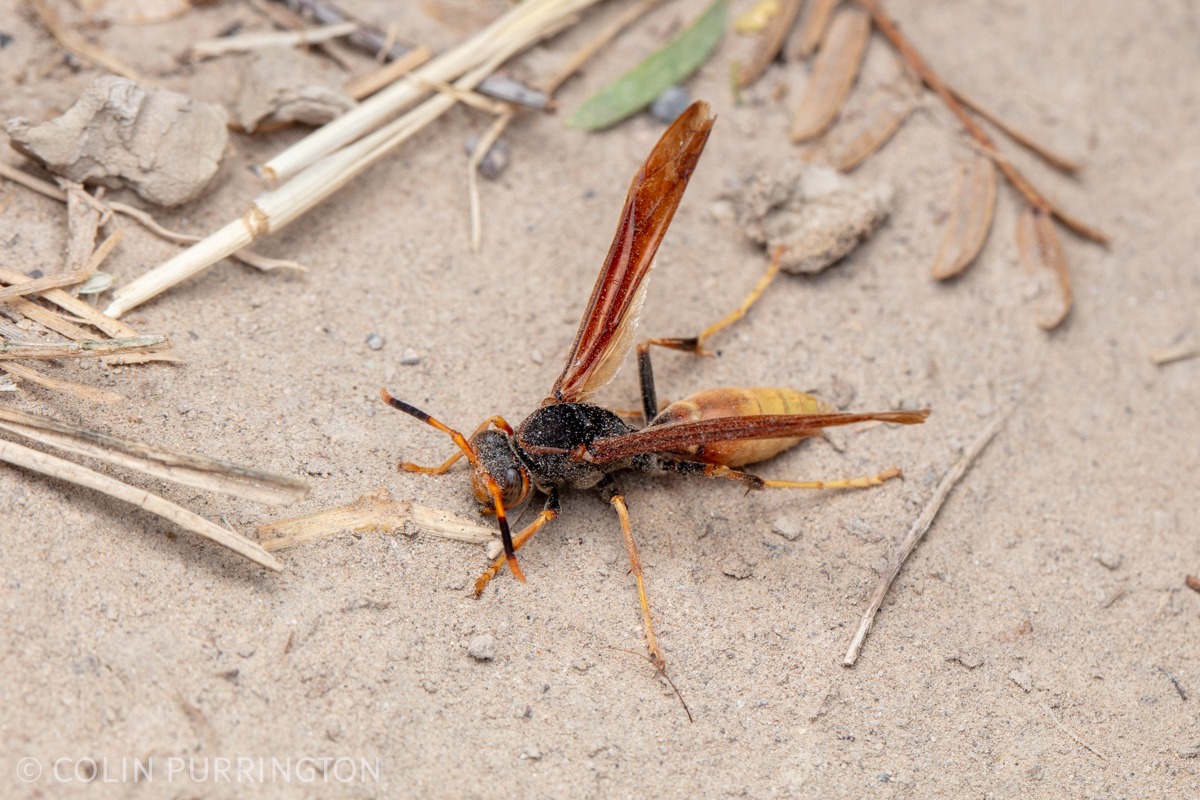
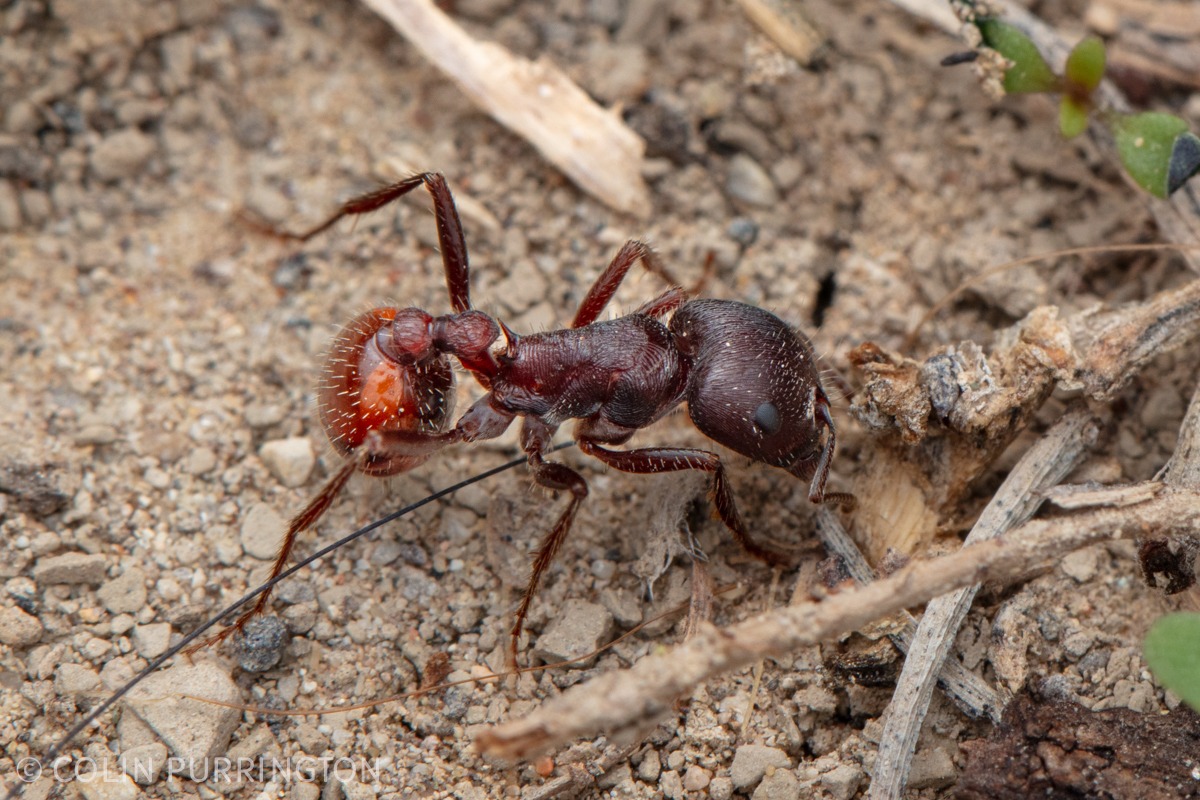
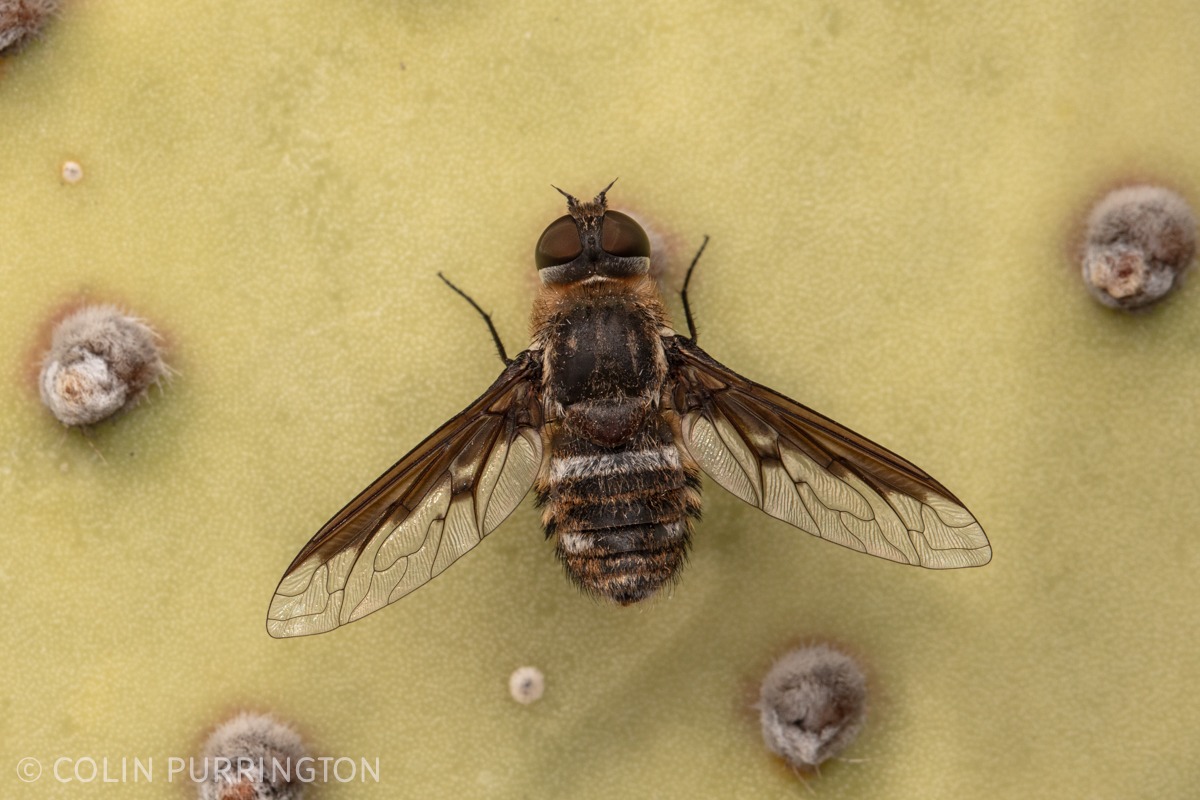
Below are some photographs I took at the Crooked River National Grassland in Madras, Oregon earlier this year.

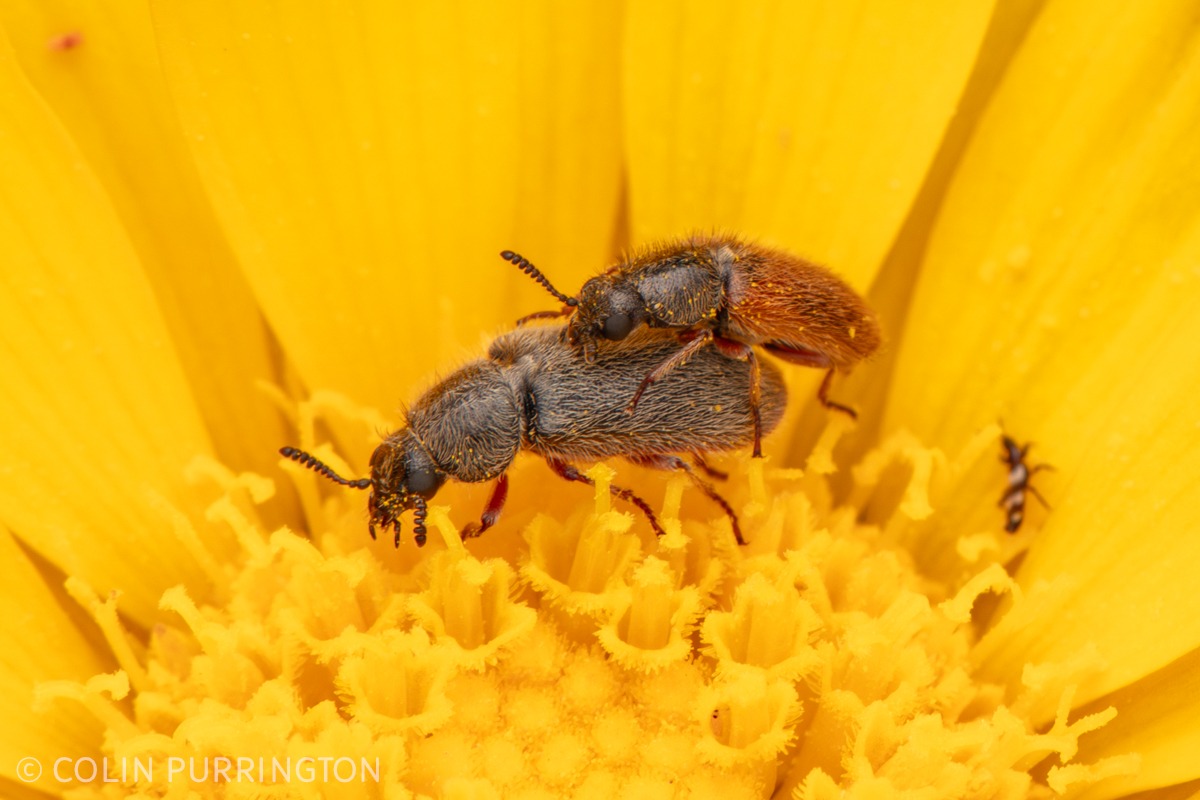
Ligated furrow bee (Halictus ligatus)

This is a male ligated furrow bee (Halictus ligatus). It was probably less than 1 cm long and very hard to photograph. Females collect pollen but I’m assuming this guy was just drinking nectar. Or perhaps just hanging out waiting for females. If you’re looking for ID tips, see page 121 of The Bees in Your Backyard and BugGuide. There’s also a fantastic guide to the species on iNaturalist.

Jagged ambush bug (Phymata) eating a bee

This is some sort of Phymata species, sucking juices out of a bee. They are just masters at camouflage. For an excellent summary of how they choose flowers that match their color and how they change colors, see this post.

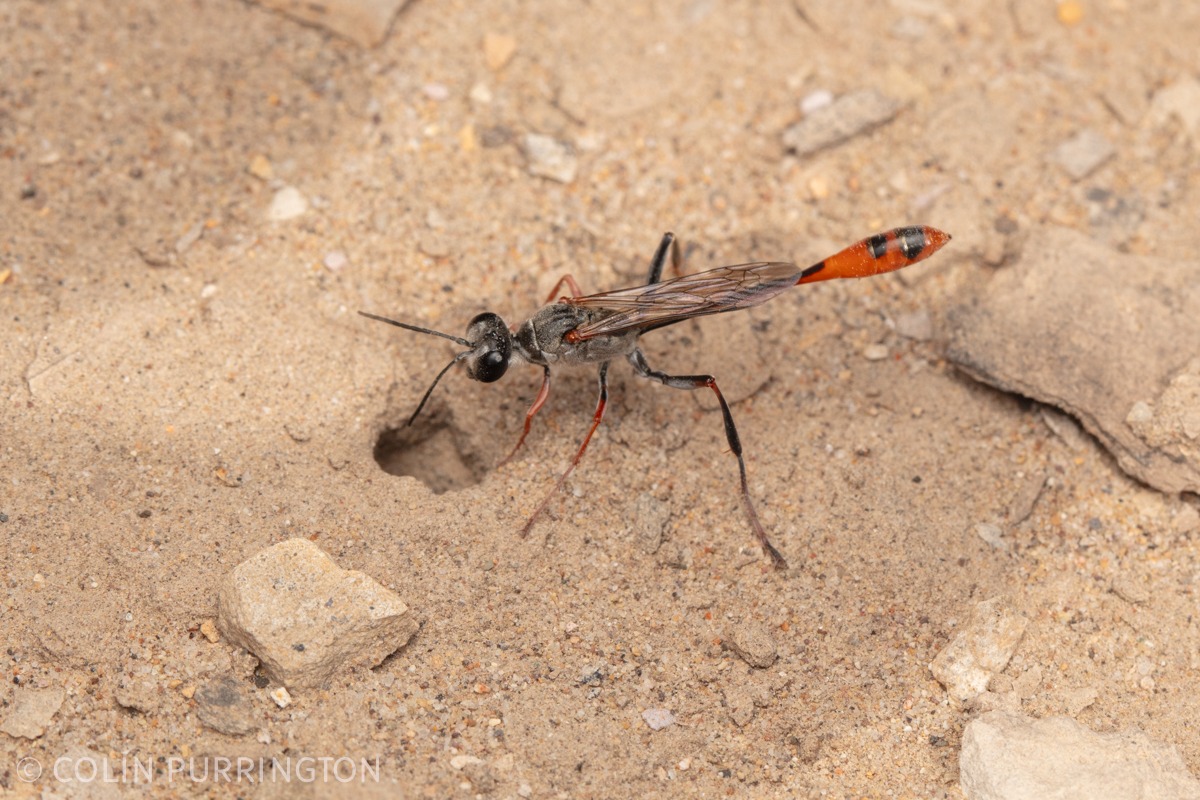
I’m not sure of species, but this wasp is in the genus Trypoloxylon. It was amazing to see them land on water. Females collect spiders (and nectar and water) while the males guard the nest, often a hollow twig. I have a similar species in my yard back in Swarthmore, Pennsylvania, and they are my favorite wasps.

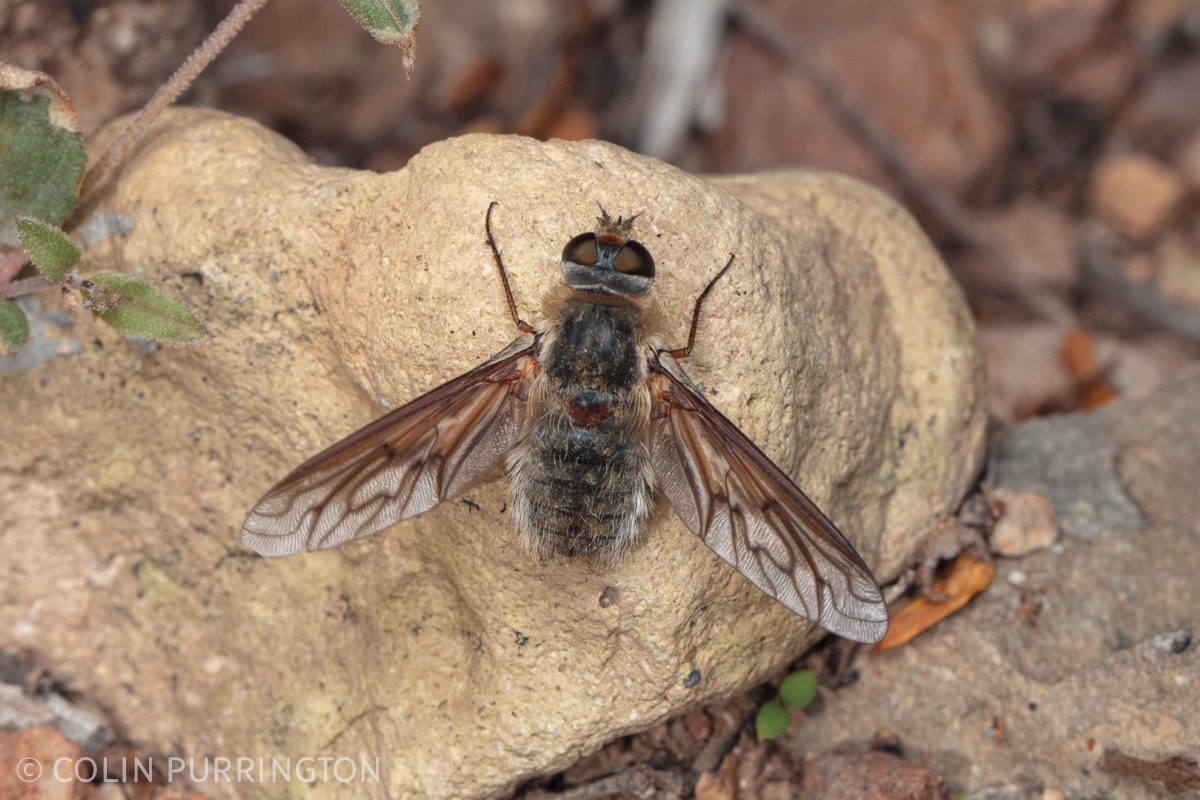
Some sort of Ptilodexia species, likely a parasite of scarab beetle larvae per literature on the genus. There were thousands of these flies in the area so there must be a huge population of scarabs there, too.

a Geron of some sort. I failed to capture a side view, so you can’t really see the humped back (of an old person) that the genus is named for. Likely parasitic on some Lepidopteran larvae.

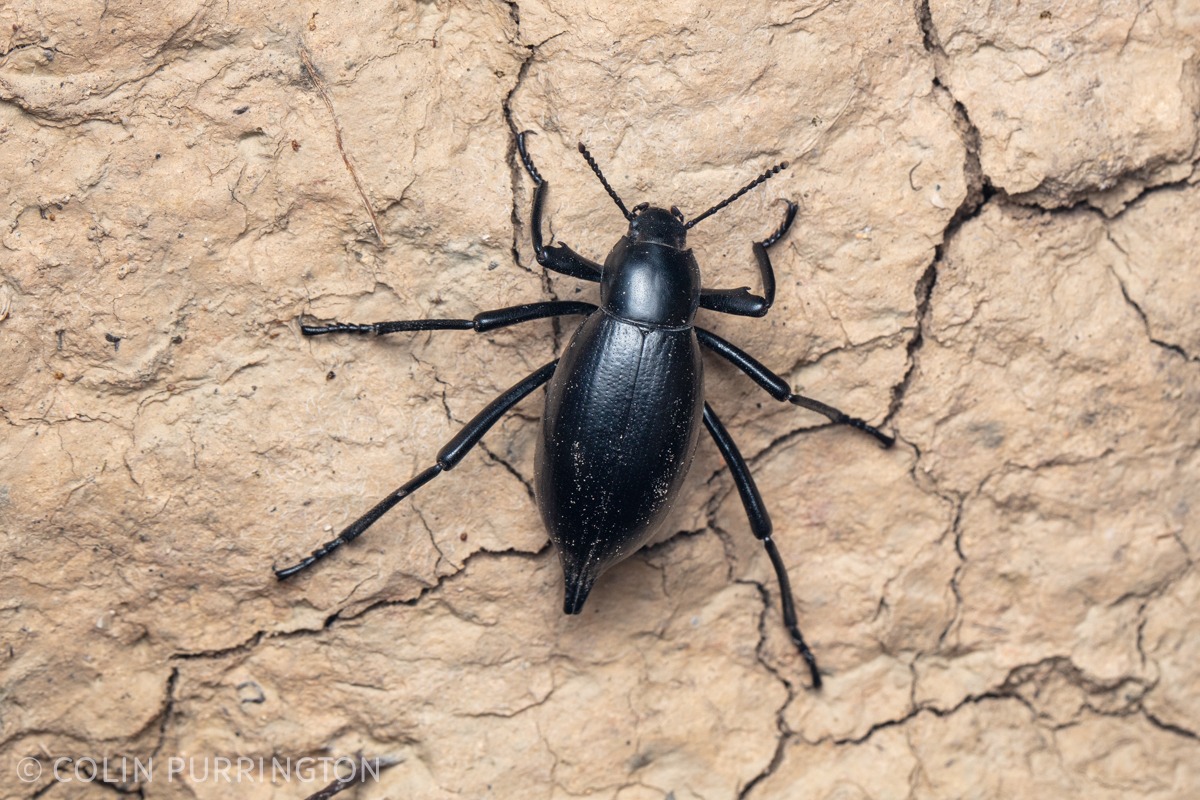
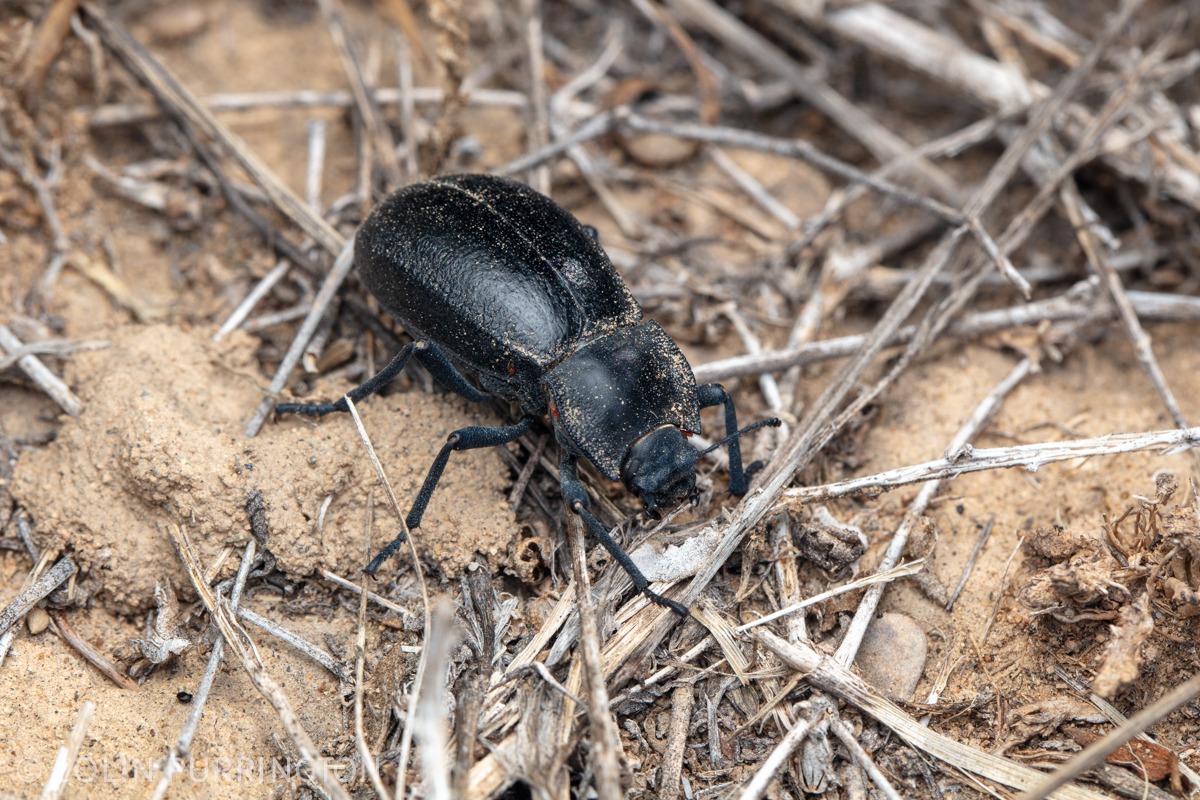
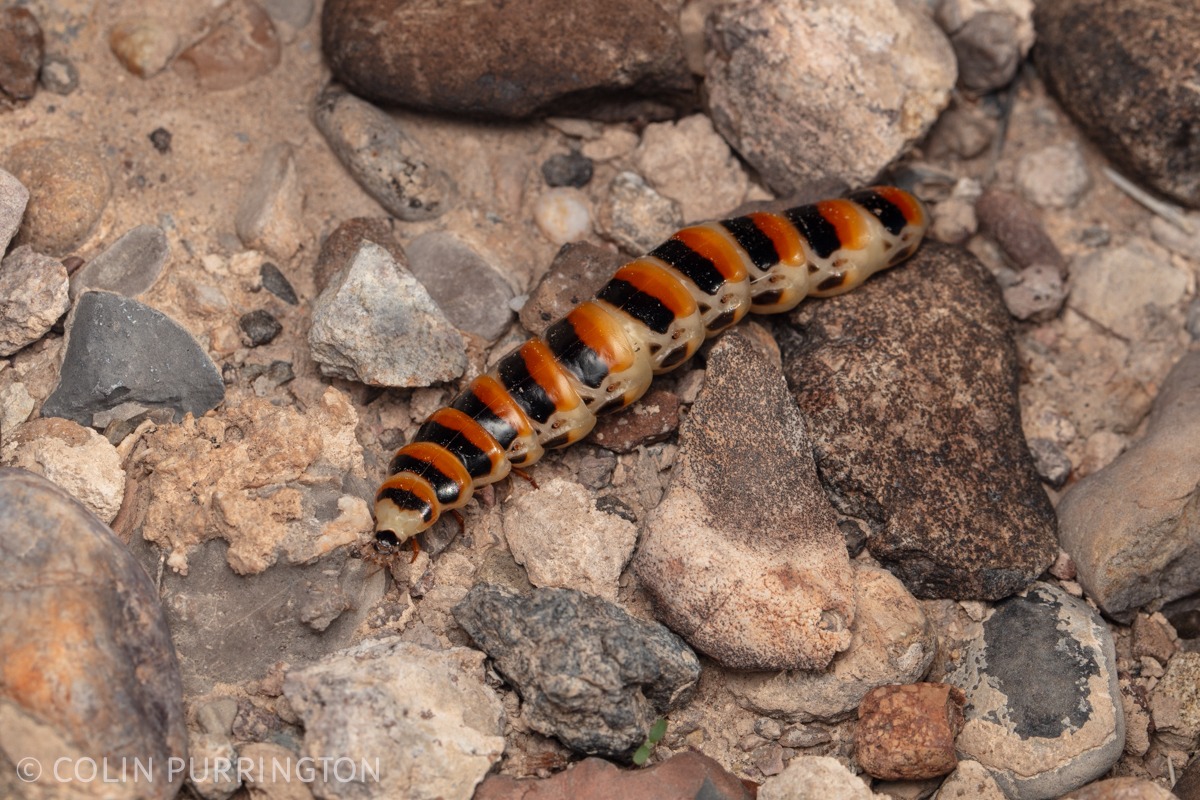
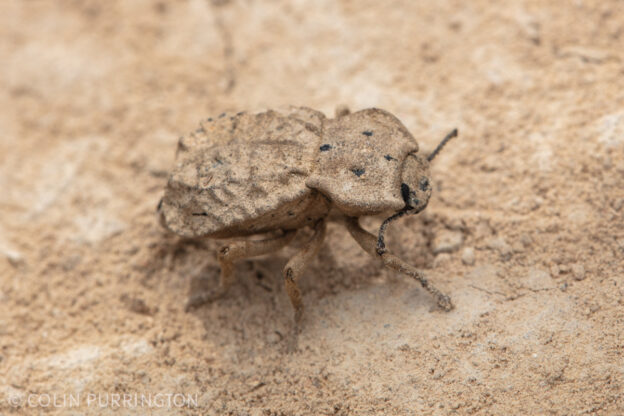
This is Eleodes obscura sulcipennis, and they were were so numerous you had to watch where you stepped. Reminiscent of the tanker bugs in Starship Troopers, especially when they go into a butt-up defensive posture. Here’s BugGuide information page if you’re curious. By the way, the common name, “circus beetle”, refers to Eleodes hirtipennis.

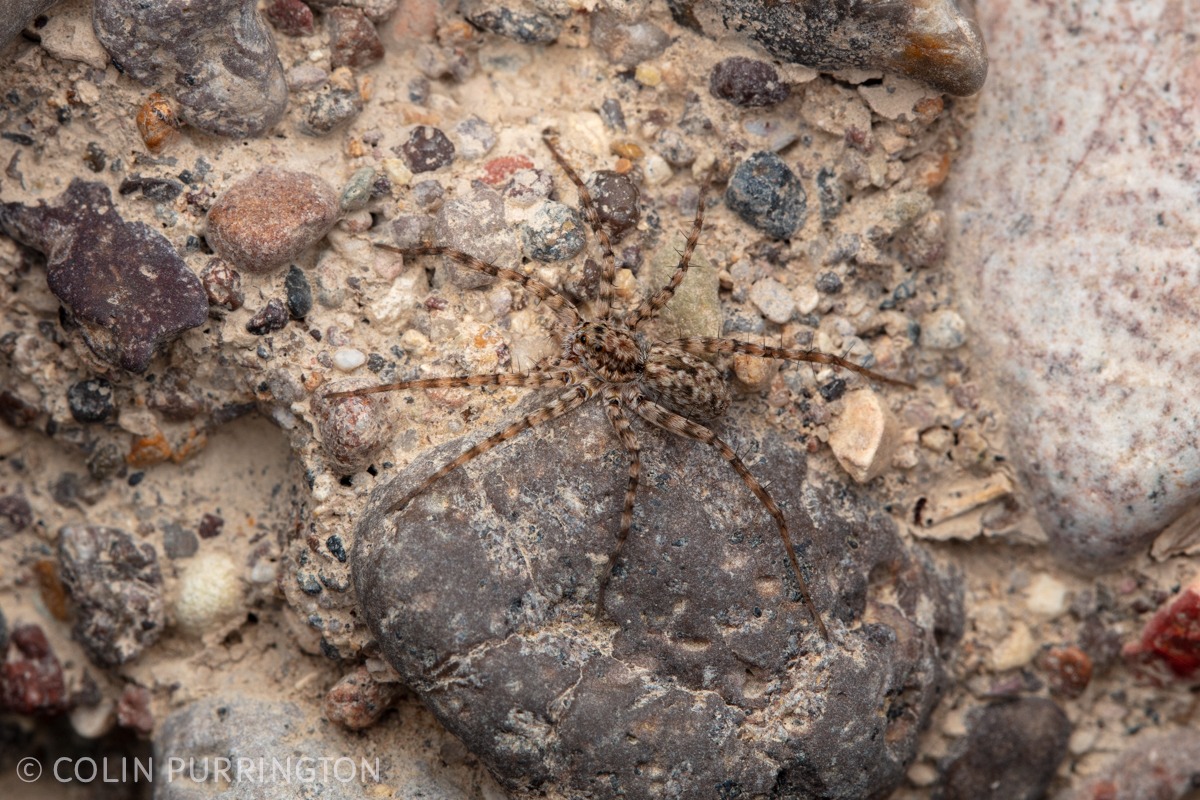
I’m guessing, but I think this might be a Metepeira. It was maybe 4 mm and the wind was blowing its web back and forth, so it was super hard to get any closer views.

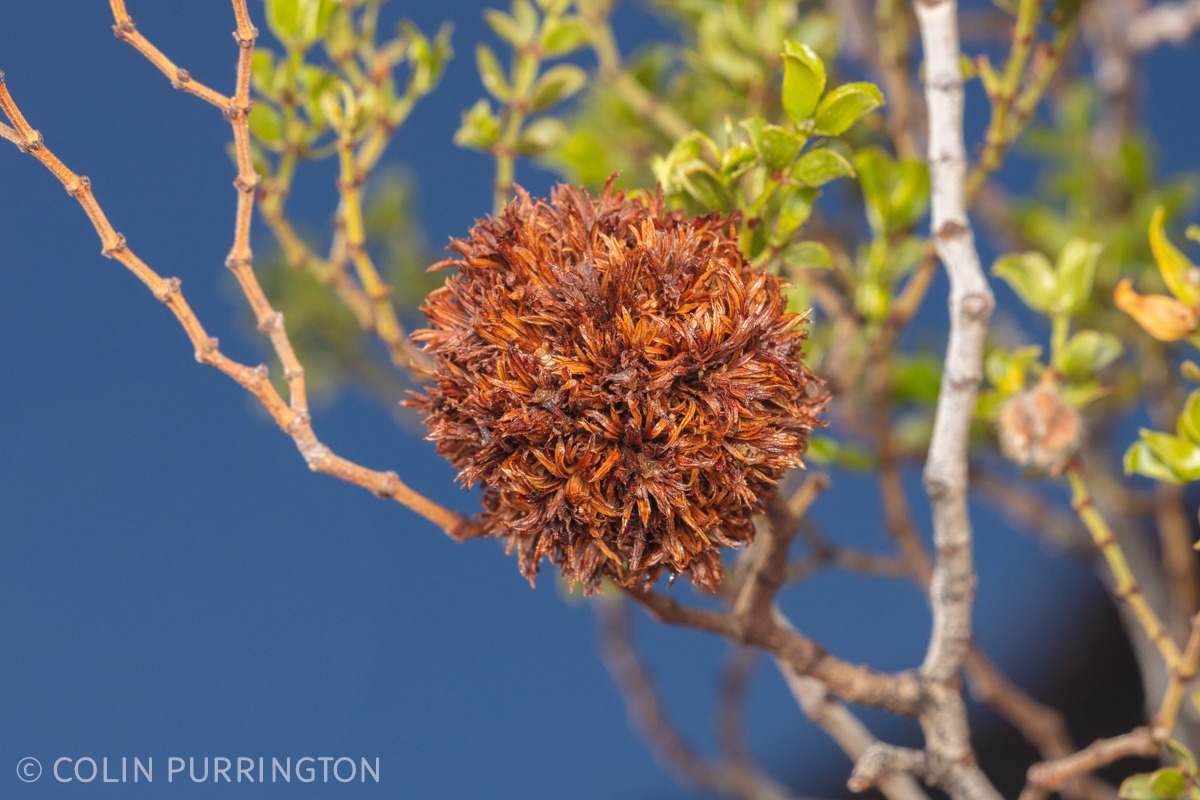
This juniper gall is the creation of an undescribed gall midge in the genus Walshomyia. Russo’s book, Field Guide to Plant Galls of California and Other Western States, refers to it is as “species B.” But per research by my dad and sister, the galls are often filled with a moth:

Purrington, F.F., and T.M. Purrington. 1995. Hienrichiessa sanpetella Neunzig (Lepidoptera: Pyralidae) is an inquiline in juniper midge galls (Diptera: Ceciomyiidae). Proceedings of Entomological Society 97:227.

This is the same species but shows the actual juniper cones. I.e., even though the gall looks like a gymnosperm cone, it’s not.

This is a juniper urn gall midge (Walshomyia juniperina). The tip splits open when the adult is ready to eclose. At that stage the urns resemble pods in the Alien franchise. I know, two references to science fiction movies in one post. It’s my blog and I can do what I want.

Sadly, I have no idea what makes this gall. Perhaps Rhopalomyia sp., but that’s just a guess given that so many species in the genus make galls on sagebrush. Here’s my iNaturalist observation in case you can help me out.

More pics from Crooked River National Grassland on my SmugMug account.

Spartan Mosquito Pro Tech deployed in a yard

Does the Spartan Mosquito Pro Tech attract mosquitoes?

This post evaluates the claim on the label, “mosquitoes will gather near them”. Per the company, it is the first step in how the device kills mosquitoes. I.e., the device needs to attract mosquitoes if it is going to work.

mosquitoes will gather

Evaluating the claim

I used a security camera to record activity around the cap area. Here’s a photograph of how I arranged everything:

Spartan Mosquito Pro Tech with security camera

Below is a 15-second time-lapse to show that small insects such as ants were easily visible, even at night. I think they are Prenolepis imparis, which are 3-4 mm long —mosquitoes are larger and thus would be detectable even in flight.

On the day that began filming (September 2nd, 2020) I counted over a dozen mosquitoes (all Aedes albopictus) landing on my arms and legs within 30 seconds. According to the instruction sheet, the device begins to work instantly, as soon as water is added, so an hour of remote, video observation should be a sufficient amount of time to evaluate the attraction claim.

Spartan Mosquito Pro Tech begins working instantly

I collected continuous footage for over a week, ending observations on September 10th. The mosquitoes were still plentiful on that day.

Results

During 183 hours of footage, I couldn’t find a single mosquito on or near the device. Here are the contents. I also posted a photograph to iNaturalist.

Conclusion

Because the Spartan Mosquito Pro Tech did not attract any mosquitoes, it therefore did not kill any mosquitoes. If my results are generalizable to other yards, the device is worthless as mechanism of mosquito control.

It is noteworthy, I think, that Spartan Mosquito has not made public a single video of mosquitoes gathering around a Pro Tech (or an Eradicator) when it is deployed outside. My guess is that the company has tried many times to get such footage but has not succeeded in attracting a mosquito. It will be interesting to know whether they will be compelled to disclose their efforts in a court of law. I.e., because the company has formally claimed to the EPA that “mosquitoes will gather” around the Pro Tech, the company would be in substantial legal jeopardy if that statement turned out to be false. If that’s what is going on then it seems likely that the EPA Enforcement Office might coordinate with the FTC as well.

Please also see my page, “Spartan Mosquito Pro Tech review“.

Footage

In case anyone might be skeptical of my results, I decided to upload all 183 hours of footage onto YouTube. I had to break it into 16 segments due to size limits on YouTube.

Wine bottle drip irrigator

Instructions for making a drip irrigator out of a wine bottle. In case you’re bored out of your mind during the Covid-19 lockdown.

Wine bottle drip irrigator

Instructions

  1. Cut the bottom off the bottle. The above shows a 750-mL bottle but a 1.5-L works, too. I own a Creator’s bottle cutter kit (it’s fantastic) but there are videos showing other techniques.
  2. Drill a hole through the cork to accommodate 1/4″ tubing.
  3. Cut a length of 1/4″ drip irrigation tubing so that it is 1/2″ longer than the cork. Put a small piece of tape over the opening of one end.
  4. Put a few drops of outdoor glue into the hole. Gorilla Glue is nice because it tends to expand, filling gaps in the cork.
  5. Insert the taped-up end of tubing into hole, pushing until untaped part is flush. Take off tape (that was there to make sure it didn’t get filled with glue).
  6. Once glue is dry, insert cork into bottle so that the 1/2″ overhang is sticking out.
  7. Attach an adjustable valve to the tubing.
  8. Attach a 12″ (or so) length of 1/4″ tubing to the valve.
  9. Attach bottle to a 36″ stake (1×1″ wood, 1/2″ bamboo, or plastic-coated metal) using wire. Make it extremely snug so that when filled with water it won’t drift down.
  10. Crumple up some tulle (or flexible screening) to form a filter plug near cork. Tamp down using a long rod. This prevents hole and valve from clogging.
  11. Attach tulle (or flexible screening) to top with two rubbers bands. One rubber band is fine but the second is backup in case sunlight degrades one. The screening keeps out debris, but also prevents mosquitoes from ovipositing when valve is closed (and bottle is filled).

Here are some closeups:

Once done, situate the irrigator in your garden so that you can easily see the drip and adjust the valve without fighting foliage or stooping. This is why the instructions above call for a short length of tubing rather than something that fully extends into the soil near the plant (where you couldn’t see it). Evaporation from a falling drop of water is probably non-zero but I think the ability to see the drip rate is worth it.

When you water drop by drop, slowly, the soil has time to fully absorb the moisture. Drip irrigated plants thus need far less water, sometimes dramatically less. Another benefit is that water isn’t constantly splashed onto leaves, something that can distribute as well as activate pathogens. Some plants simply don’t like wet leaves (don’t judge). And many plants (such as tomatoes) also benefit from being constantly hydrated, something that is hard to accomplish with normal irrigation. Finally, plants tend to take up fertilizer better when it is slowly delivered.