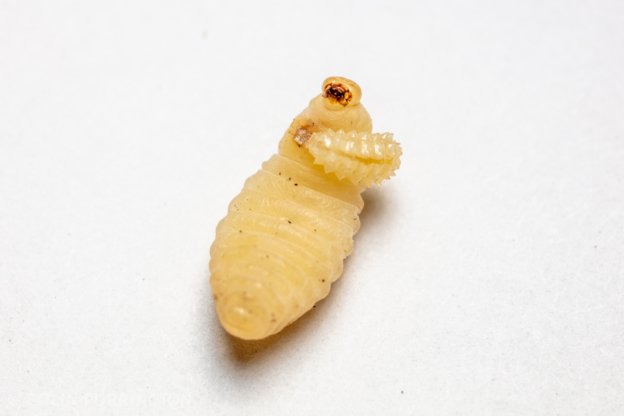
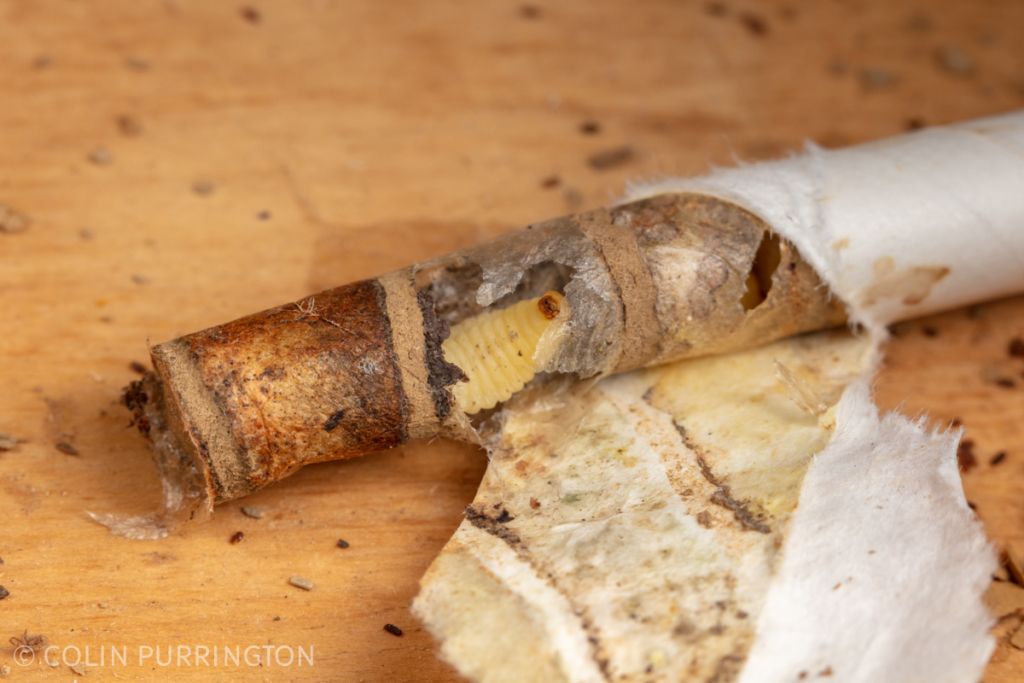
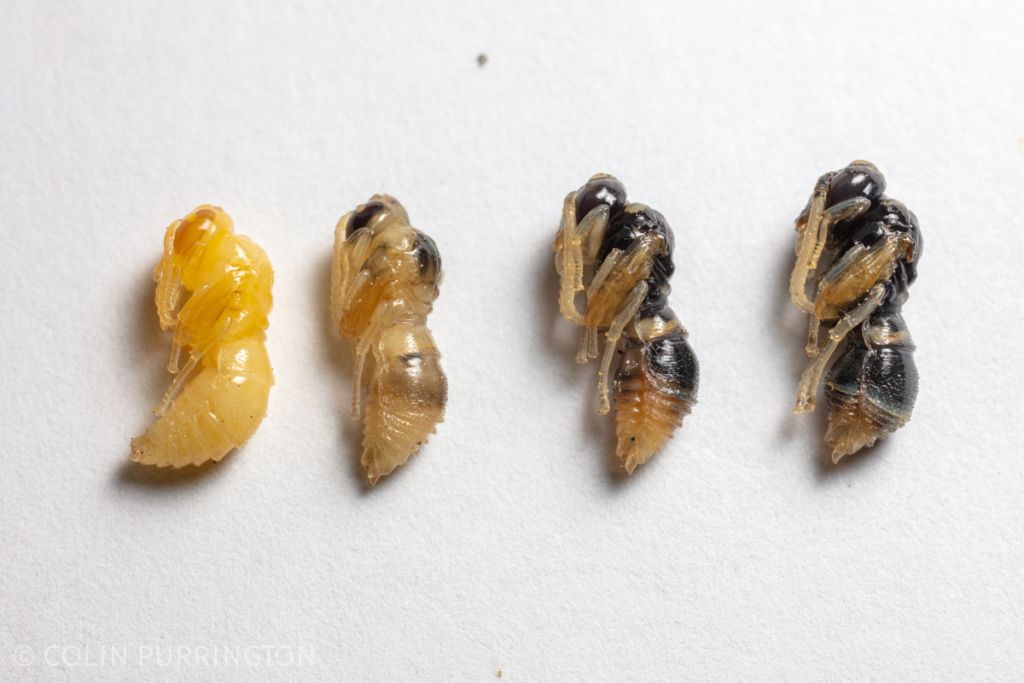
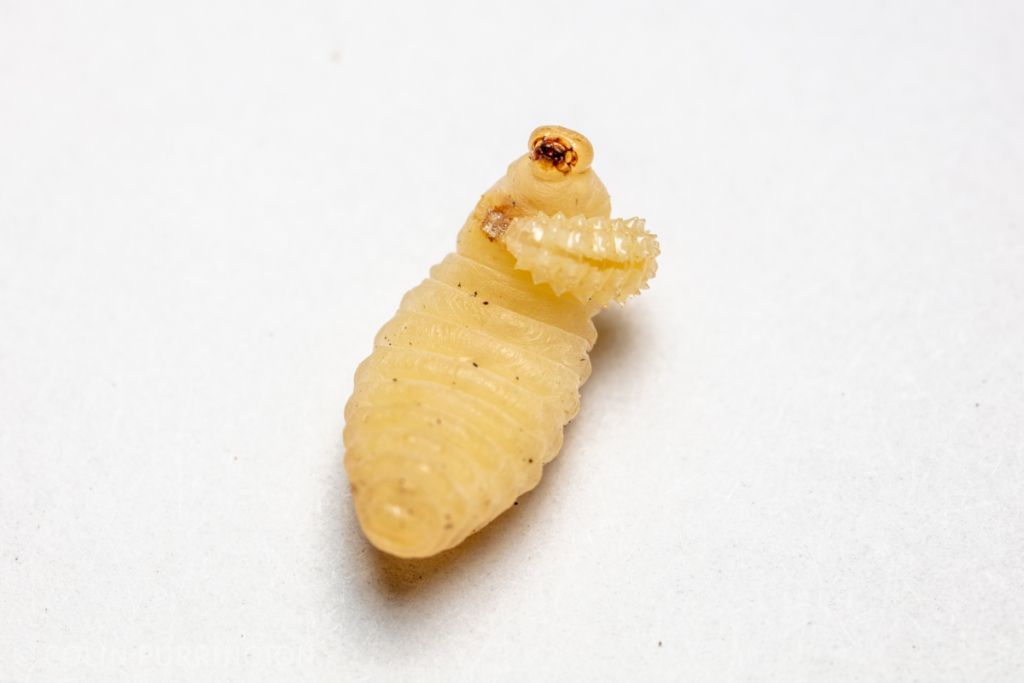
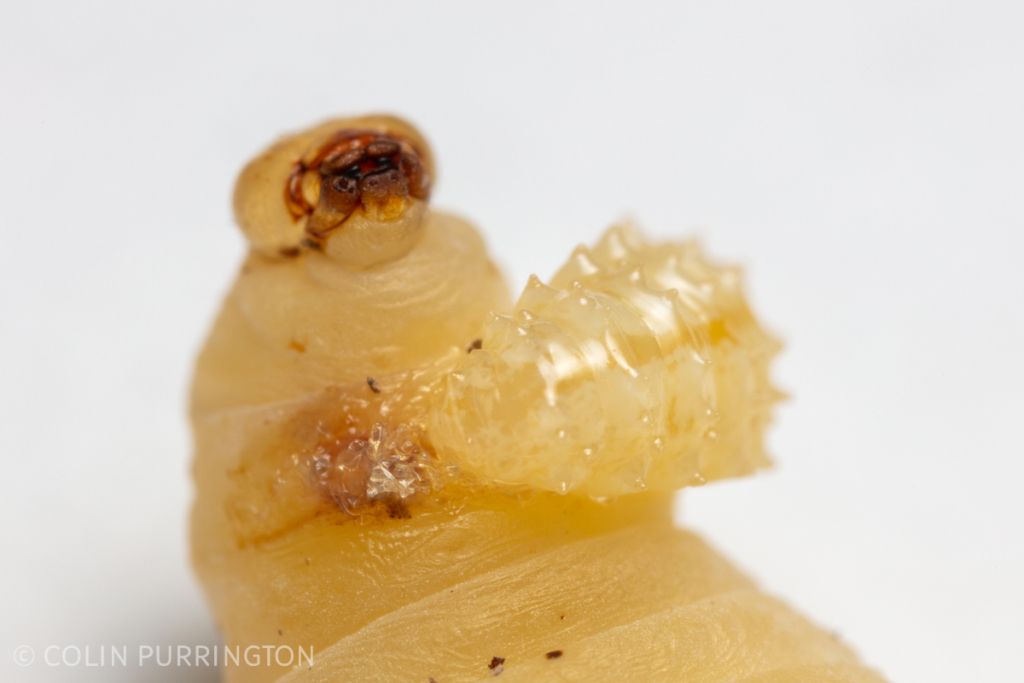
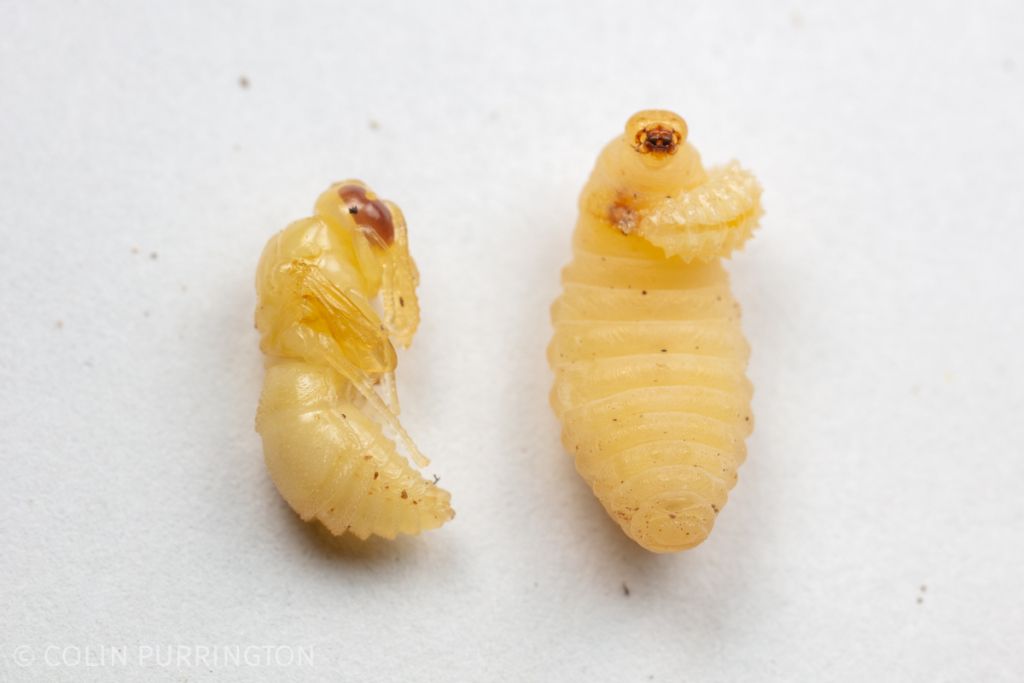
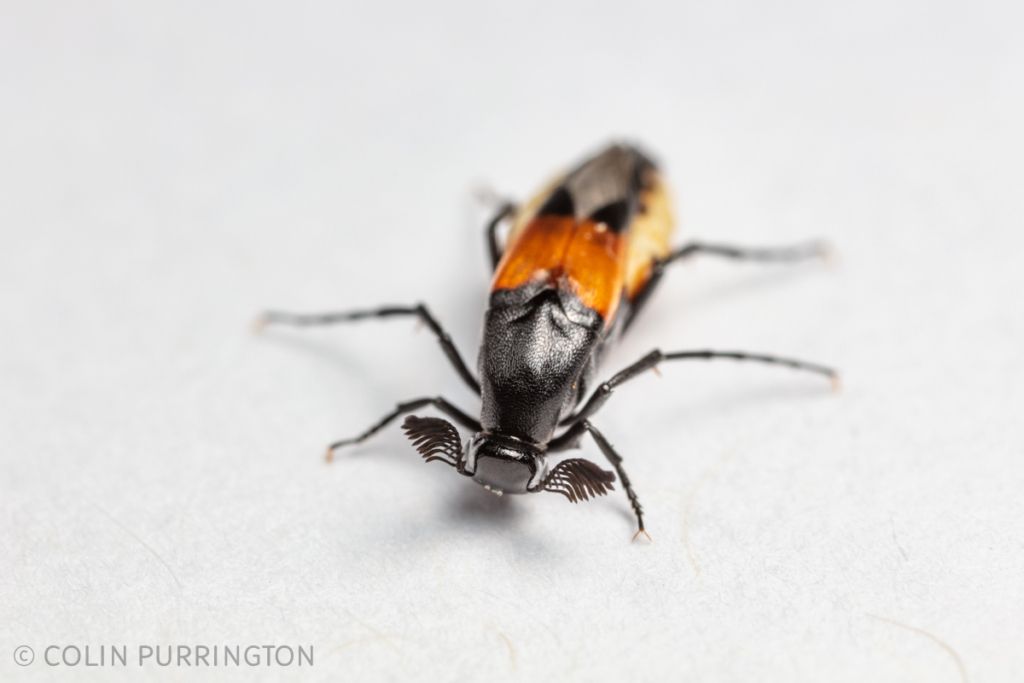
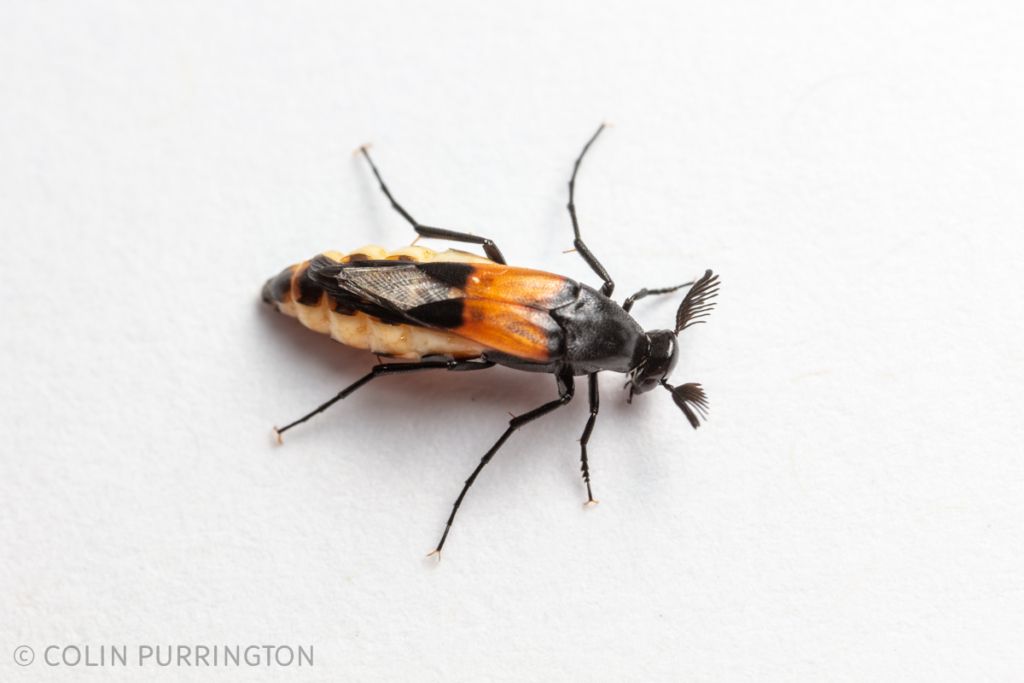
Now that my eastern redbuds (Cercis canadensis) are pumping out thousands of pods each fall, I thought I’d start photographing the wasps that show up to parasitize the redbud bruchids (Gibbobruchus mimus) developing inside the seeds.
Eupelmus pulchriceps (Eupelmidae)
I’m starting with this species because it’s the only one I’ve photographed that is currently identified beyond genus on iNaturalist. Here’s the female:
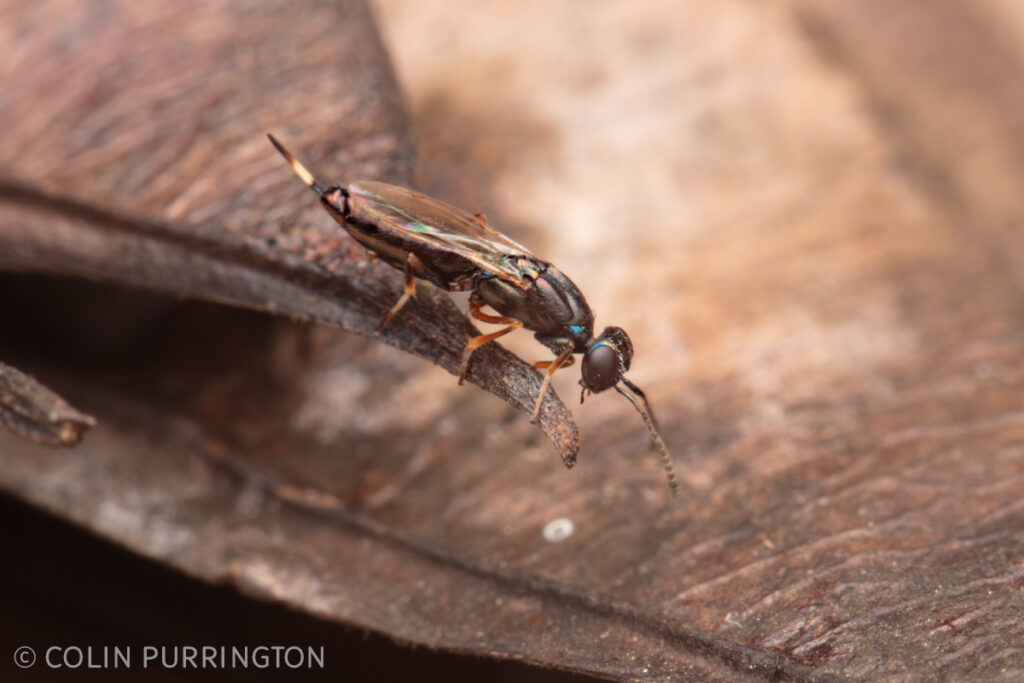
And here, possibly, is the male:
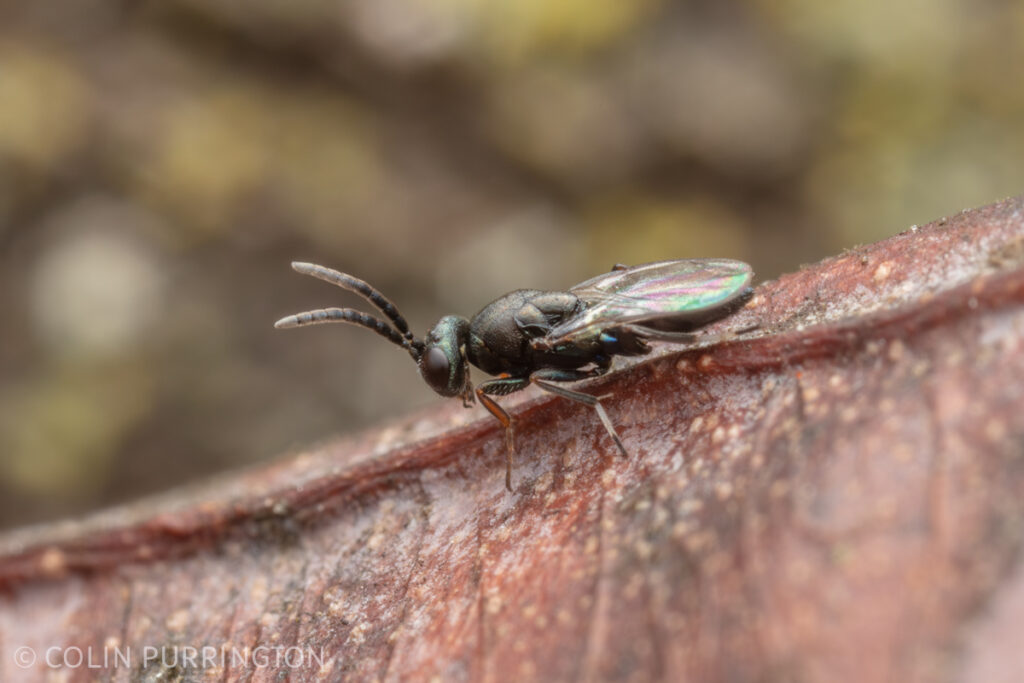
I think this a known parasitoid of the redbud bruchid but it took some digging to figure it out. Kingsolver 2004 lists E. cyaniceps as a parasite but Gibson 2001 asserts, “… all literature recording E. cyaniceps from various Bruchidae appear to be misidentifications of E. cushmani.” And per iNaturalists taxonomy page, Eupelmus cushmani is now known as Eupelmus pulchriceps. That said, BugGuide seems to have a listing for Eupelmus cushmanii but not Eupelmus pulchriceps. Additionally, the 2021 “Checklist of Chalcidoidea and Mymarommatoidea (Hymenoptera) of Canada, Alaska and Greenland” (Huber et al. 2021) contains both species, as does the “Bees and wasps of Central America Extended.” I’m a bit confused and thus I likely made a mistake somewhere.
As an aside, the species has recently been found in the Galapagos Islands (Camacho-Erazo et al. 2024, Carmargo-Martinez et al. 2024). Its host range is quite impressive.
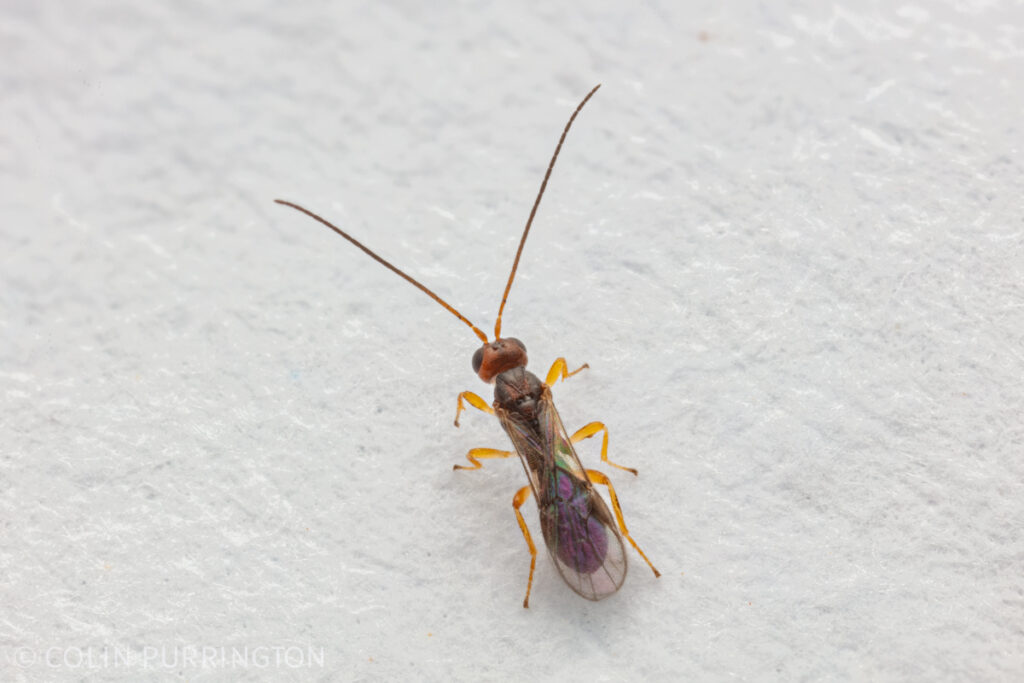
Heterospilus sp.
Kingsolver 2004 mentions that both Heterospilus bruchi and H. prosopidis can be found parasitizing redbud bruchids, so my specimens could one of those (or both), but perhaps even something else in the genus. My ID is because the wasp strongly resembles an observation on BugGuide that is identified as Heterospilus sp.
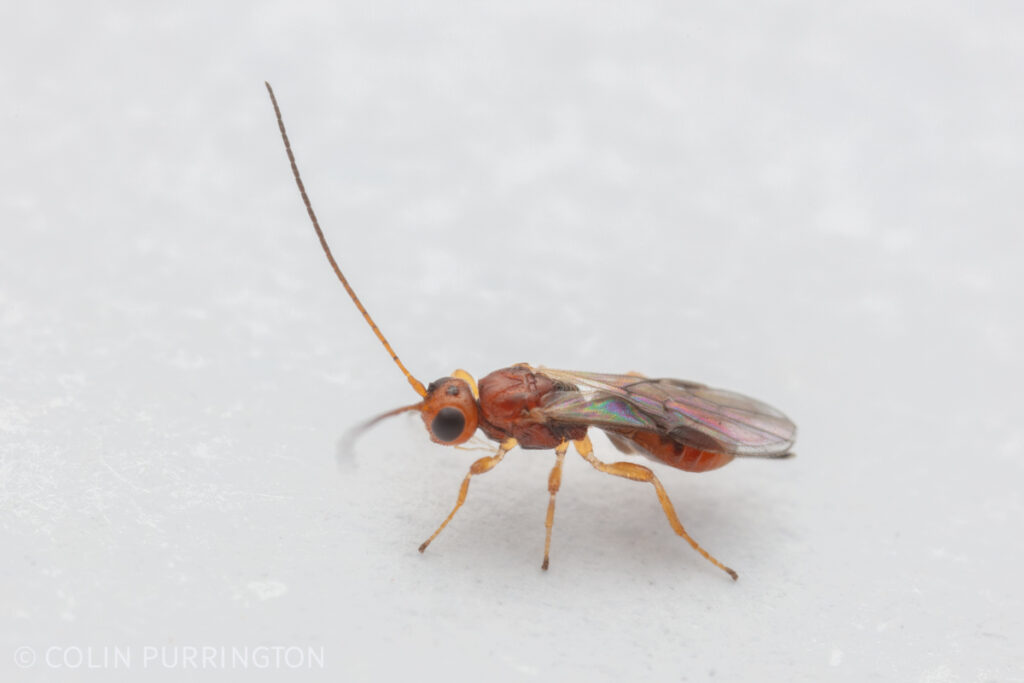
And here’s the male, which I admit assumes they are the same species. I don’t have any photographs of this species arriving at pods still attached to the tree.
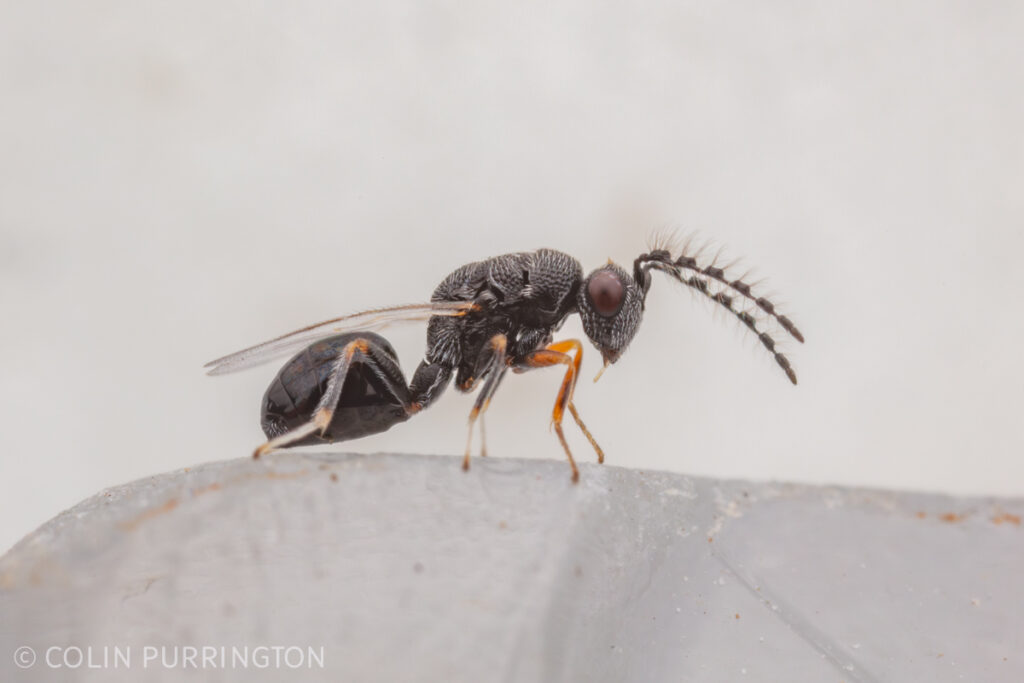
Eurotoma sp.
Klingeman and Carrington 2005 list two unidentified Eurytomidae associated with redbud trees that have bruchid infestations, so this was also not an unexpected find.
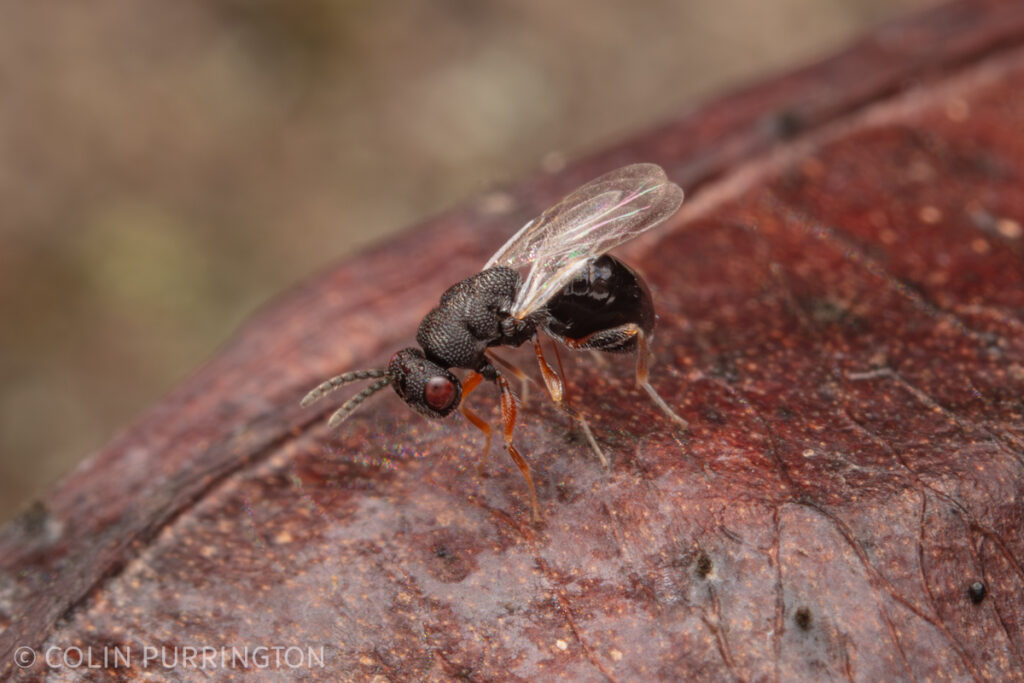
A male (below) was one of several that emerged from redbud seed pods. As with the other finds, I’m tentatively assuming that the male/female pairs are the same species.
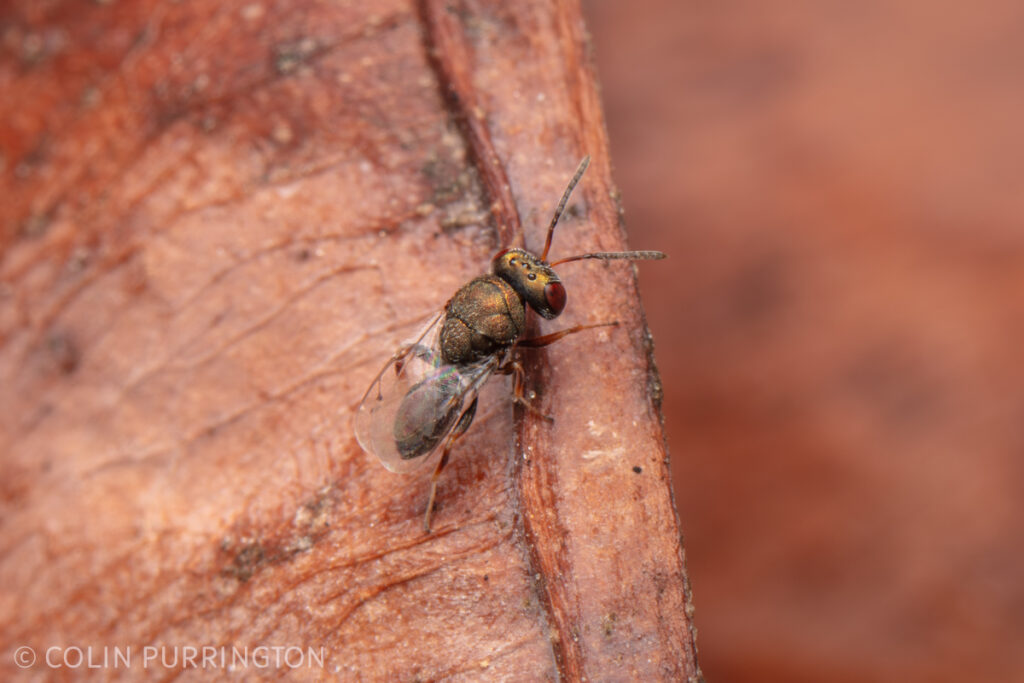
Dinarmus sp. (Pteromalidae)
Per a suggestion on iNaturalist, this might be in the genus Dinarmus. In (weak) support of that, it does appear similar to observations of that genus on BugGuide and iNaturalist. If the genus is correct, it might possibly be Dinarmus basilis, a species that Klingeman and Carrington 2005 found emerging from eastern redbud seeds in Tennessee. There’s an illustration of a female on page 646 of Sureshan and Narendran 2001, however, that doesn’t look like mine in profile, so I’m hesitant. Similarly, figures 2 and 3 of Pimentel et al. 2024 look much bluer than mine. I also think my specimens have too many antennal segments (9?). Dinarmus basilis is apparently introduced in North America and is popular in IPM. The lectotype (a male from Egypt) is in Florence under the basionym of Entedon basalis (Bouček 1974).
More wasps to come?
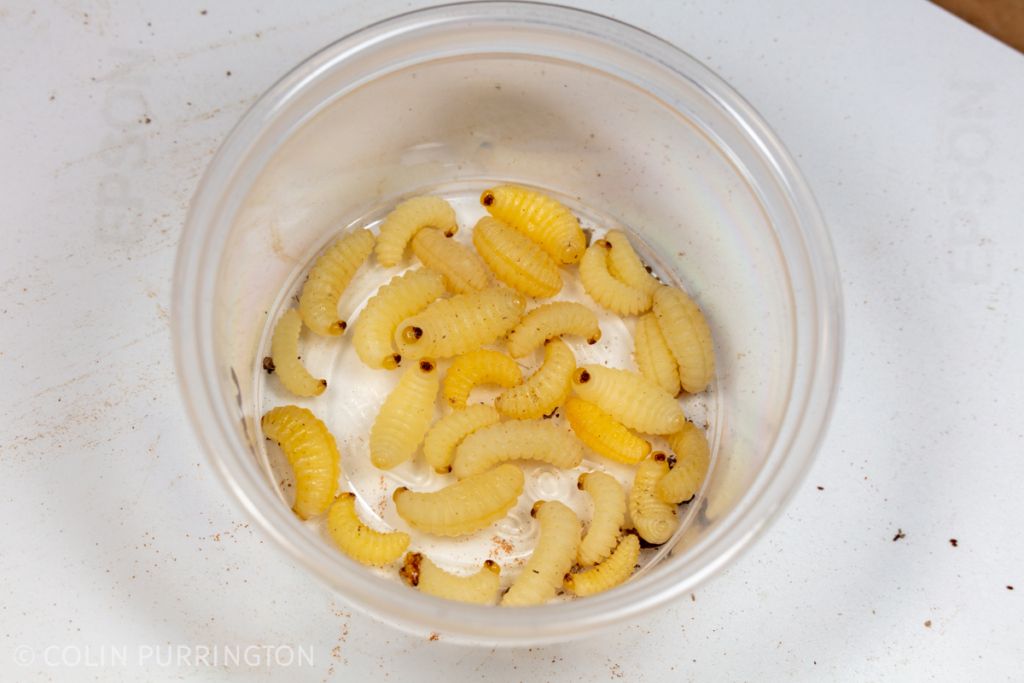
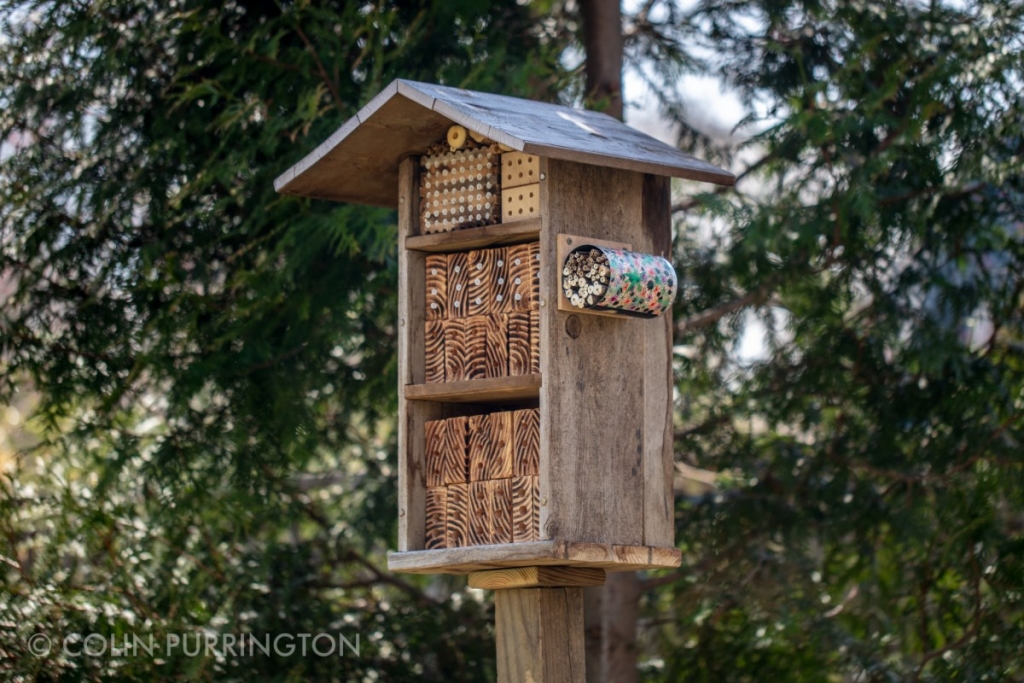
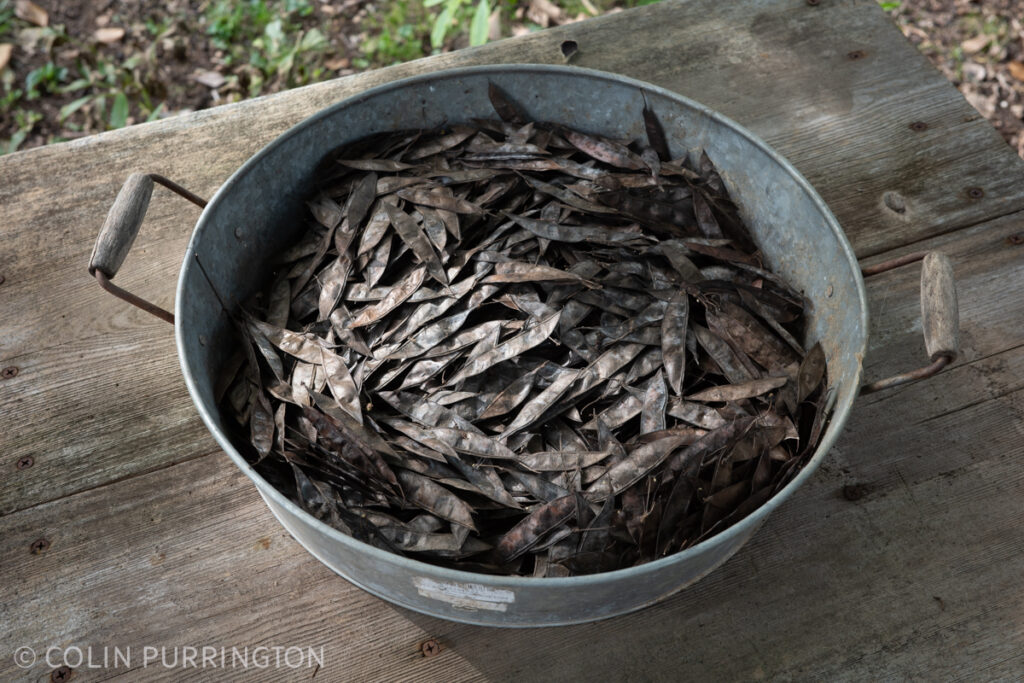
I’d be very surprised if my current gallery of wasps is complete, so I’m monitoring several thousand seed pods (below photograph) to see who else might emerge in the months to come. There are two wasps that are mentioned in the literature and that I’m hoping to find. The first is Horismenus missouriensis (Eulophidae; bright metallic green with a “longitudinal median groove on the scutellum“; see fig. 1), mentioned by Burke 1971. And Stenocorse bruchivora (Doryctinae; fig 9b, fig 7) is mentioned by Cushman 2011. Neither BugGuide nor iNaturalist has photographs of these species.
I’m especially interested in finding hyperparasites of some of the wasps mentioned above. And on my to-do list in 2026 is to collect several hundred redbud pods in the spring to see whether any of the redbud bruchid eggs harbor parasites such as fairy wasps (Mymaridae).
Redbud seed bruchid
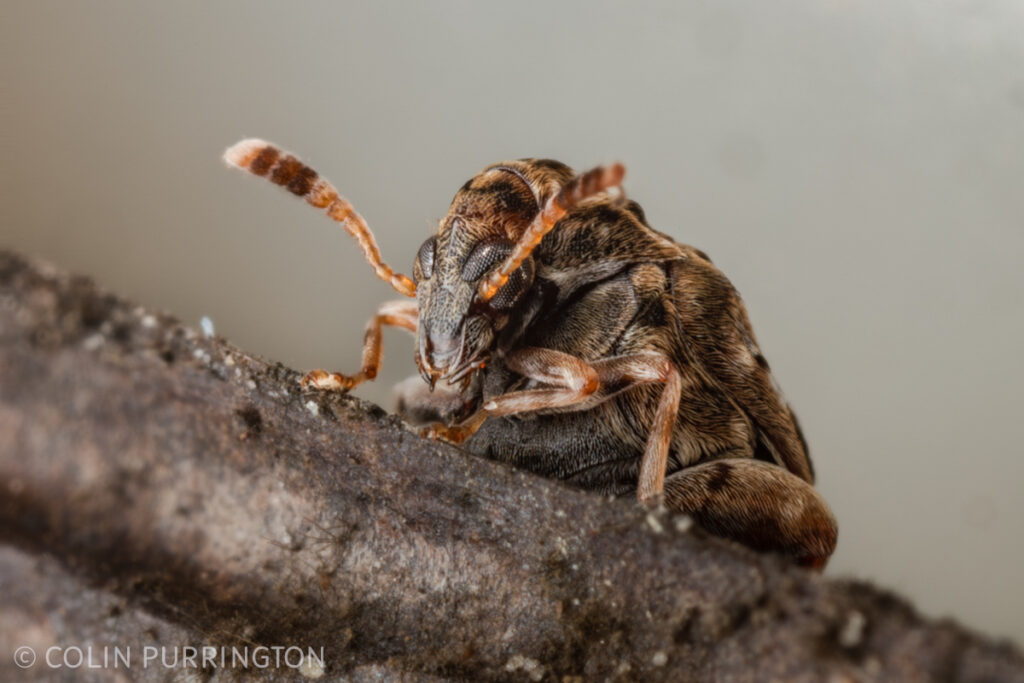
In case you want to see what the beetle looks like, here’s an adult: