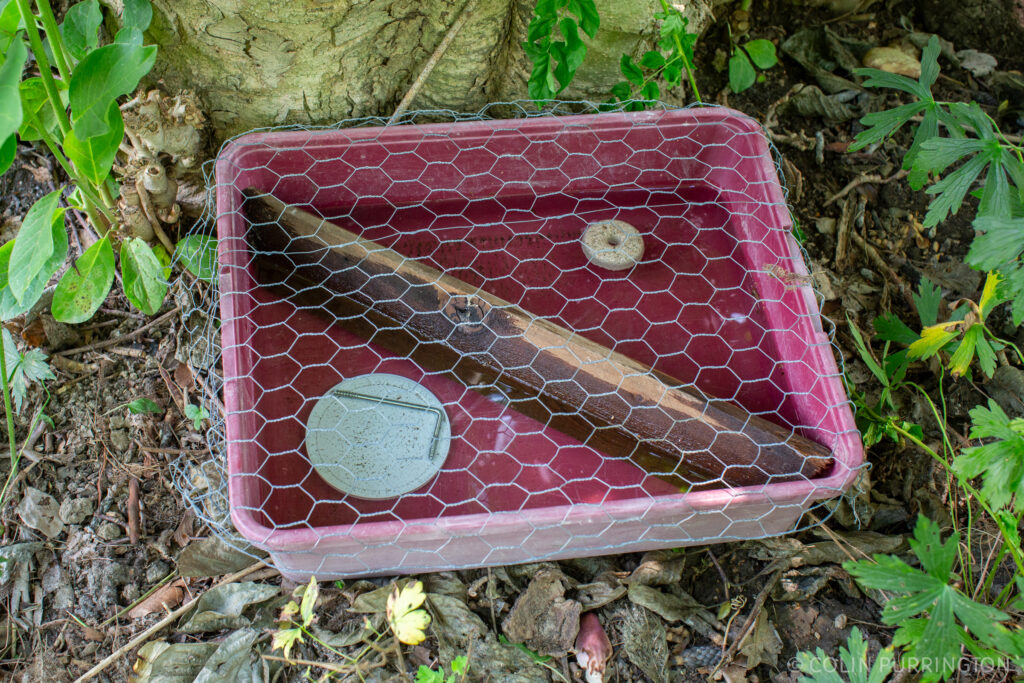
I tested the Mosquito TNT in my Pennsylvania yard and have concluded that they do not control mosquitoes. Moreover, they kill a considerable number of non-target organisms, including pollinators, and provide a habitat for developing flies that feed on the decaying carcasses of previous victims. My full review is below. I include instructions for reporting the product to federal and state regulators, plus tips on how to get your money back if the company refuses to honor its refund policy.
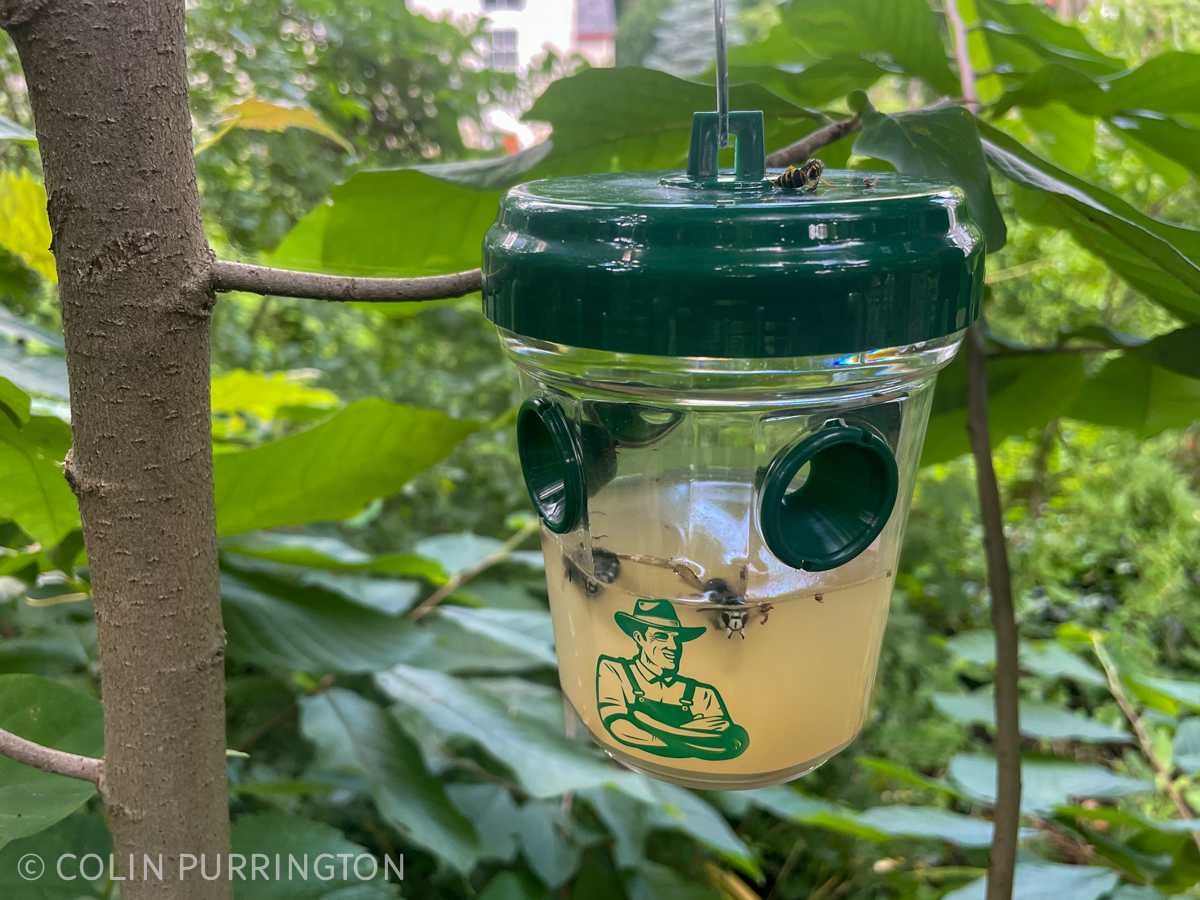
Marketing claims
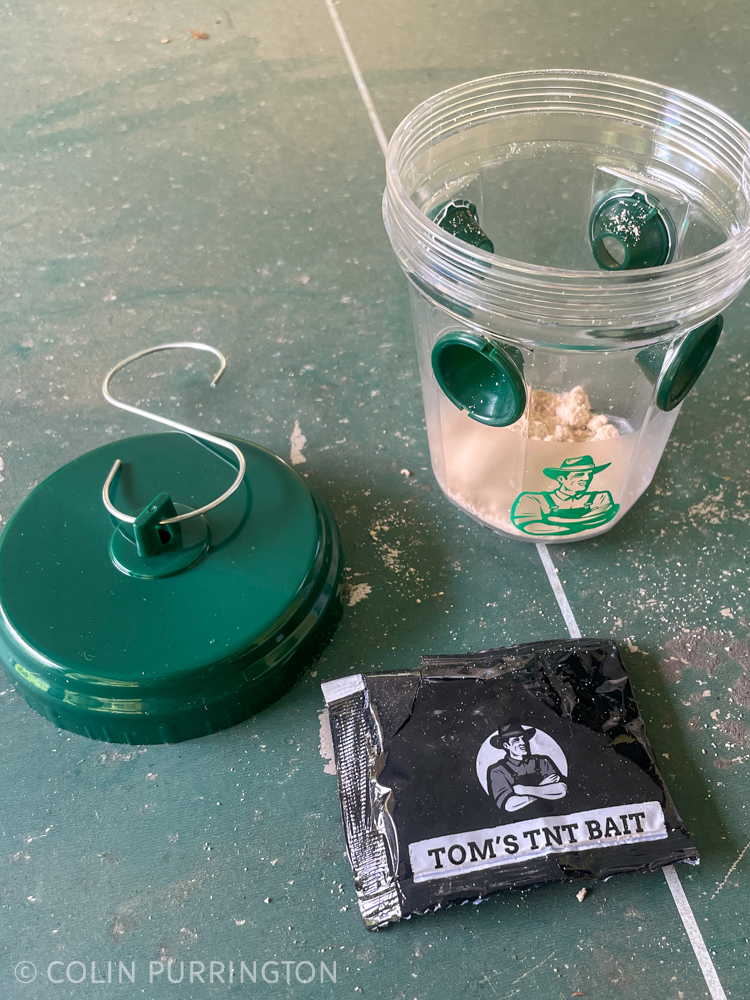
The company says the four-trap kit ($39.99 plus tax) will make a 1-acre yard “mosquito-free” for 30 days. At the end of this period you dump out the contents and add fresh bait (sold separately for $19.99).
Marketing materials assert that female mosquitoes are attracted to the containers because they emit carbon dioxide, which is produced by two pairs of “inert” (i.e., not inert) ingredients (yeast and D-glucose; sodium bicarbonate and citric acid). The active ingredient, sodium lauryl sulfate is said to make them drown faster.
Note that in reality the device would not be able to produce enough CO2 to attract mosquitoes, and certainly not for 30 days. And the active ingredient, sodium lauryl sulfate, is not listed anywhere in the primary literature as a chemical that can kill adult mosquitoes.
My test results
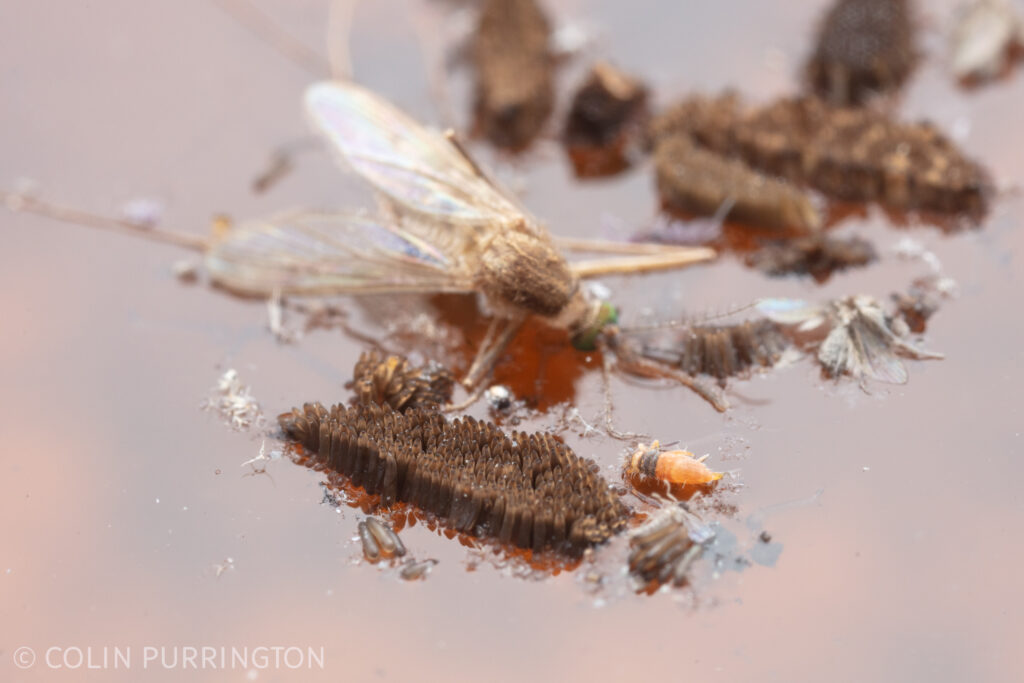
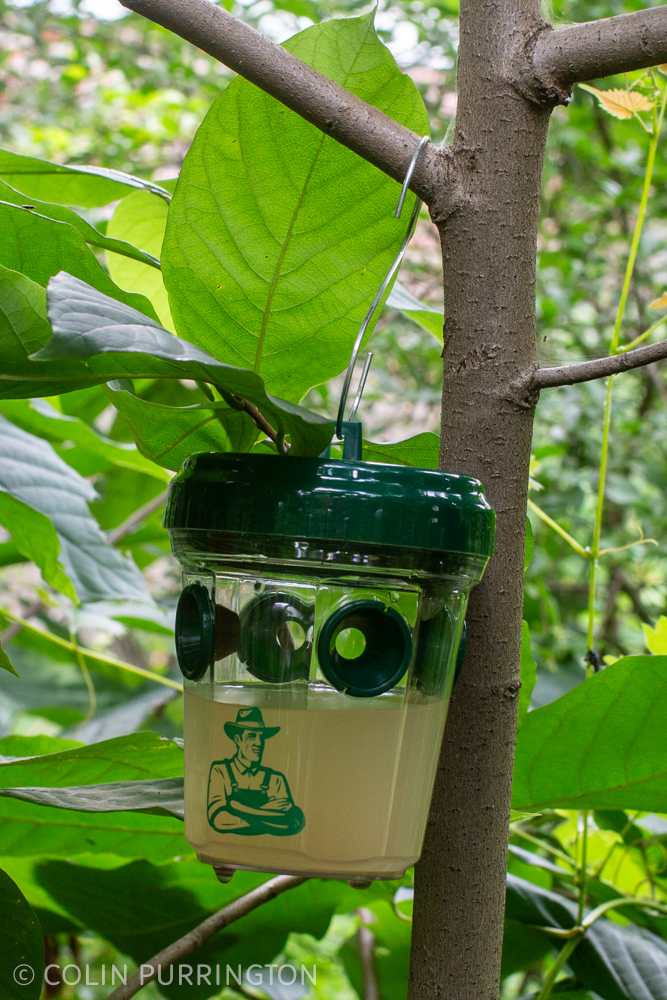
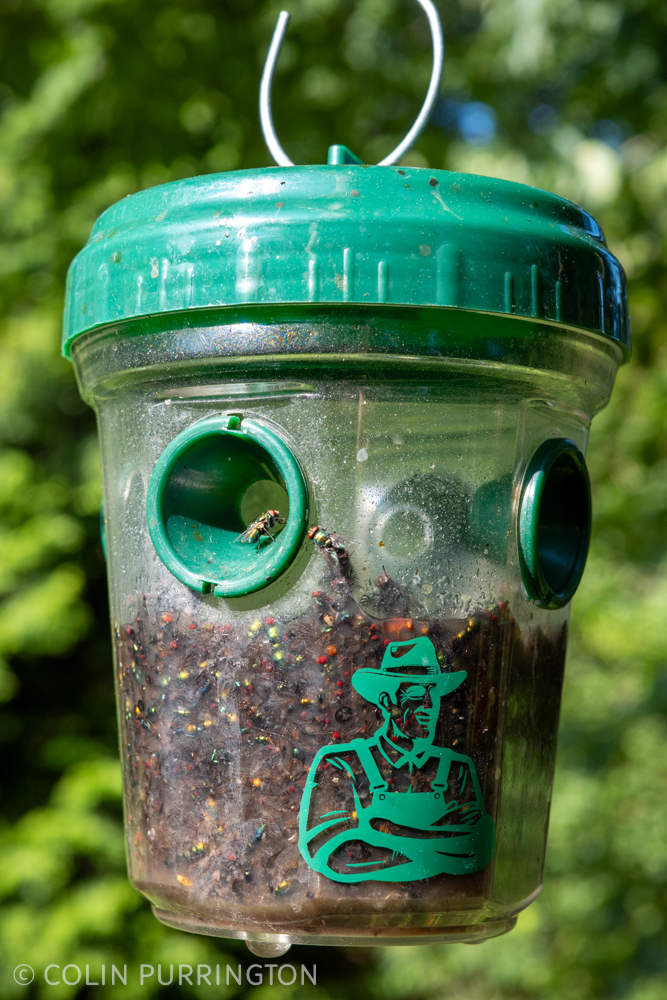
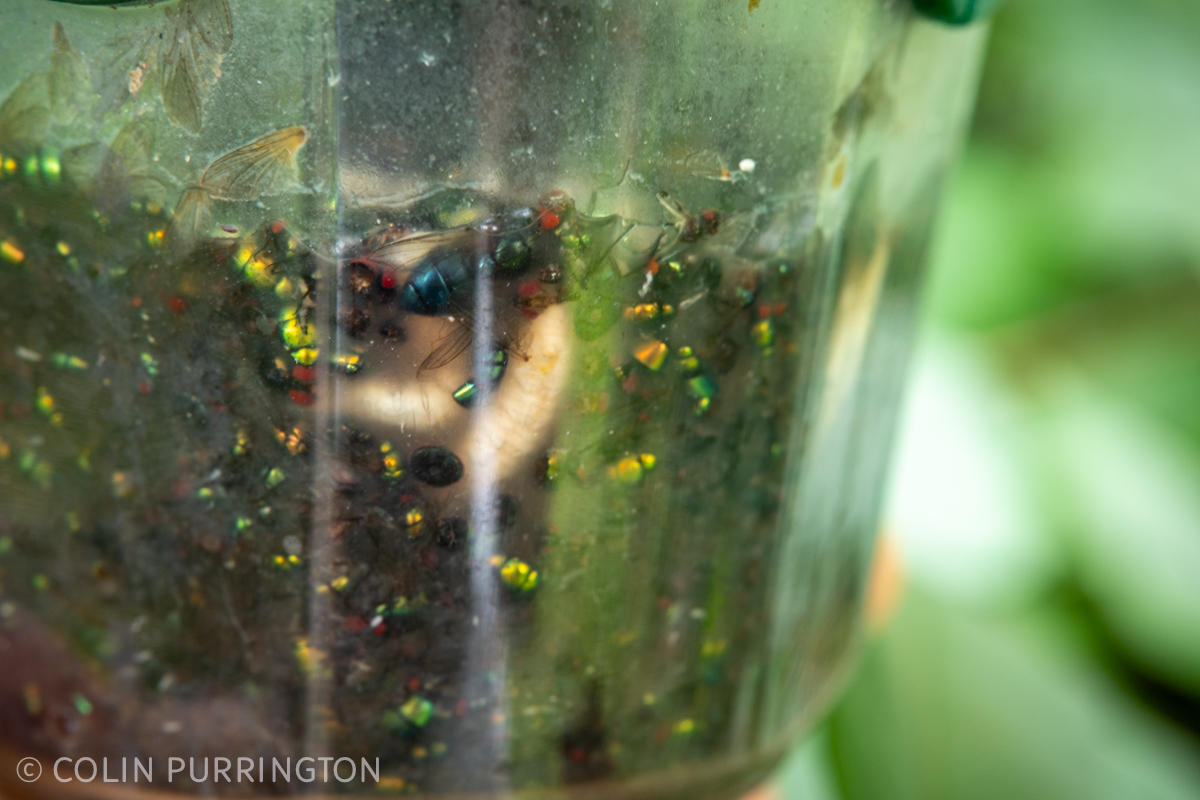
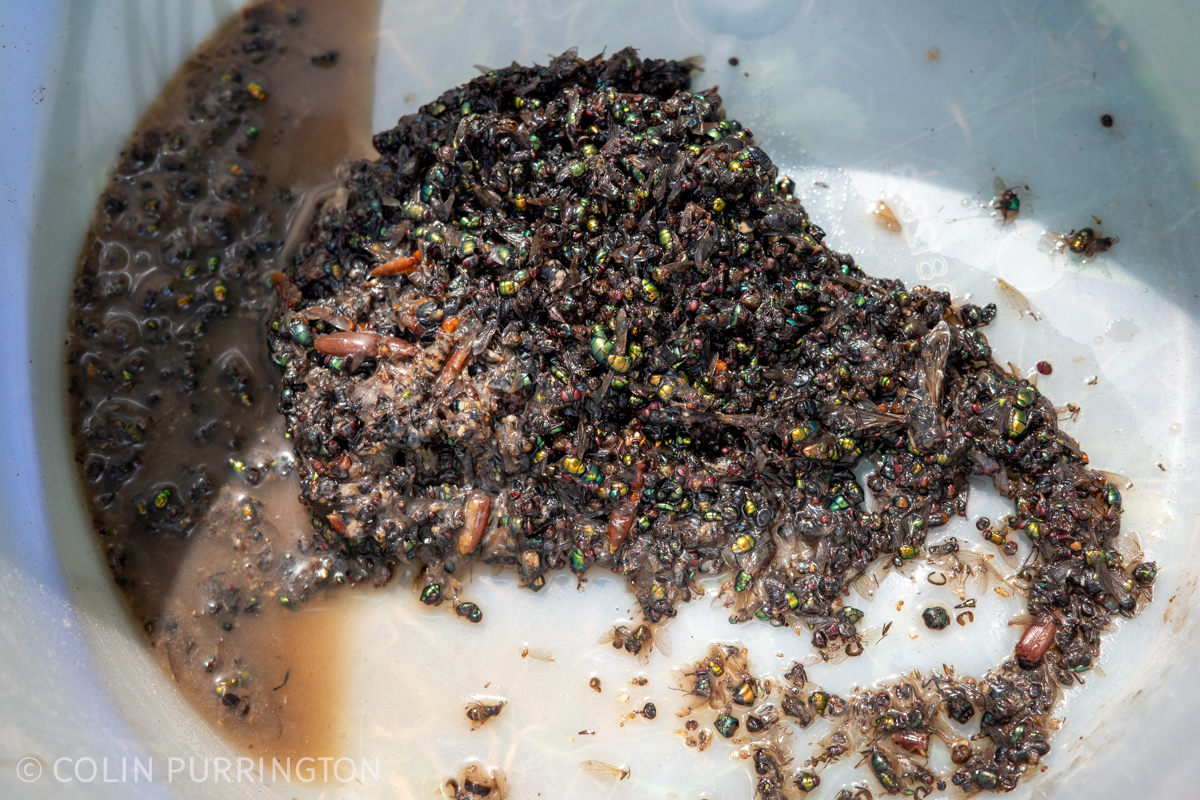
I took photographs of the four traps every several days as a way to record what types of insects were being killed. By far the most common were flies (fruit flies, blow flies, picture-winged flies, etc.), wasps (yellowjackets and hornets), earwigs, and beetles. Initially they were attracted by the sugar and yeast, but eventually the rotting carcasses attracted species that feed on decaying organic matter. Some of these latter individuals laid eggs, resulting in rather large white larvae moving around in the fluid. After about 20 days the stench was enough to make me gag whenever I got close. At no point during my inspections did I notice a single mosquito.
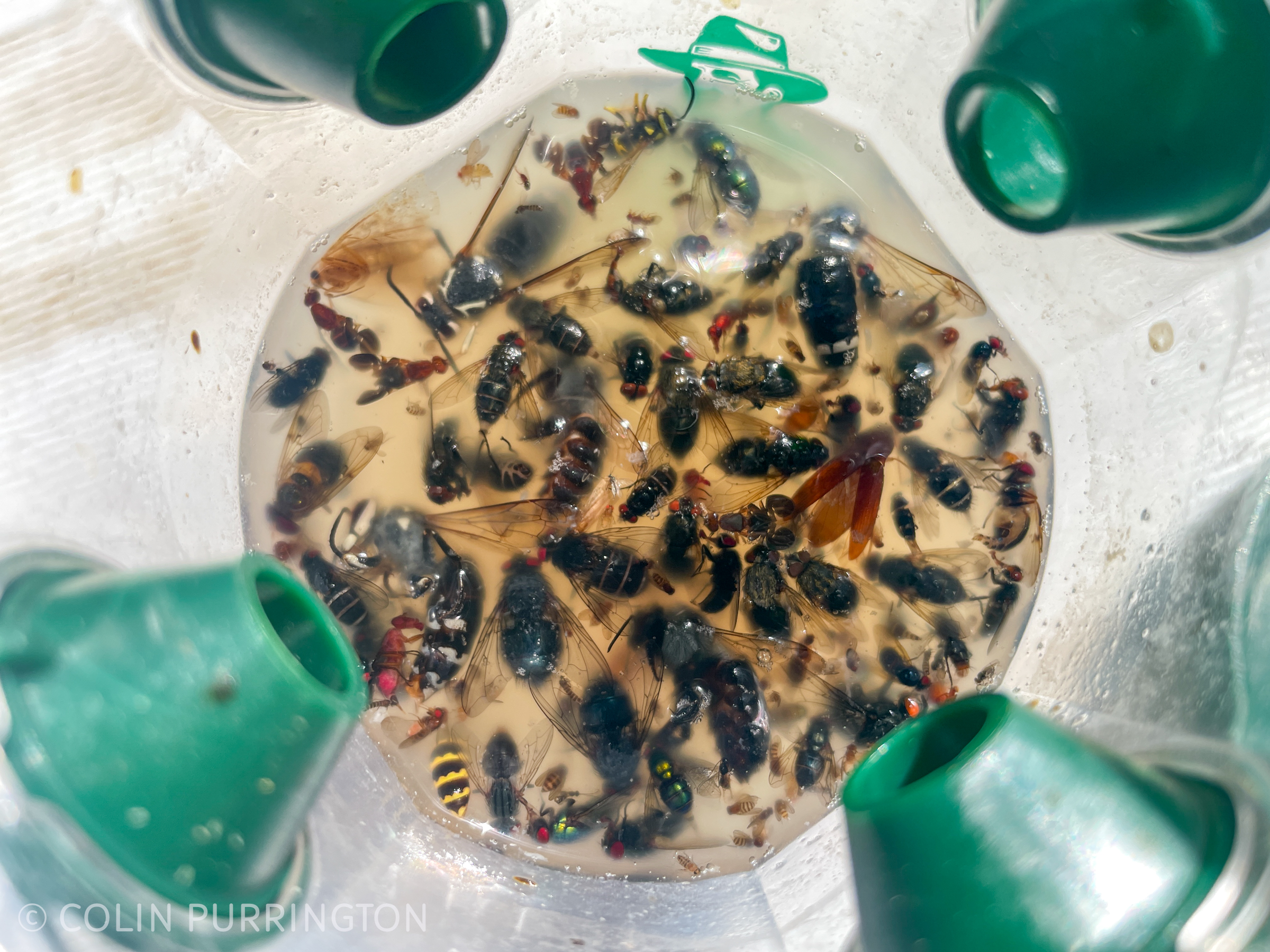
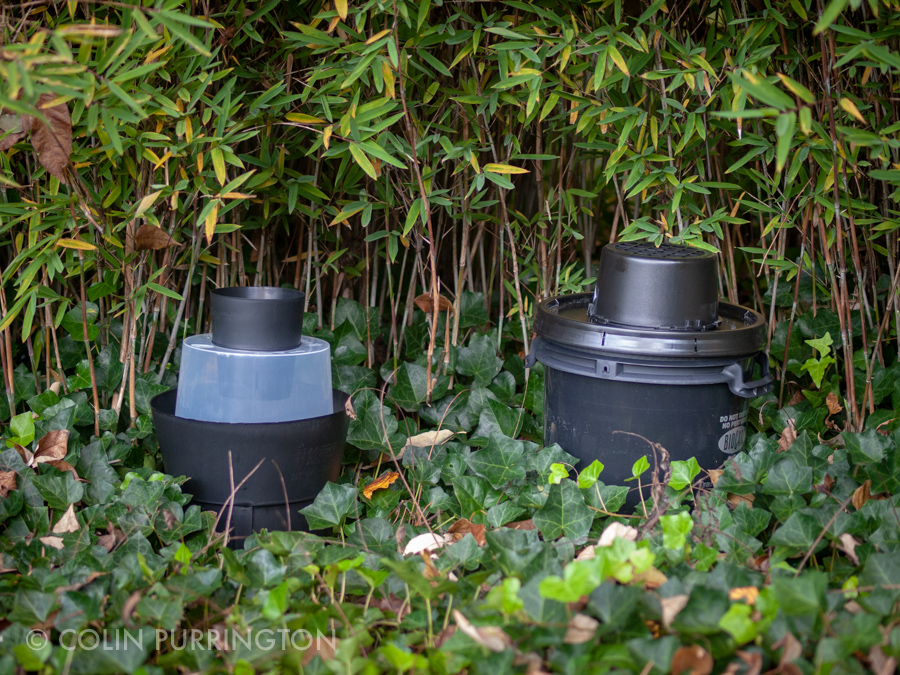
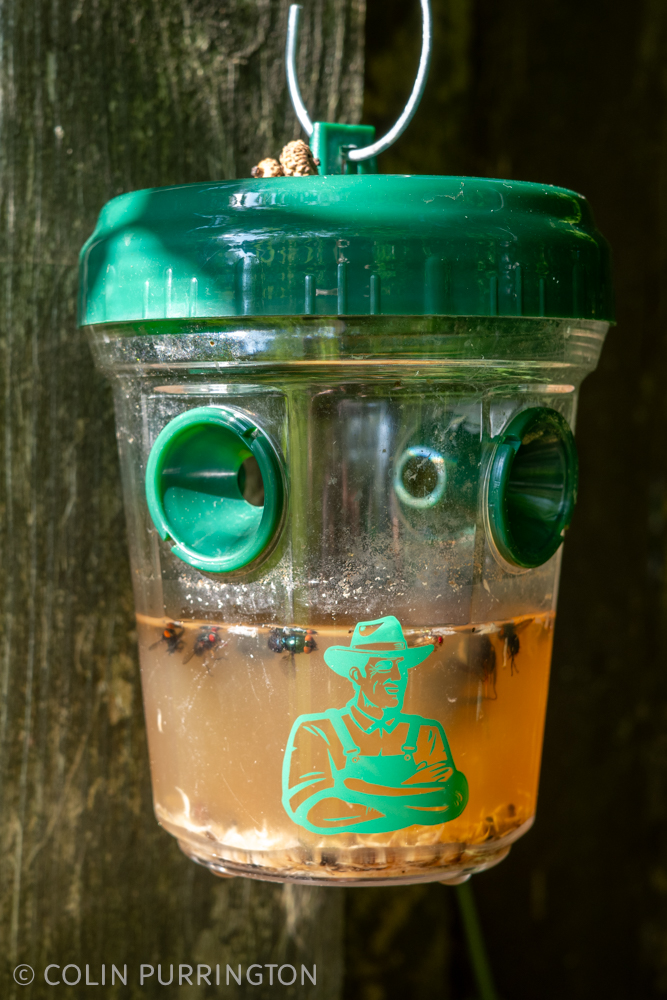
Below are photographs of the other three Mosquito TNTs. Like the trap above, these did not kill any mosquitoes. One had trapped two bumblebees. Although these seemed to attract fewer insects, all contained living fly larvae.
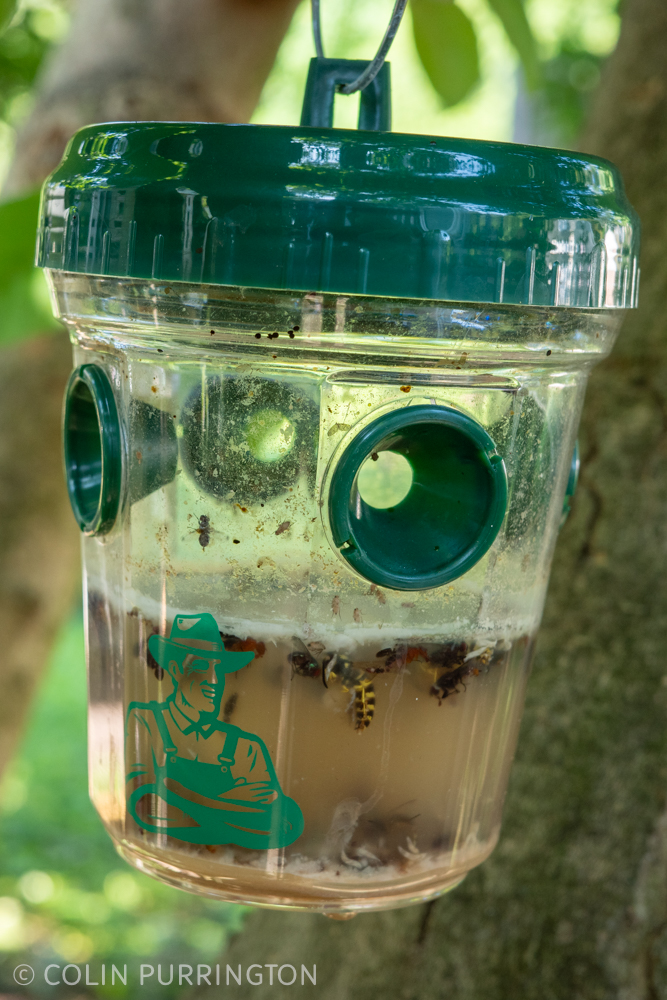
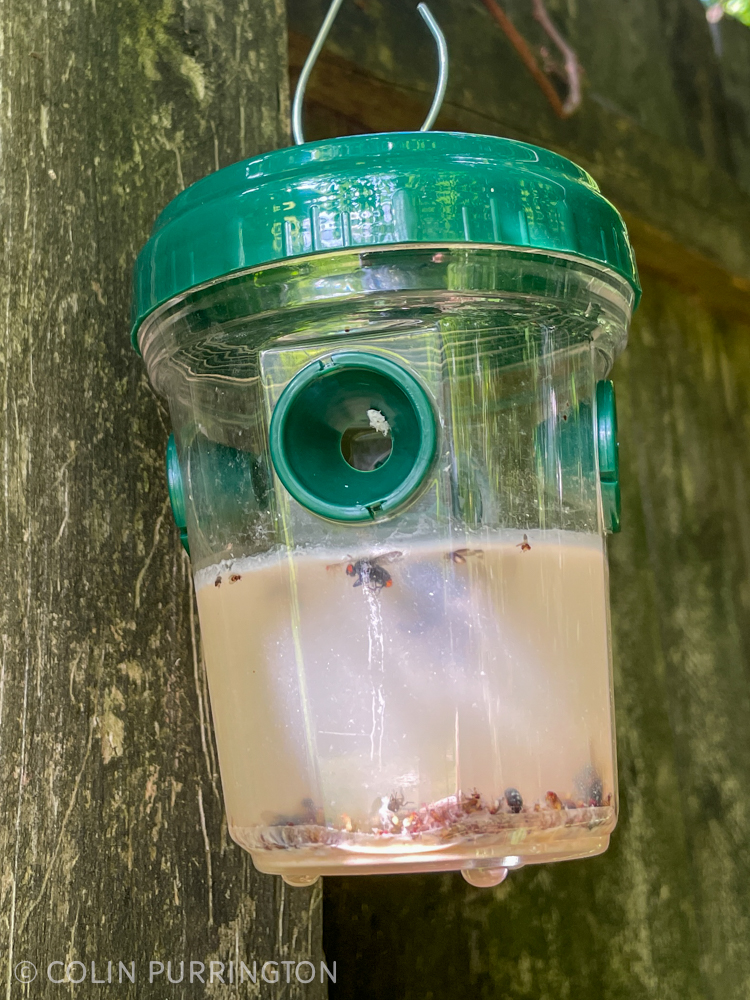
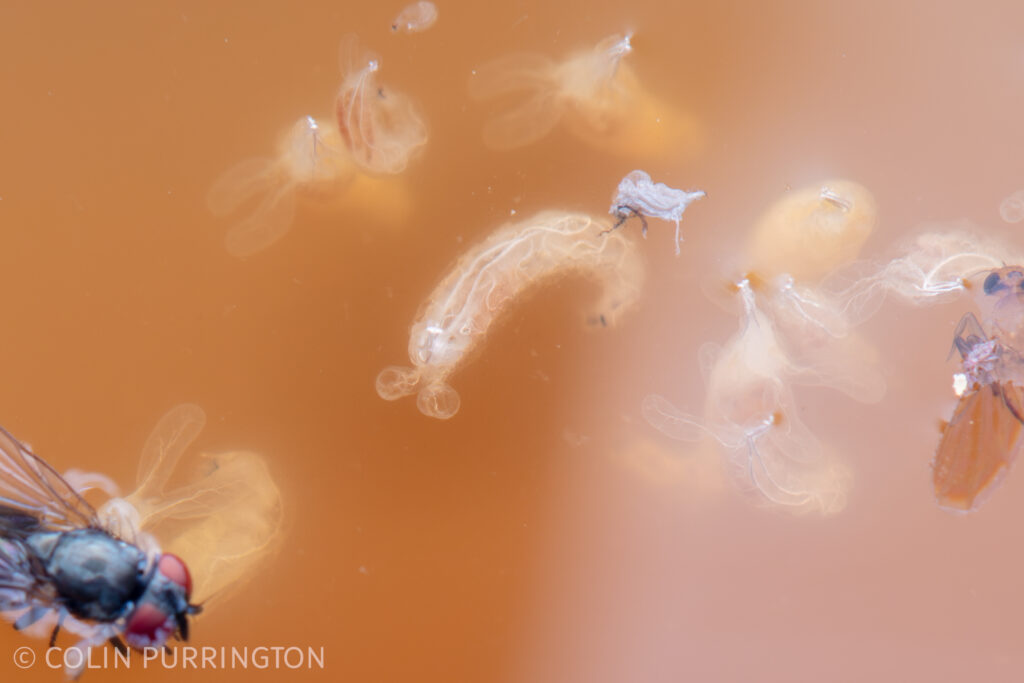
Containers are filled with larvae
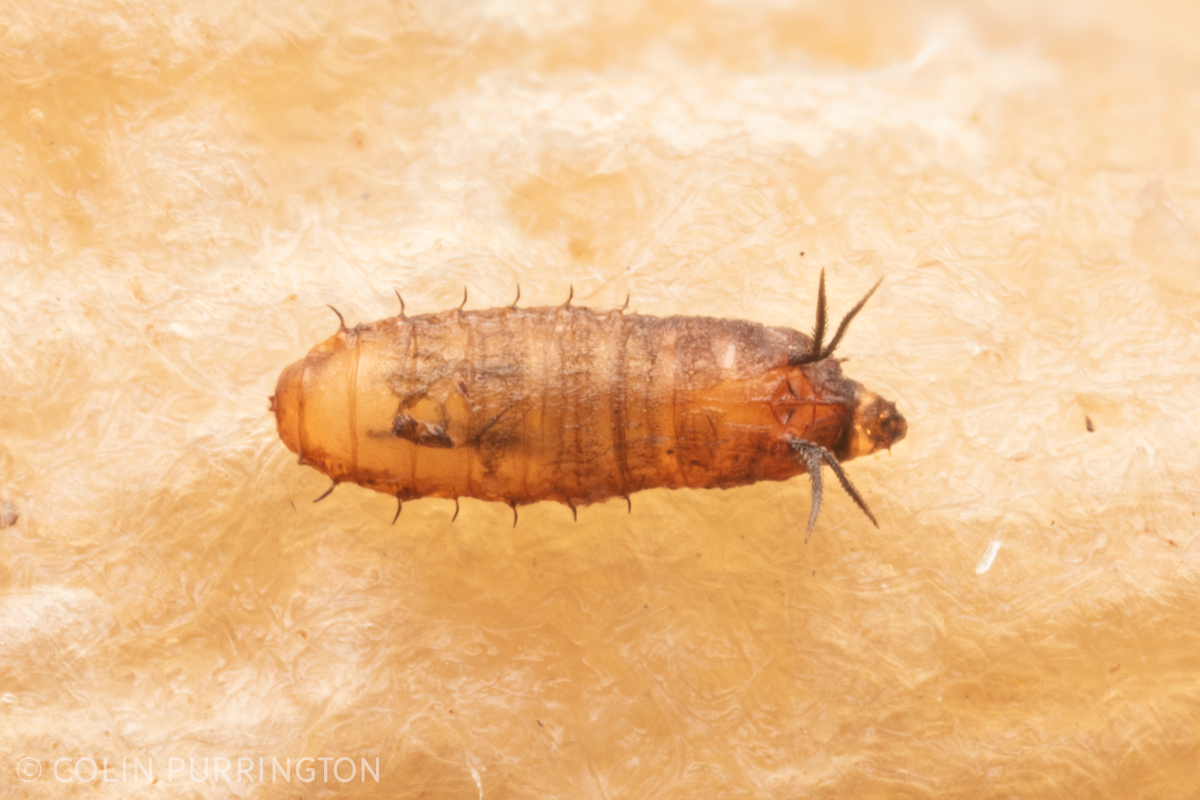
I think the larvae moving around in the fluid might be some sort of shore fly (Ephydridae), in part because they have very prominent posterior respiratory siphons that are characteristic of the family.
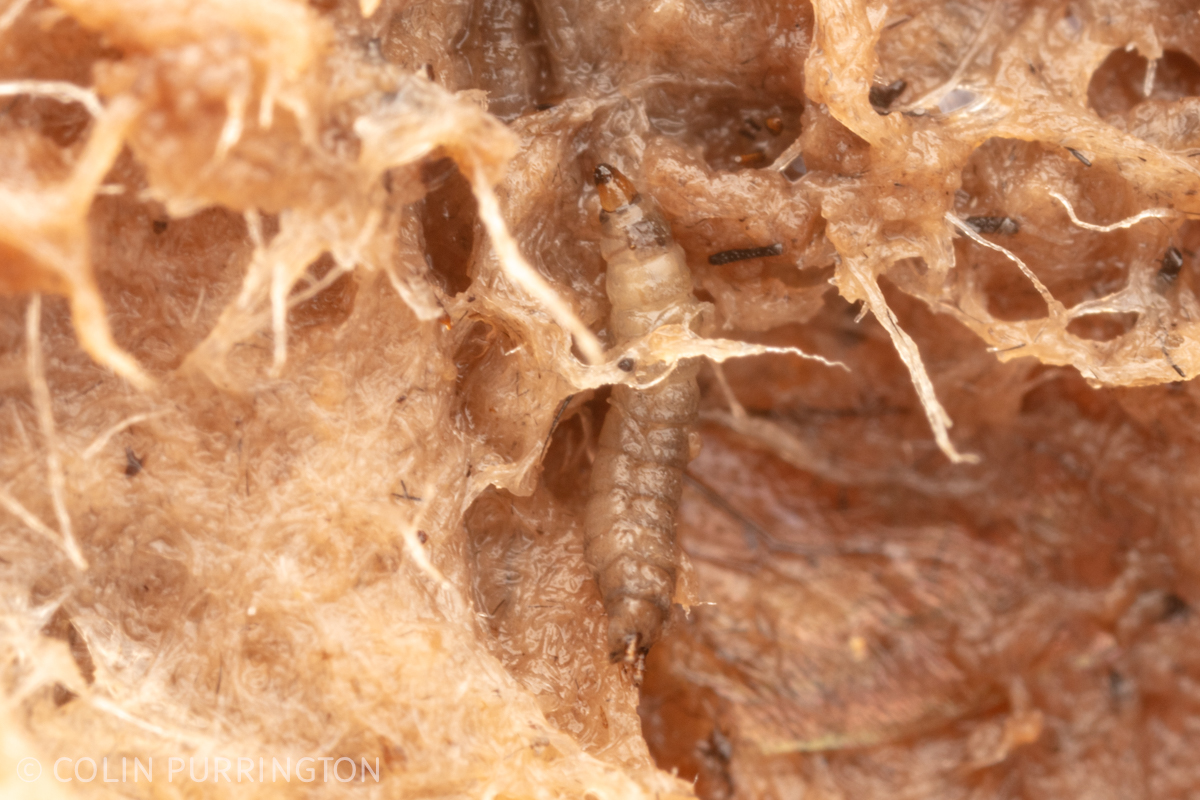
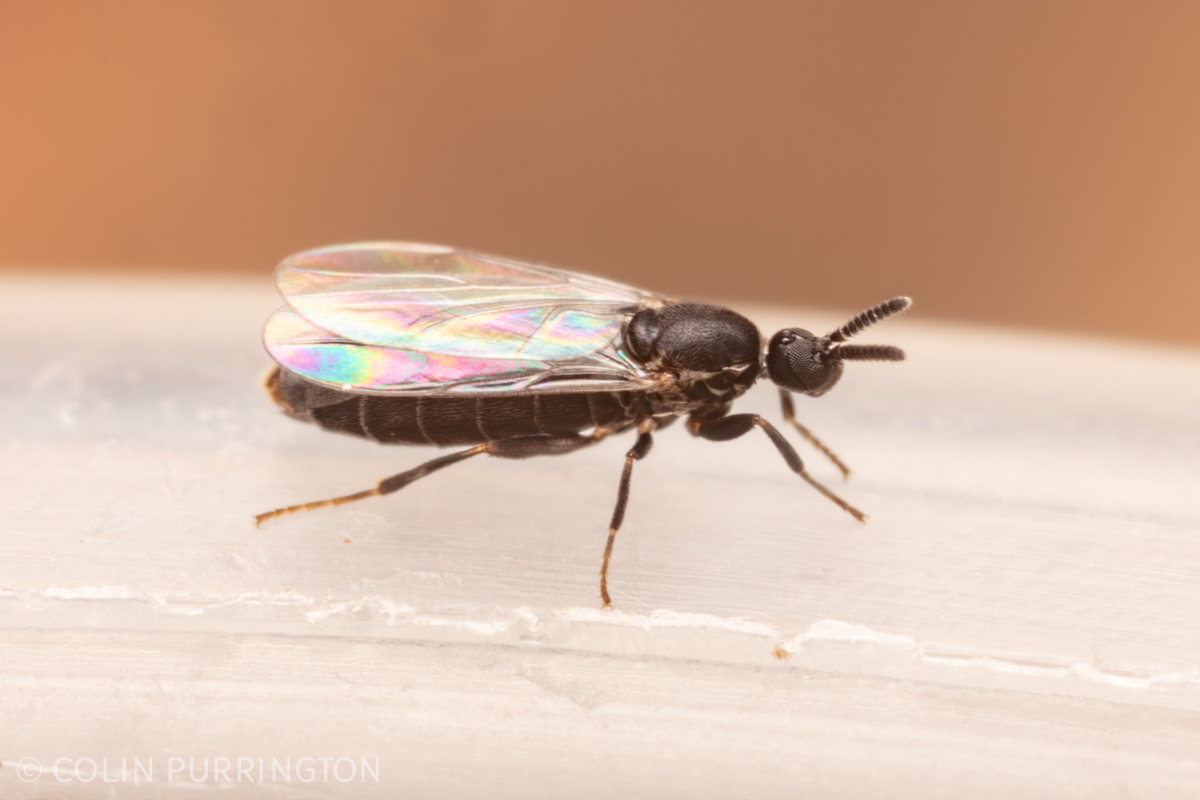
I wasn’t able to rear any of the above to adulthood but did succeed for a different species, below, which I’ve tentatively identified as Coboldia fuscipes, a type of minute scavenger fly (Scatopsidae).
Ads are misleading
Many of Tougher Than Tom’s ads assert that the dead insects inside the traps are mosquitoes, even though the insects appear to be fruit flies, bottle flies, and wasps. I.e., the company uses gaslighting to convince people that traps work even though it is very apparent they do not.
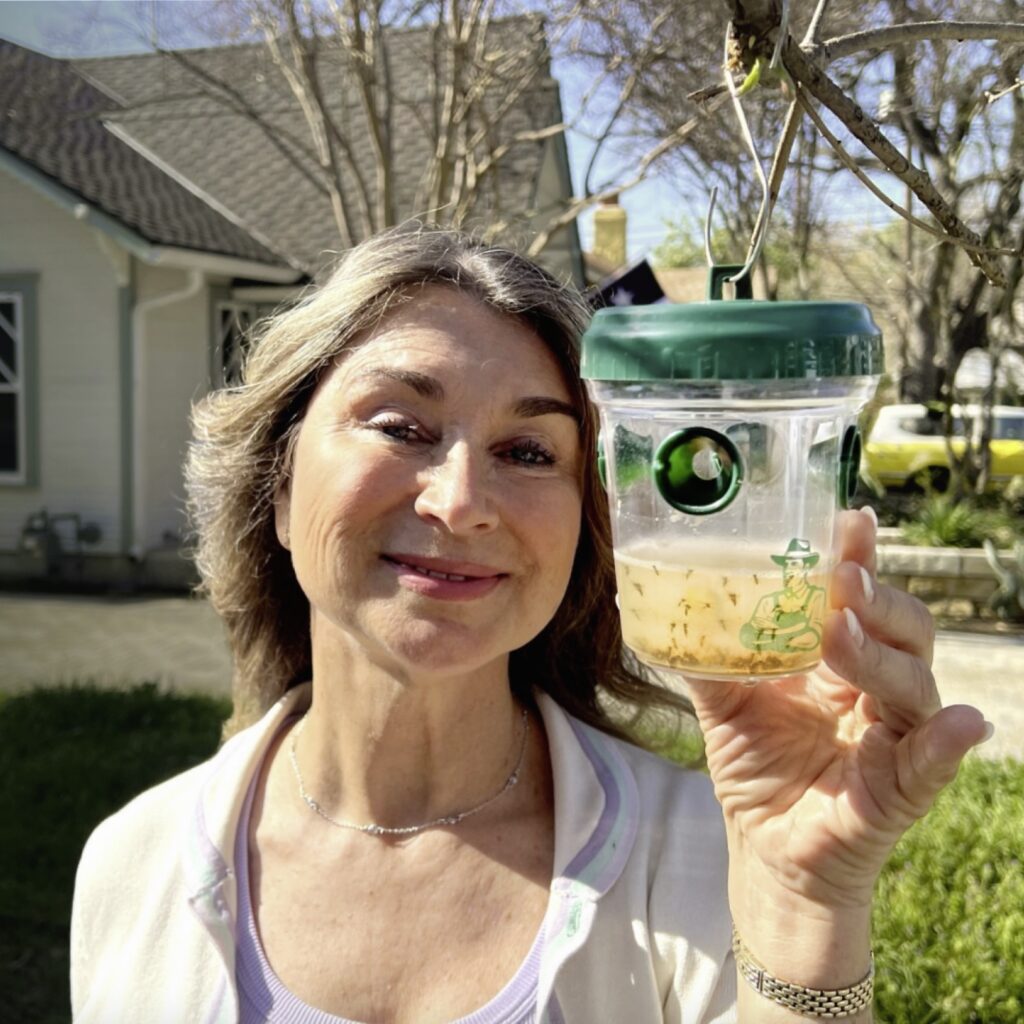
Another tactic is to show images that have been Photoshopped to falsely convey high efficacy. For example, the image below has mosquitoes that were copied from a photograph taken in Germany by Steffen Kugler. It’s unclear whether Tougher Than Tom has legally licensed that photograph.
Tougher Than Tom also uses “user-generated content” (UGC) to push the Mosquito TNT on TikTok, Instagram, and YouTube. Users seem to be following a script that frequently includes how safe the ingredients are, how yards become “mosquito-free,” and how traps eliminate worries over mosquito-borne diseases (all claims that violate FIFRA). None shows mosquitoes inside the Mosquito TNT. The UGCs rarely disclose a financial relationship with the company even though that is required by the FTC.
How to get a refund
Tougher Than Tom has generous return language (“100% guaranteed,” “hassle-free refunds,” “If Tom’s products don’t work for you, you get your money back!“) but tends to ignore refund requests. For those who persist, company then insists that traps need to be mailed to Texas at customer’s expense. To get around these tactics, I highly recommend posting a review on Trustpilot. The company seems to monitor this site and will usually try to appease consumers in an effort to maintain a good standing on the review site. You can also leave reviews at the Better Business Bureau and PissedConsumer.
If that doesn’t work, file a complaint with the Attorney General in your state. You can do this by conducting an internet search for “file complaint with attorney general [your state]” and then submitting a short form. The office will then contact Tougher Than Tom on your behalf, using legal language that may get the company’s attention. It’s easy.
How to file a state or federal complaint
If you’d like to help protect other consumers, you can report the company for making false or misleading claims.
To locate the person in charge of pesticide registration and enforcement in your state, click on this map. These people have the power to revisit a product’s registration status as well as levy fines against the company for shipping to the state without a registration. In your email, provide details of what your traps have captured and attach photographs if possible.
You can also report the company to the EPA and the FTC. For these communications it is also helpful to attach screenshots of the marketing materials that led you to believe that the product eliminated mosquitoes. And if you noticed zero mosquitoes inside your traps, mention that, too.
Here’s the company contact information to share in your report:
Tougher Than Tom
2028 E Ben White Blvd, Suite 240-1328, Austin, TX 78741
(413) 400-0067
owner: Zachary Snyder Collins
zach@simplystrive.com
Further information
- The Mosquito TNT is a 69-cent wasp trap made in China.
- I highly recommend reading the consent agreement (PDF) between the company and the EPA. The company had to pay $80,880 in fines for violating federal pesticide laws.
- The owner of Simply Strive (“Tougher Than Tom”) is Zachary Snyder Collins (photo). He likely got into the mosquito-control business from fellow Austin resident Nick Olnyk, founder of Grandpa Gus, a company that had an identical product lineup before being sold a few years ago. I think Collins copied the “folksy, honest grandpa” marketing schtick from Grandpa Gus.
Where can the Mosquito TNT be sold?
From searching databases and regulations, I think the following states allow the product to be sold: Alaska, Arizona, Arkansas, California, Colorado, Delaware, Florida, Georgia, Hawaii, Idaho, Iowa, Kansas, Kentucky, Michigan, Mississippi, Montana, New Hampshire, New Jersey, New York, North Carolina, North Dakota, Pennsylvania, South Dakota, Texas, Vermont, Virginia, Wisconsin, and D.C.
The search revealed that the following states do not allow sales: Alabama, Connecticut, Illinois, Indiana, Louisiana, Maine, Maryland, Massachusetts, Minnesota, Missouri, Nebraska, Nevada, New Mexico, North Carolina, Ohio, Oklahoma, Oregon, Rhode Island, South Carolina, Tennessee, Washington, West Virginia, and Wyoming.
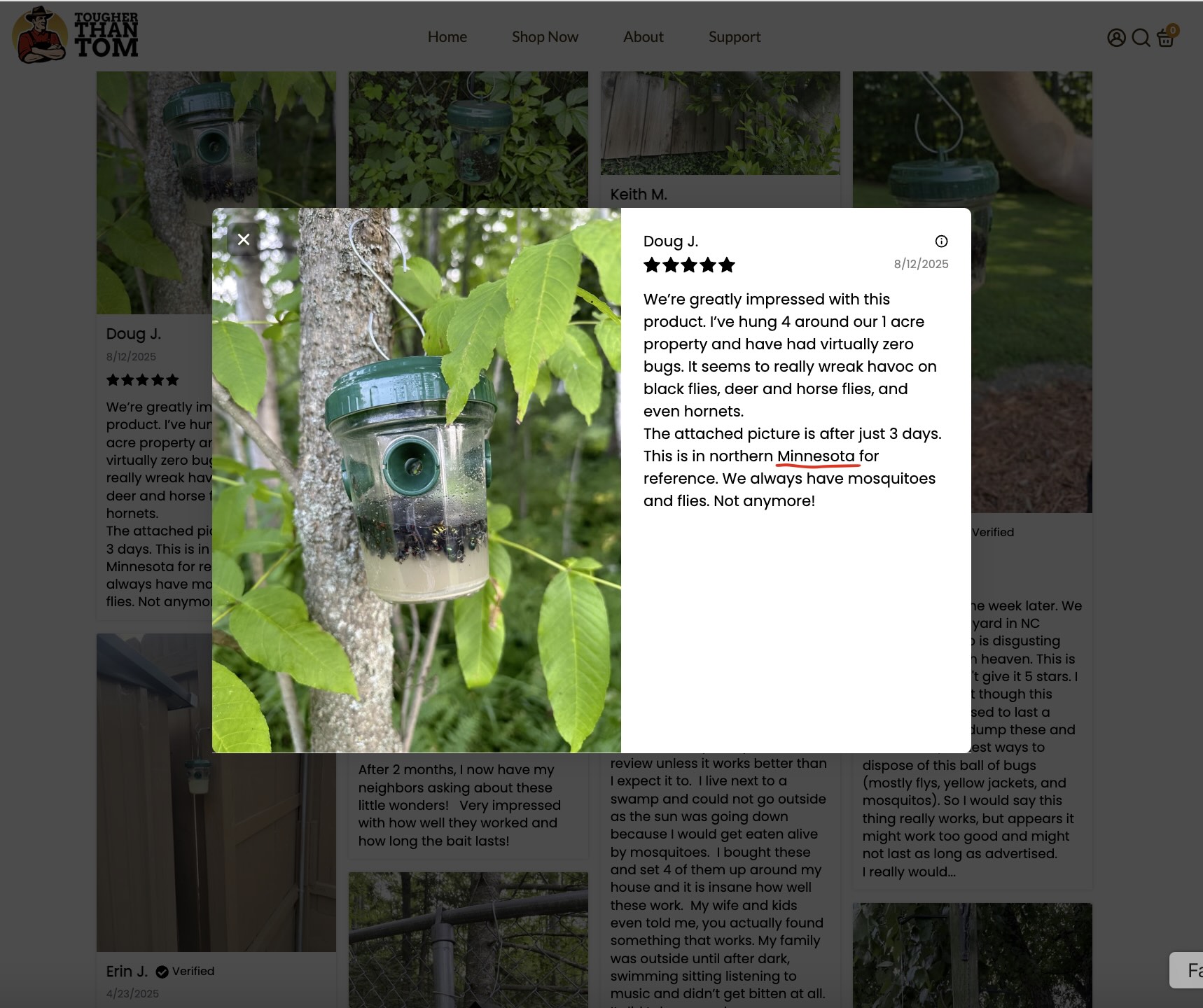
However, Tougher Than Tom’s website indicates that sales are prohibited only in New Mexico and Tennessee. And the company’s Amazon listing says product cannot be shipped to Oklahoma, North Carolina (which allows sales, actually), and Maine. That these two sources list different states suggests that the company is not paying close attention to where the device may legally be shipped. The company is probably regularly shipping the product to states that have denied a registration. E.g., per a review that Tougher Than Tom features on its website, it has shipped the device to Minnesota (jpg screenshot).
Other reviews
- Mandy M. (YouTube)
- Cassie (TikTok)
- Bonnie McConnell (Facebook)
- Trudy Harlow (Facebook)
- Tougher Than Tom Mosquito TNT users (Facebook group)
Contact
If you have a question, information you think I should provide, or find errors, send me an email.