
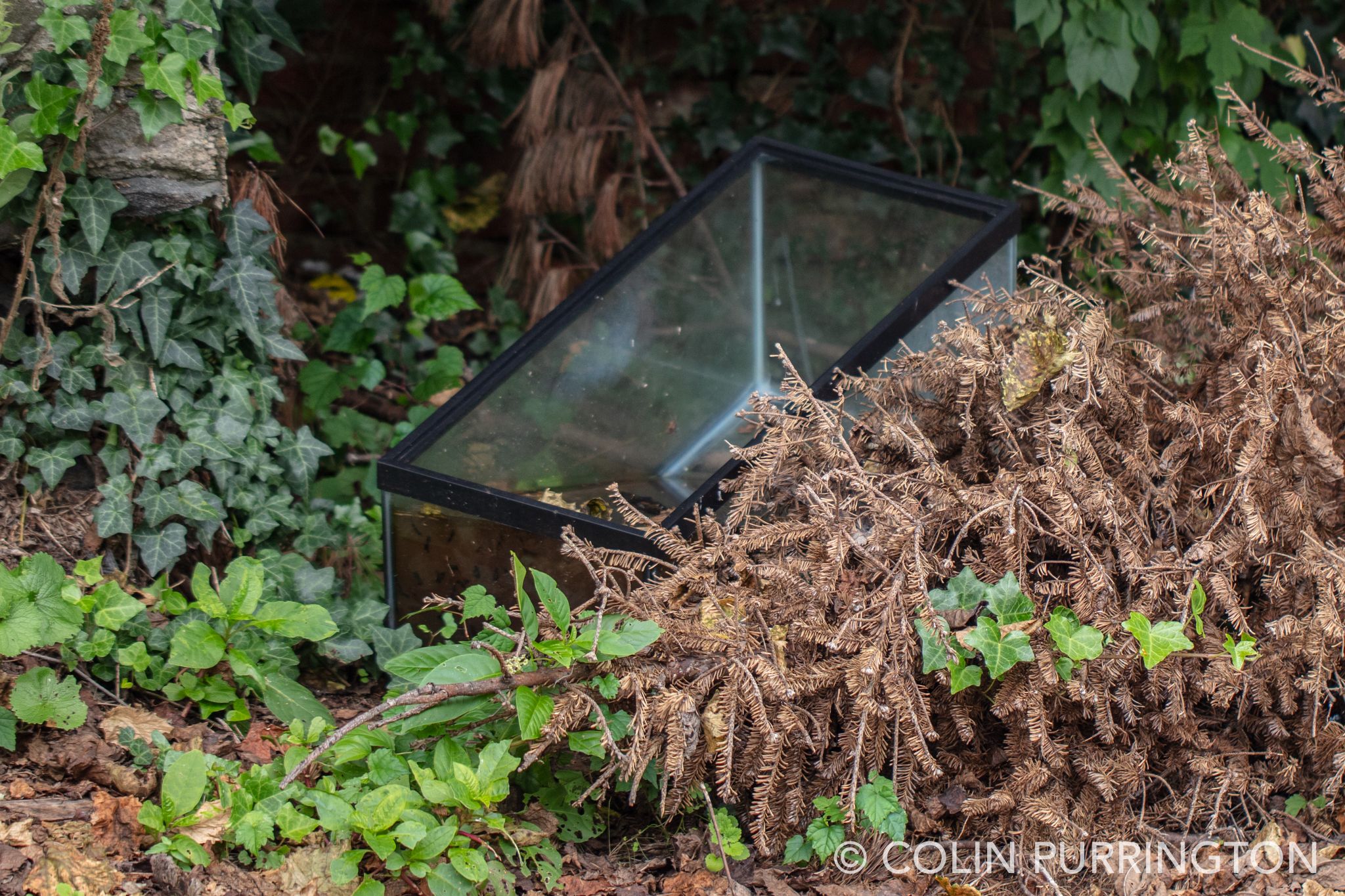
During a run this week I passed an abandoned, 30-gallon aquarium with easily 10,000 larvae doing their thing (wriggling). I came back later, took some photographs (on my Instagram soon if you’re into that), and then dumped it, sending the larvae to their deaths but also releasing a cloud of perhaps 100 newly-eclosed adults. I suspect the aquarium had been there for years, pumping Asian tiger mosquitoes (Aedes albopictus) into the neighborhood. Given the aquarium’s location at the edge of busy parking lot I’m sure that thousands of people have looked at it and thought, “Huh. Looks like an abandoned aquarium full of dirty water. Next to a Christmas tree. I bet there’s a story there!”, and then moved on with their lives.
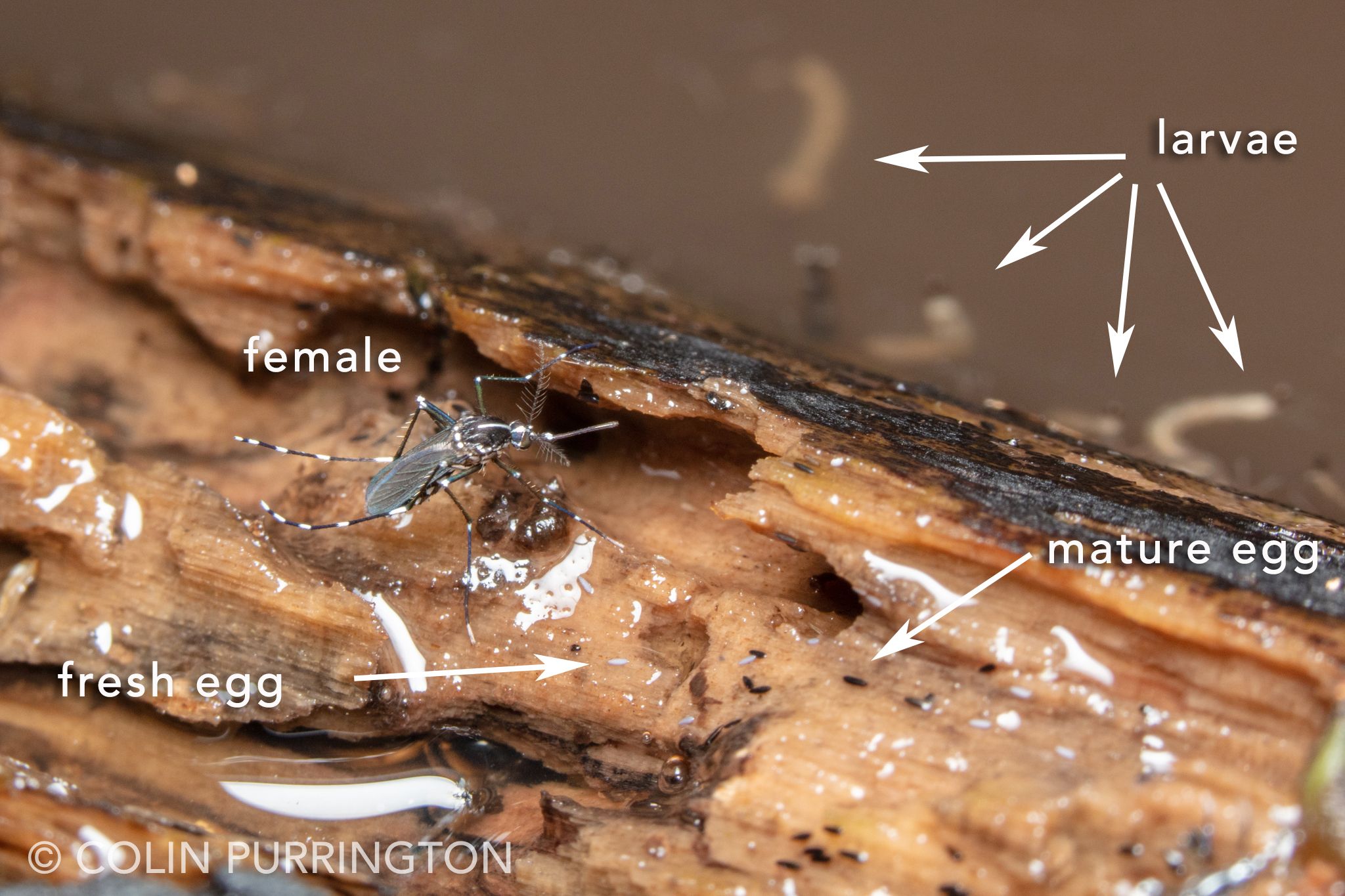
In case you are unsure what an infestation looks like, the next two photographs show what the adults, larvae, and eggs look like. Asian tiger mosquitoes lay eggs singly on the sides of containers or on moist objects floating on the water. They can last over a year as an egg, waiting for conditions to be just right.

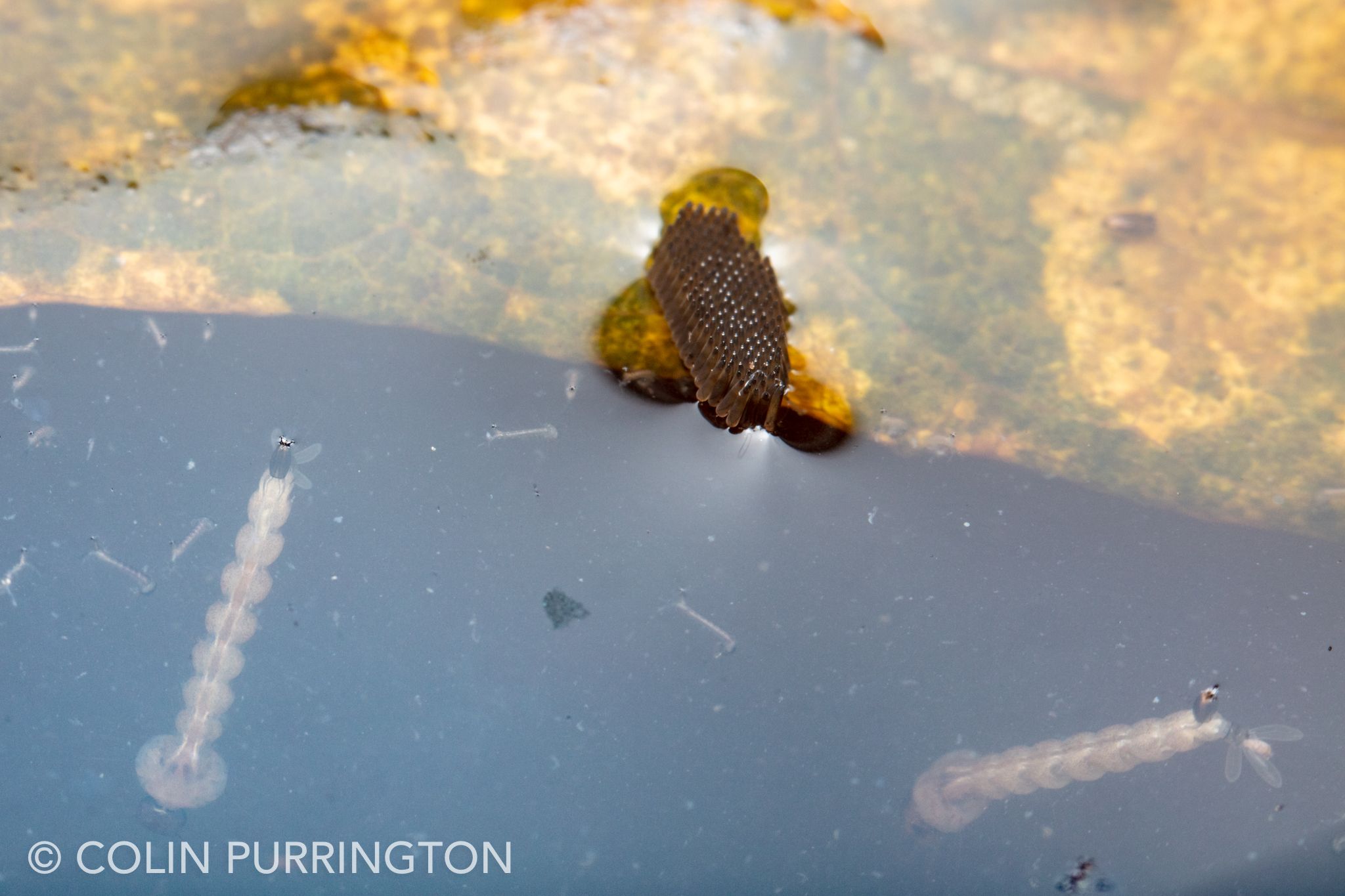
Here’s a sample of the water I pulled from the tank.
But not all the eggs were Aedes albopictus (there are 60 species in PA alone). Here’s a raft of eggs in the aquarium from a different species (Culex sp.). The raft is lodged on a leaf but normally it just floats around until the larvae pop out. Anopheles (another common genus) has eggs that are deposited singly but float with the help of cute little life preservers.
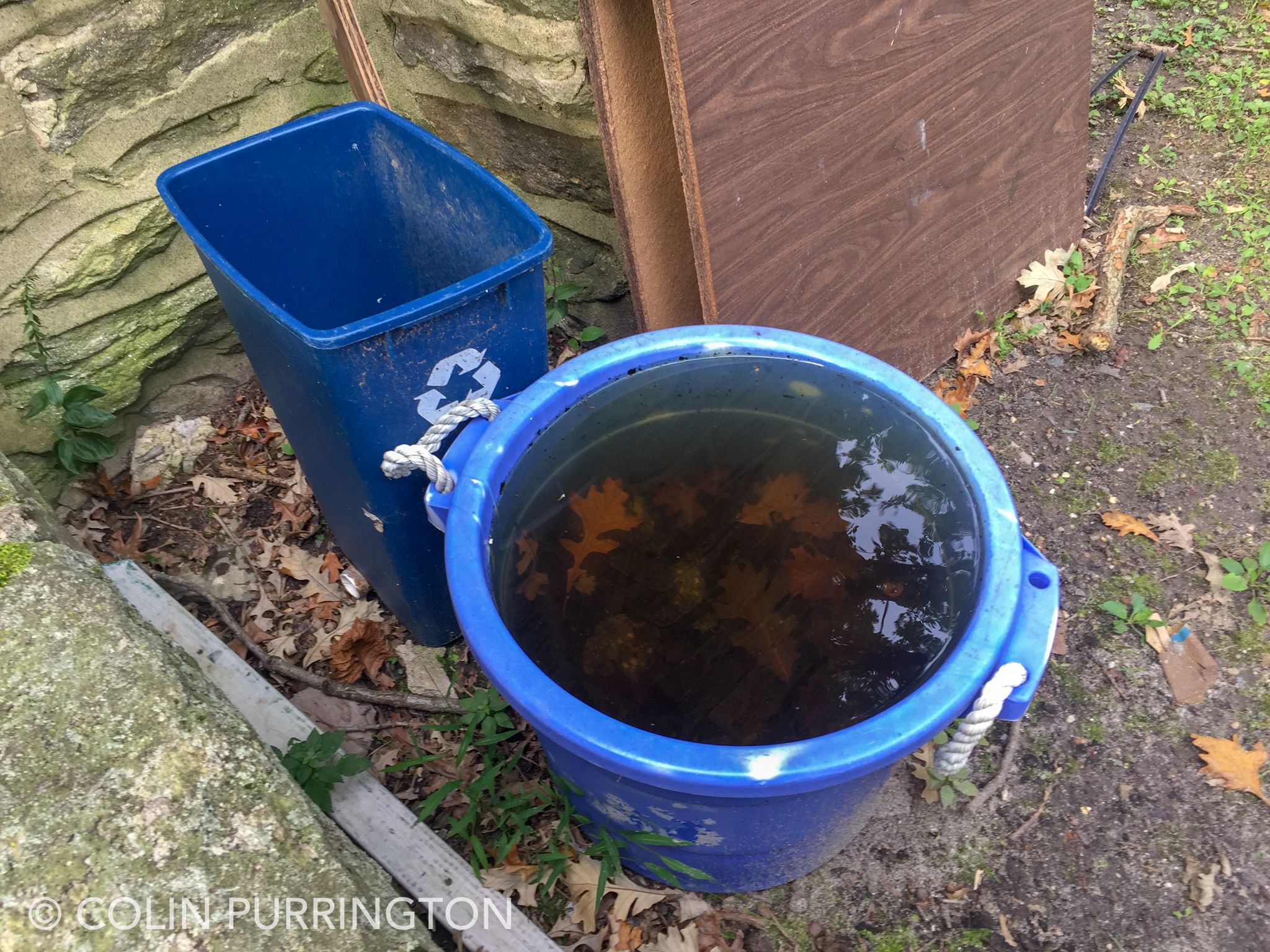
But that’s not all! Yesterday I found a recycling bin behind a church with similar numbers of larvae. Given the amount of leaves decomposing in the bottom I suspect it has been like this for at least the whole summer. Again, it really is strange that nobody did anything about it. It’s right next to a sidewalk that gets lots of traffic (at least on Sundays) and is probably 10′ away from a playground at an infant/toddler daycare center. Poor kids. (I dumped it.)
Given how much people hate mosquitoes it left me thinking how the public outreach about mosquito control has failed on the most basic level. Everyone should know enough about mosquito biology to know how and where they breed, and everyone should feel empowered to do something. Being proactive is so much better than adopting what I think is the common view, “Well if the mosquitoes get bad enough I’m sure the government will spray insecticides from planes.”
All it would take would be a nicely worded message from a town official to mobilize residents into a mosquito watch. Something like, “If you see mosquito larvae swimming around in a container when you are out walking your dog, please turn the container upside down or alert the owner about it. Thanks.”