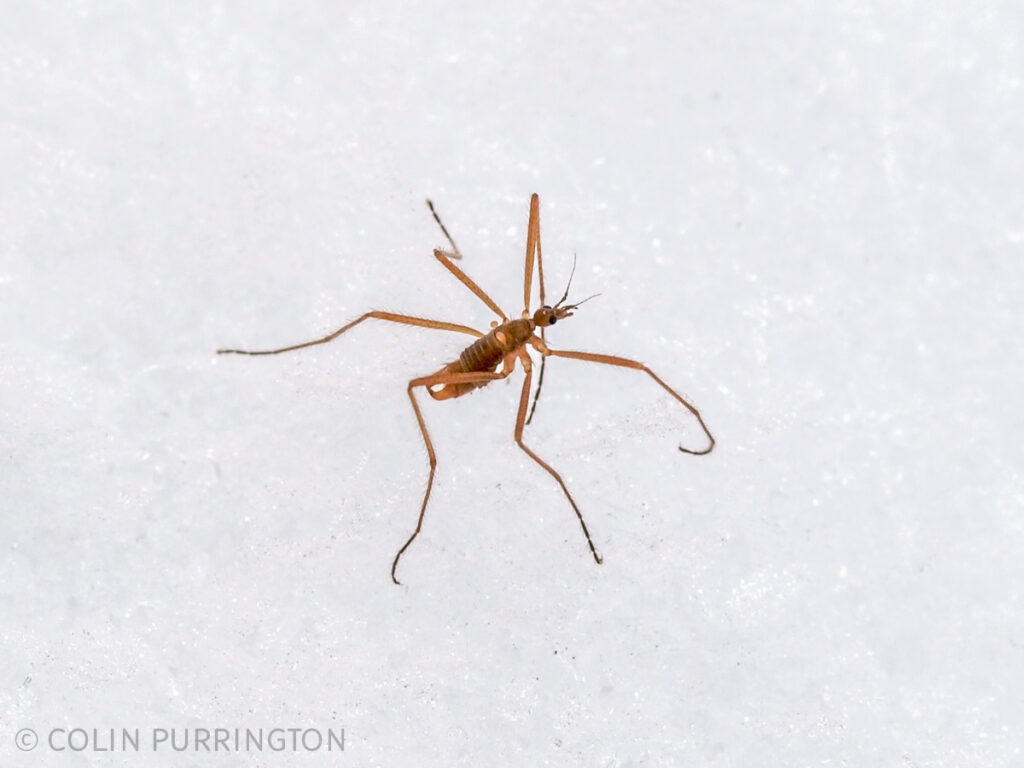
Here are some of my favorite photographs from a recent stay at Mohonk Mountain House in New Paltz, New York. I also have a few non-macro pics at the end in case you’re curious what the place looks like.
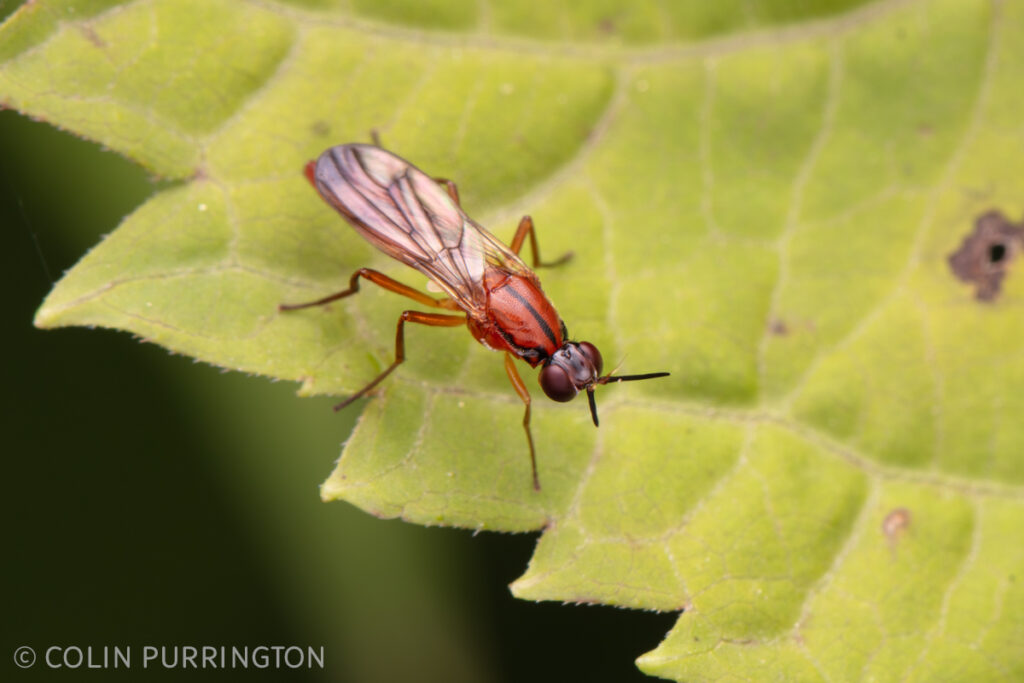
This is Loxocera cylindrica (Psilidae). They puncture and hoover up fluids from leaves, resulting in patches of brown discoloration that give the family its common name (rust flies). Larvae mature inside stems of inland sedge (Carex interior), which tend to grow around calcareous swamps and marshes.
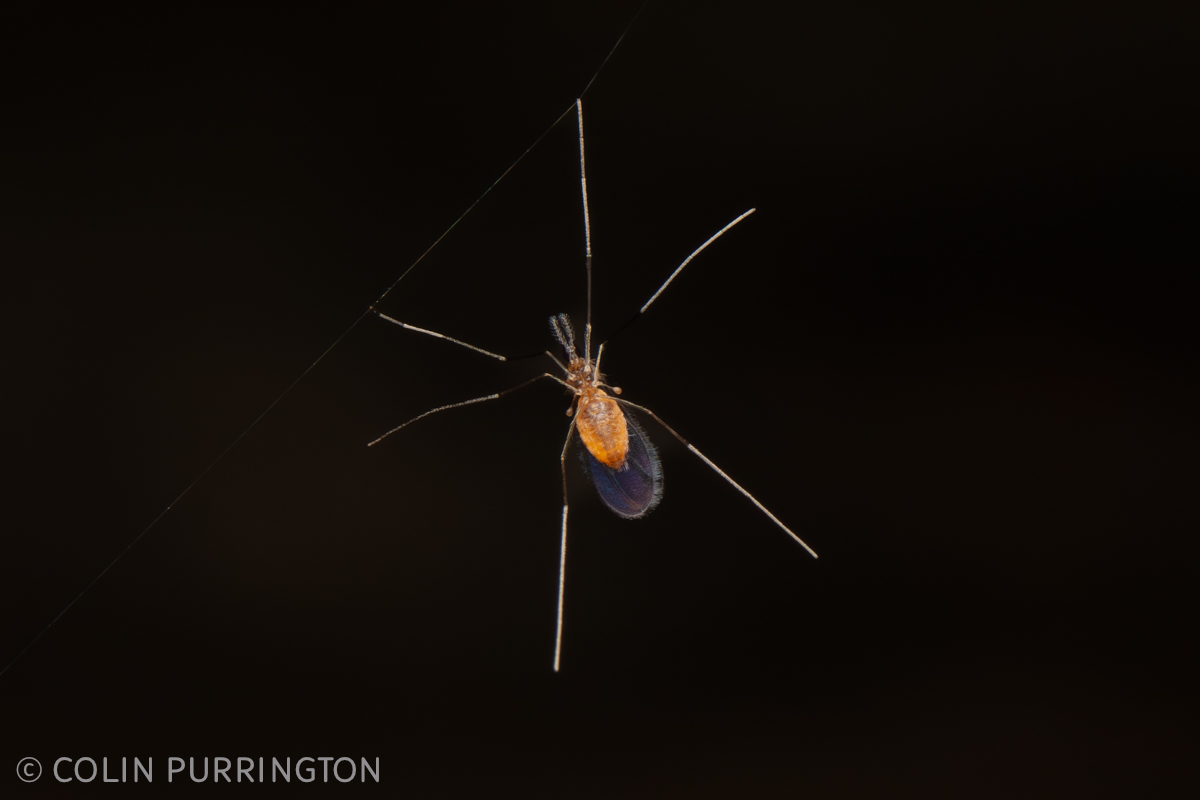
This was so small I assumed it was a spider with just six legs. Eventually figured out it was a gall fly (Cecidomyiidae) when I loaded the photographs onto my computer. It was hanging on spider silk, a behavior that is apparently quite common in the family.
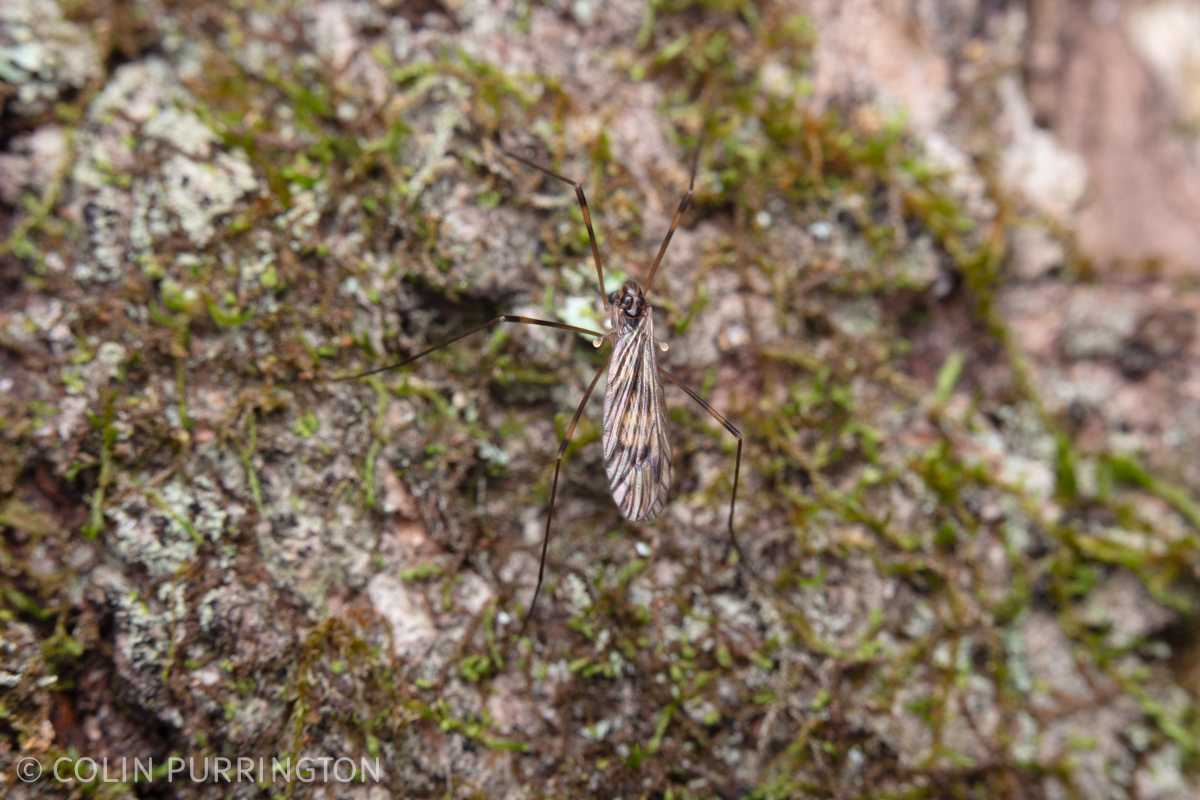
And one more fly: Limonia indigena. BugGuide, my go-to source for obscure facts, says that members of the genus spend their youth in gelatinous tubes on moist surfaces that harbor algae.
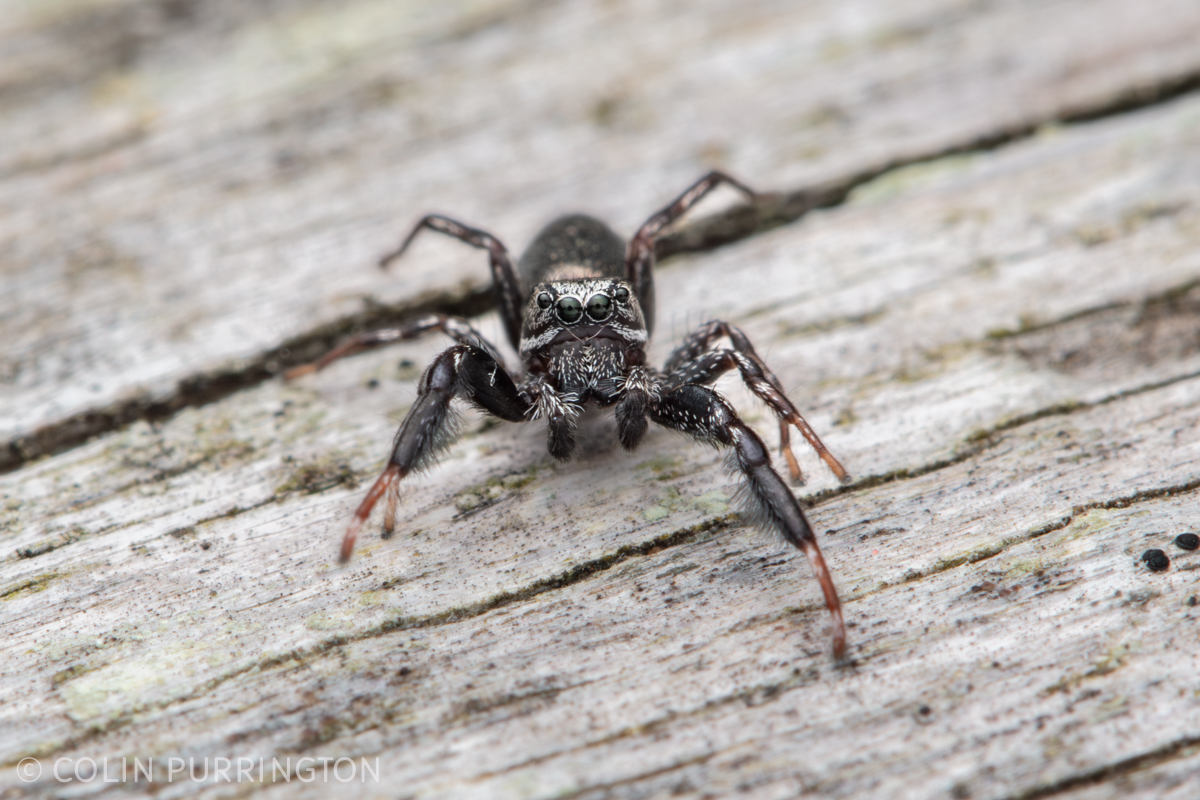
This is a Hart’s jumping spider (Tutelina harti) that was thinking about leaping onto my camera. I’ve always wondered whether spiders see the lens and assume it’s an eye. I love the white stripe below the eyes.
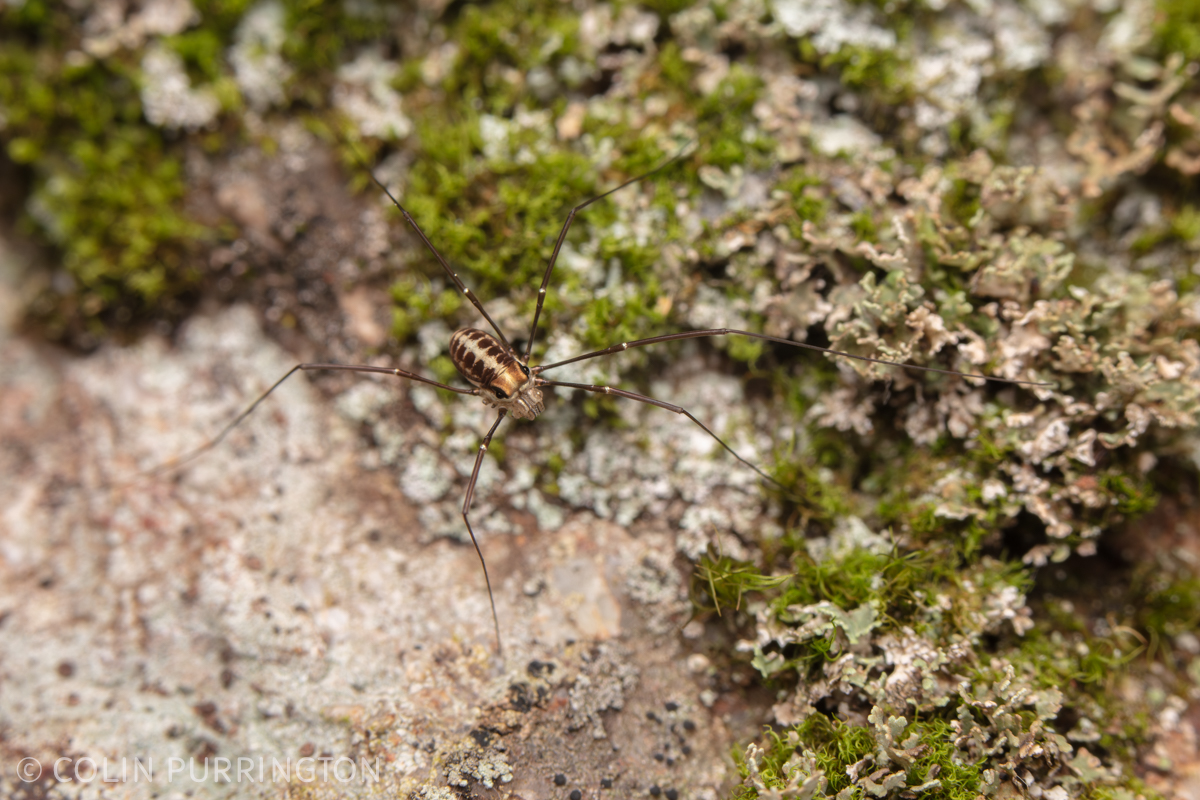
Caddo agilis, a diminutive, predaceous harvestman. I first encountered this several years on the exact same patch of moss. The reason why they are assumed to be hunters is partly because they have such big eyes. They are also are incredibly fast runners. The stuff of nightmares, to be honest.
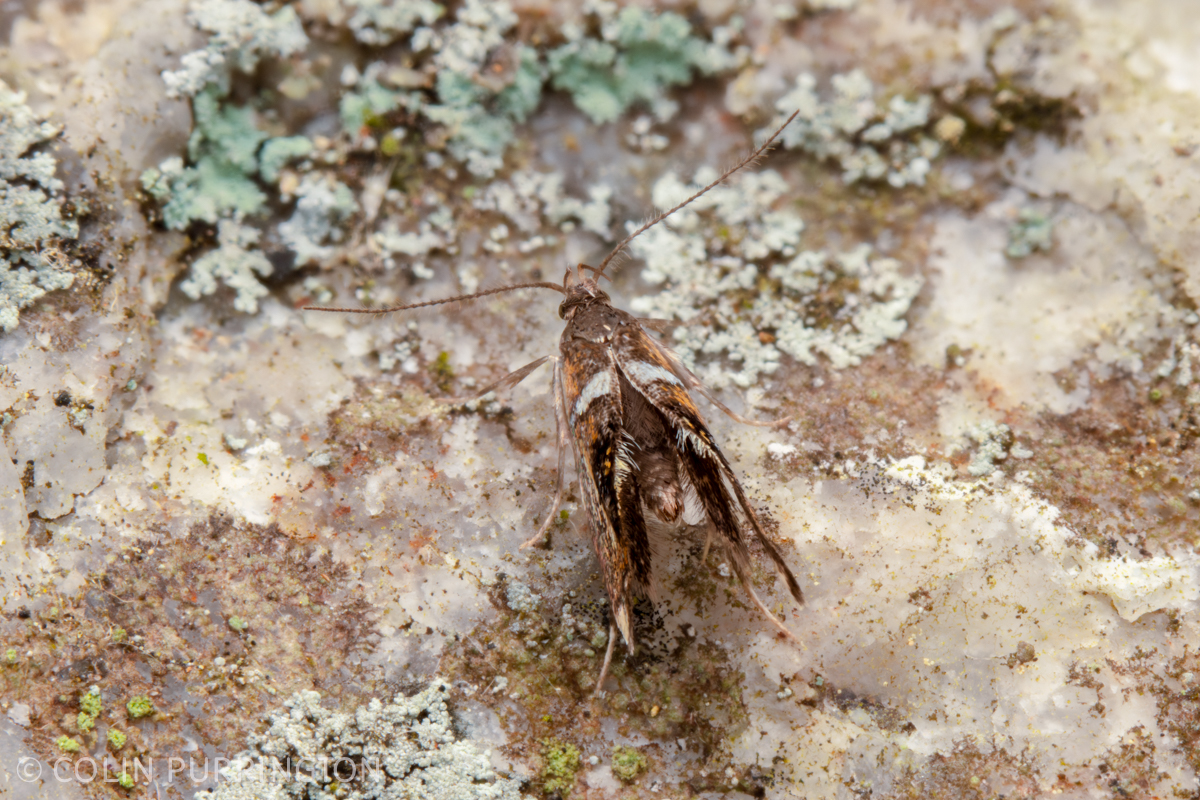
Shaler’s Fabiola moth (Fabiola shaleriella). This is another repeat species for the location, and I always seem to find them on the same stretch of rock. Like most small moths people have no idea what the larvae eat. I’m wondering whether it might use lichen.
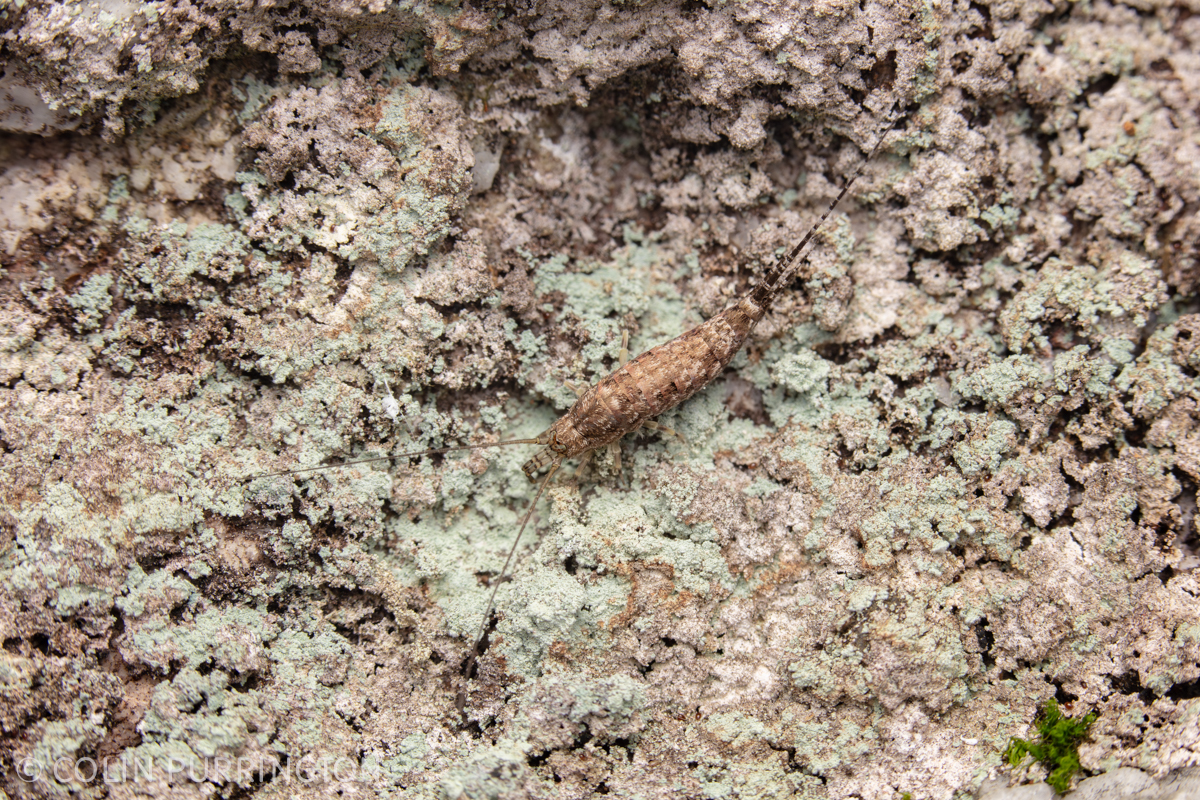
This is some sort of bristletail, wingless insects that move like predators but apparently eat lichen. The small photograph doesn’t do justice to the scales and eyes so below is a close-up.
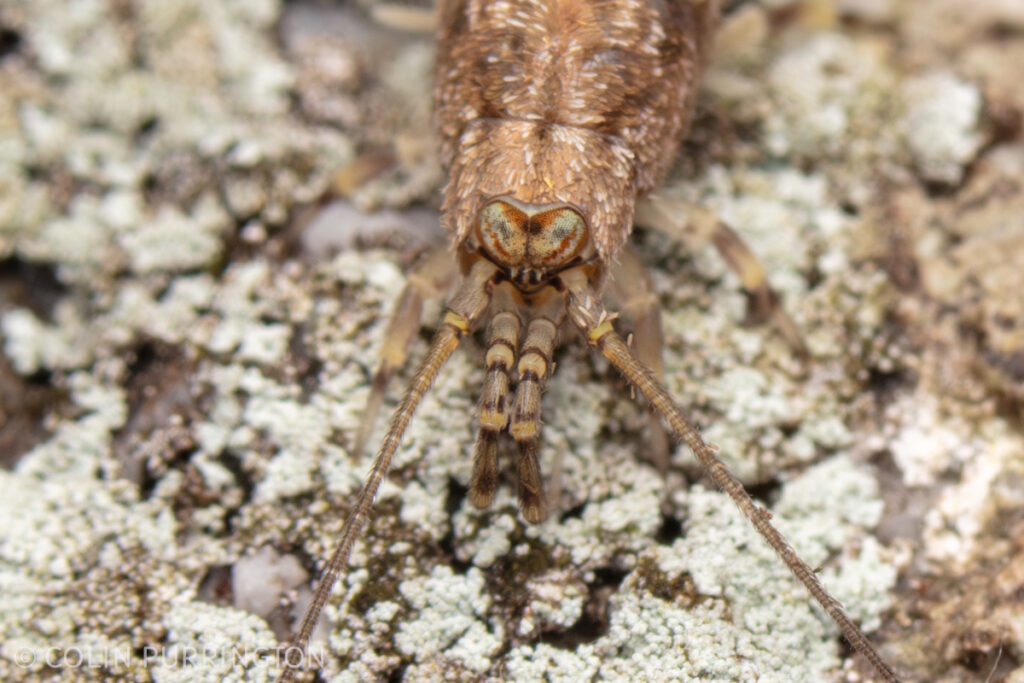
I’m hoping that the eyes can help with identification but so far nobody has weighed in on iNaturalist. They are apparently very hard to narrow down.
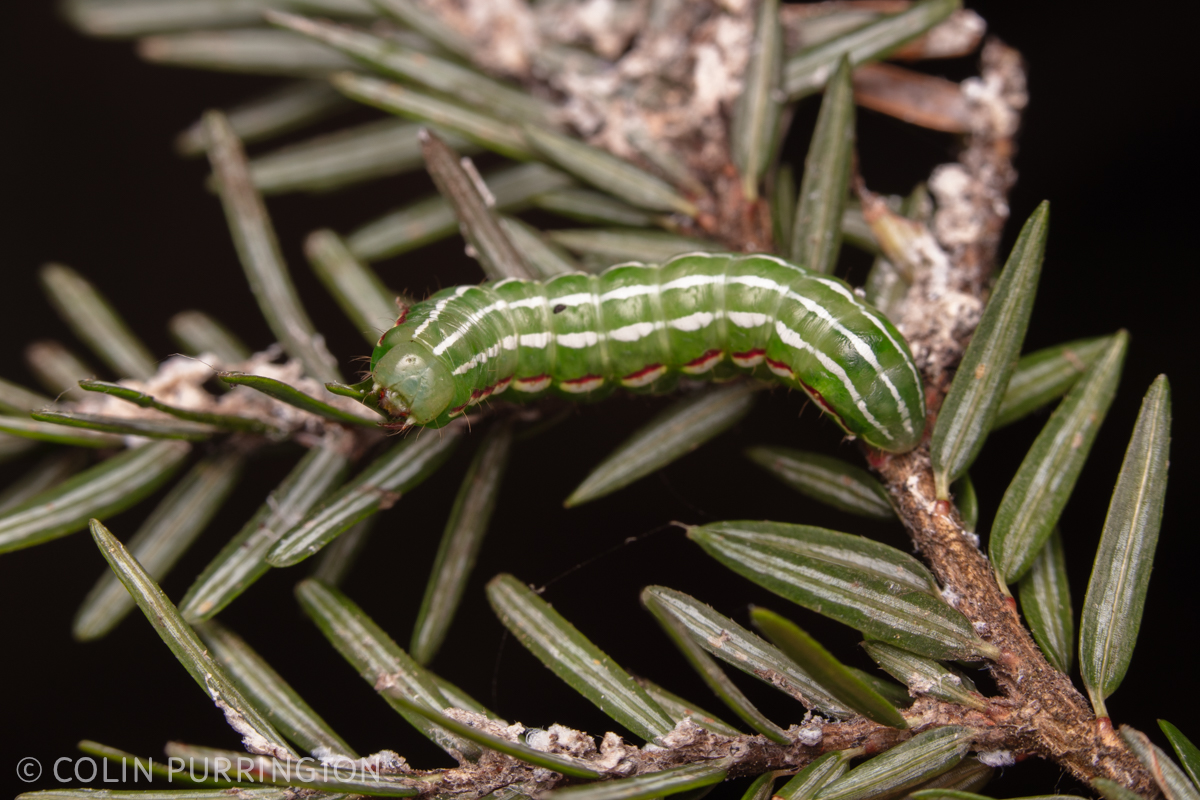
This is a larva of Feralia jocosa (Noctuidae), which apparently goes by the common names “the joker” and “jocose sallow.” It’s munching on eastern hemlock (Tsuga canadensis). Adults are gorgeous but I’m not sure what is so funny about them. Probably an inside joke.
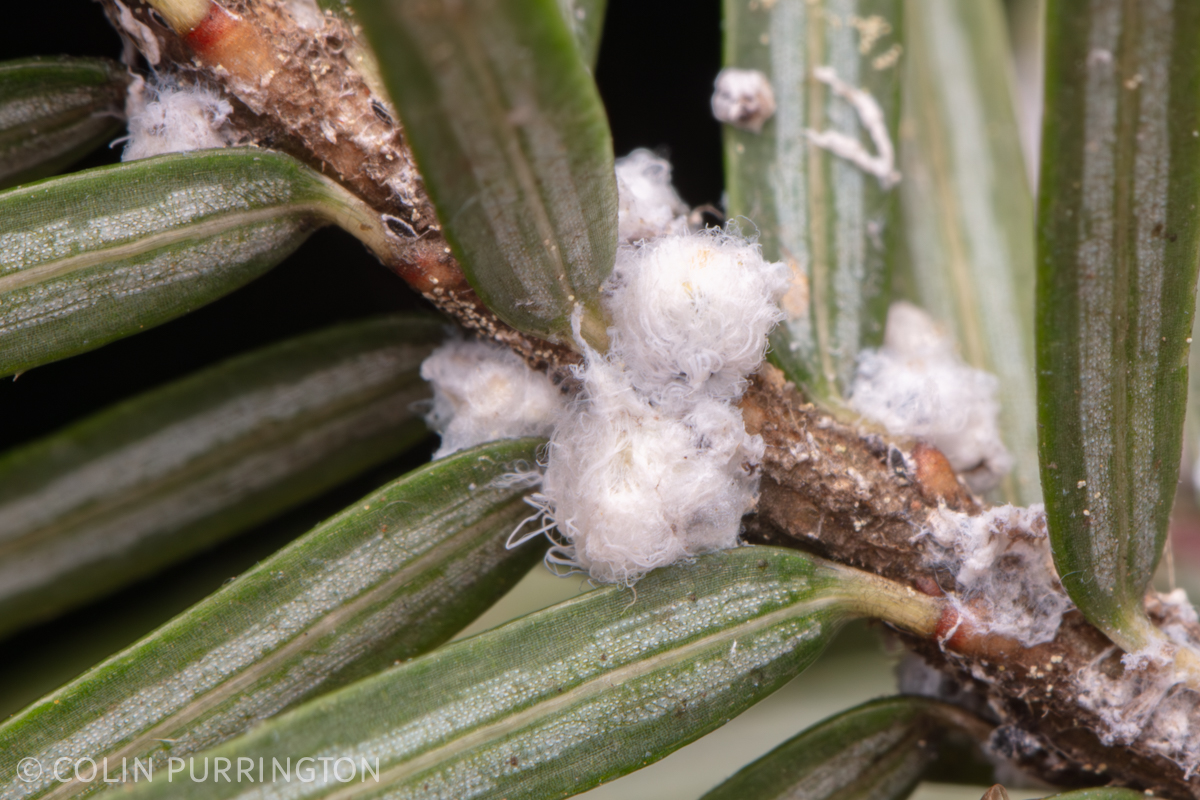
As in many parts of North America the eastern hemlocks at Lake Mohonk are getting hammered by the invasive hemlock wooly adelgid (Adelges tsugae). There were no signs of the beetles (three different species) and silver flies (two Leucotaraxis spp.) that are known to attack them.
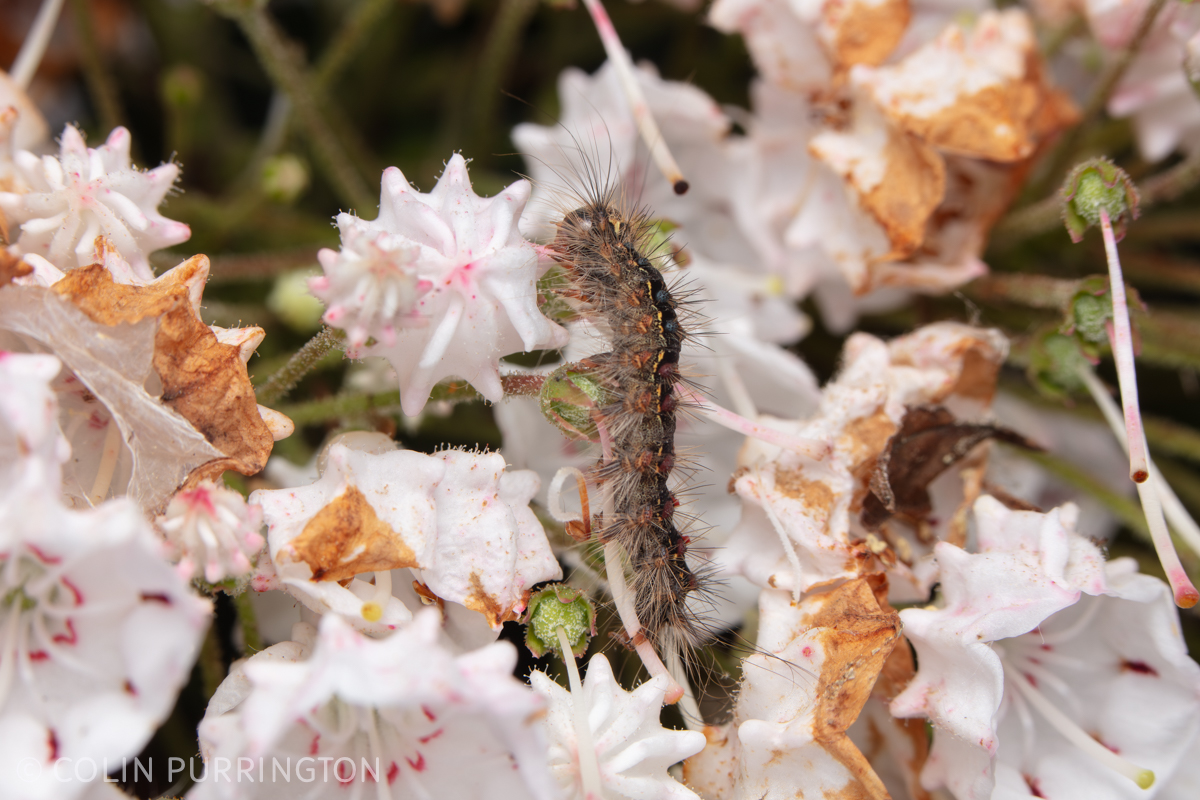
The spongy moths (Lymantria dispar) were everywhere this year and seem happy eating everything, even toxic mountain laurel (Kalmia latifolia) that deer won’t touch.
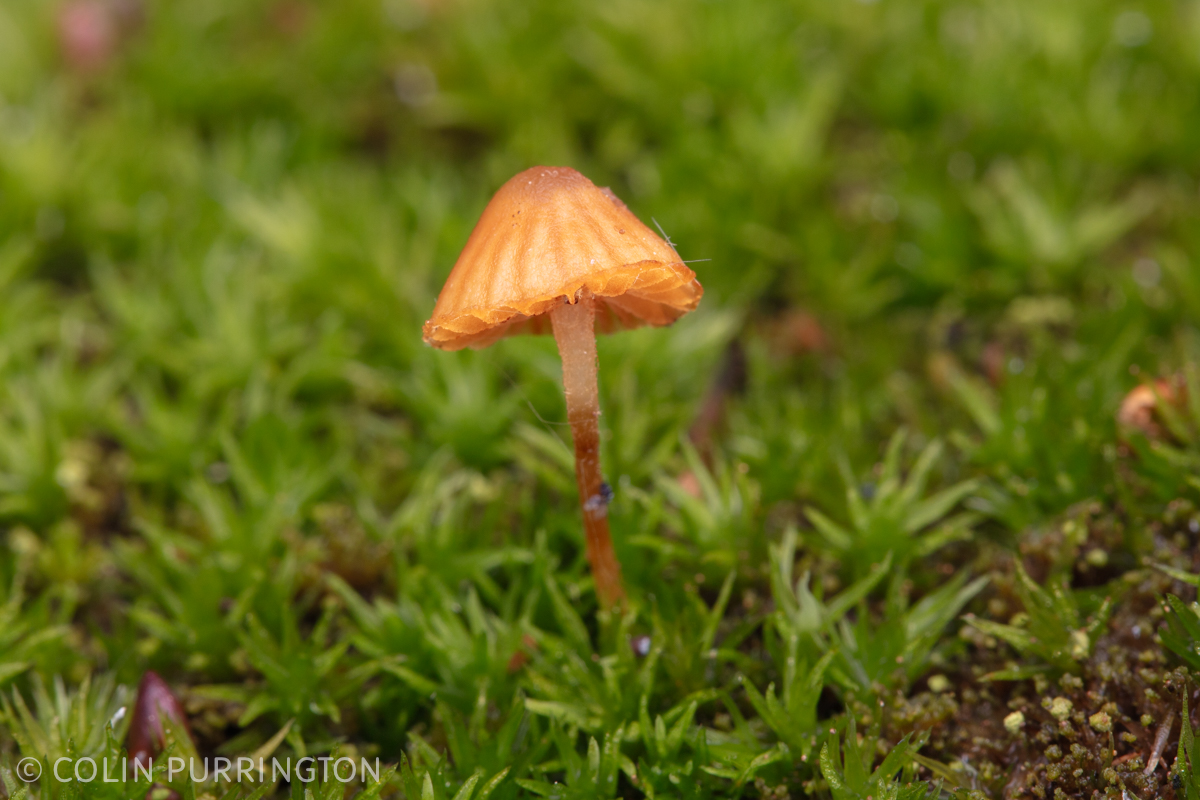
I’m not exactly sure what this tiny mushroom is, but possibly a moss bell (Galerina hypnorum). If genus is correct then very likely highly poisonous, thanks to amatoxins, the same compounds that are in death caps (Amanita phalloides).
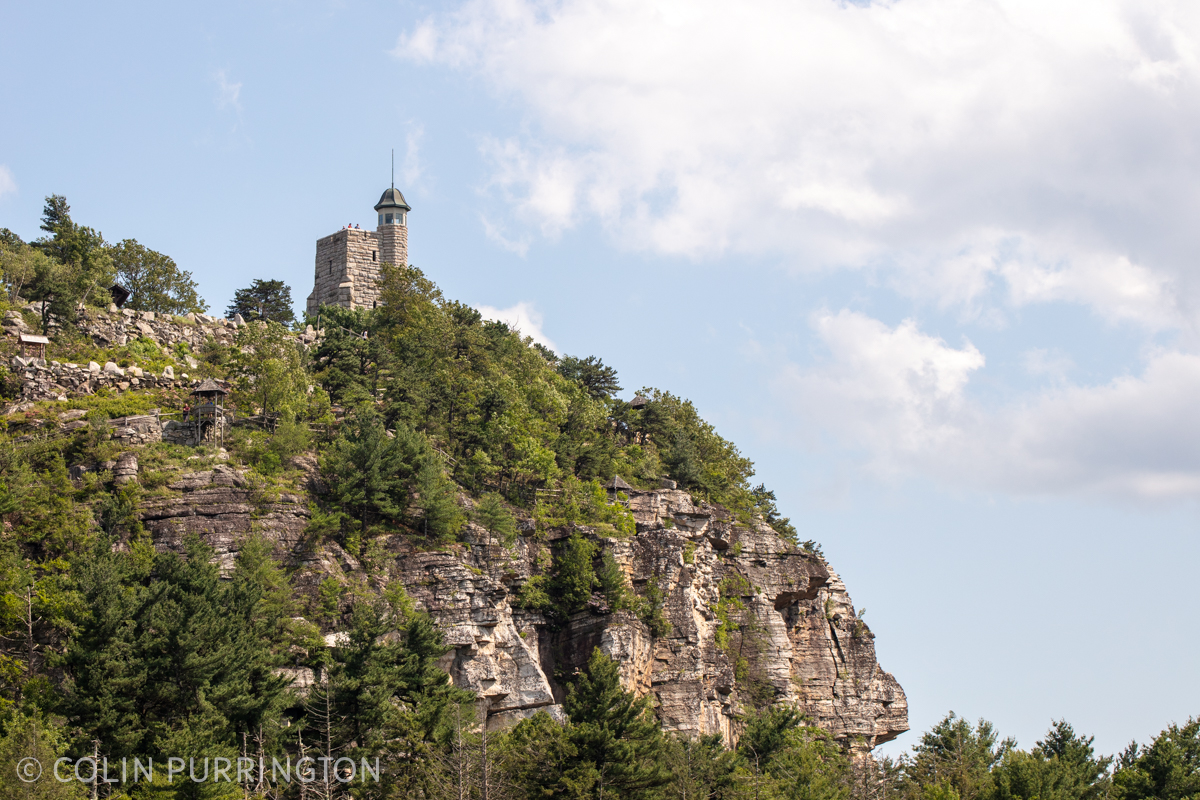
Finally, below are some scenes from around the hotel. It’s such a beautiful place. Do not go if you’re trying to lose weight.
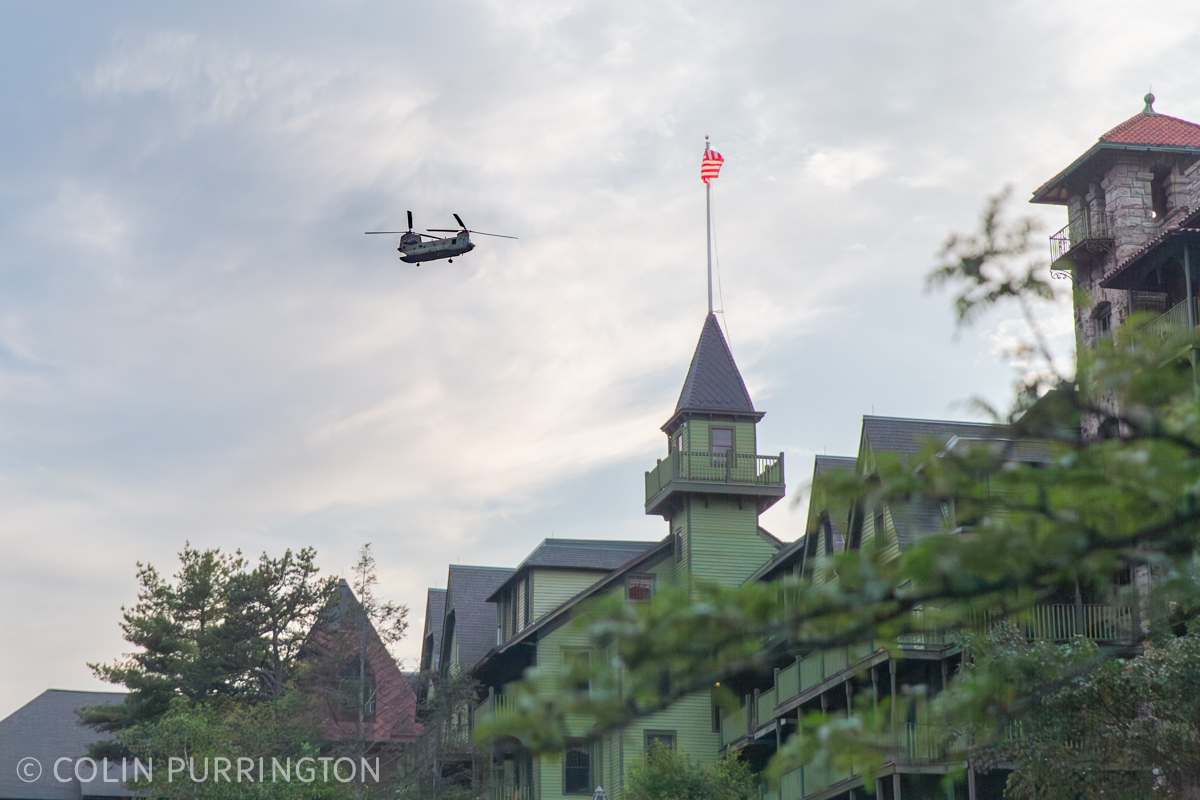
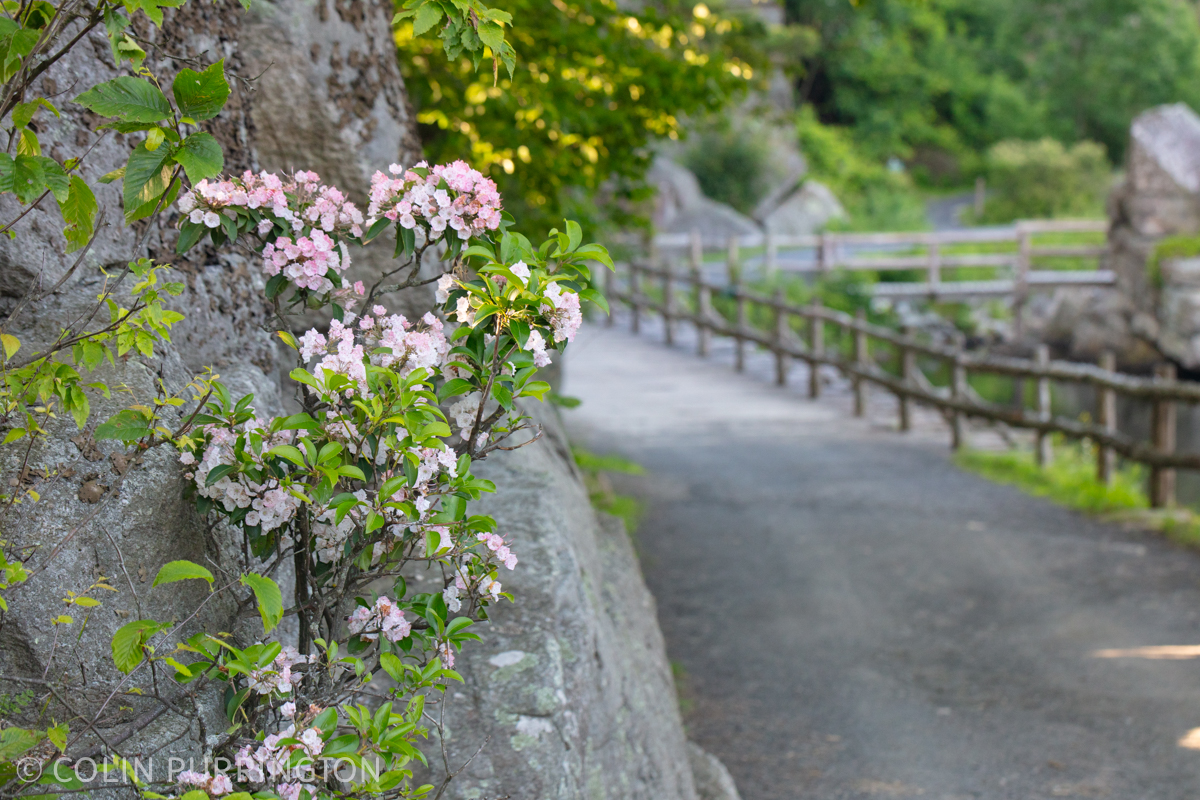
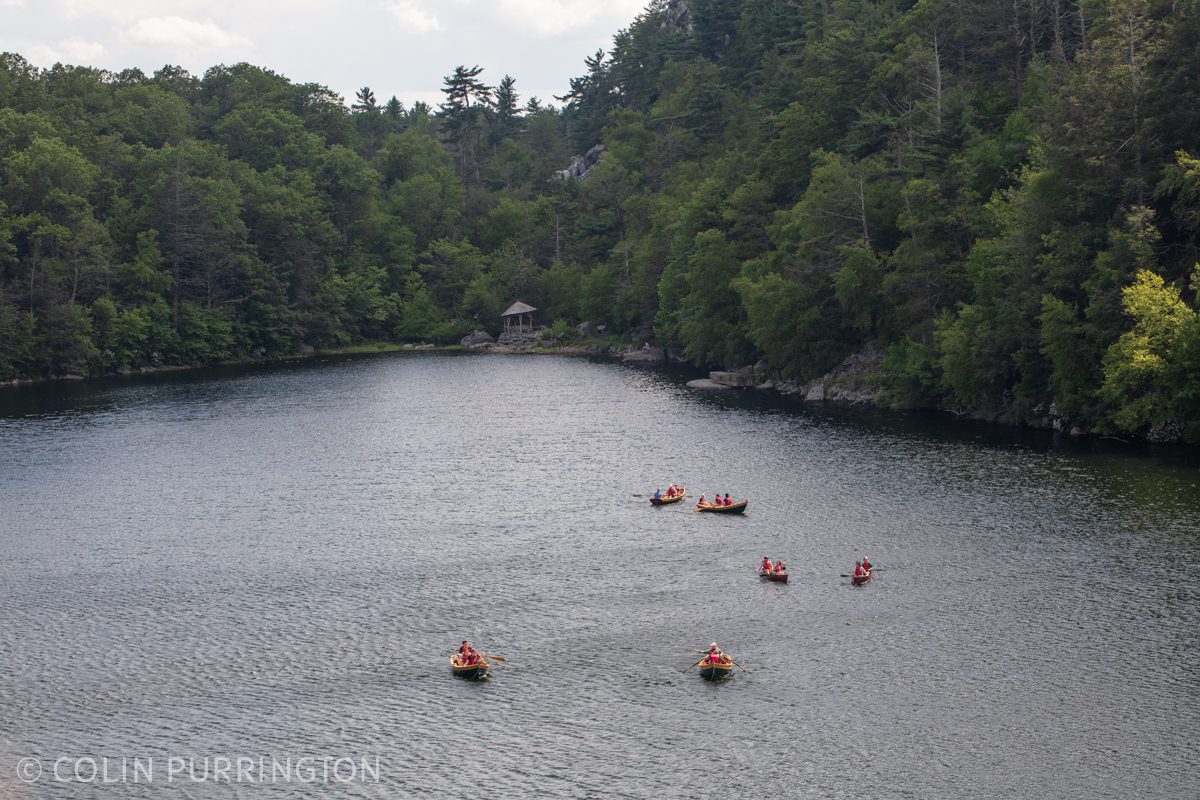
If you want to see more photographs of Mohonk Mountain House please check out my gallery on Smugmug.