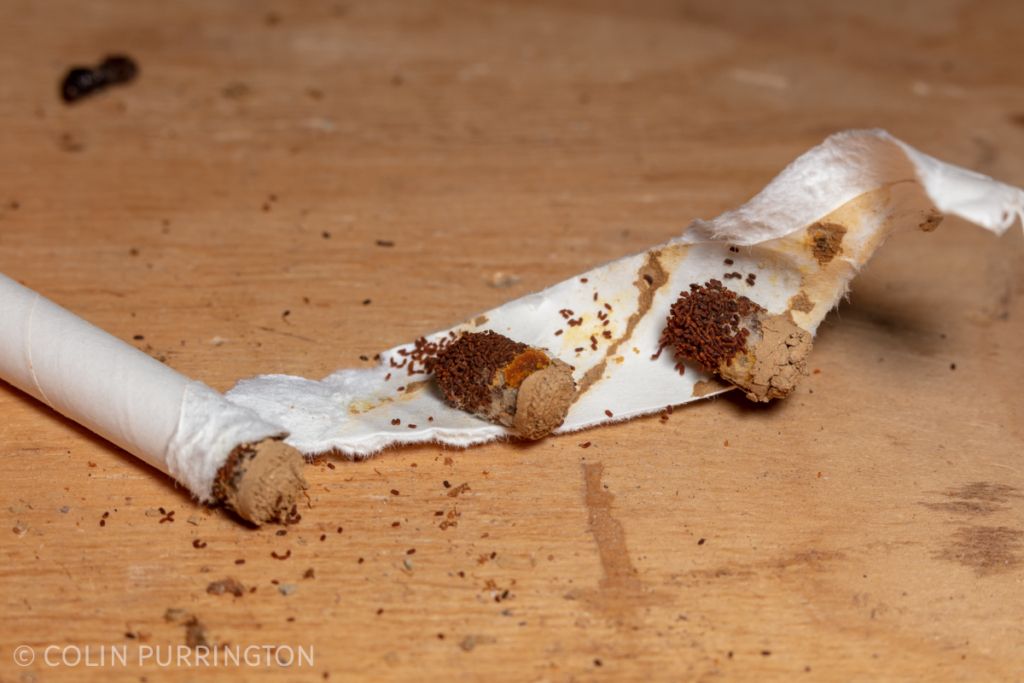
There’s an eastern black walnut (Juglans nigra) on my neighbor’s property that rains down fruit every fall, and I finally got curious about what species might be inside. So far I’ve found four flies, five beetles, two mites, and a parasitic wasp. I’m a little disappointed with the number of wasps but am hopeful that over time I can find more. There are almost always more wasps.
Walnut husk maggots
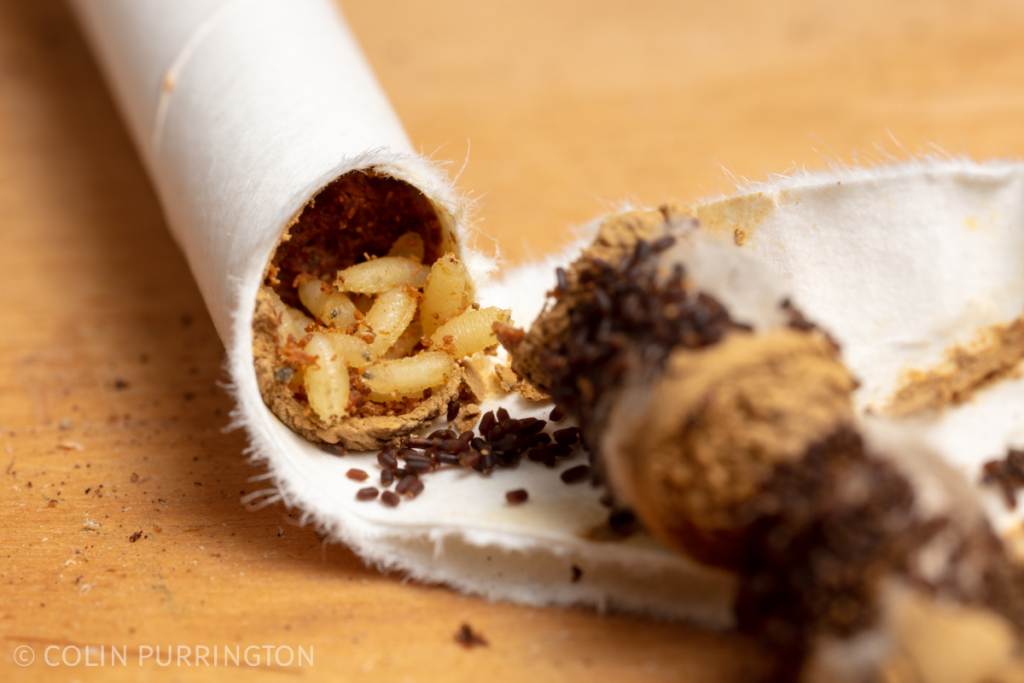
Almost all of them were filled with fly larvae that are most likely Rhagoletis suavis (Tephritidae). If you collect walnuts for their nutmeat, these are unwanted residents because their activity can make the husks difficult to remove, stain the shell, and even cause the kernel to discolor, become bitter, and shrivel. Commercial walnut groves Juglans regia will even treat spray insecticide to minimize their presence. Below is a typical scene showing a healthy population of the larvae:
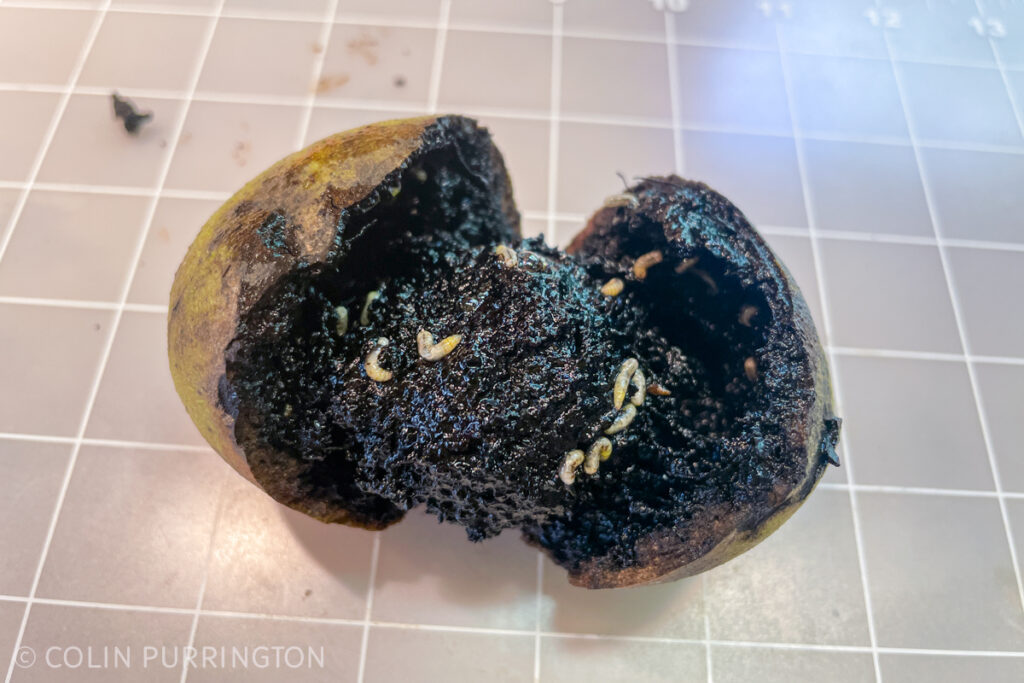
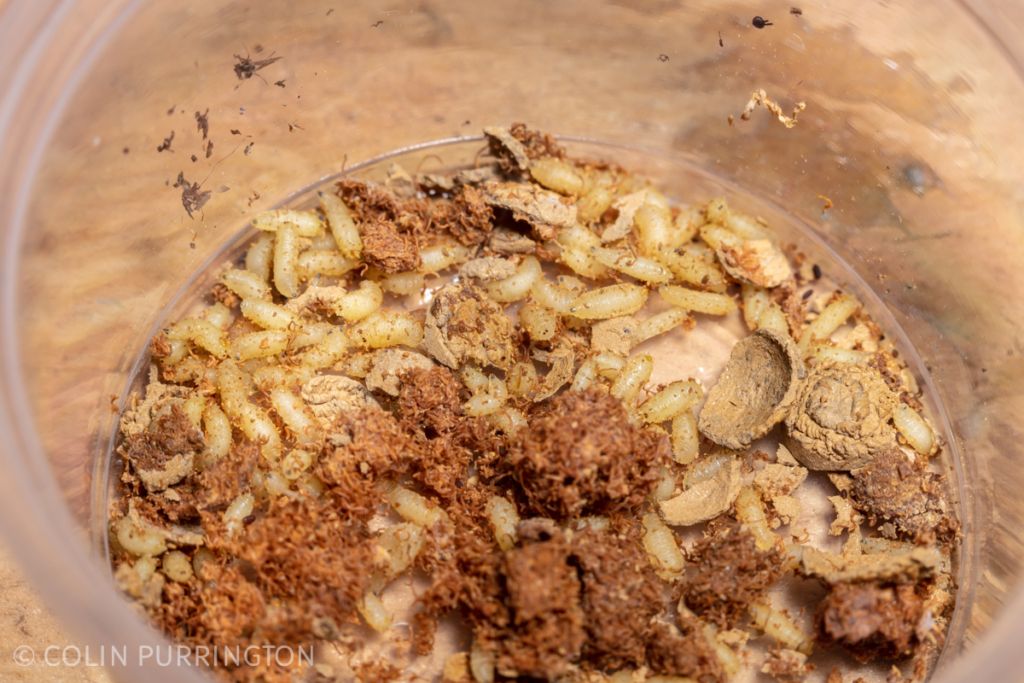
And here’s a close-up. It’s interesting that the larvae seem to accumulate dark pigment in each segment. I’m assuming it’s juglone, also known as Natural Brown 7. The presence is probably unavoidable given what it is eating but I wonder whether it confers any protection against predators. It’s certainly allelopathic, antifungal, and can kill fish.

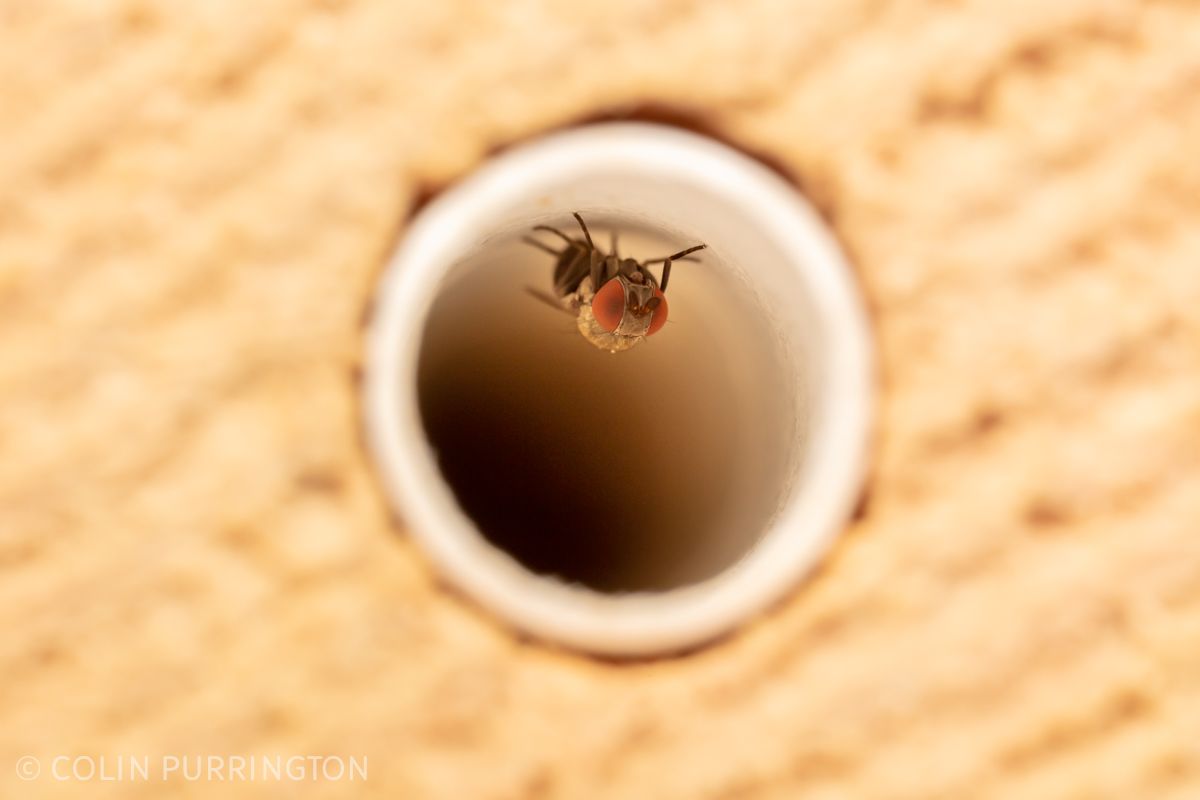
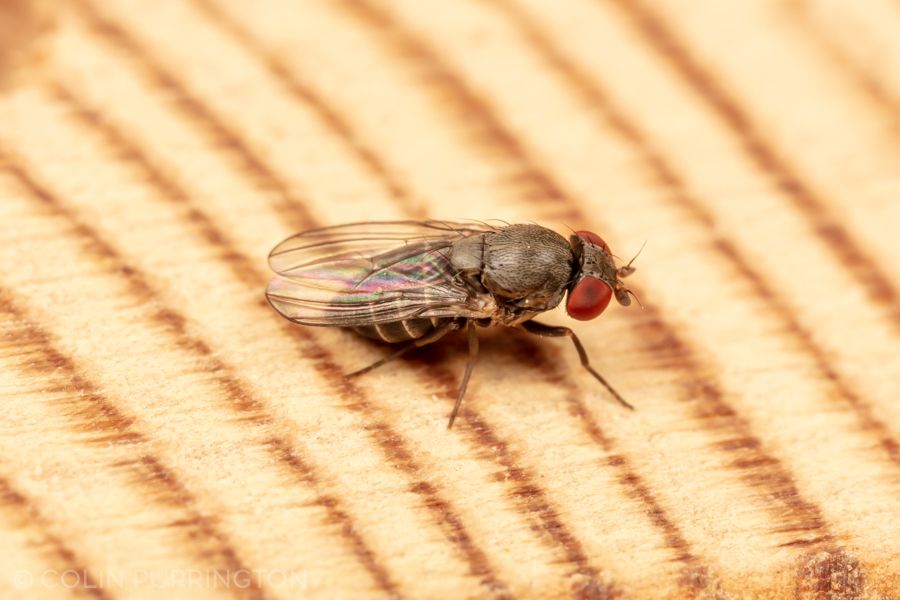
Here’s an adult that I found a few years ago.
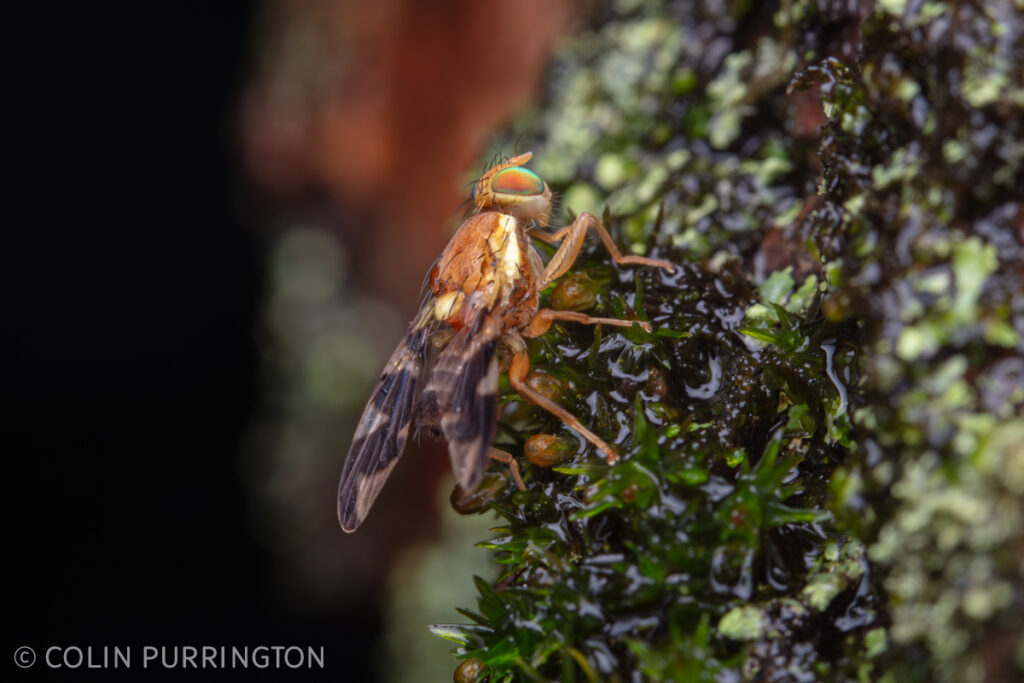
There are several species of tephritids that utilize walnuts. Rhagoletis suavis is restricted to the eastern half of North America (iNaturalist distribution map), with the western-most observation being in Colorado. The western species, Rhagoletis completa (BugGuide pics; iNaturalist map), seems to be expanding its range, arriving in Jonesboro, Arkansas in 2007. Another western species, Rhagoletis juglandis (BugGuide pics; iNaturalist map), occurs in Arizona, Utah, New Mexico, Mexico, and apparently British Columbia. If you live in an area with more than one of these species, you’d need to rear larvae to adulthood to get an identification (see fig. 8 here for wing pattern differences). Alternatively, you can try to use the key to larvae in Steyskal 1973.
Fungus gnat
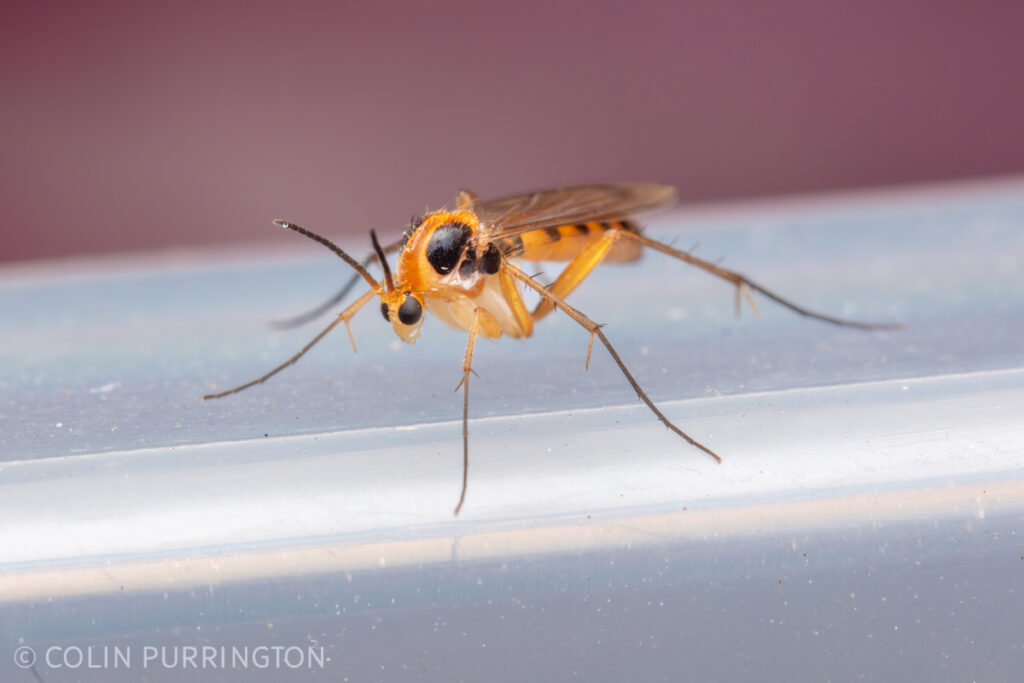
This fly emerged from a pile of rotting walnuts that I’d covered with fine netting to catch whatever hatched when I wasn’t looking. I think it is Leia bivittata (Mycetophilidae). Per Weiss 1919 the larvae move around in a bag of mucous. It’s the only one that appeared. There is nothing in the literature that suggests they eat the fungi in rotting walnuts, so I don’t know how common they are in the fruit.
Vinegar flies
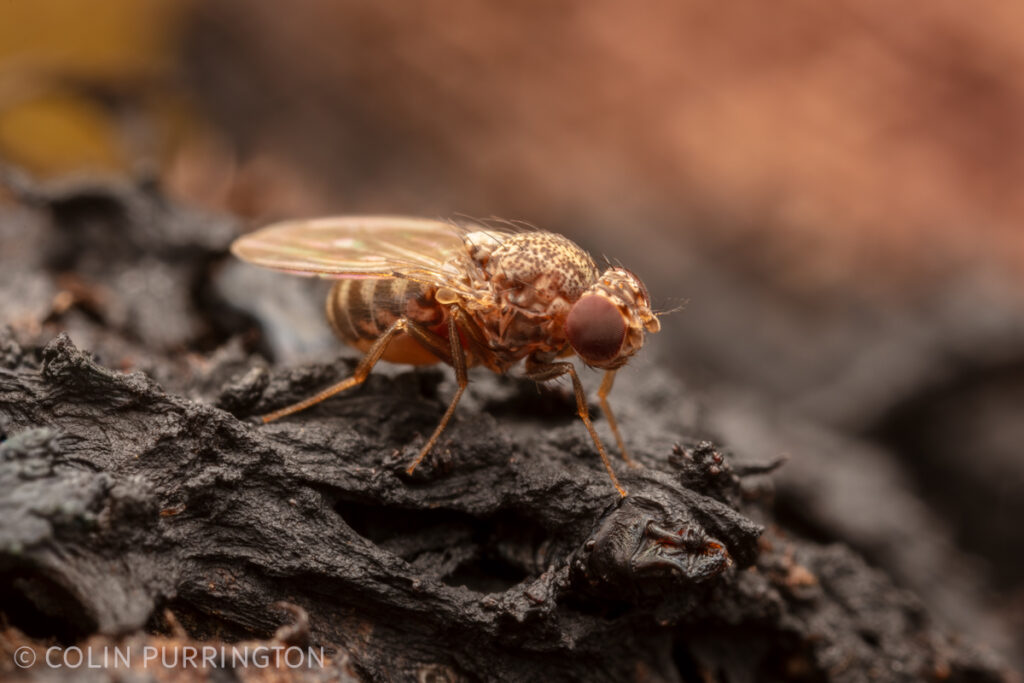
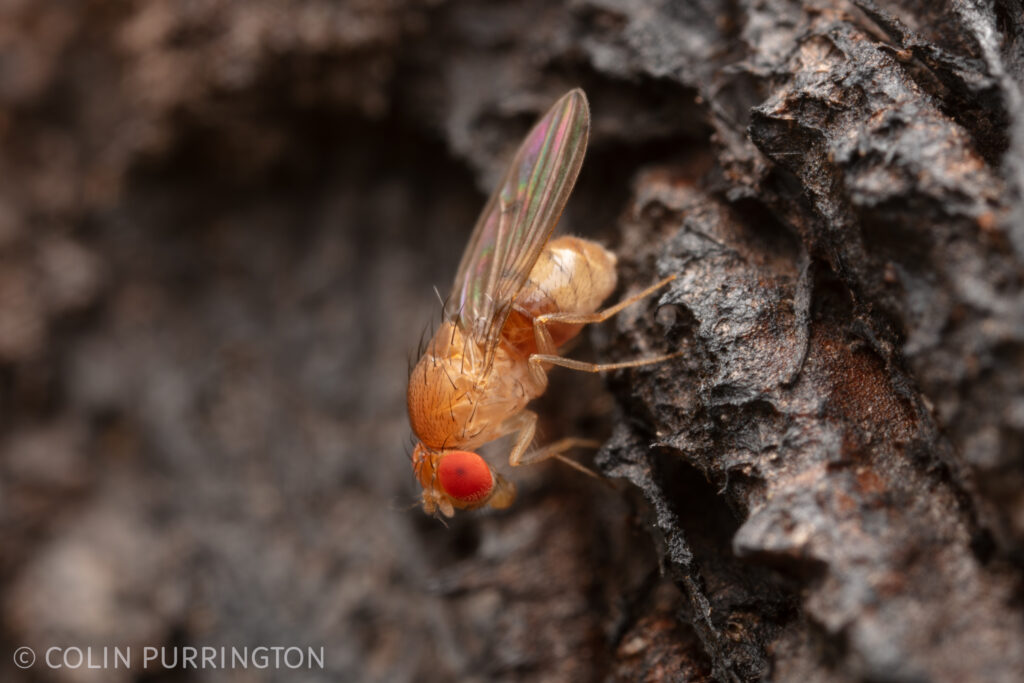
I found two species of vinegar flies (Drosophilidae) hanging out on rotting husks, Drosophila repleta and Drosophila tripunctata, the latter in large numbers. Per Buchner and Symmes 2014, Drosophila are attracted to the rotting flesh caused by Rhagoletis infestation. What’s notable to me is that larvae can tolerate the juglone and related compounds.
Beetles
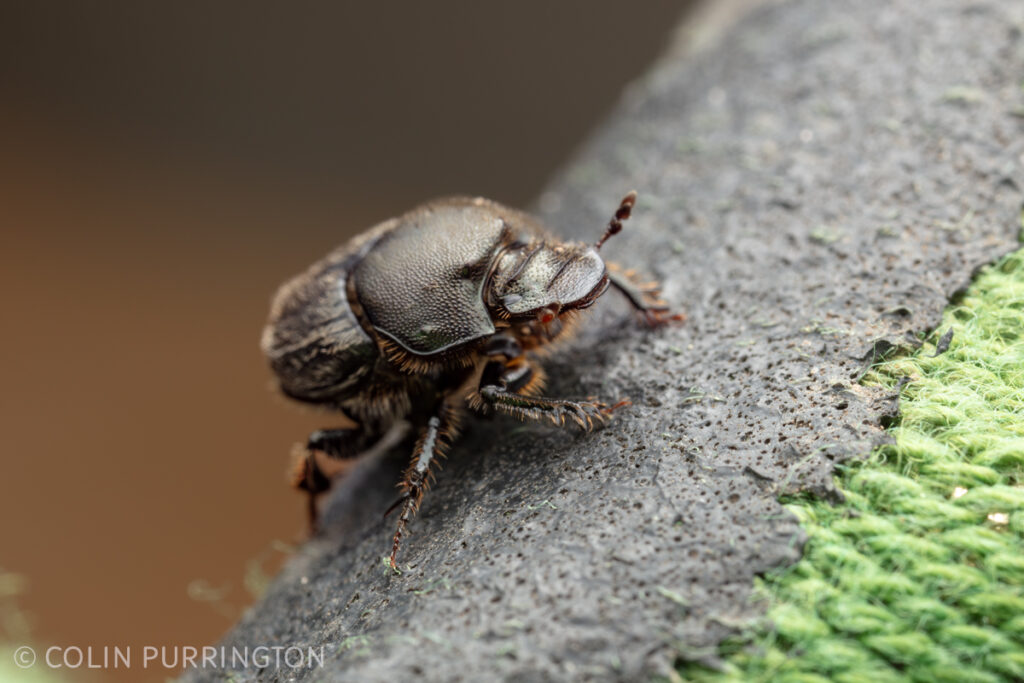
This scooped scarab (Onthophagus hecate) was wedged inside a crevice in a walnut husk. They eat fungi but will also show up to eat dead animals.
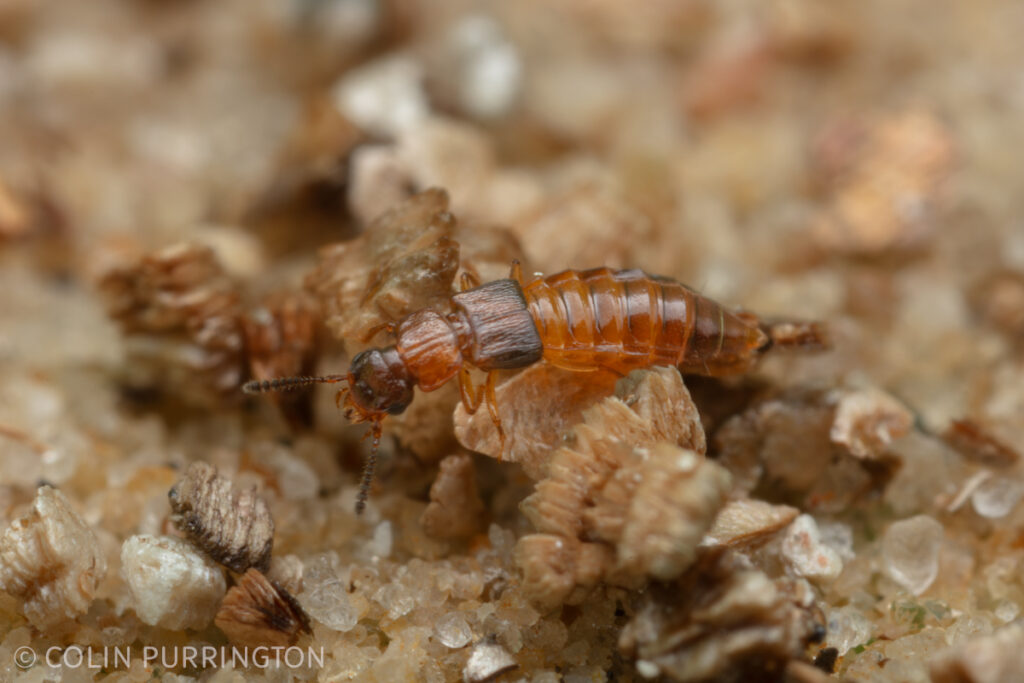
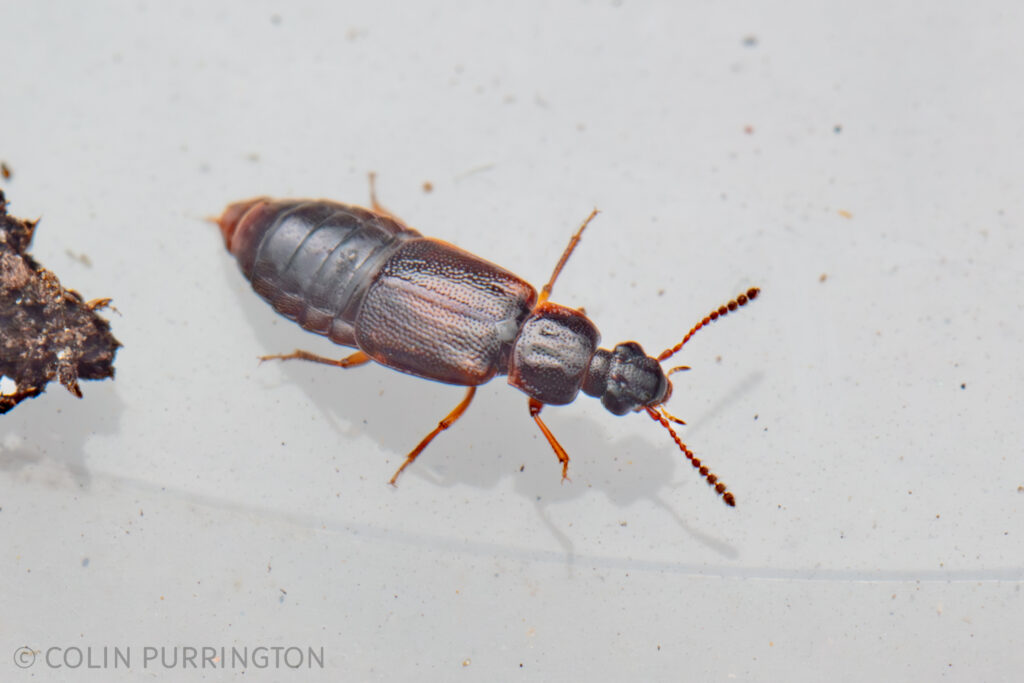
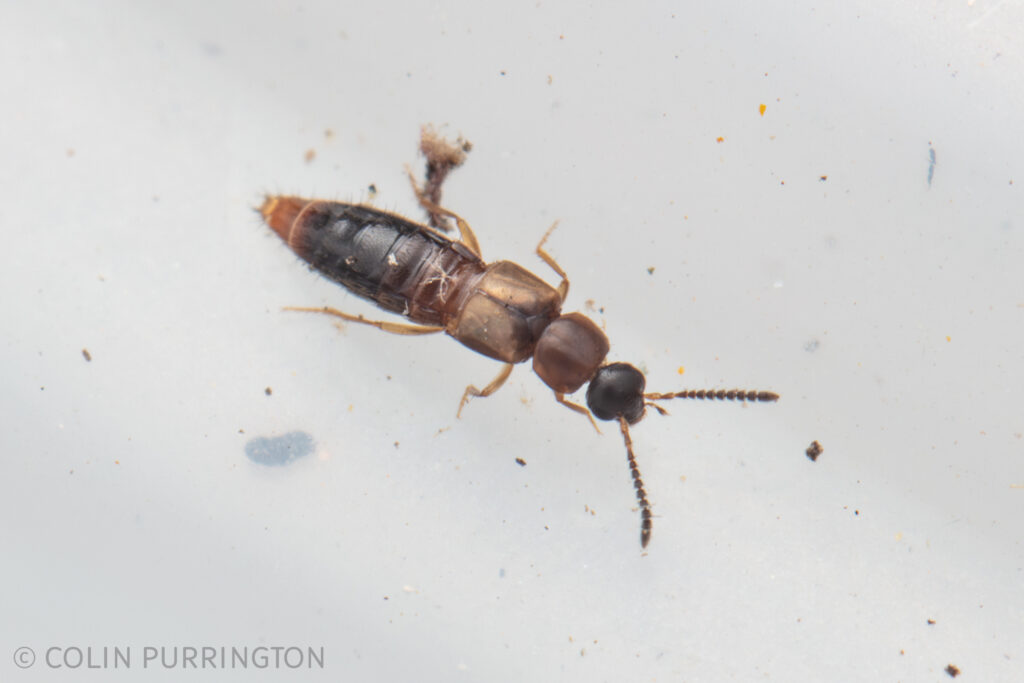
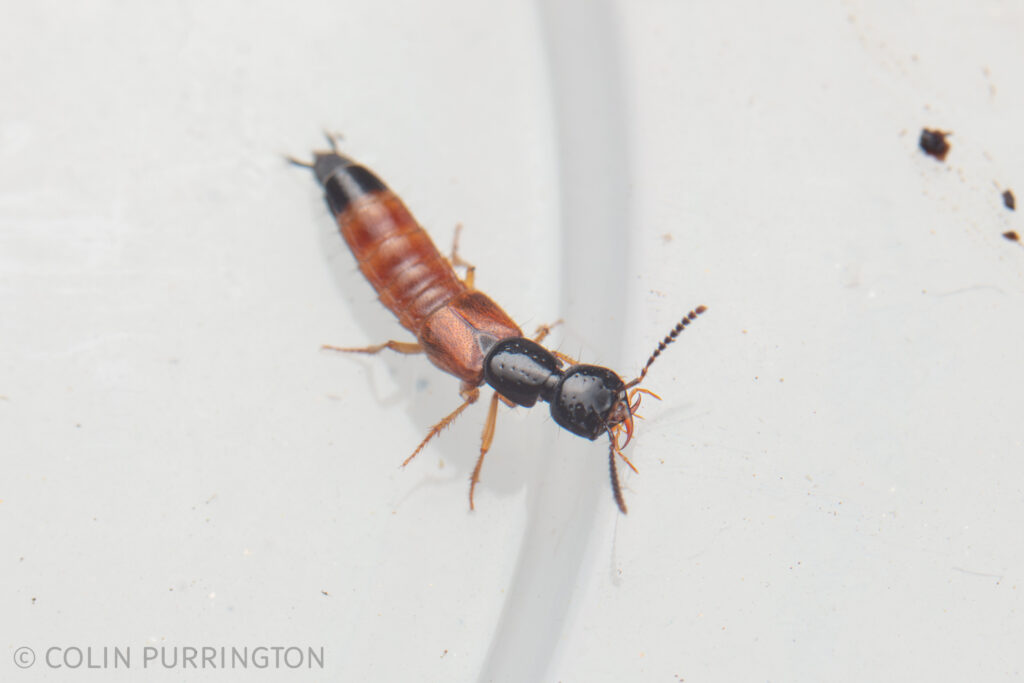
I also found four different kinds of staphylinids. I’ve only been able to identify one, Belonuchus rufipennis, but will update this post if and when an expert on iNaturalist sees them (so probably at least a decade). I would love to know what they are eating. There are certainly plenty of fly larvae present but I don’t have any confirmation that those are their targets.
Mites
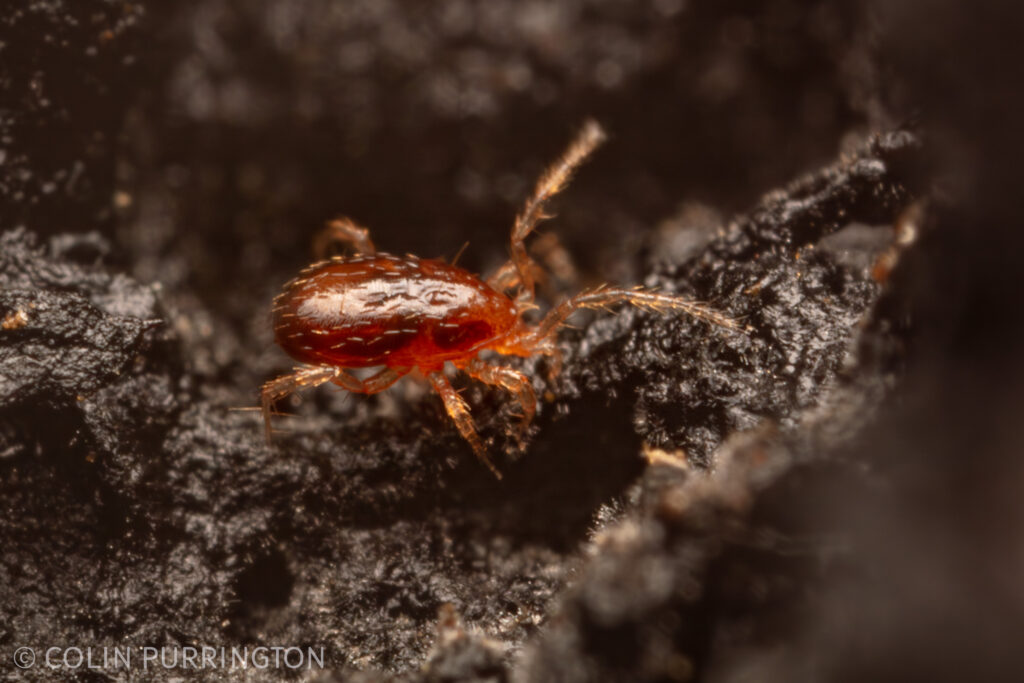
The rotting walnuts were crawling with mites, often numbering in the dozens. These are extremely small and fast moving so I’m not sure how many different kinds are present. I think there are at least two species, both in the order Mesostigmata. The first image might be in the suborder Gamasina, and possibly in the genus Lasioseius. I have no idea what they are eating but some mesostigs are omnivorous.
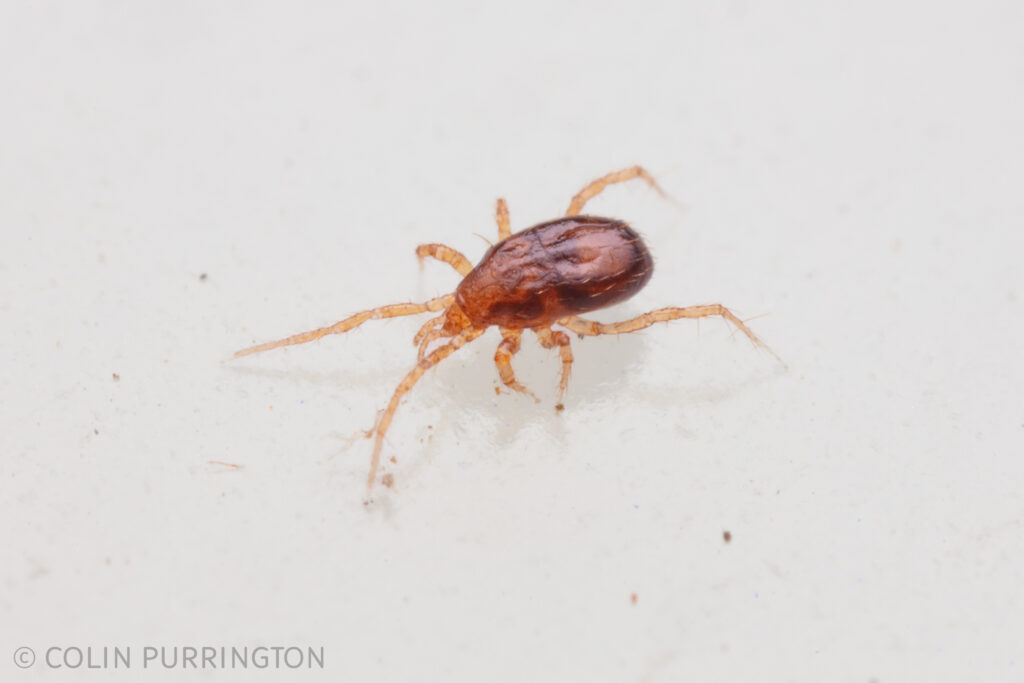
Parasitic wasps
Although I didn’t find them inside the walnuts, this wasp in the genus Coptera (Diapriidae) ended up in a yellow pan trap set up near a tray of Rhagoletis suava puparia that I situated atop a bin of several dozen walnuts. Here’s a really low-res video of it walking around on the tray after I rescued it from the pan trap. There was a second individual walking on the tray at the same time, so I don’t think the pan-trap individual was just a rando Coptera attracted to yellow. These wasps apparently dig down into the soil to find pupae. Some articles say they’ll drag the pupae to the surface prior to ovipositing into them.
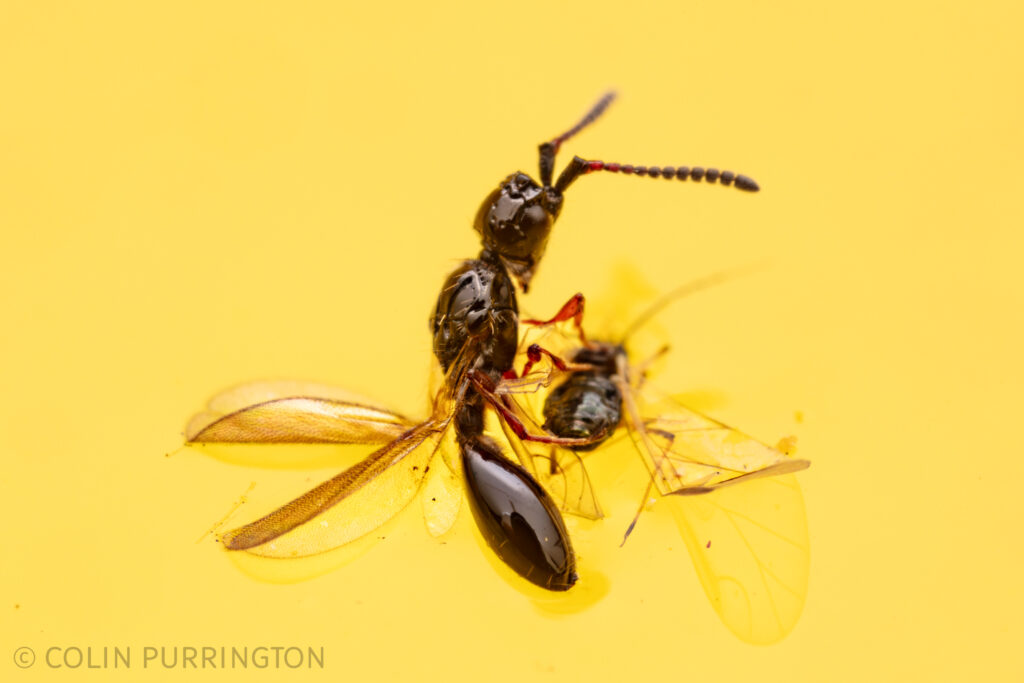
Members of this genus are rarely observed and are difficult to tell apart, but based on proximity to walnuts it is likely Coptera pomonellae, the only species that arrived at pan traps set up under walnut trees in Iowa (two locations) and Indiana in Forbes et al. 2012.
Because I have trays of bait pupae, I’m also monitoring for but haven’t yet seen:
- Diachasmimorpha mellea (Braconidae), a wasp that is reported to parasitize Rhagoletis suavis (Krombein and Burks 1967, Wharton and Marsh 1978).
- Aphaereta pallipes (Braconidae), a pupal parasite of Rhagoletis suavis that was documented in Amherst, MA (Babb 1902). Per Joseph Fortier, it’s been reared from 15 dipteran families. The two observations on iNaturalist emerged from Chirosia gleniensis and Fannia canicularis.
- Phygadeuon sp. (Ichneumonidae), a species that attacks pupae of (the closely-related) Rhagoletis juglandis (Andrew Forbes, pers. comm.). I’m not sure whether Phygadeuon attacks Rhagoletis suavis, but there are observations in the eastern USA.
- Aganaspis alujai (Figitidae), a parthenogenic wasp that attacks Rhagoletis completa in Mexico (Ovruski et al. 2007, Takata et al. 2025). I have no idea whether there’s a member of the genus in Pennsylvania, so this is another unlikely arrival.
- Tetrastichus giffardianus (Eulophidae) “may parasitize Rhagoletis suavis completa CRESSON” (Narayanan and Chawla 1962, citing Marlatt 1933, which I cannot locate). Marlatt was writing in a USDA publication so this relates to the United States. But host species is now Rhagoletis completa, so this is probably a western wasp (confirmed: just California).
Absent from the list are hyperparasitoids, which is kind of annoying because I really like them. I will certainly be on the lookout for them, of course. I’ve also read that a fairy wasp attacks the Rhagoletis eggs, and that would also be fun to find.
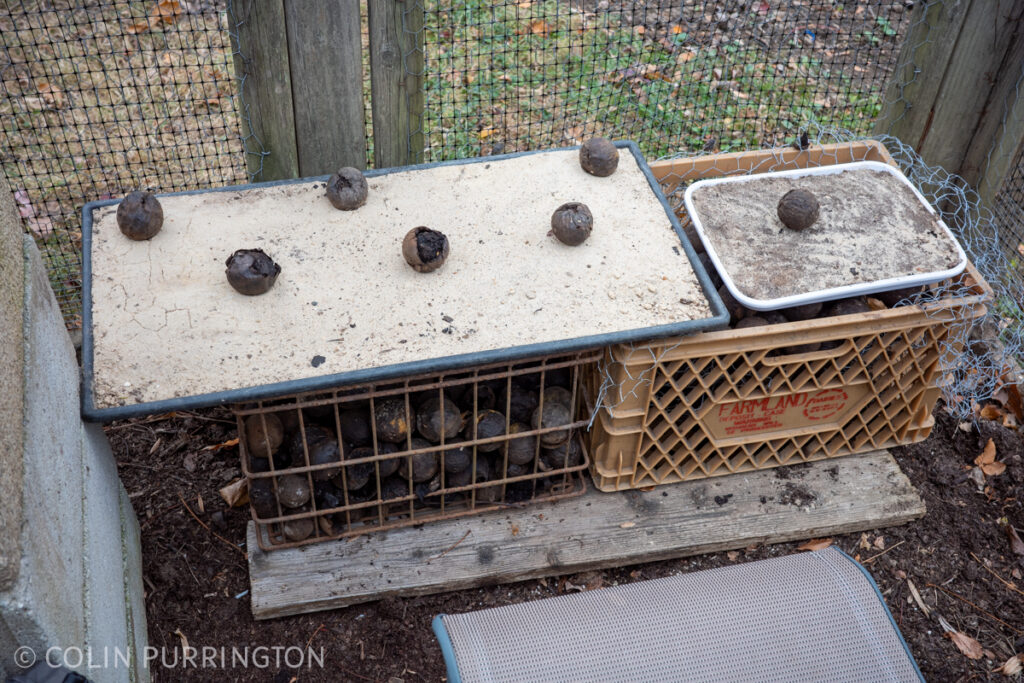
I’ll post an update in August 2026 with details on what emerges from the several hundred Rhagoletis suava pupae I have. Hopefully there will be at least some Coptera in the mix, and with some luck I’ll get photographs of both sexes. I’m also very curious what types of wasps might seek out Rhagoletis completa that are on eastern black walnuts planted in the western USA, but that hinges on my sister reading this post and setting up some trays in a similar way (simple instructions are in next section). The first record of Rhagoletis completa in Oregon was in 1963 (Berlocher 1984).
Below is a photograph of the trays of pupae. The chair is so I can drink my coffee while scanning for wasps.
Collecting fly puparia
If anyone is curious how I’m getting puparia, I placed infested walnuts in trays filled with sand and vermiculate, and the larvae tunnel down into the medium to pupate. The plexiglass is to keep the rain from flooding the containers, and the whole operation is conducted inside a screened enclosure that keeps the squirrels from pilfering the walnuts. This is making the squirrels angry.
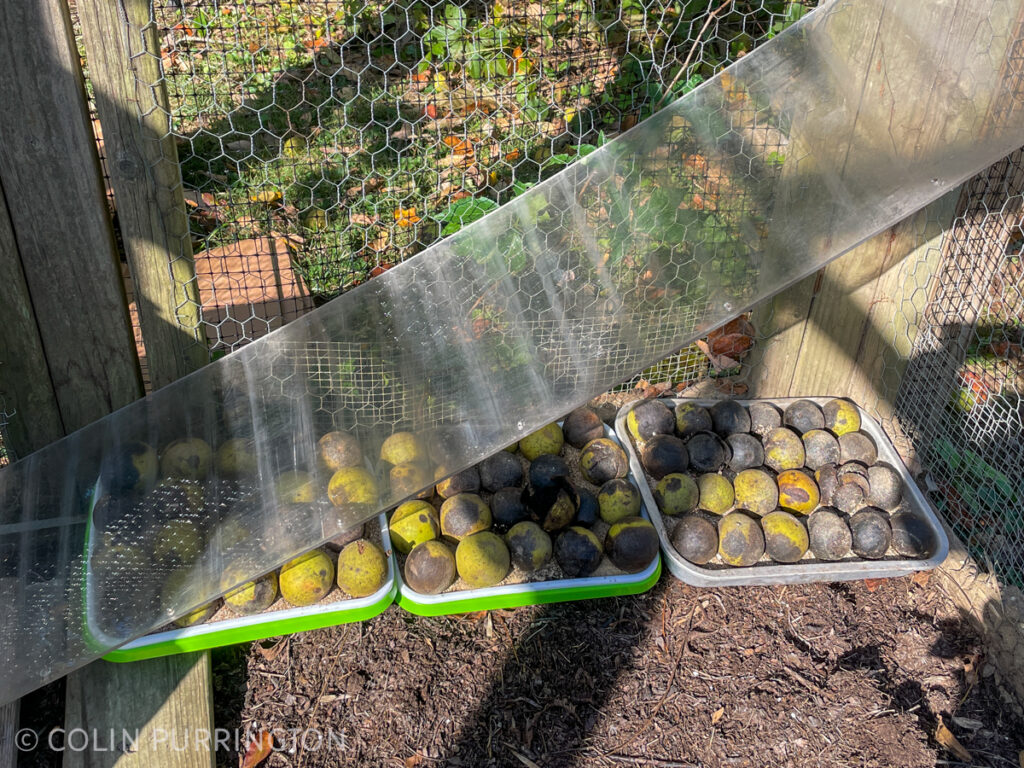
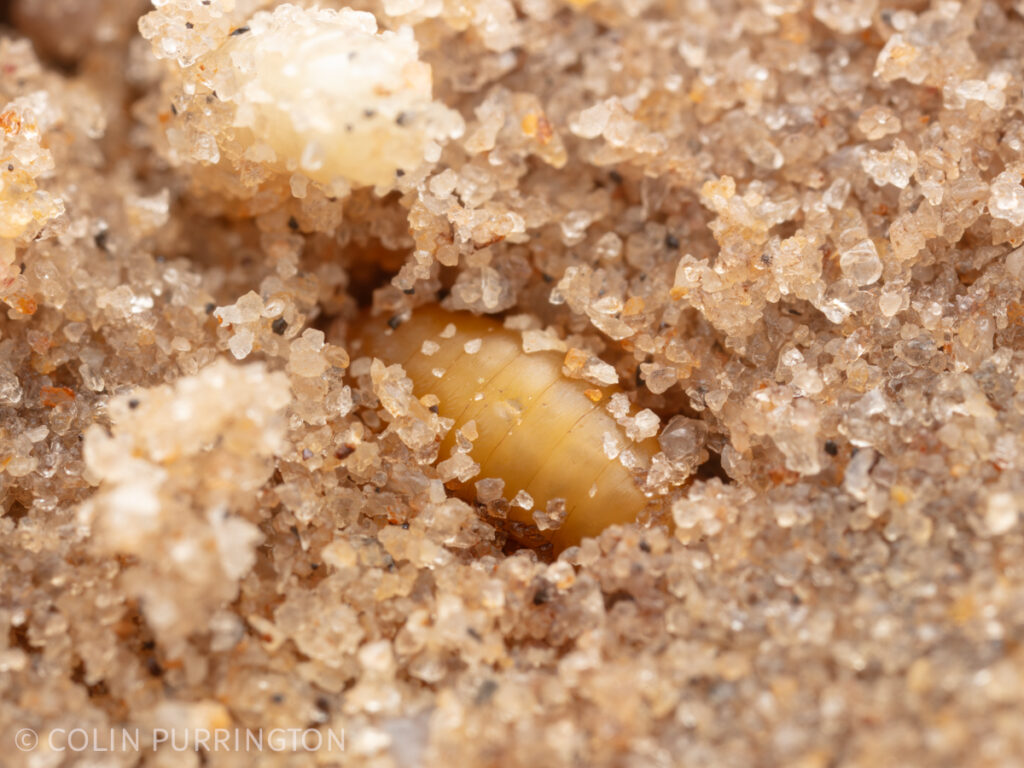
The larvae eventually burrow into the medium to form puparia, but sometimes they simply pupated underneath a walnut (e.g., as in photo below). At some point I’ll sift the media to collect puparia so that I can more closely monitor them. I’m curious whether they can be candled under a microscope to spy on the residents.
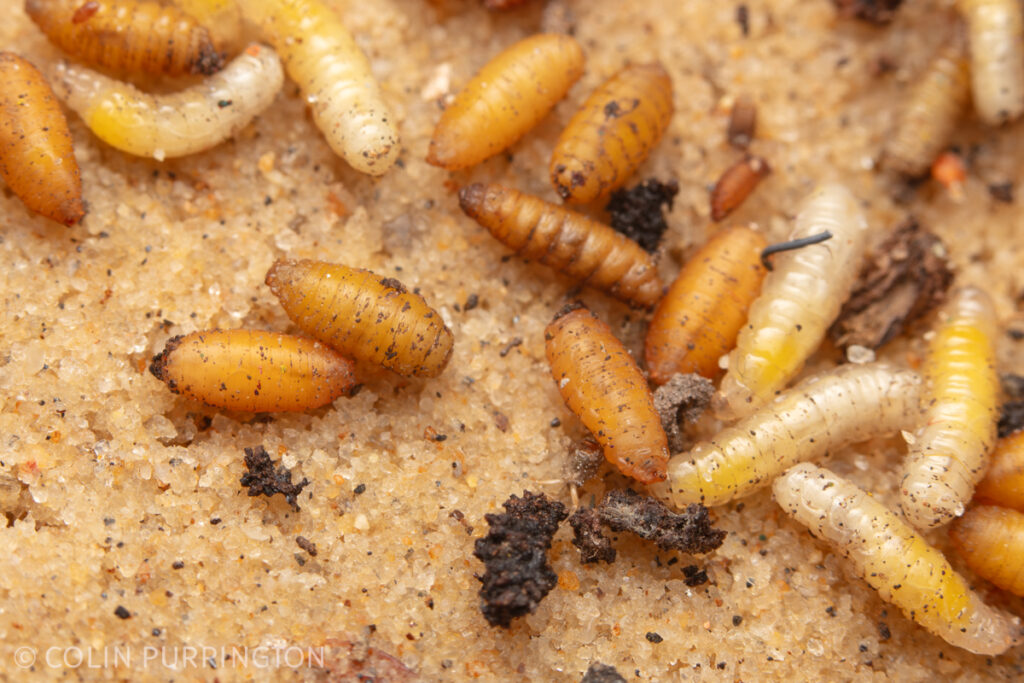
Here’s a sampling of the puparia along with some third-instar larvae. I suspect I have 500 or so puparia in the trays. Some pupae apparently stay dormant for two years (Stirret 1936).
Next year I’ll likely repeat all of the above but start monitoring for Coptera much earlier.