
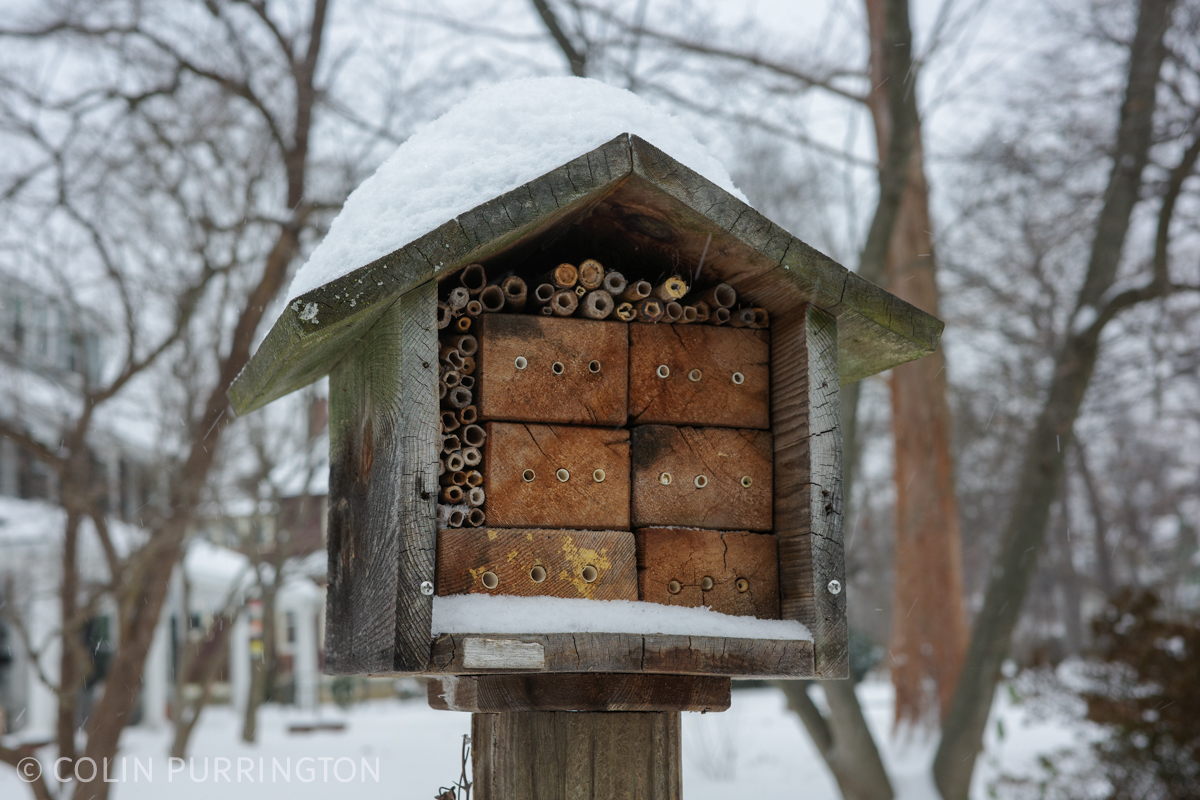
The cold and snow this winter have prevented me from taking many nature photographs, so it was a treat to have a look inside my two insect hotels. The one below is in the front yard. As you can see, it has a mix of hollow stems and wood blocks that have holes lined with paper straws. I split open the stems and unravel the straws to see who is inside, a process that is interesting but also allows me to kill any non-native, invasive parasites I find. I.e., I don’t want my hotels to be a breeding facility for pests and pathogens that might spread out and harm populations of local bees and wasps.
Bees
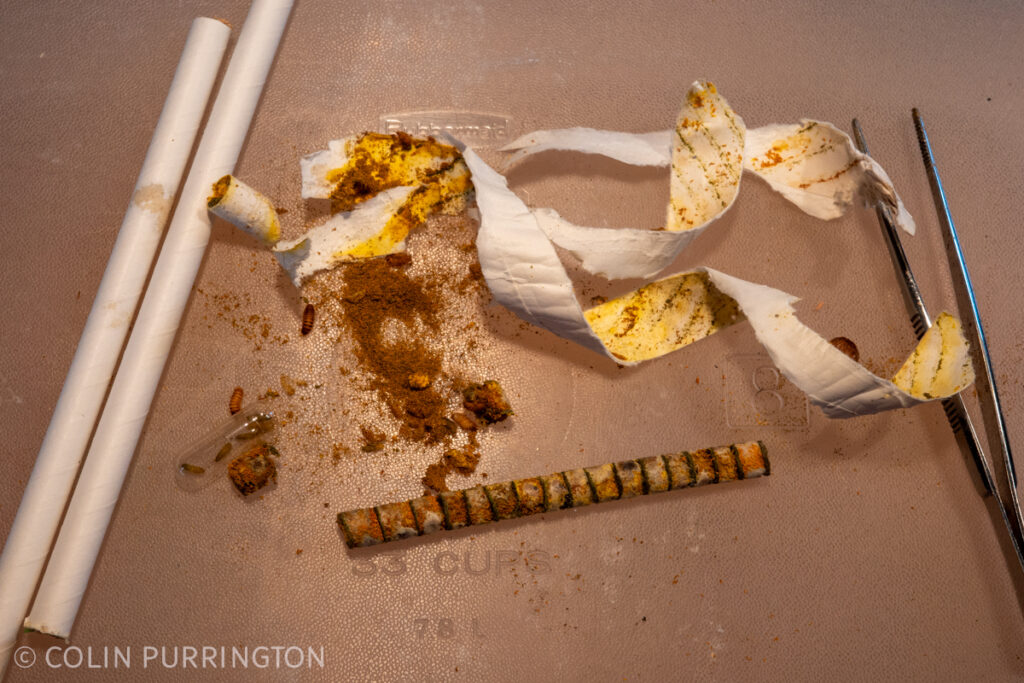
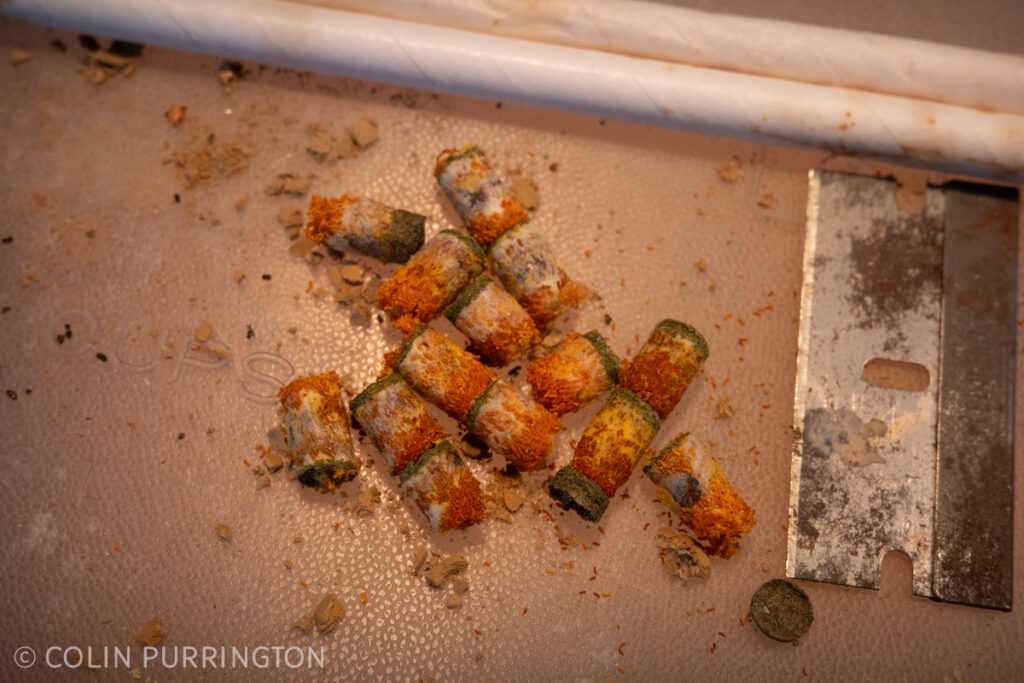
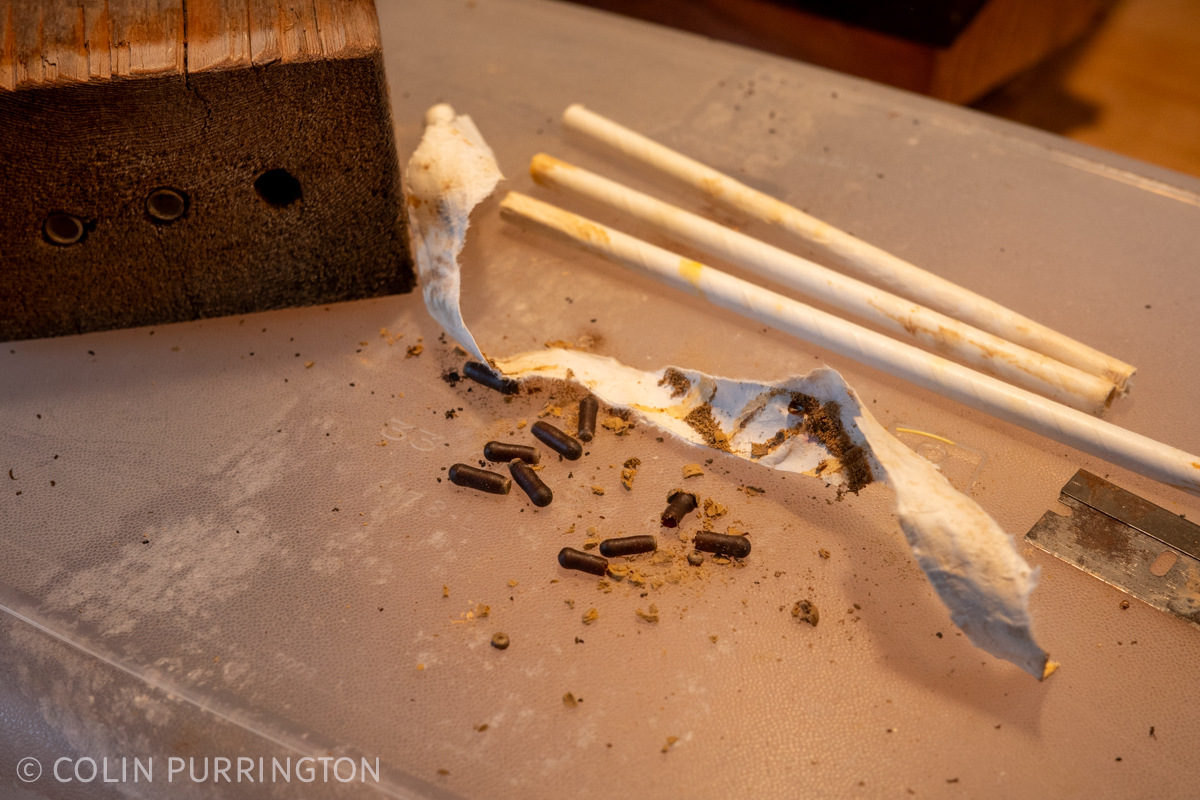
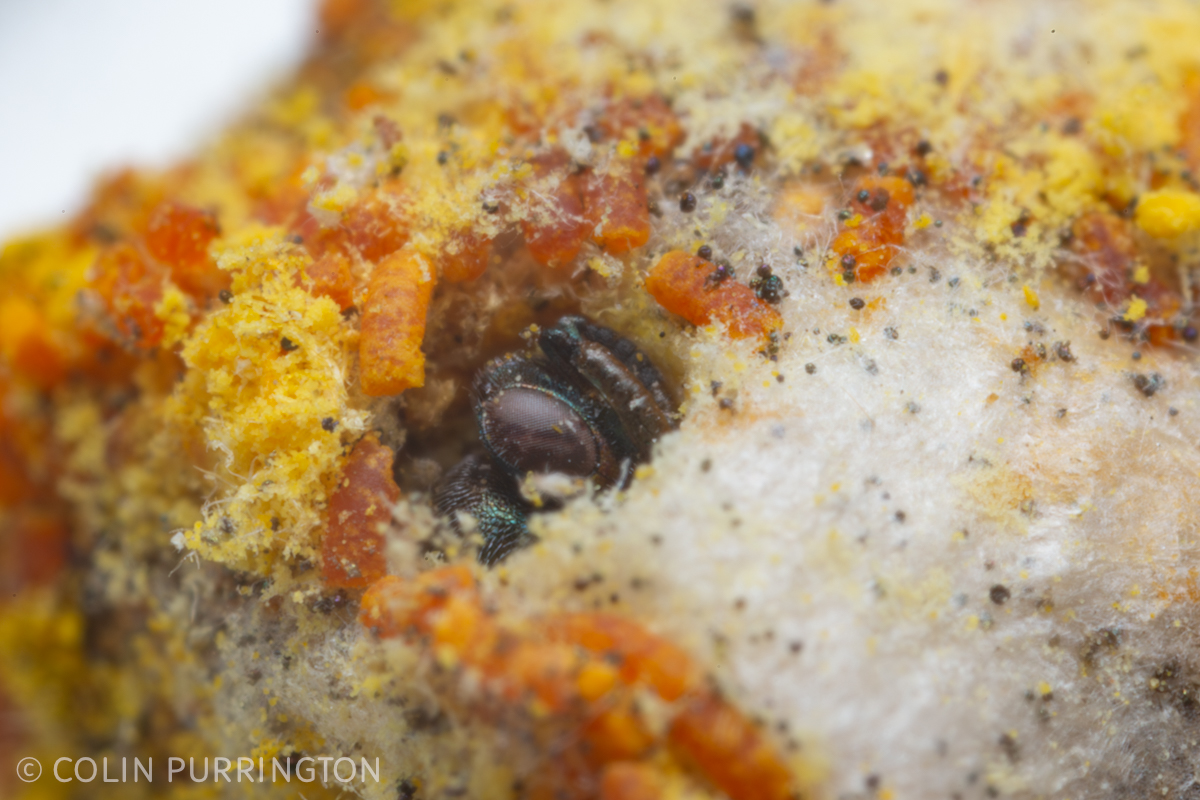
The most common mason bee this year was Osmia georgica, a native that can be recognized by its bright orange frass and circular, green, felt-like plugs that separate the cocoons inside the nesting tunnel. Here’s an adult if you’re curious what they look like.
There was also a mystery bee that is currently in a vial and will hopefully emerge sometime this spring. It’s unlike anything I’ve found before but somewhat resembles the cocoon of a resin bee. But much smaller than the cocoon of a sculptured resin bee (pic) that I often find in my hotels; this species is non-native and kind of a bully toward native species so they are unwelcome visitors.
Wasps
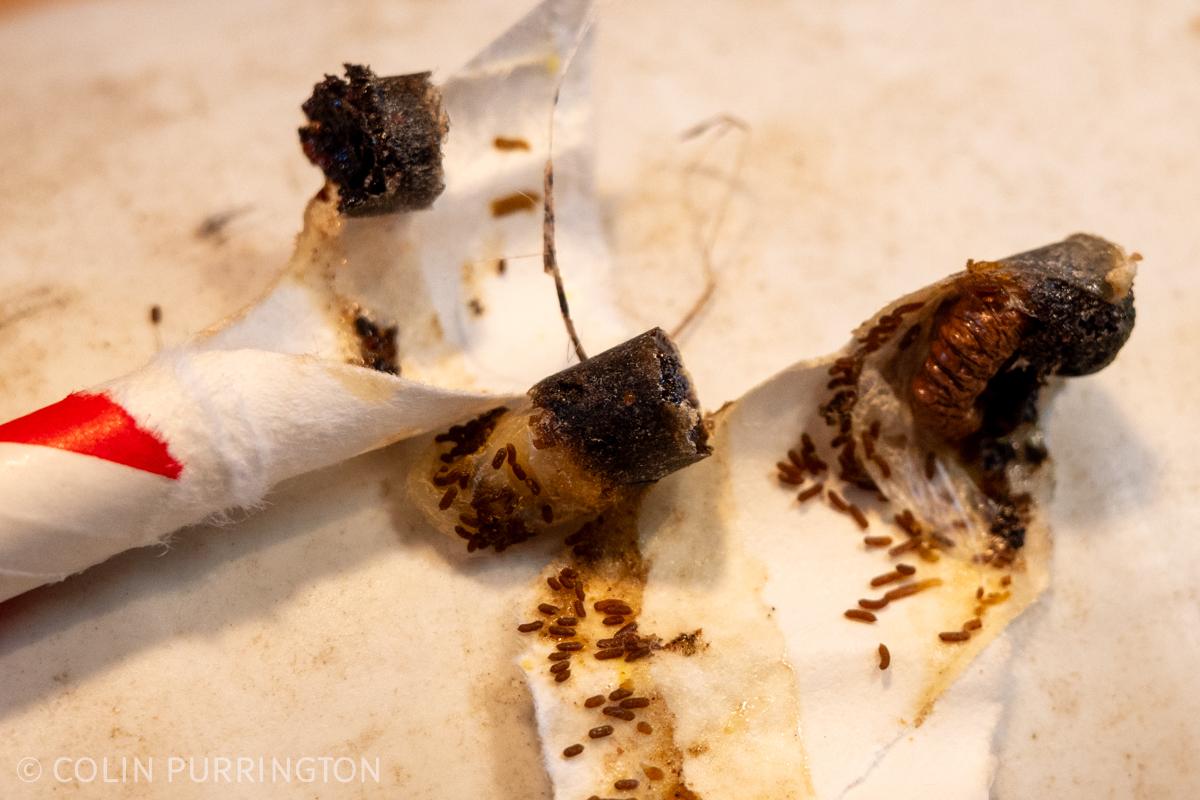
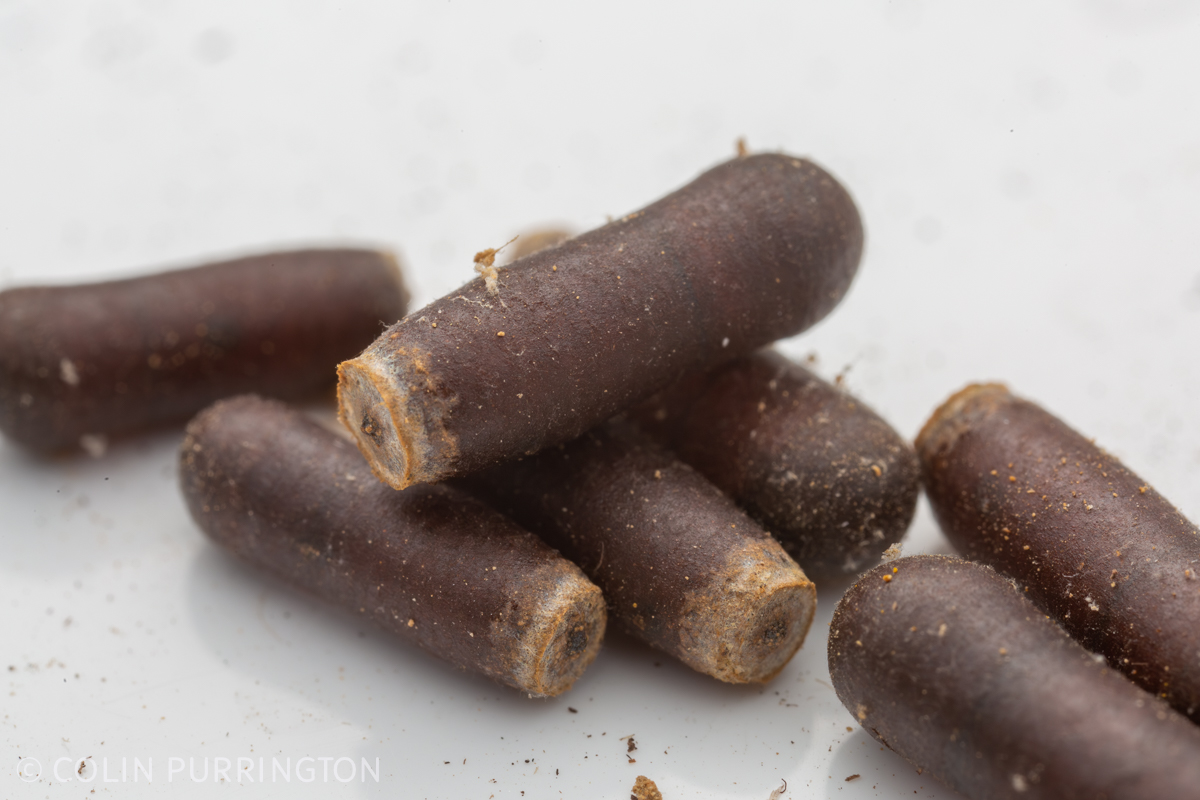
These are cocoons of Trypoxylon collinum, a spider-provisioning wasp (pic of adults) that I also get every year, especially in the front yard (maybe they like morning sun?).
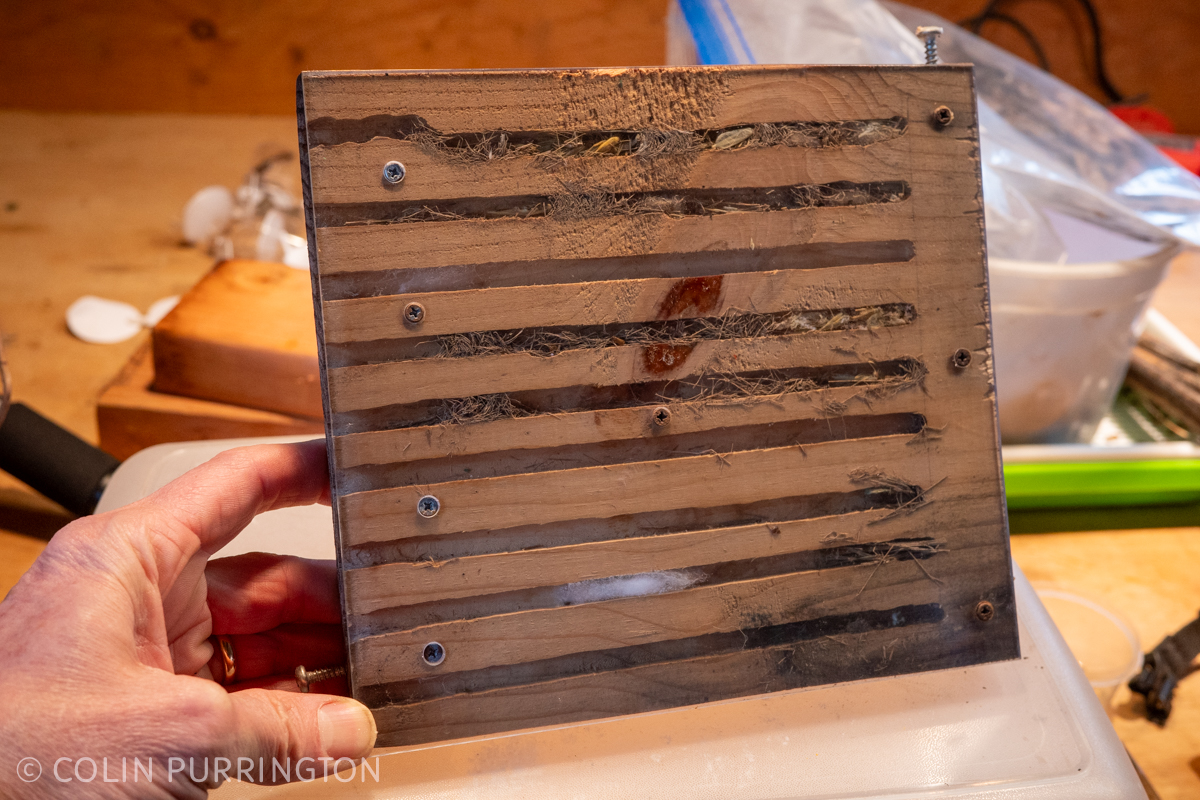
I also got a few grass-carrying wasp pupae but I forgot to take any closeups (here’s one from past). For some reason the females prefer to nest in observational panel. The tunnels are full of grass and dead crickets but the larvae are there.
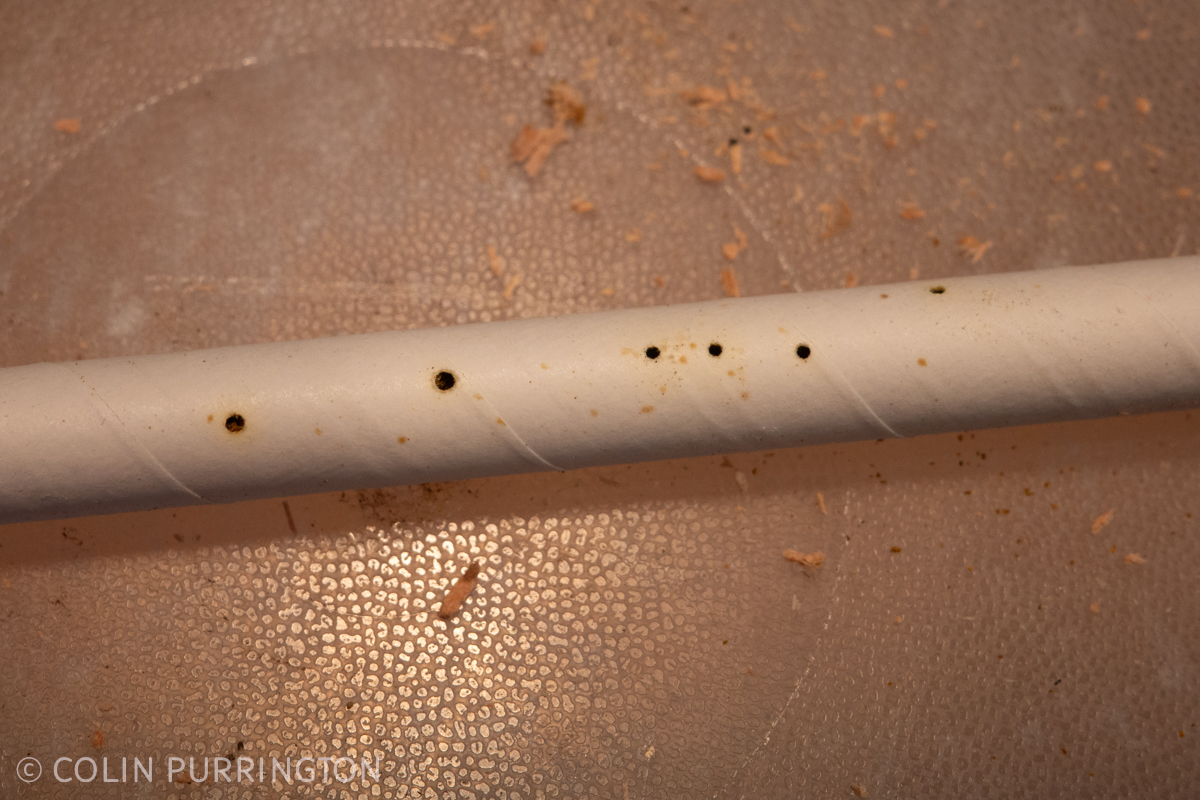
As always, some of the mason bee cells were filled with adult, dead Monodontomerus sp., a parasitoid. I can easily tell they are inside because they have partially chewed exit holes through the straw. When you unwrap the straw the adults are still inside the bee cocoon, apparently unable to exit because the straw is wedged into the drilled hole tightly. In the real world the wasps would chew through the stem and be able to escape. I have pics of larvae, trapped adults, and a female).
Flies
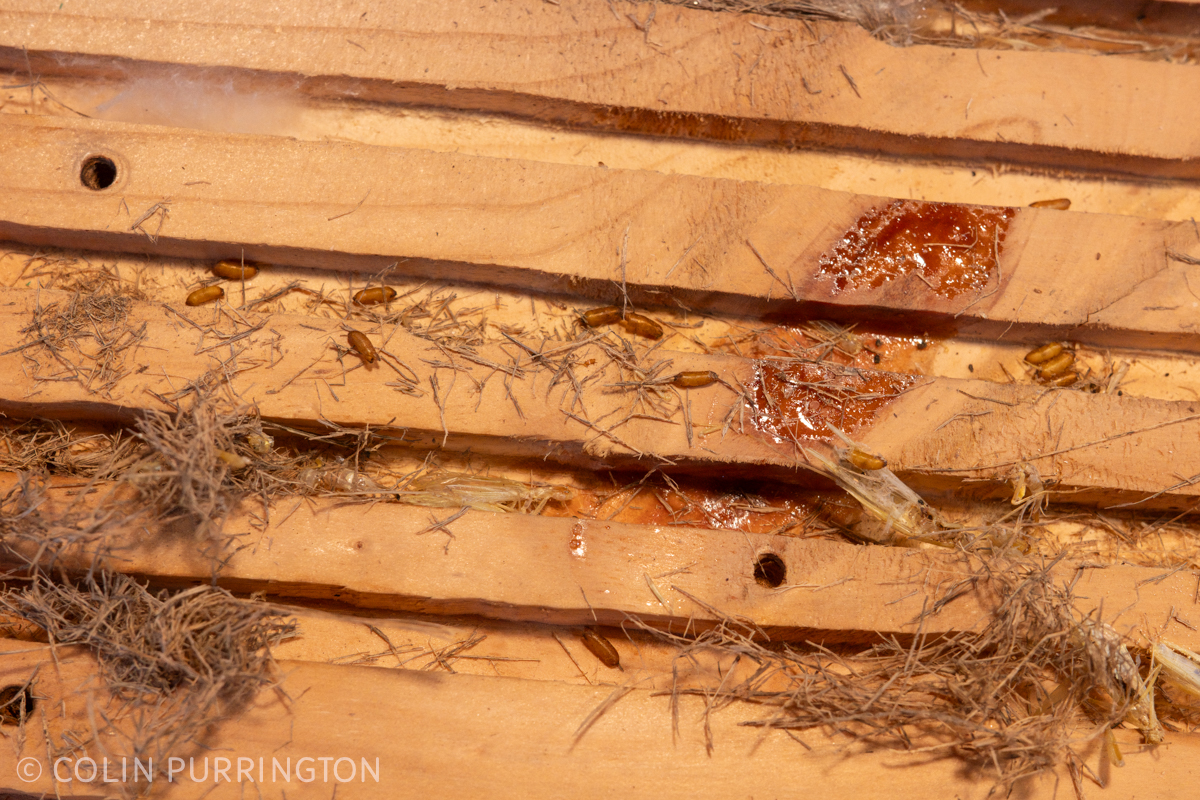
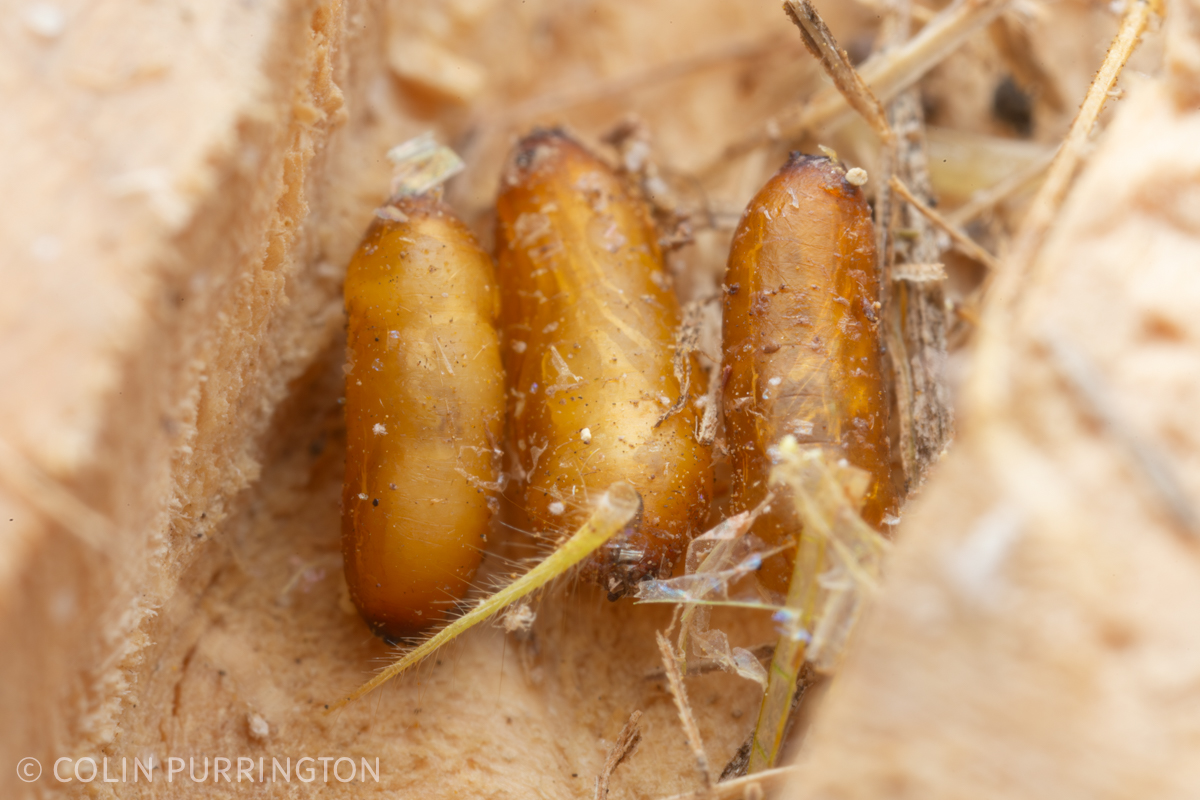
I’m not sure of the ID, but I found small dipterous (I think) pupae scattered around the observation window. Given their small size and the fact that grass-carrying wasps were the only residents, I’m wondering whether they might be scuttle flies, which are known to be parasites. E.g., Megaselia aletia (Medler 1965). I’ve saved the pupae and will attempt to get photographs of the adults.
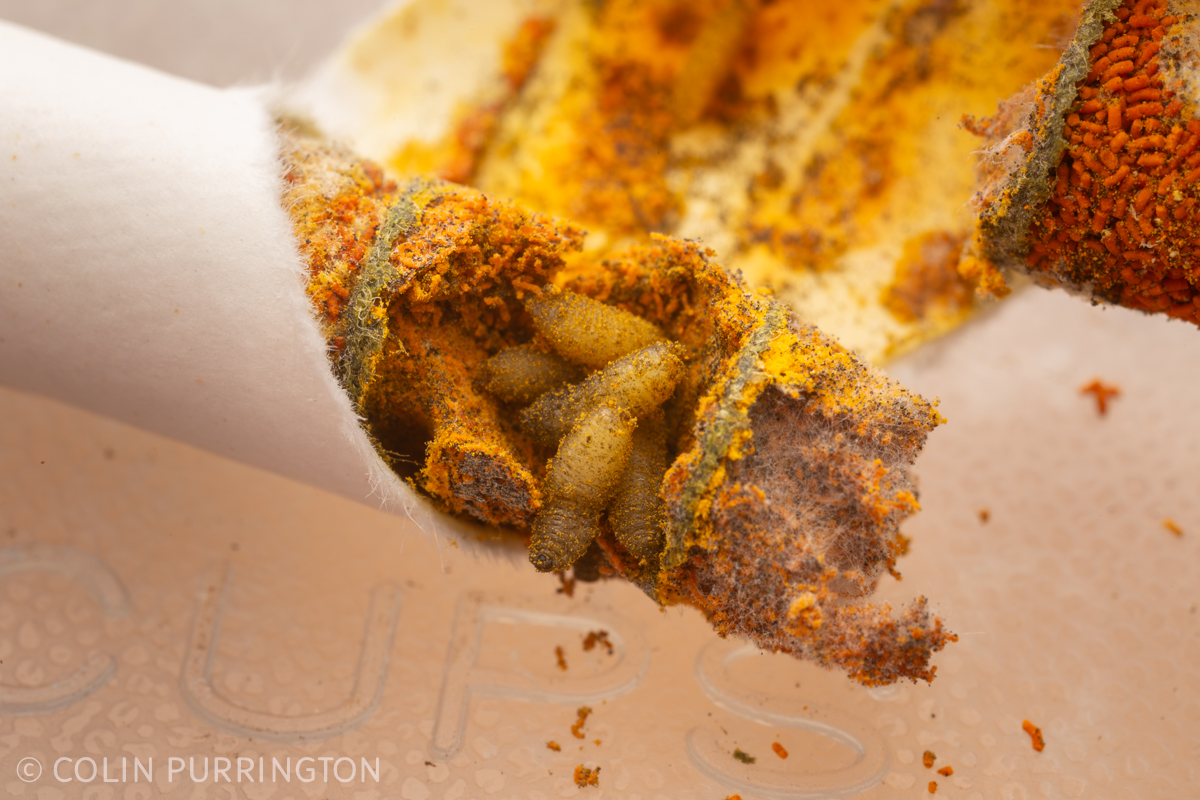
Several of the mason bee cells were infested with the kleptoparasitic, non-native Houdini flies (Cacoxenus indagator, adult). I usually kill them but this batch is bound for a researcher who needs them.
Bugs
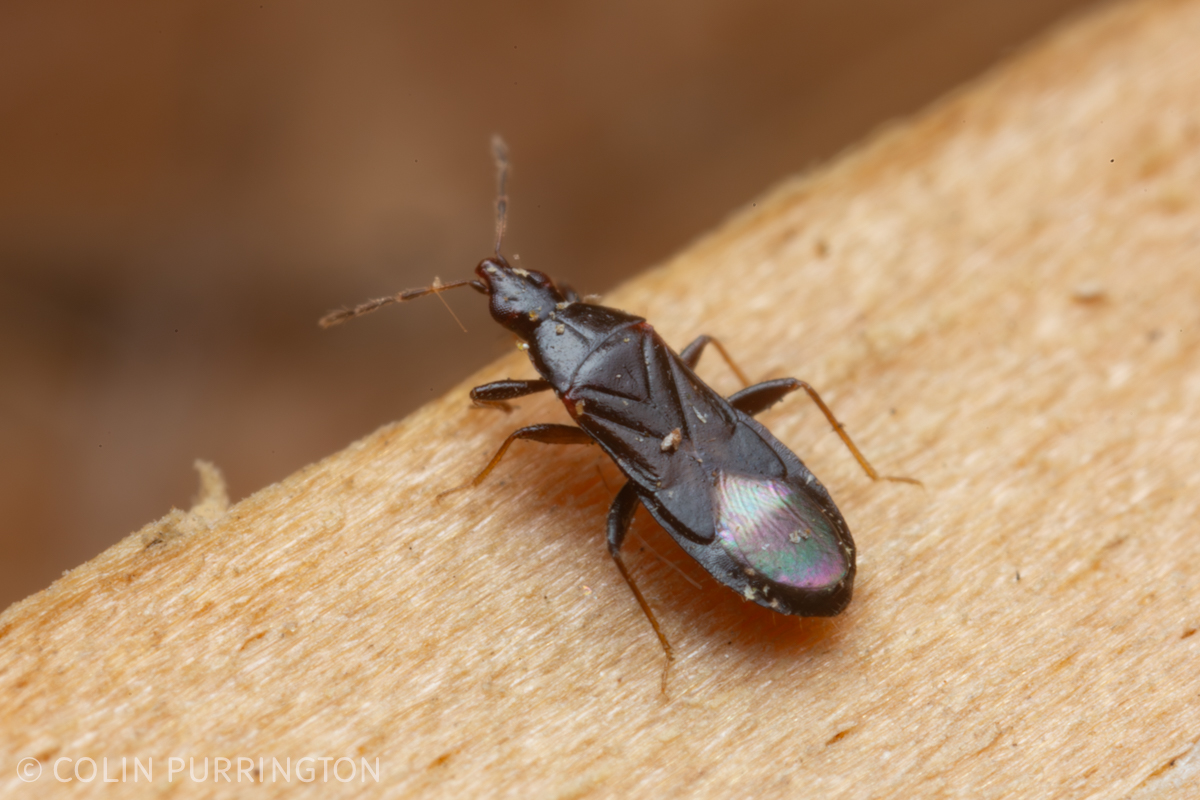
As in most years, the observation panel had several Dufouriellus ater individuals, members of the minute pirate bug family (Anthocoridae). I can confirm that they are minute but also that they rarely sit still and are thus a royal pain to photograph. The nymphs are bright red and even smaller.
Beetles
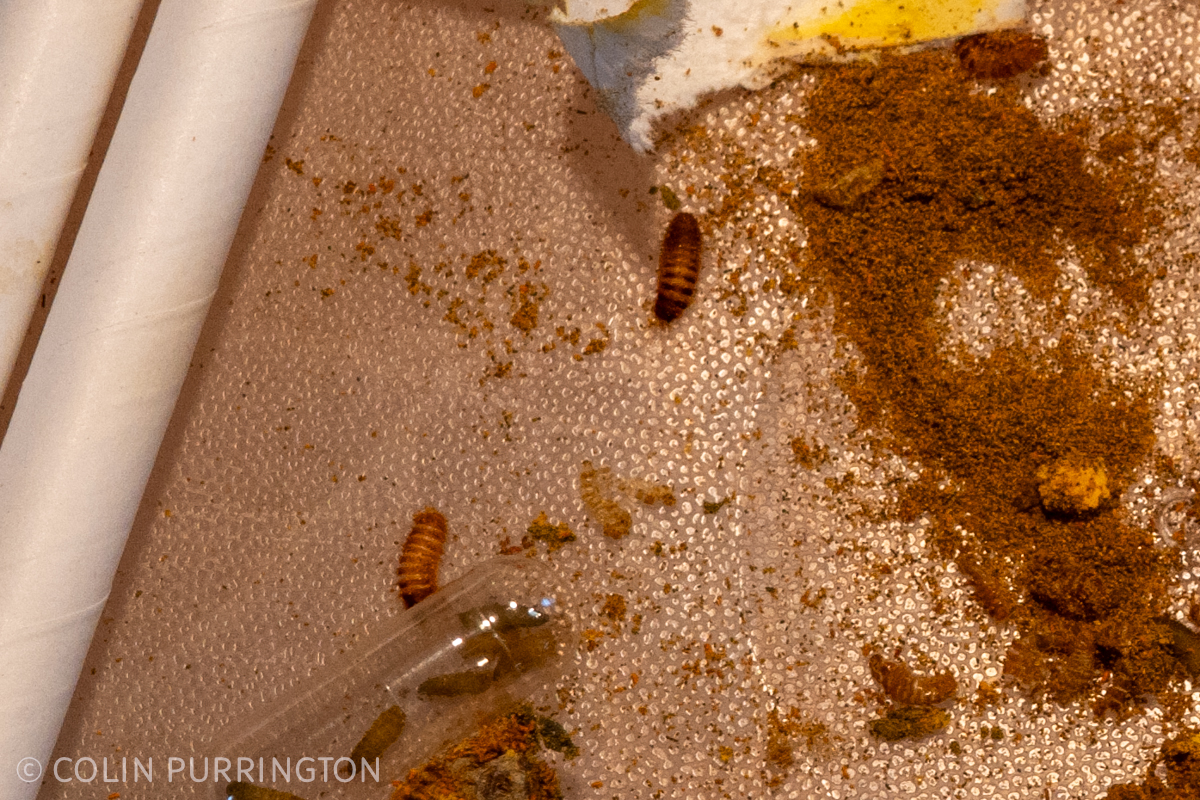
These two larvae are dermestids and were found inside mason bee nests where they had eaten several of the pupae. They are unwelcome residents and are an important reason why it’s important to clean insect hotels.
Spiders
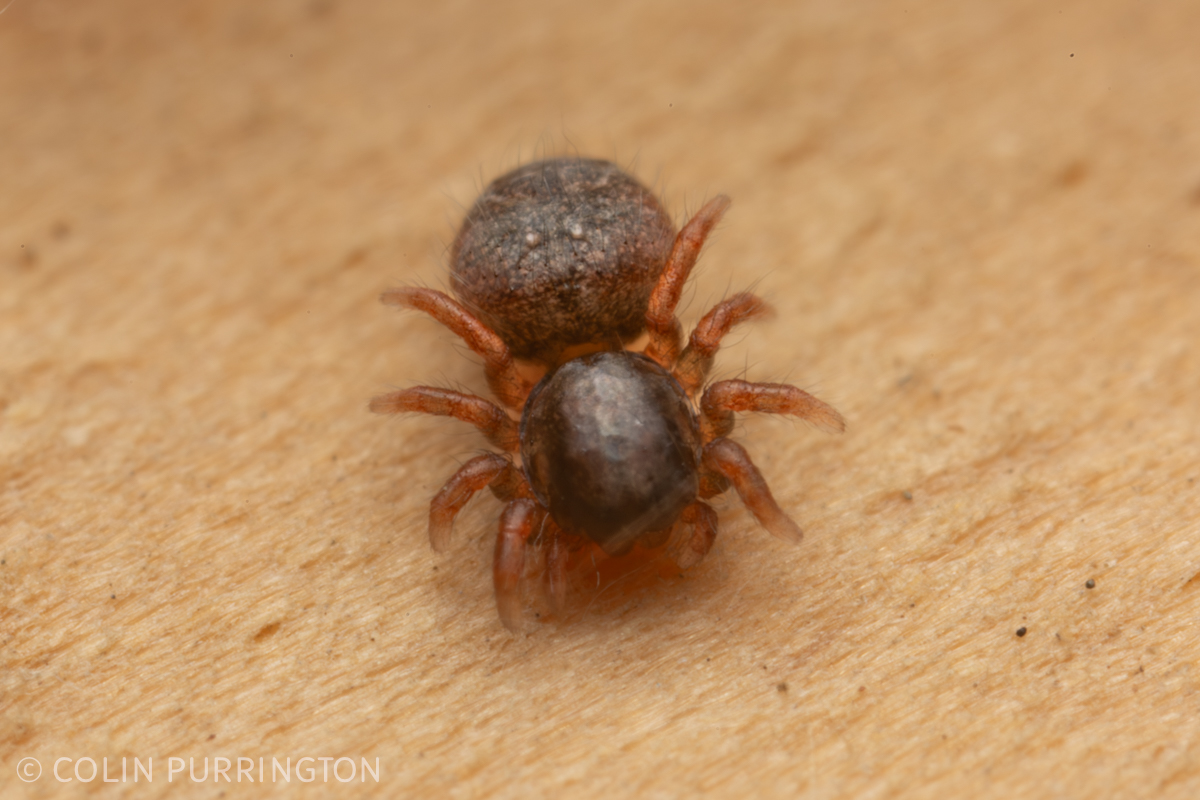
There was a nest of spiderling jumping spiders in the observation window and they were unspeakably cute, with a thorax that looked liked hammered copper. Note that I typically relocate spiders when I find them on the hotel grounds during the season. For reasons.
Cleaning and restocking
In case of interest, all the pupae go into containers and placed in protected locations outside so that when they emerge in late March they can go on to live their lives. If I’m outside I’ll stop by the location multiple times per day to look for emergers to photograph.
I then bake the wood blocks to kill any remnant dermestid larvae, pollen mites, and pathogens that might be lurking inside. I also sweep out the house structure and drench it with a bleach solution. After everything is dry I’ll restock the house with blocks and stems.
Here’s an action shot of me making new stems sections with a cut-off blade attached to a Dremel.
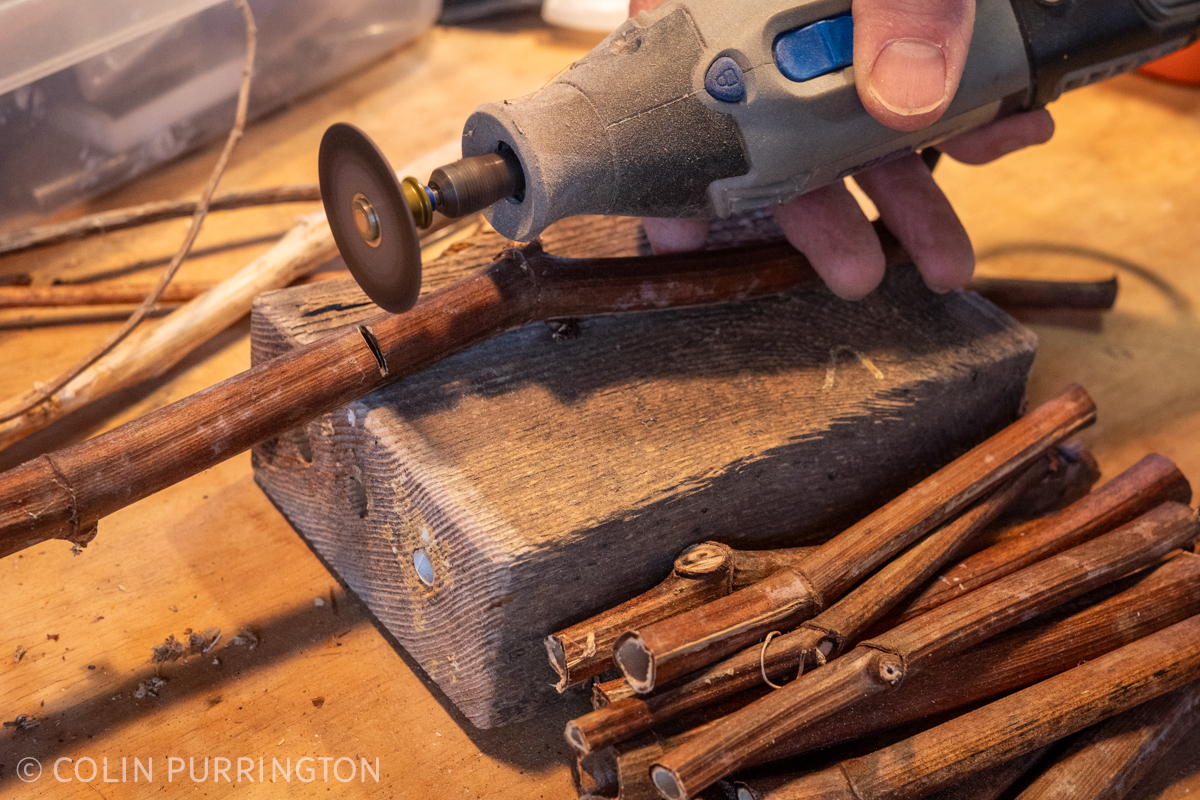
If you’re envious, here’s where to buy an insect hotel. Or you can build your own. For help identifying a resident, please browse the “Bee and Wasp Hotels” project on iNaturalist. Send me a message if you have questions.