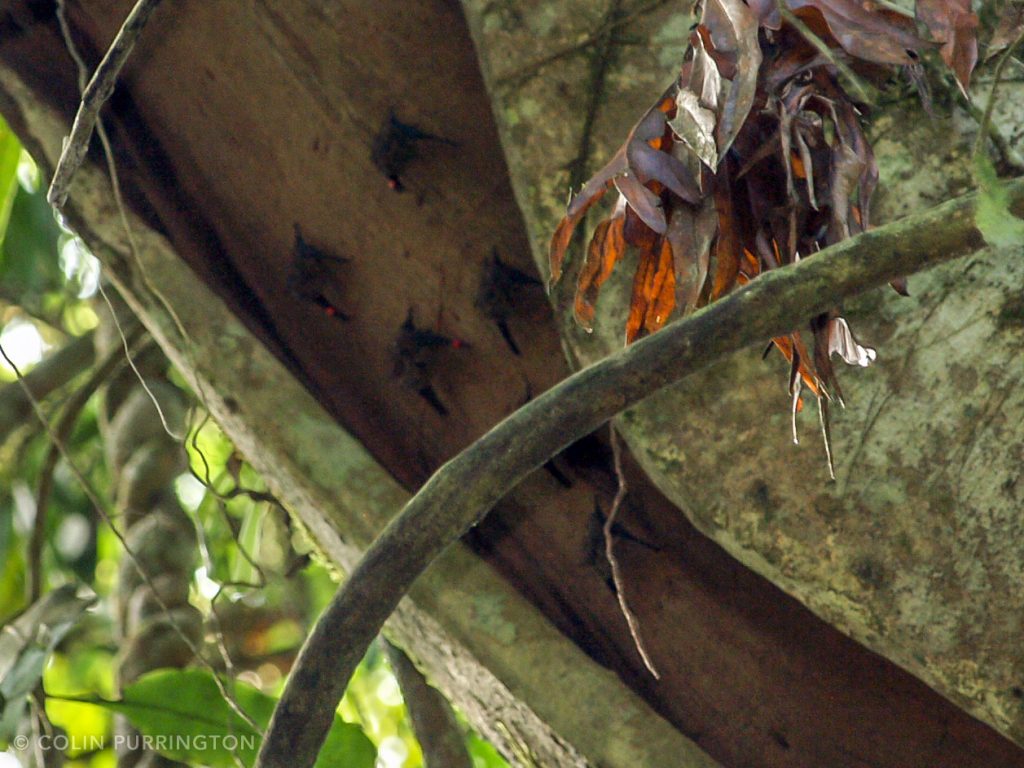
For some reason I forgot to post this last year. Luckily, nature photographs aren’t particularly time sensitive. These are all from a warm day in November after a good rain. The Martin Forest is a 30-acre tract near Smedley Park, not too far from the Springfield Mall in Springfield, PA. The tract is owned by Swarthmore College.
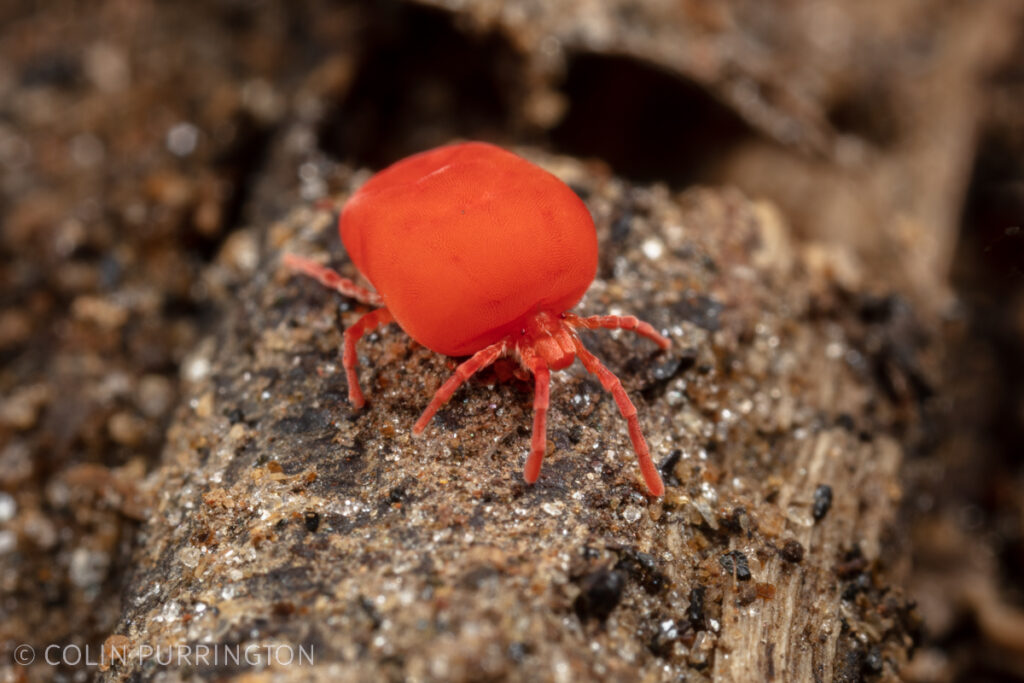
Up first is a large trombiid mite that was lumbering along the trail. I’m assuming this is in the genus Tombidium and not Allothrombium, but nowhere within the 1000s of IDs on iNaturalist and BugGuide is a single useful comment about what distinguishes them. The only key I could find is on page 43 of Banks’ The Acarina or Mites published in 1915, and apparently Allothrombium has “pedunculate eyes”. For a great introduction to the group, see Zhang 1998.
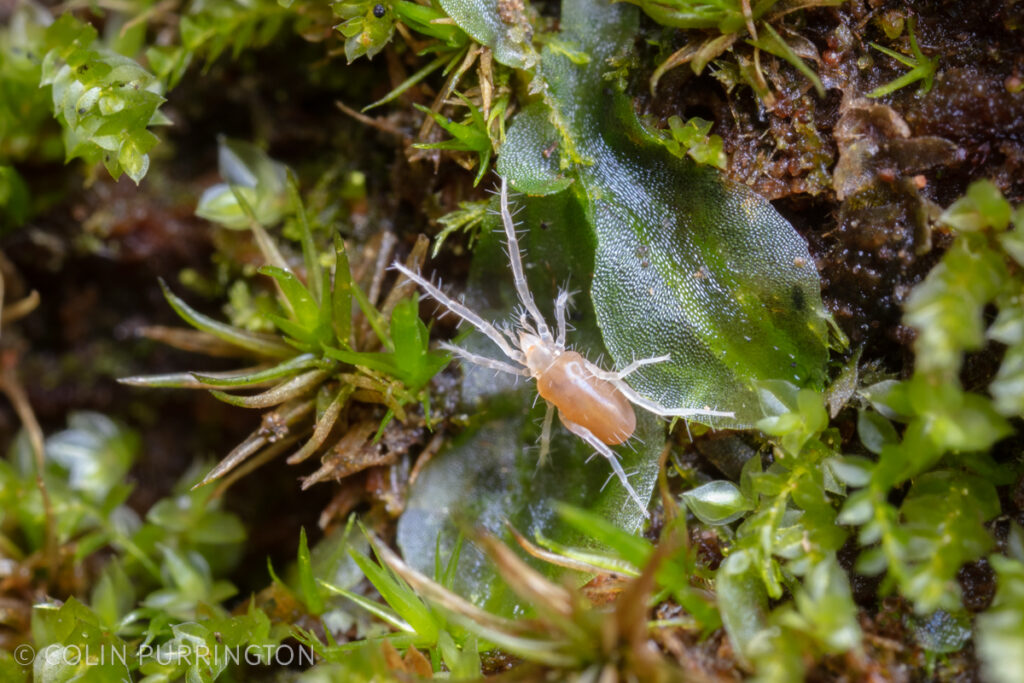
Here’s another mite (Rhagidiidae) that was racing around a rotting log covered with moss and liverworts, likely looking for springtails and other small arthropods to eat. Its speed made it nearly impossible to photograph, so the above is just a lucky frame out of dozens of fails. BugGuide and iNaturalist generally just leave these mites at family level, which is a shame because I’d love to know more about what they do for a living.
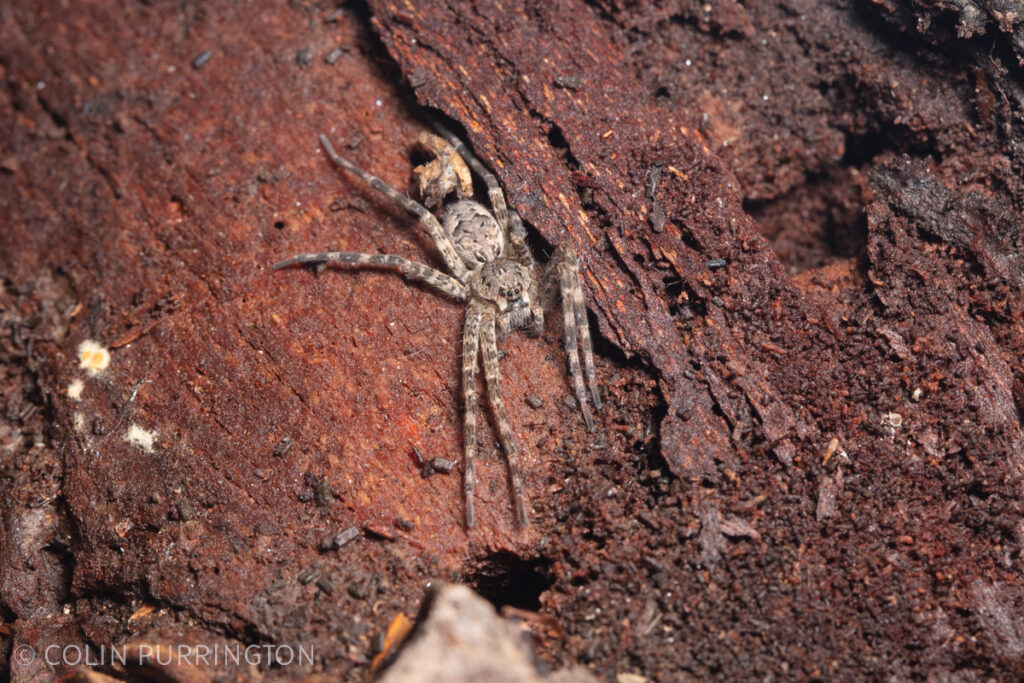
This is a dark fishing spider (Dolomedes tenebrosus), I think. Likely just overwintering under the protection of loose bark (which I replaced).
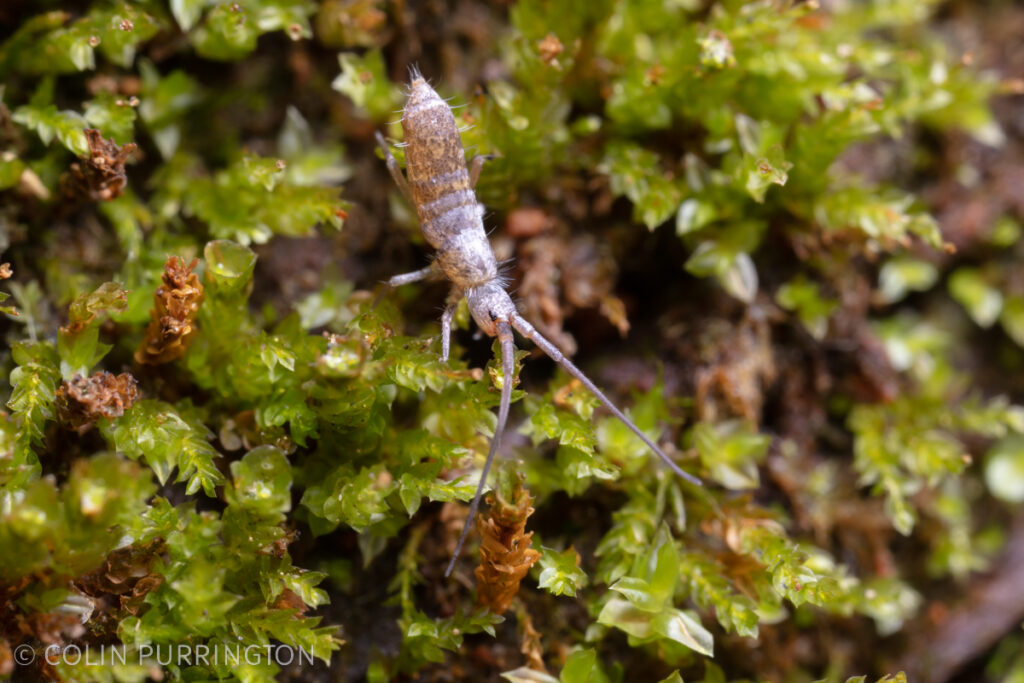
I think this is Pogonognathellus dubius (Tomoceridae), a rather fetching elongate springtail. In searching for information on this species I discovered you can buy them. One site describes them as follows: “Among the largest springtails in the hobby. Blow on their antenna to see them curl into spirals, a unique characteristic of the genus. They have very relaxed personalities and mostly sit still, great pet invertebrate species.”
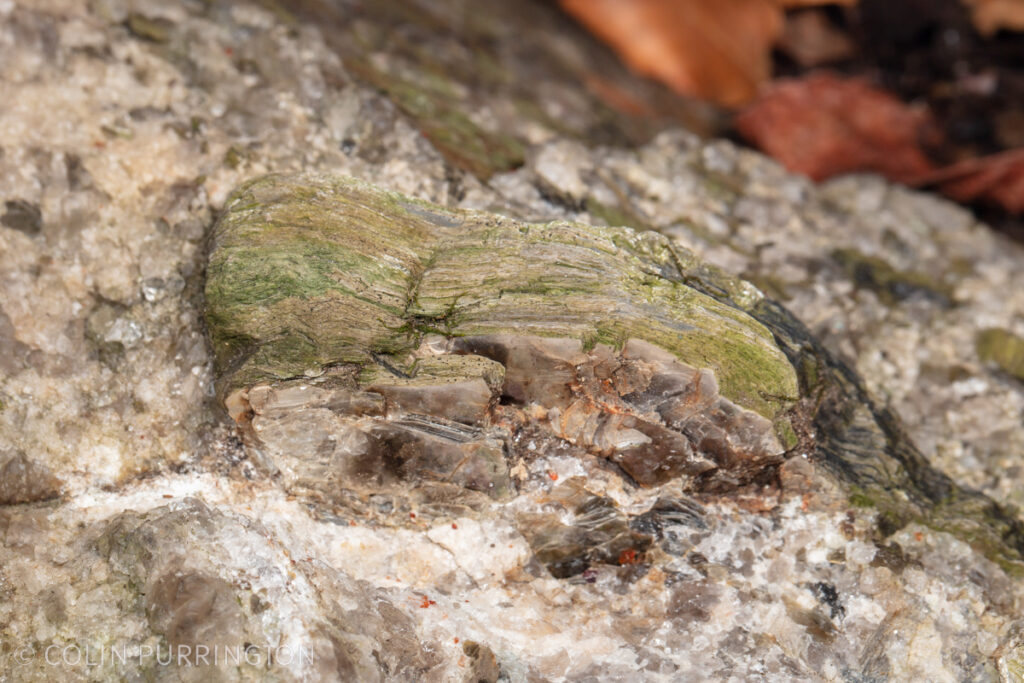
I’ve noticed this for years but have never before photographed it: mica with some sort of alga or lichen in between the layers. I wasted several hours trying to find out what it might be but came up with nothing. Which means I’ll probably need to collect a sample and put it under a compound microscope.
If you enjoyed any of the above, I also post nature pics and esoteric facts on Mastodon. And occasionally on Bluesky. I still have a Twitter account but it’s silent except for periodic updates on Spartan Mosquito (the company suing me for exposing its scam).