
Here are some photographs I took in June at my allotment in town.
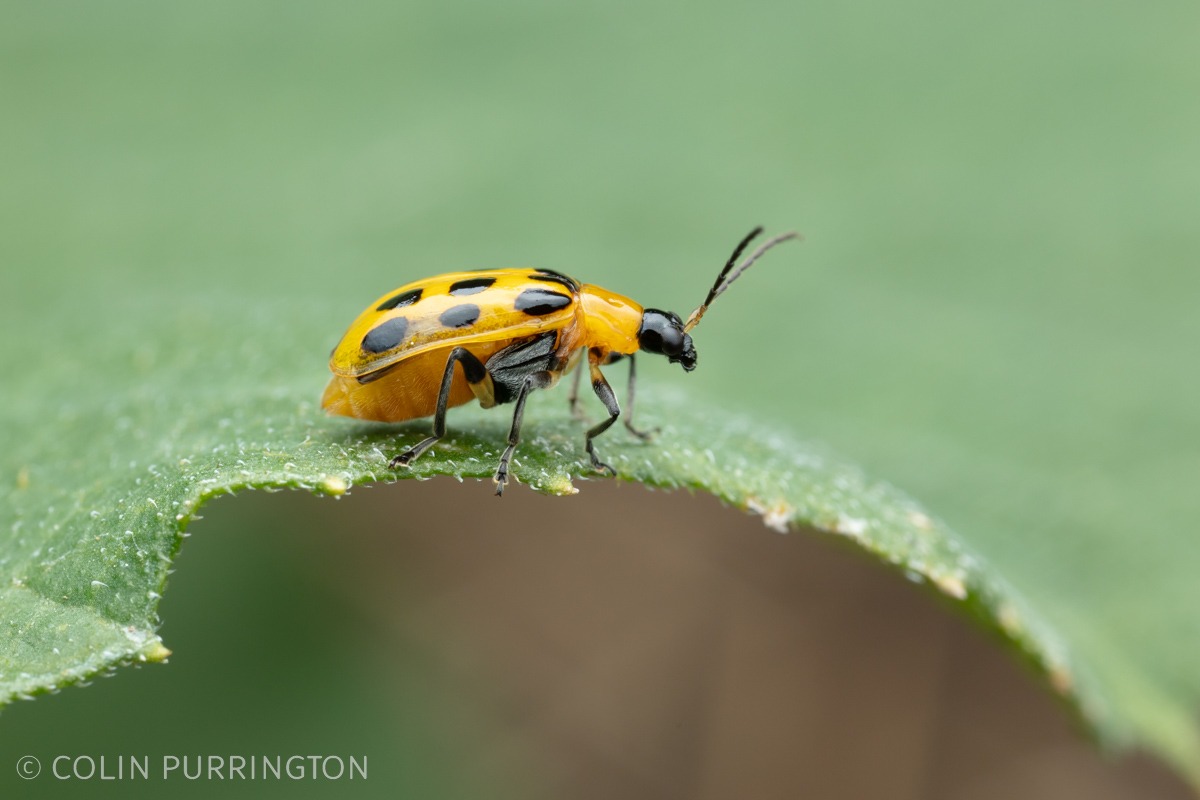
First up is a spotted cucumber beetle (Diabrotica undecimpunctata howardi), perhaps the most common insect in my garden every year. In addition to being defoliators, the beetles are important transmitters of the Erwinia tracheiphila, which causes wilting. I think some of my zucchini fruits might be suffering from this wilt, but I’m not positive. The insect can also eat corn roots during their larval phase (hence its other common name, southern corn rootworm). If any of my corn plants lodge (fall over) I’m going to attempt to find and photograph the little bastards. For a beetle with “cucumber” in the common name it’s stunning how many different types of plants this insect can survive on (per one estimate, over 40 different families). More information on the species can be found at BugGuide.
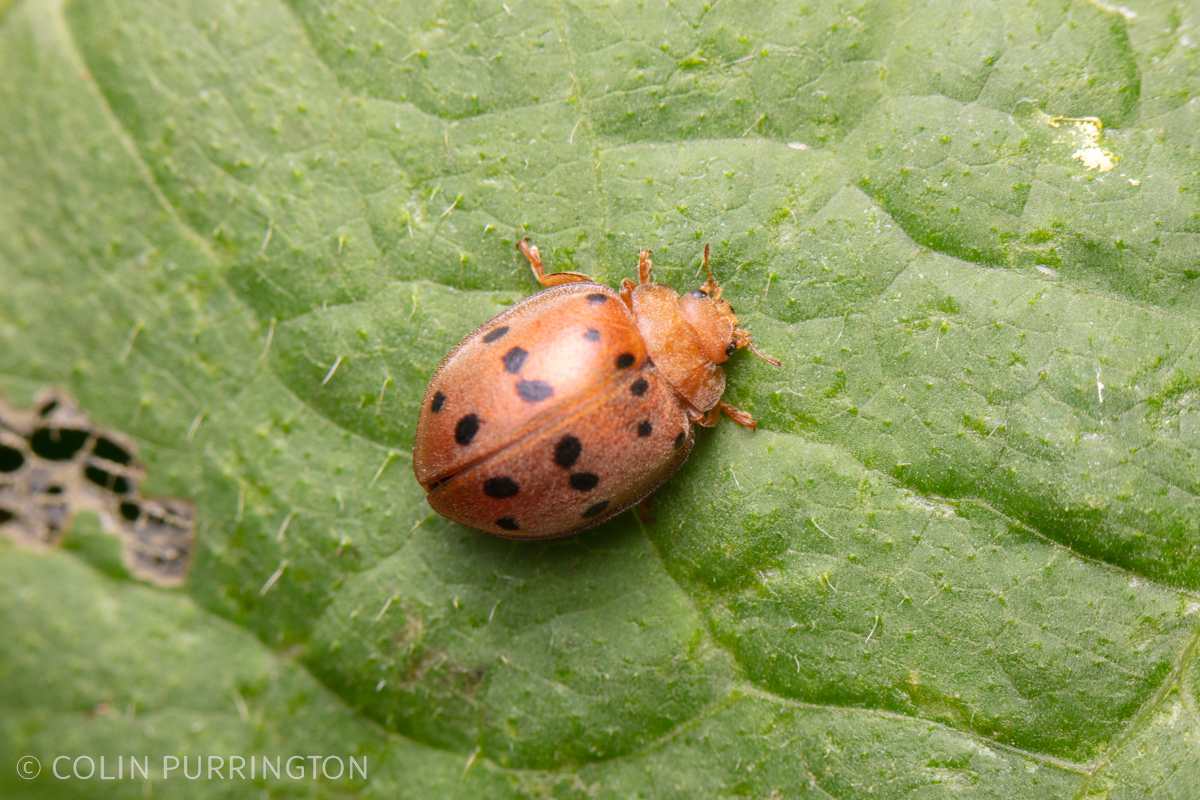
This is a Mexican bean beetle (Epilachna varivestis) next to some of the damage it presumably caused. If you provoke them they apparently “reflex bleed”, and the blood is laced with a toxic alkaloid (Eisner et al. 1986). I haven’t yet seen their larvae (here‘s an excellent pic) but those have a different alkaloid in their glandular hairs (Attygalle et al. 1993). BugGuide has information on identification, distribution, and life cycle.
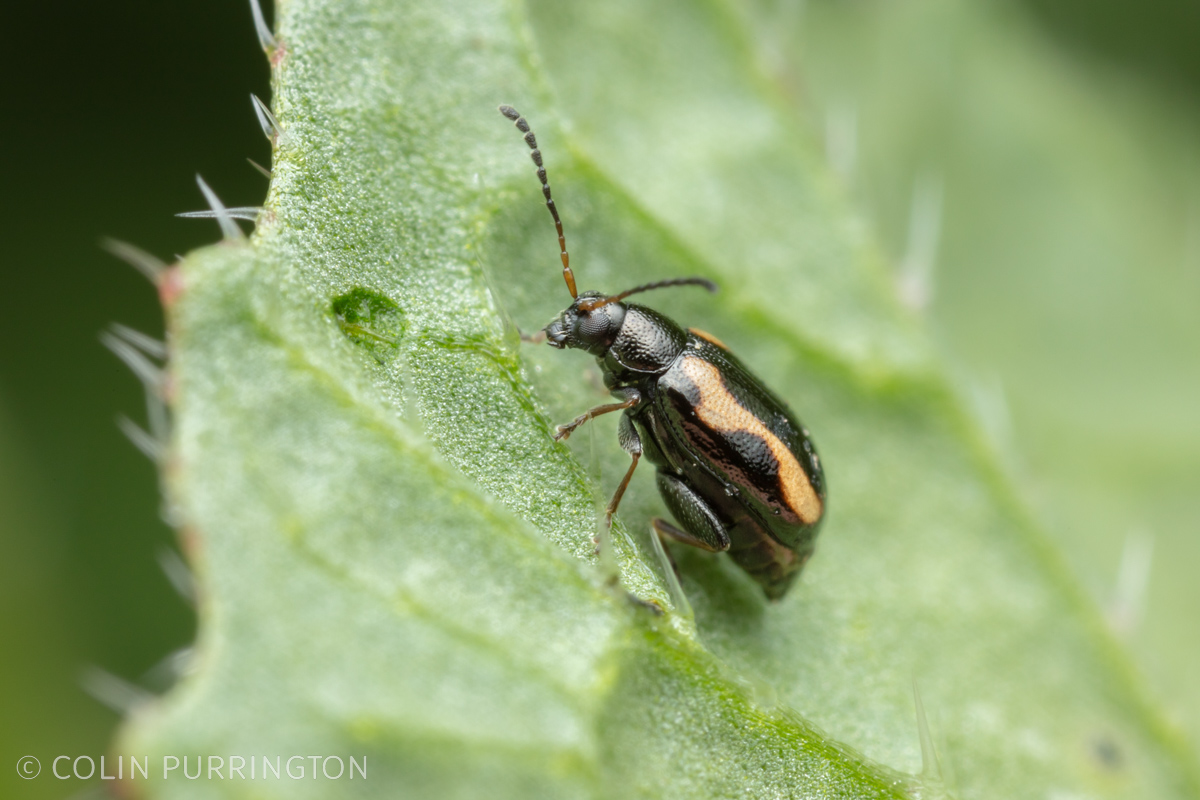
This is some sort of Phyllotreta, I think, on radish. I spent several hours online trying to identify it to species but got stuck with three options that all are rather similar: Phyllotreta striolata, Phyllotreta zimmermanni, and Phyllotreta liebecki (links go to respective BugGuide pages). But the first option seems the best: “Antennae black, basal 3 segments yellow-brown, 5th segment usually 1/3 longer than 4th, its width 1/4 its length” (BugGuide). Here‘s the iNaturalist observation in the event that an expert is reading this and can help with an ID. These beetles sequester the glucosinolates of their cruciferous hosts (Beran et al. 2014).
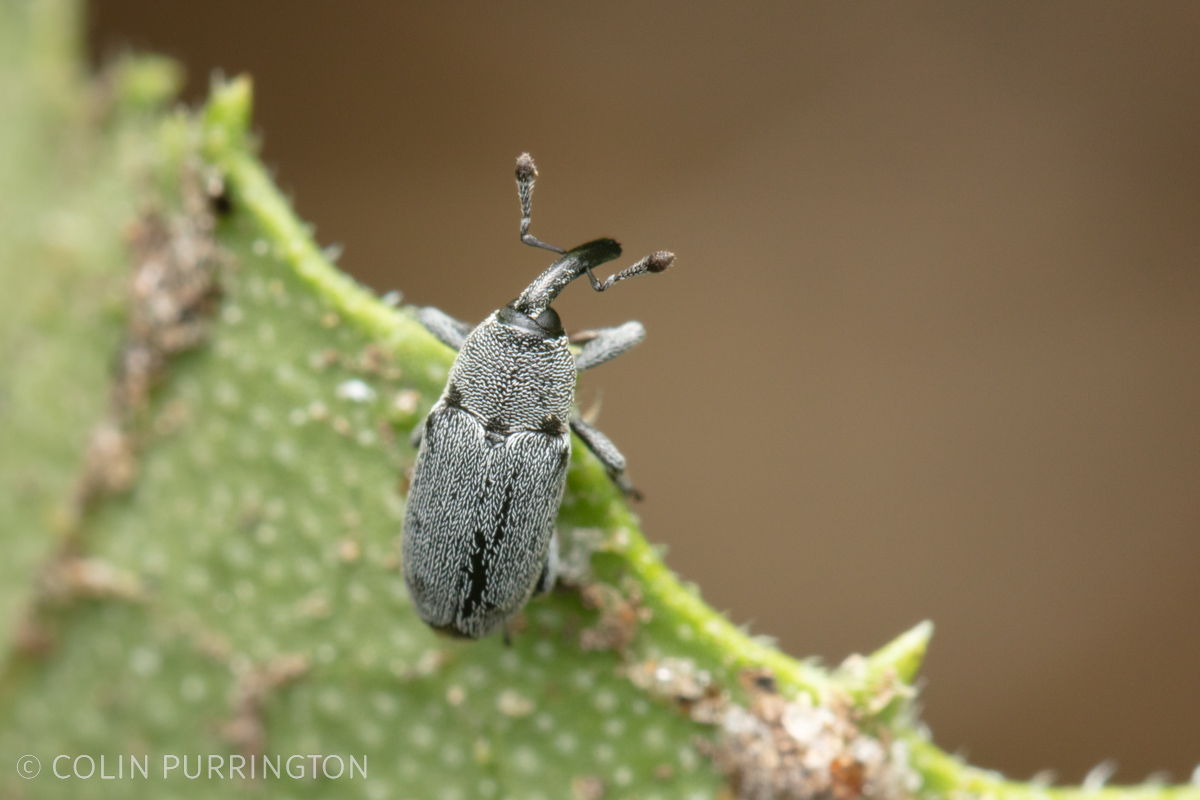
This weevil is Trichobaris trinotata, the potato stalk borer. The larvae get inside the stems courtesy of small notches that the female chews prior to oviposition. If any of my potatoes, eggplants, or tomatillo begins to wilt I’m going to dissect the stem in search of the larvae (I’m easily entertained). Adults are easy to ID because of their all-black head and presence of three black spots in between the thorax and elytra. More information is available on BugGuide.
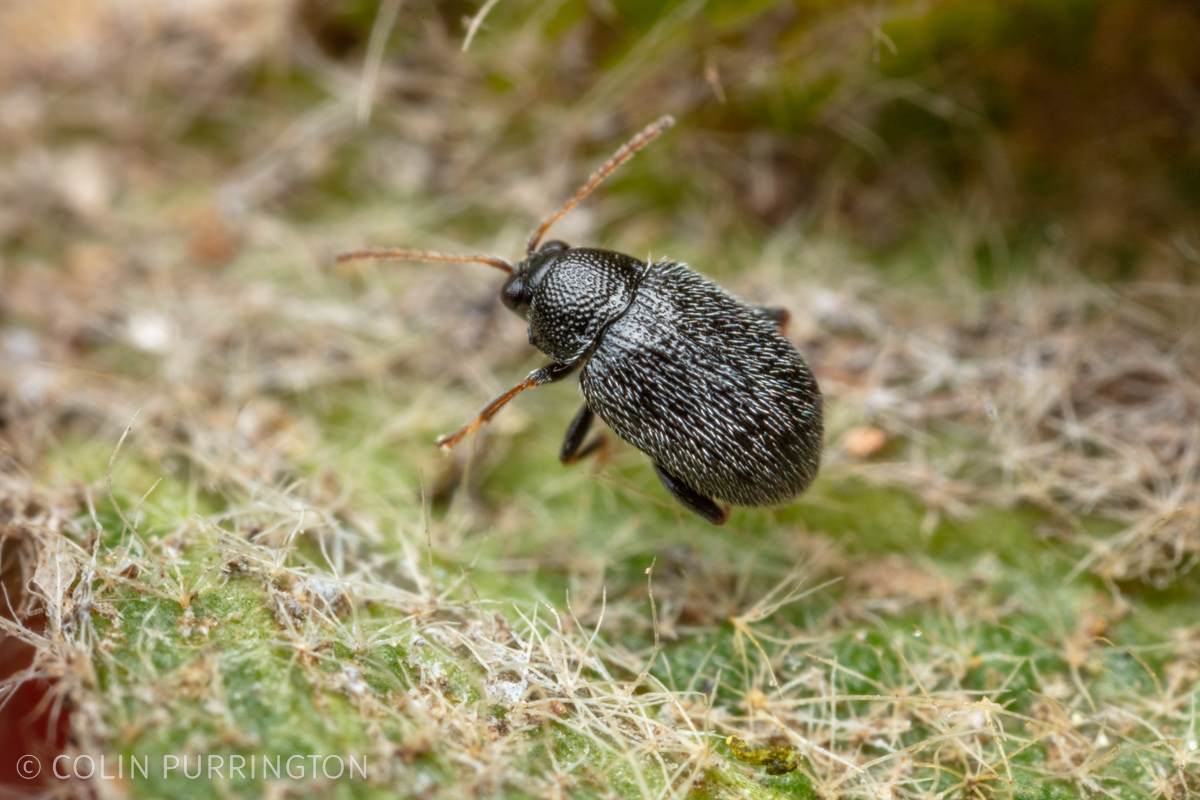
This is one of hundreds of eggplant flea beetles (Epitrix fuscula) in my garden. In addition to defoliating my eggplants every year they are extremely small and thus hard to photograph and identify. And apparently they might be eating my beets, too, as larvae. BugGuide has cursory information on identification but for more extenstive treatments plus excellent photographs see Deczynski 2014 and Deczynski 2016.
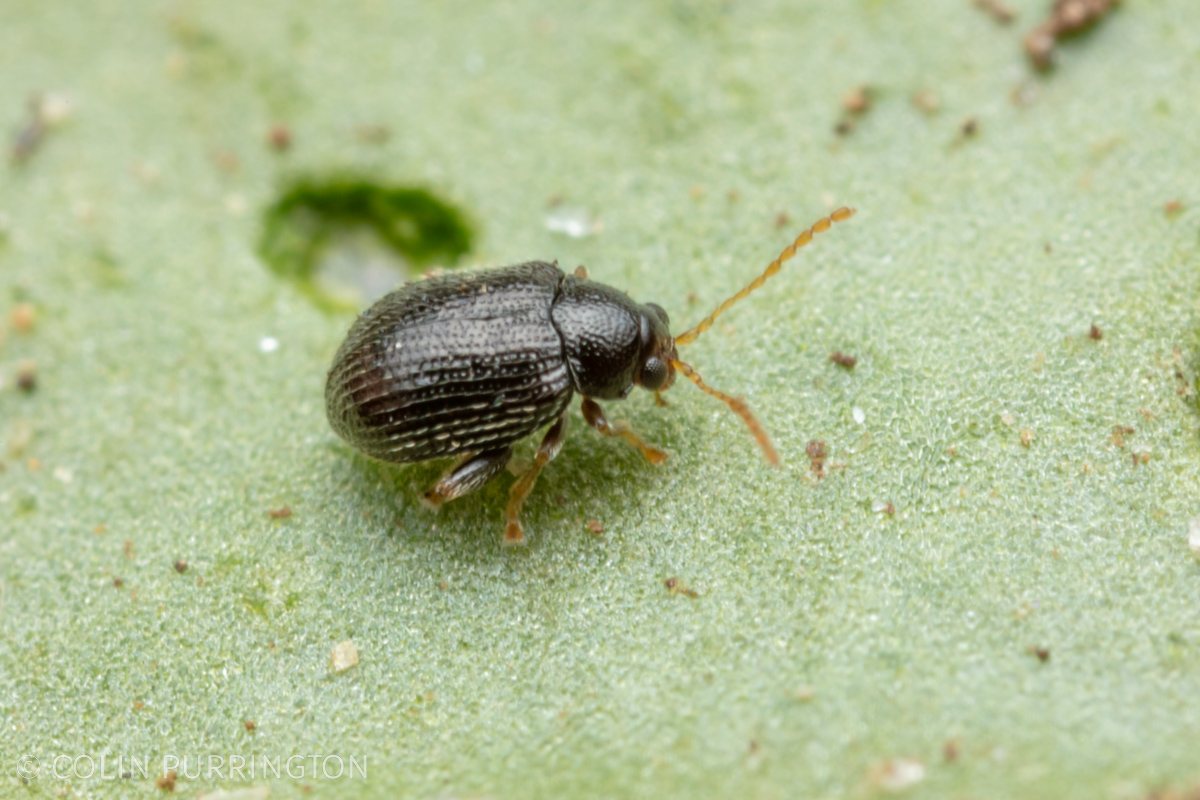
Epitrix brevis is even smaller than the eggplant flea beetle, above, and thus really at the limit of my camera gear and patience. They are all over my tomatillo, slowly skeletonizing some of the leaves through hundreds of tiny excavations like the one in the background of this photograph. Pestiferous, but also rather cute due to their small size. BugGuide has a page on the species but doesn’t have any interesting information. Likely too small.
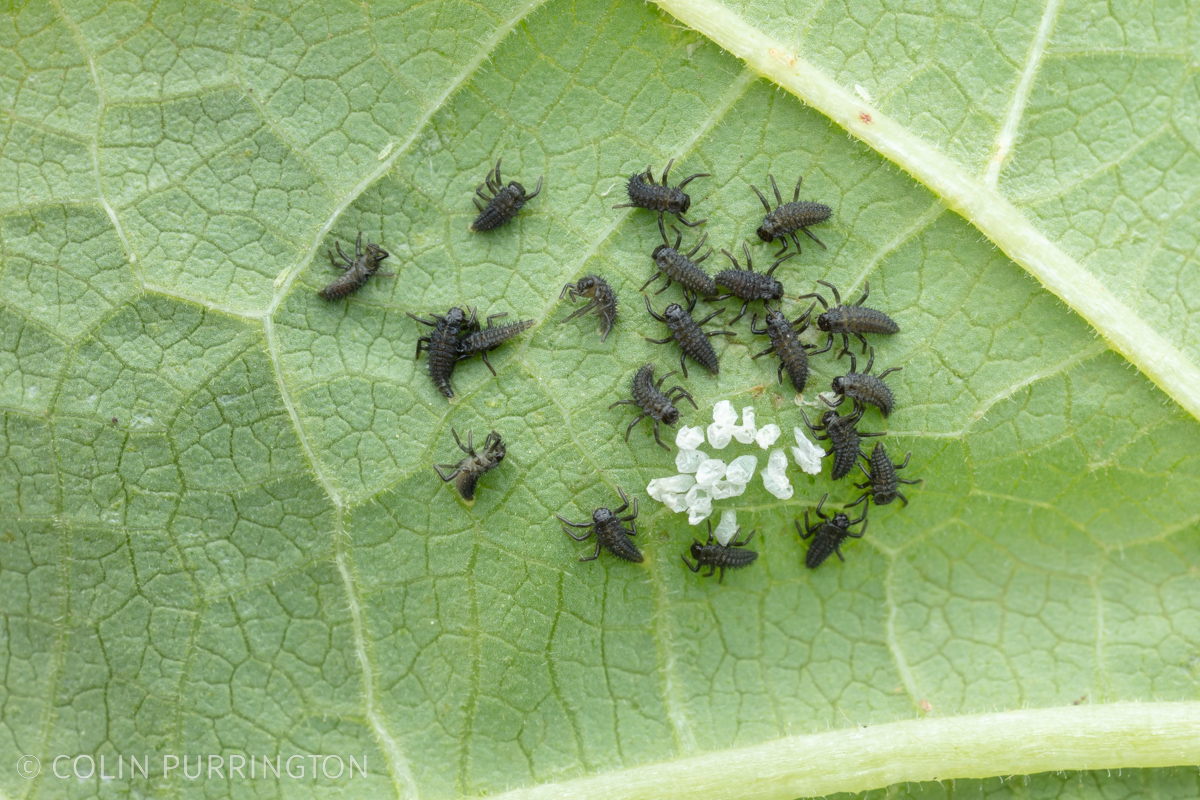
These are the larvae of some sort of coccinellid (lady beetle), still hanging around their eggs and perhaps entertaining themselves by eating each other, as one does. I’m wondering whether they might be Harmonia axyridis (Asian lady beetle), an introduced beetle so common that is often a good guess. I need to go back and check on this location (on pole bean leaf) to find later instars or adults. Here’s my iNaturalist observation.
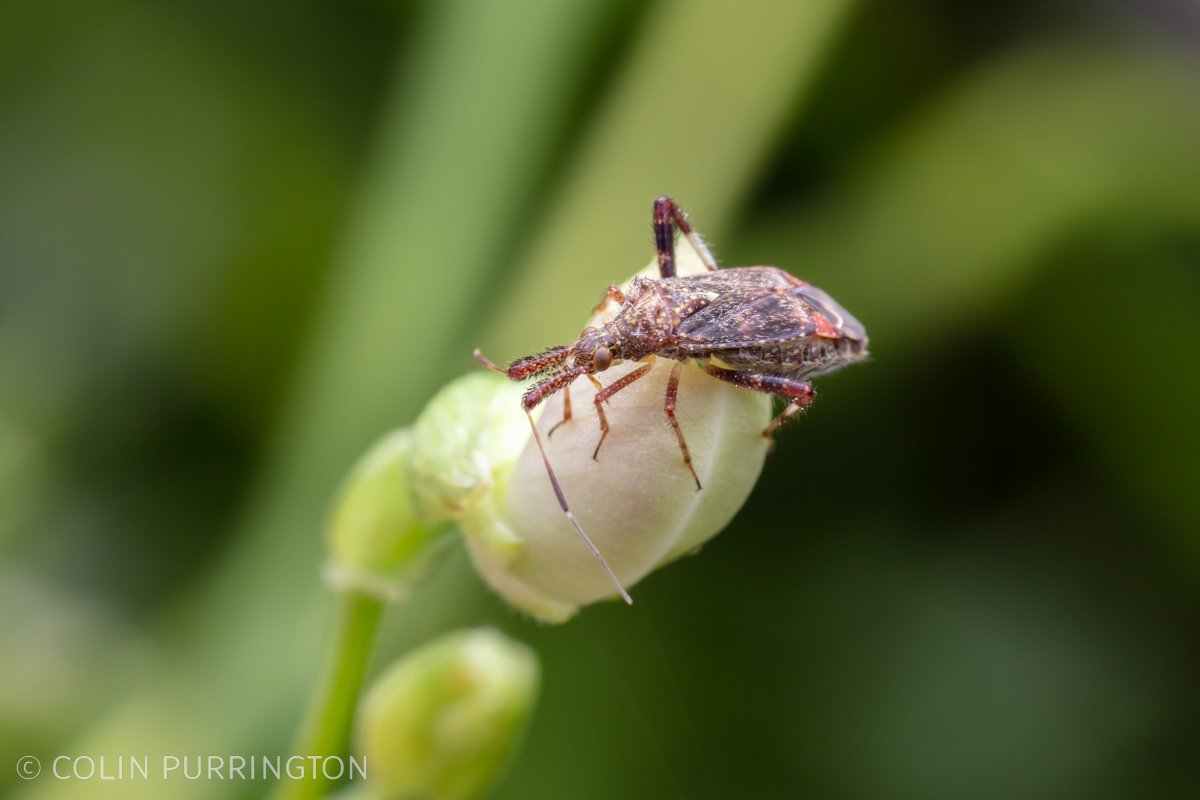
This menacing insect is a clouded plant bug (Neurocolpus nubilus) and I’ve seen several on my borlotti beans. In perhaps related news, several of my borlotti beans suddenly died this week (early July) and I’m wondering whether this bug is responsible. It’s a known pest of cotton but I can’t find any evidence in the literature that it eats legumes. More details on BugGuide.
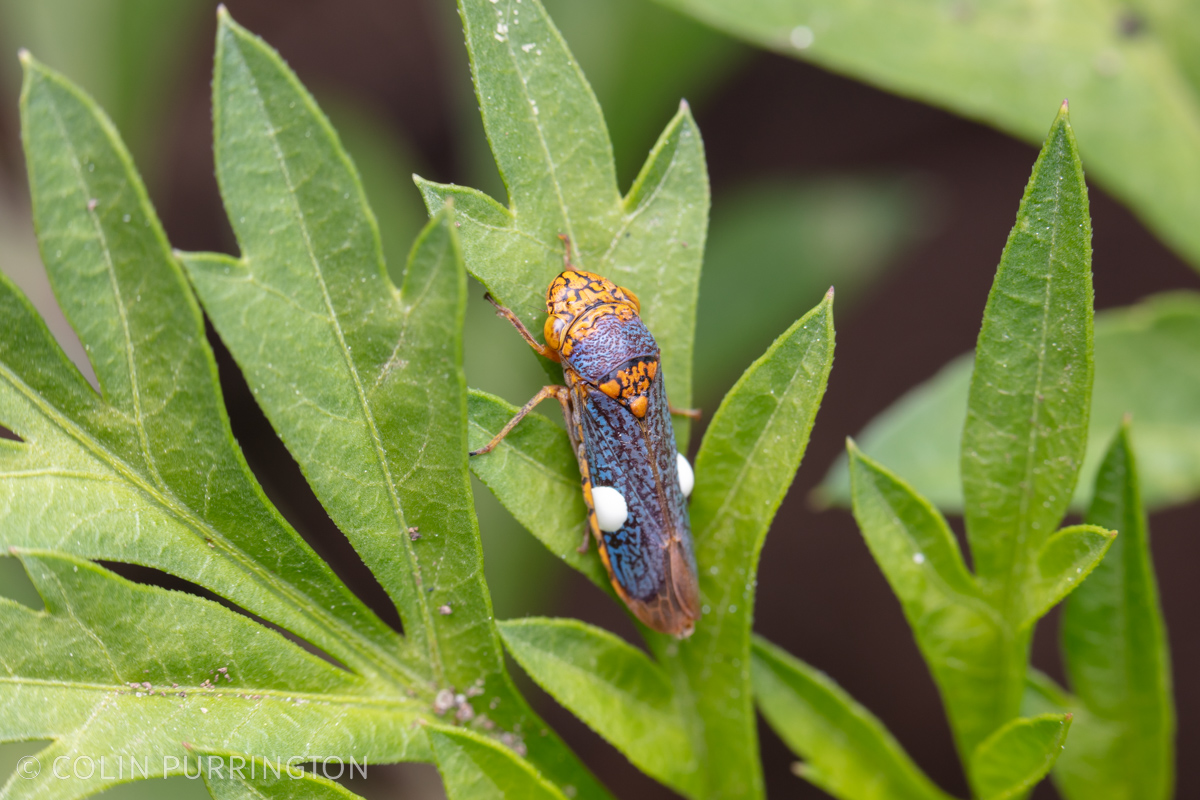
This gorgeous leafhopper is a female broad-headed sharpshooter (Oncometopia orbona). Those white spots are chalky deposits (brochosomes) that are often found on females. Females use the substance to coat their eggs, though I’m not sure whether she uses the material from those spots. For the life of me I cannot locate a photograph of eggs protected by this chalk. I gather both males and females of this species (and other leafhoppers and planthoppers) also “anoint” themselves with this goop after each molt to better protect themselves from the elements and from sticky substances (Rakitov 1996). They are really hard to photograph because when they sense your proximity they will quickly move to the other side of the leaf. More on BugGuide.
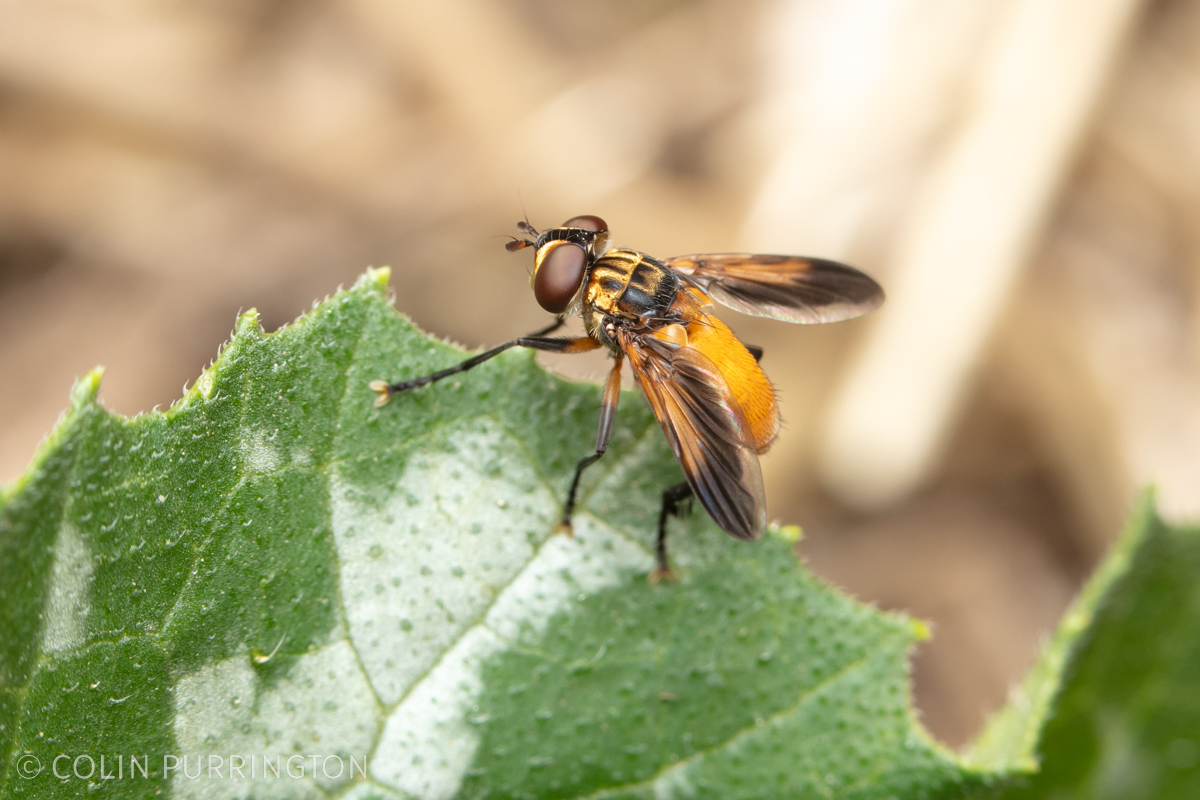
This is a swift feather-legged fly (Trichopoda pennipes), one of my favorite dipterans. I love it because (1) it’s beautiful, (2) not easily spooked, and (3) is a highly motivated parasitoid of squash bugs. I’ve never seen it in action, but they slap eggs right onto squash bugs (and several related bugs), and they do this all day long, sometimes effectively controlling the pest without any need for pesticides. They are so common that if you scroll through pics of squash bugs you’ll see the fly’s eggs regularly (e.g.). Here‘s a nice summary of its life cycle by Susan Mahr (University of Wisconsin). BugGuide.
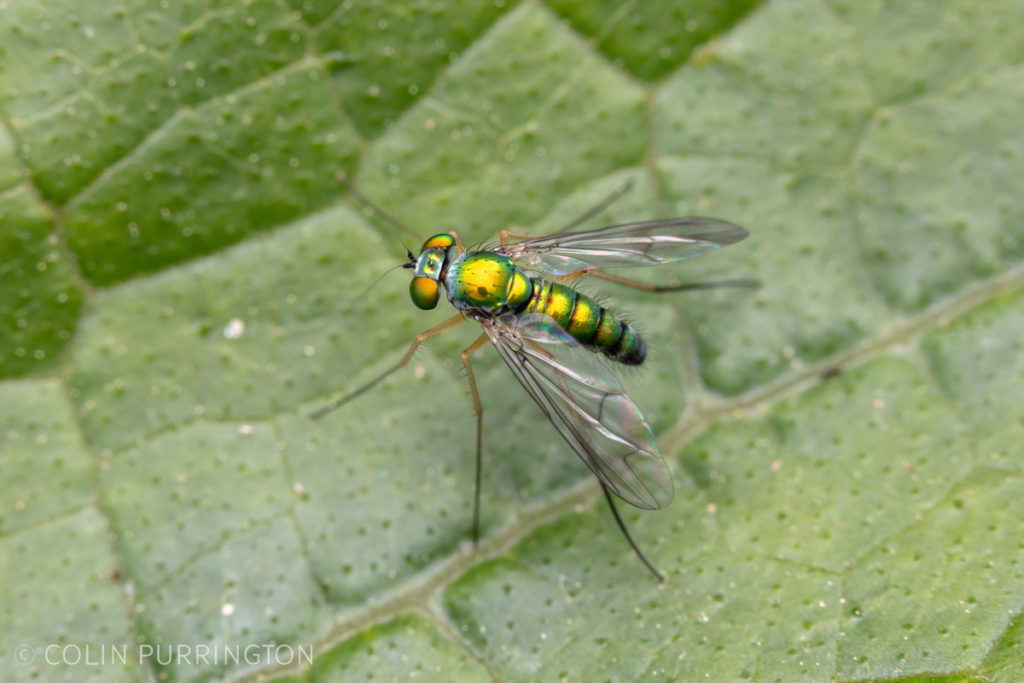
This is a male Condylostylus in the sipho group. My garden has thousands of these flies, all of them likely eating the aphids and other small insects that are present in large numbers. They are extremely skittish and hard to photograph. To make things worse, they also take flight when they detect a flash pulse, so 90% of my shots have only a leg or two. Here’s the iNaturalist observation in case you can help me with the identification. Caleb Scholtens has an excellent guide to the Condylostylus groups on iNaturalist .
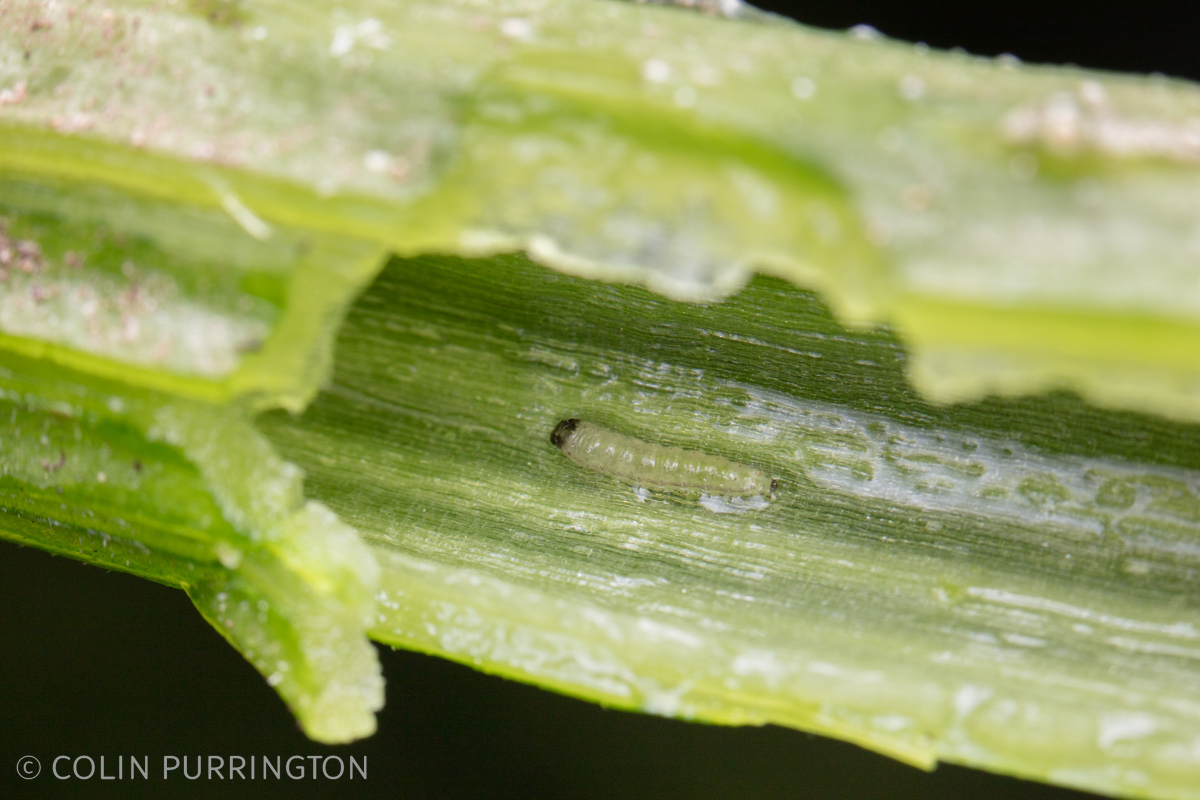
Finally, here’s an early-instar larva of a squash vine borer moth (Melittia cucurbitae) inside a zucchini stem. I found it by examining leaf stems for surface damage caused by oviposition and early feeding by the larva (see pic #3 on my Inaturalist observation to see the damage). These are horrible pests of zucchini and yellow squash, so I tend to wrap the bases of my plants in tinfoil, plus patrol the leaves and fruit stalks for larval damage. The adult, by the way, is stunningly beautiful. BugGuide has identification help, which I recommend checking just to be sure it’s not Melittia calabaza, which looks very similar.
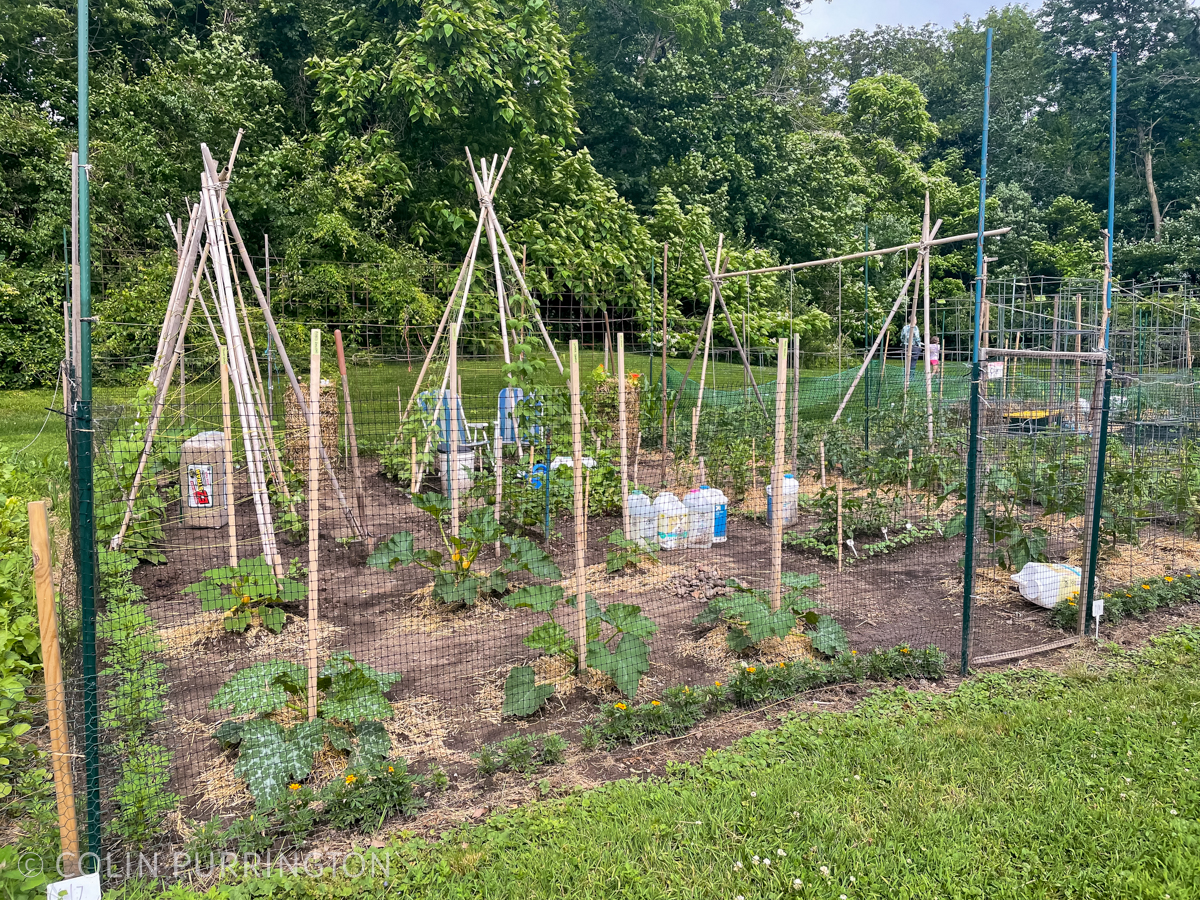
Finally, here’s a non-macro photograph that shows where all these insects are spending their lives, my little allotment at the Scott Arboretum Community Gardens.
All of the above photographs, plus thousands more, are at https://colinpurrington.smugmug.com.