Here are some photographs from a 2024 trip to Prince Edward Island. Plus assorted blurbs because I try to learn something about the species I come across. At the very end are three mystery organisms that have stumped me.
Crustaceans
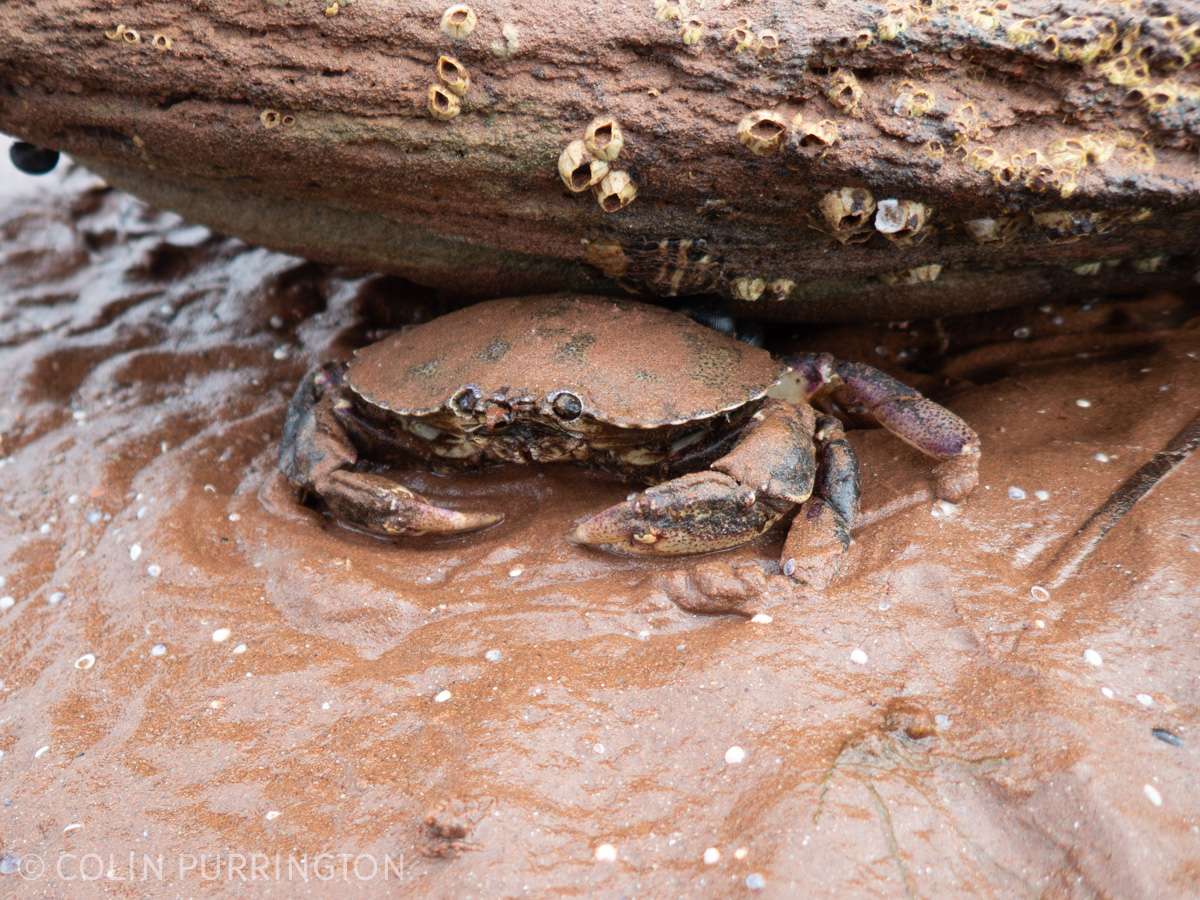
Atlantic rock crab (Cancer irroratus). It looked sad. Also of minor note: all the tiny little shells in the sand.
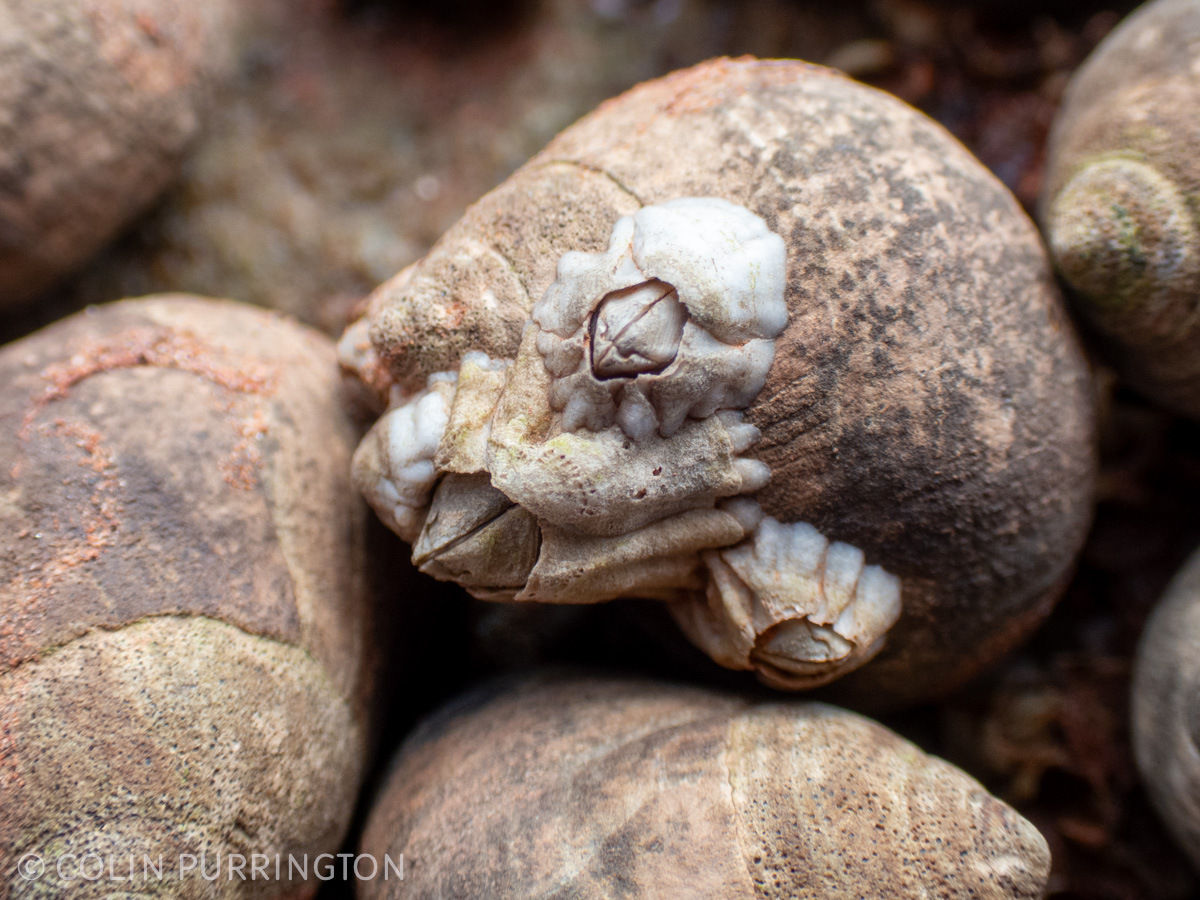
Northern acorn barnacles (Semibalanus balanoides) growing on a snail. I wonder how they fare compared to ones that develop on rocks.
Mollusks
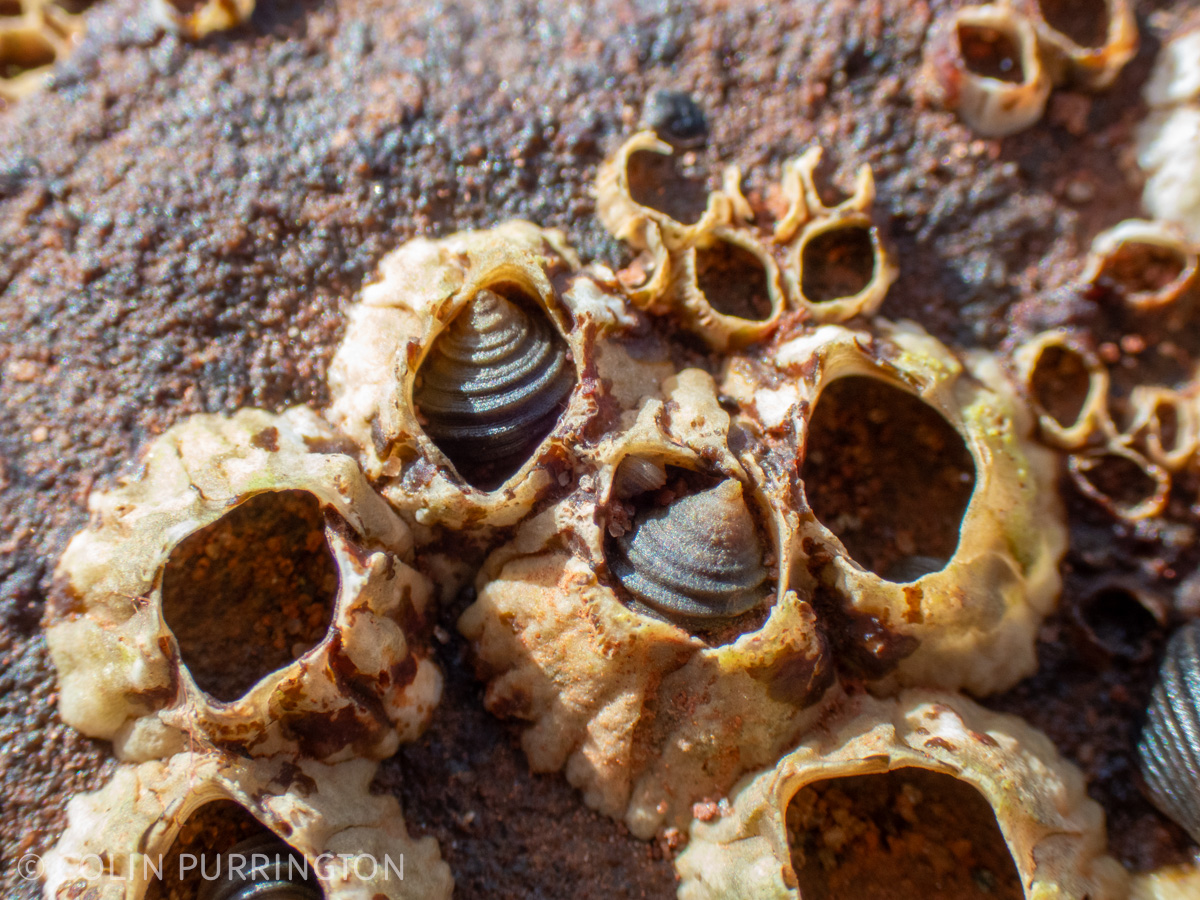
As a segue, here are some common periwinkles (Littorina littorea) inside empty barnacle shells. I wonder how often the snails become trapped inside after they add whorls to their shells.
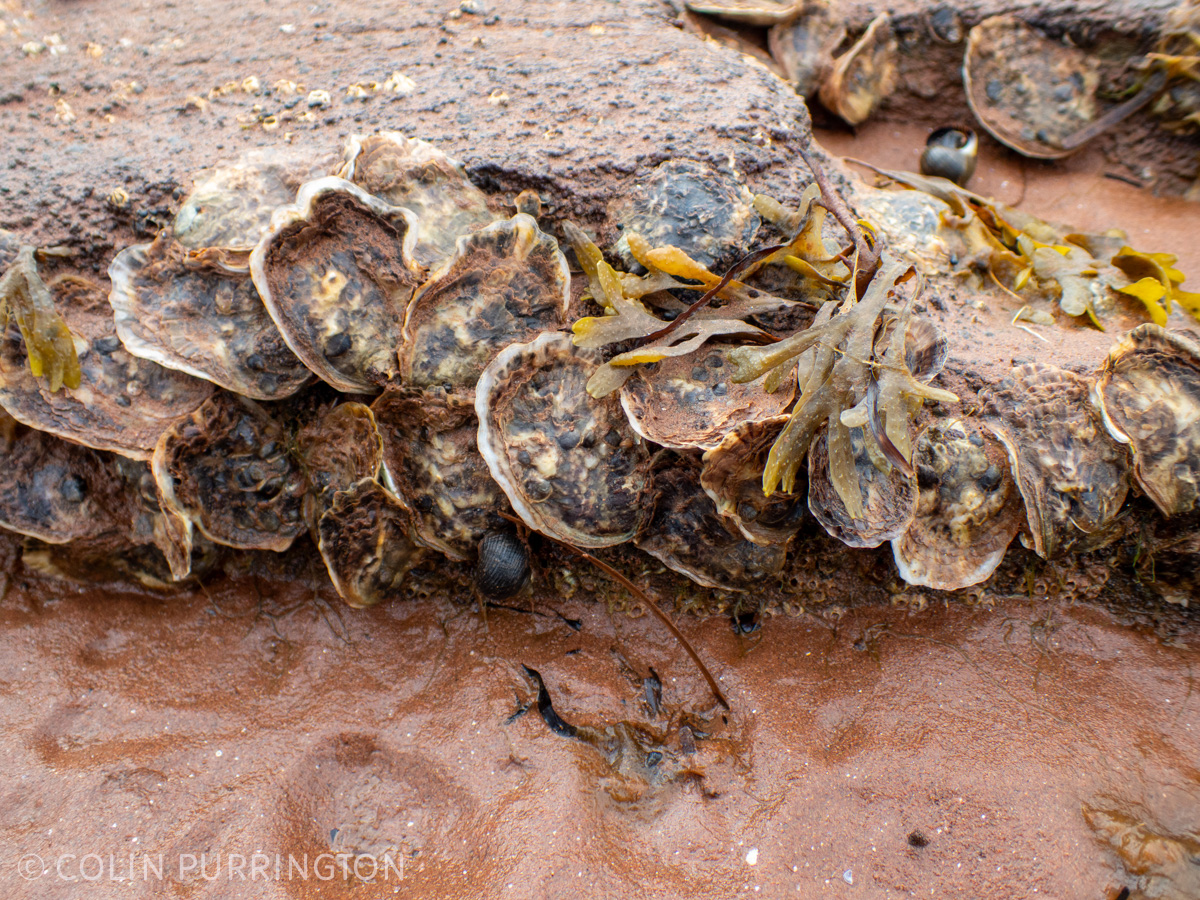
PEI is famous for its Eastern oysters (Crassostrea virginica) so it was no surprise they were growing everywhere. That said, I was surprised. Trillions of them, I suspect, if you count all the babies (spats). Females are said to produce 100 million eggs when they spawn, which is rather impressive.
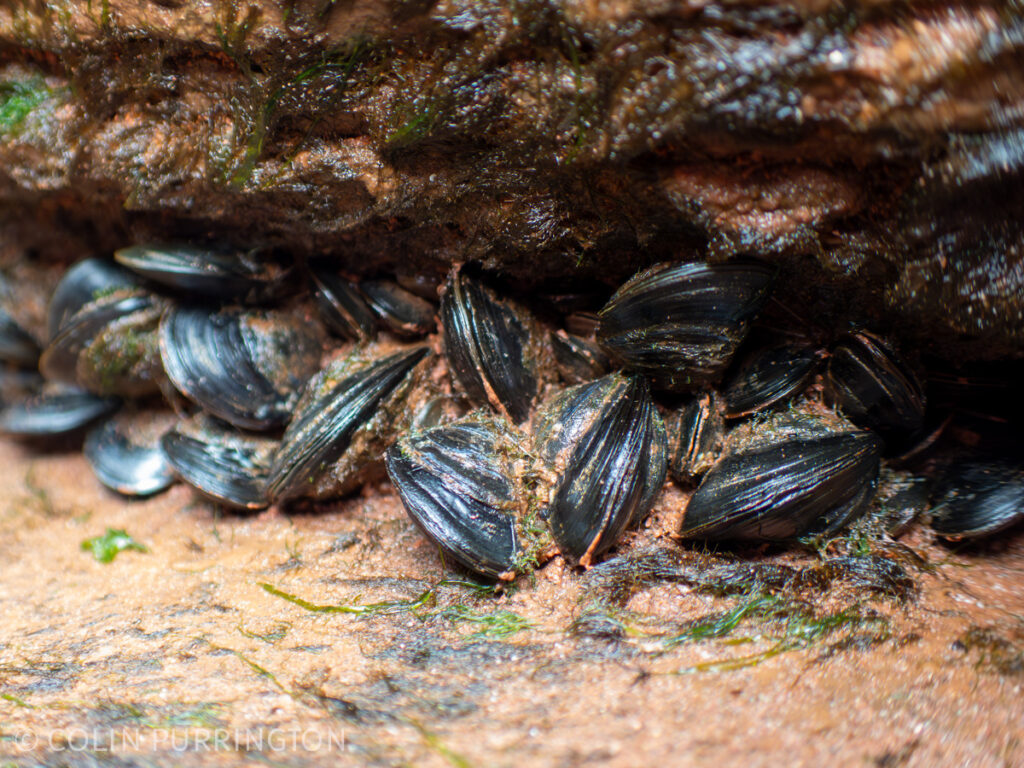
Blue mussels (Mytilus edulis) were also present in uncountable numbers. This patch seemed to have very prominent growth rings and I wonder whether the farmed ones are smoother. Could just be my imagination, of course.
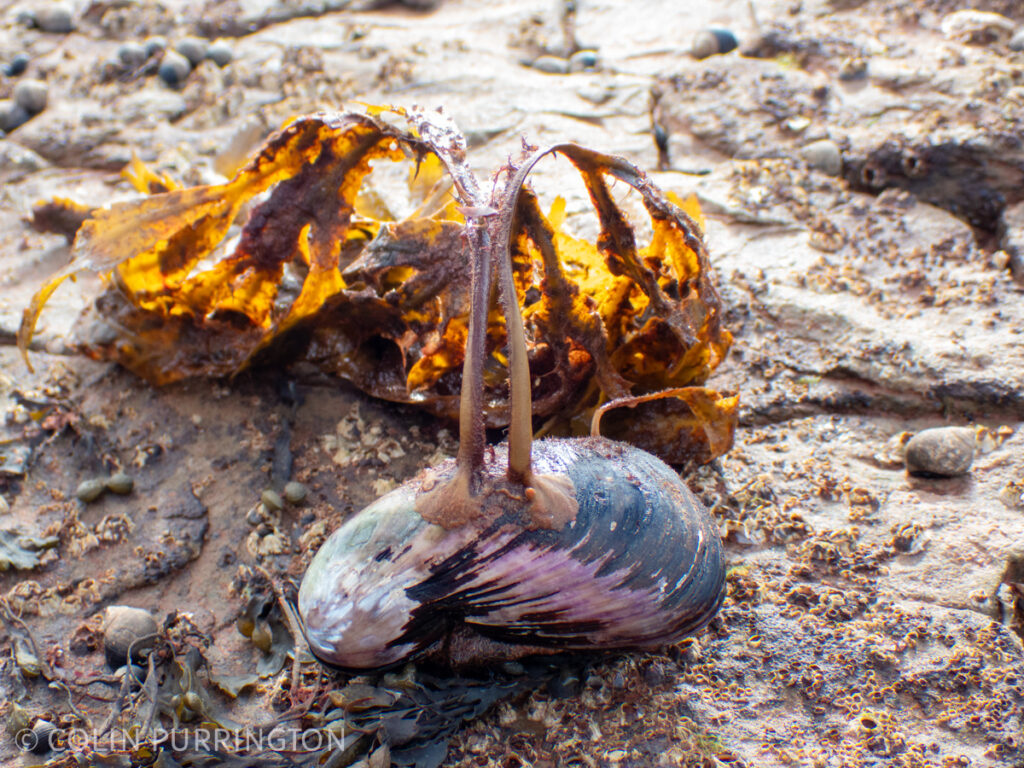
Northern horse mussel (Modiolus modiolus). These are very large but the word on the street is that they are not good for eating. The alga is Fucus serratus (saw wrack).
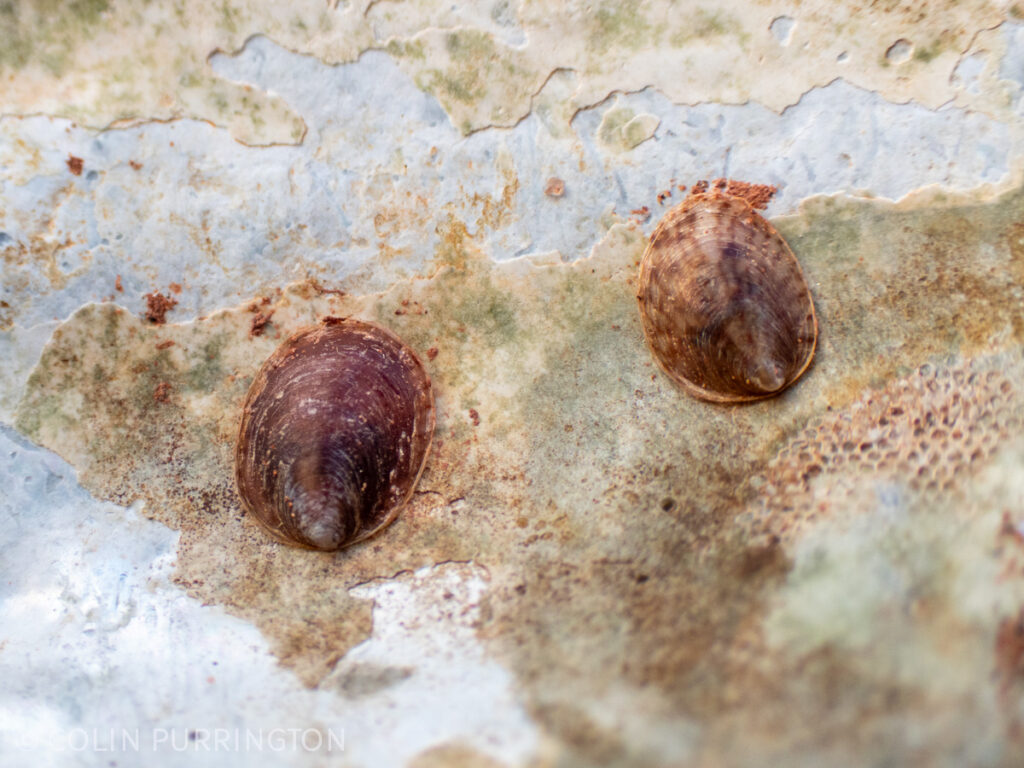
Common Atlantic slippersnails (Crepidula fornicata) on the inside of some shell. Unfortunately there’s nothing for scale so you can’t tell how tiny and adorable these are. Approximately the size of a corn kernel.
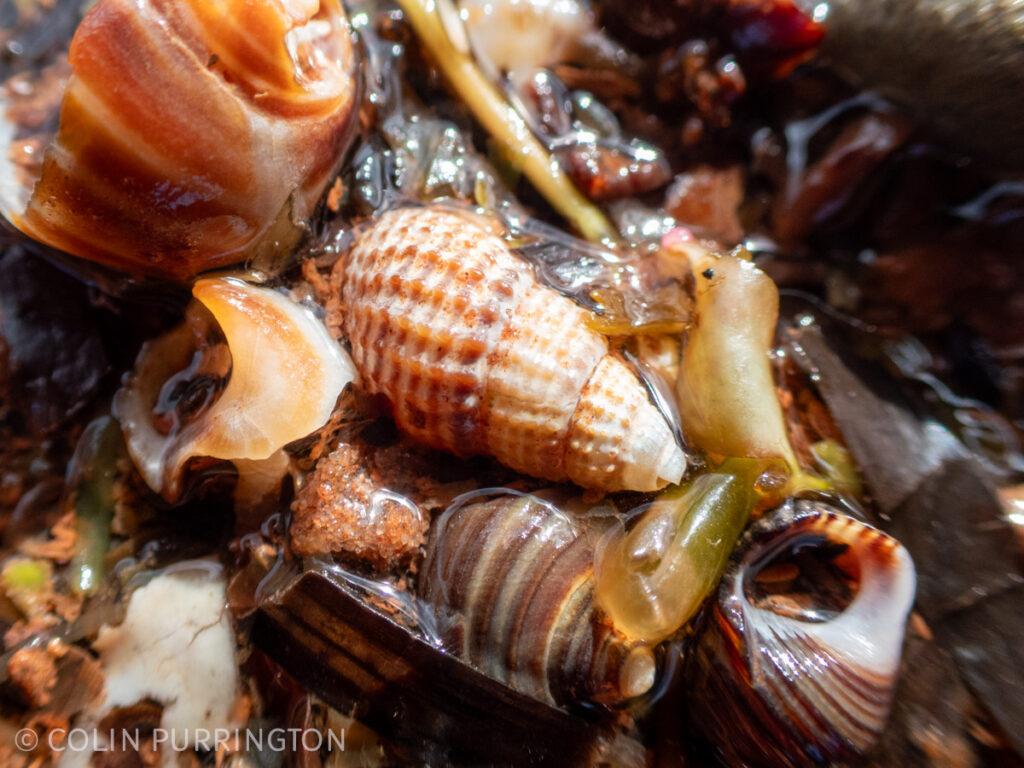
Three-lined mudsnail (Ilyanassa trivittata). A scavenger, but apparently has a taste for the egg-case of northern moonsnails (below).
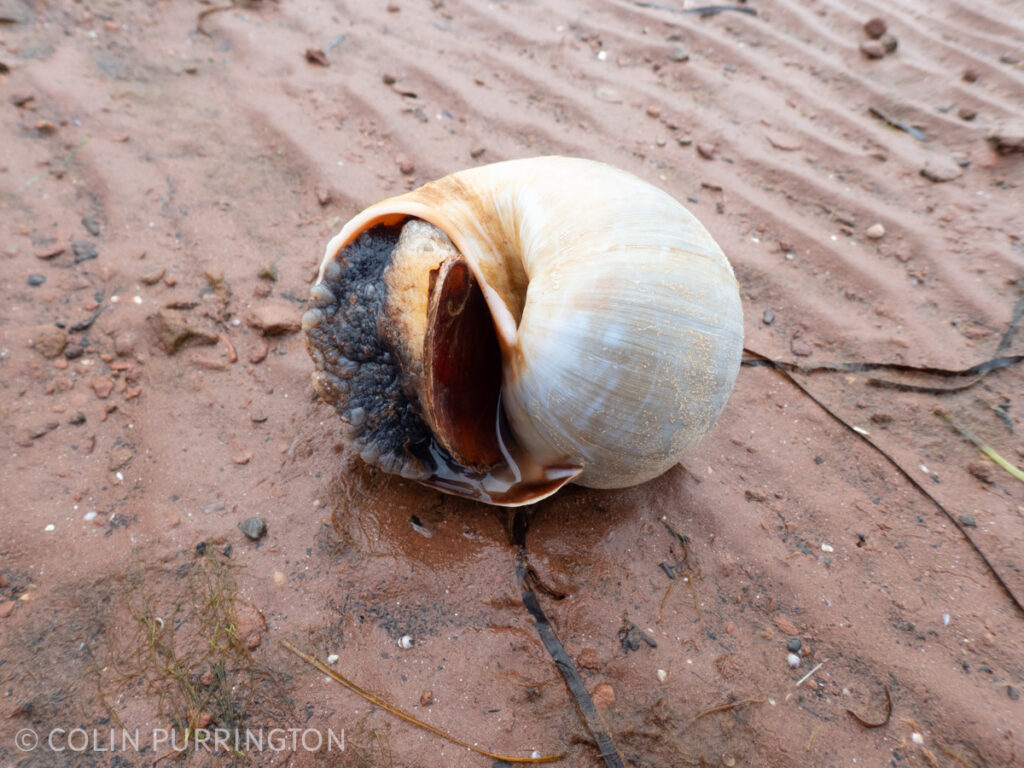
Northern moonsnail (Euspira heros). This is a snail of unusual size (SOUS) and uses a mechanical drill and acid to bore into clams and other snails, including other moonsnails. But they also eat algae, as shown by carbon isotope analysis (source). This video is a short and entertaining primer on how they do it. The resulting hole is always countersunk.
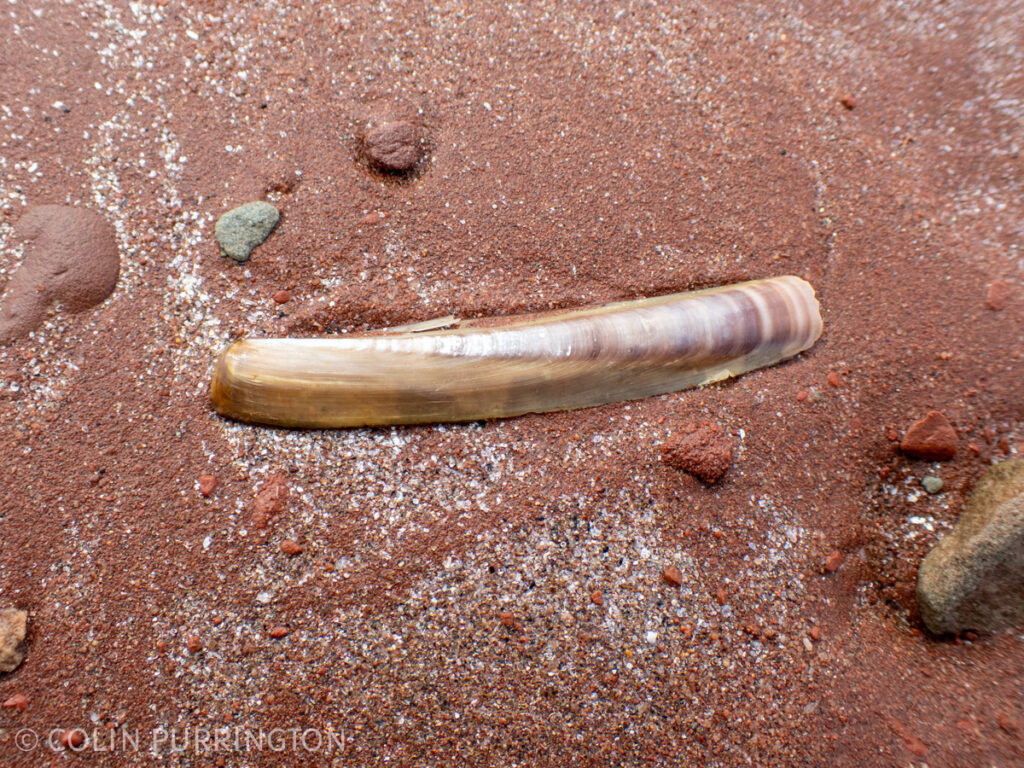
Atlantic jacknife (Ensis leei). Despite persistent effort I could not locate a restaurant on Prince Edward Island that served razor clams. Likely because I went in October. I will need to go back.
Tunicates
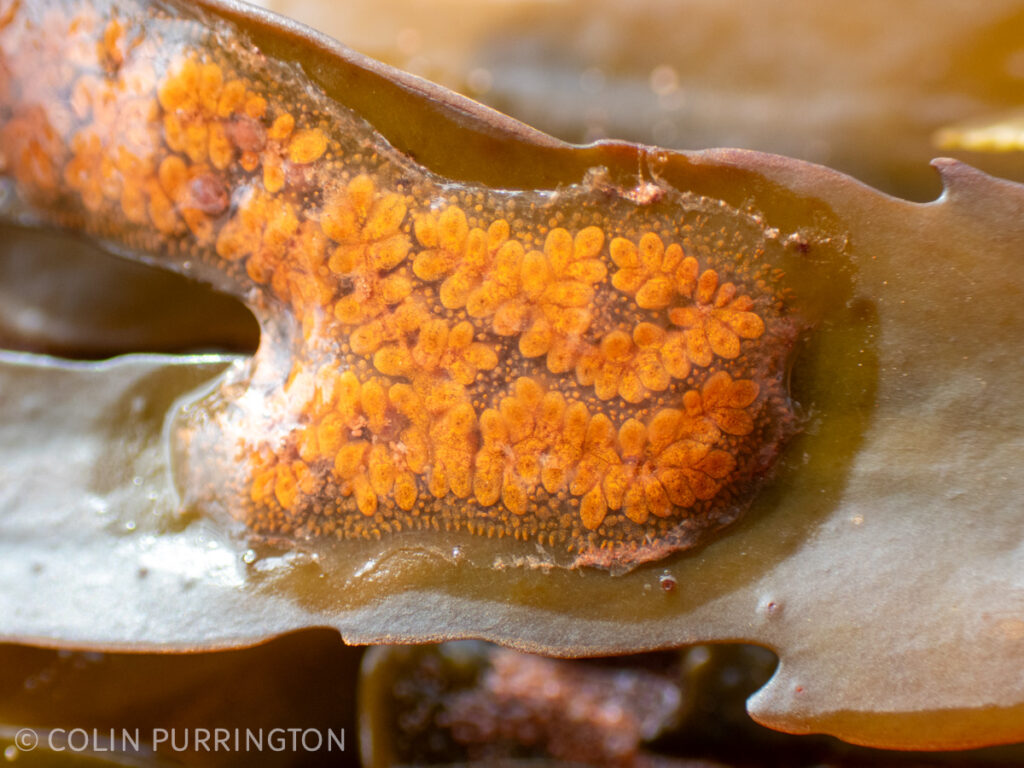
Chain (or violet) tunicate (Botrylloides violaceus). This invasive is loathed by oyster and mussels farmers on the island because it fouls cages, ropes, boats, etc., all of which need to be blasted clean with high-pressure hoses. And if you don’t, the combined weight of the tunicate is enough to break the mussels’ attachments to the rope that suspends them in the water. They also compete for food. And it gets worse because this is just one of four invasive tunicates in the area. But they are pretty!
Plants
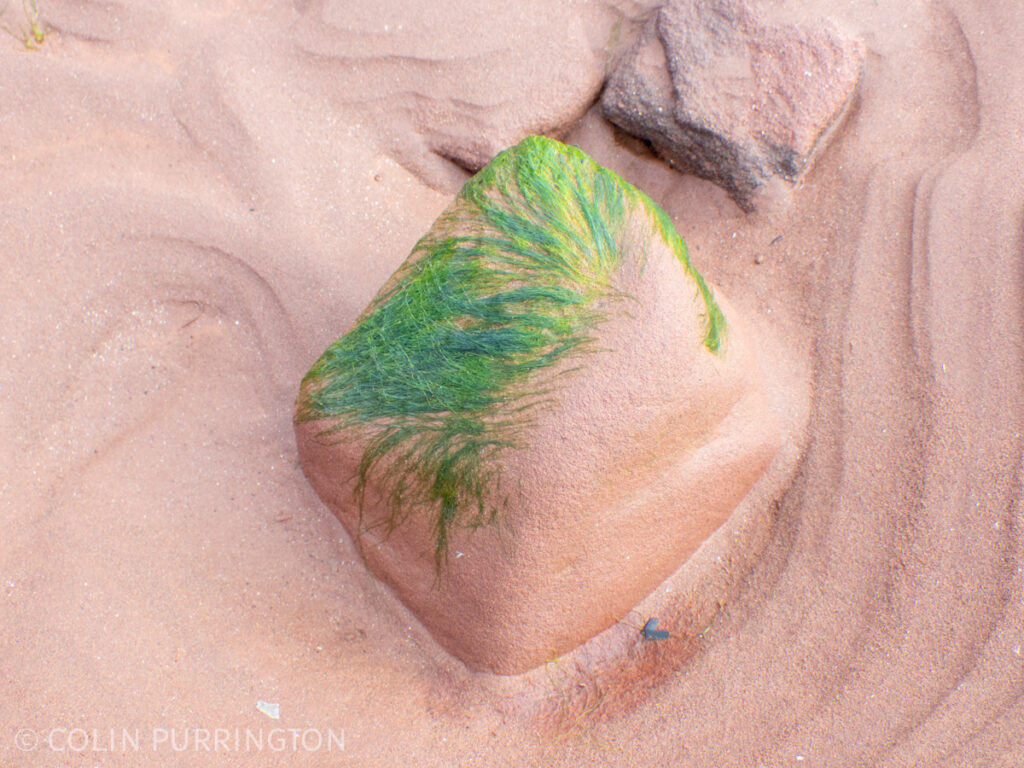
Gutweed (Ulva intestinalis). I didn’t take a close-up but I read that the fronds have hollow parts that trap oxygen and allow it to float when the tide comes back in. Although it’s very green, the reddish rock and combover reminded me of somebody. That’s why I took this photo.
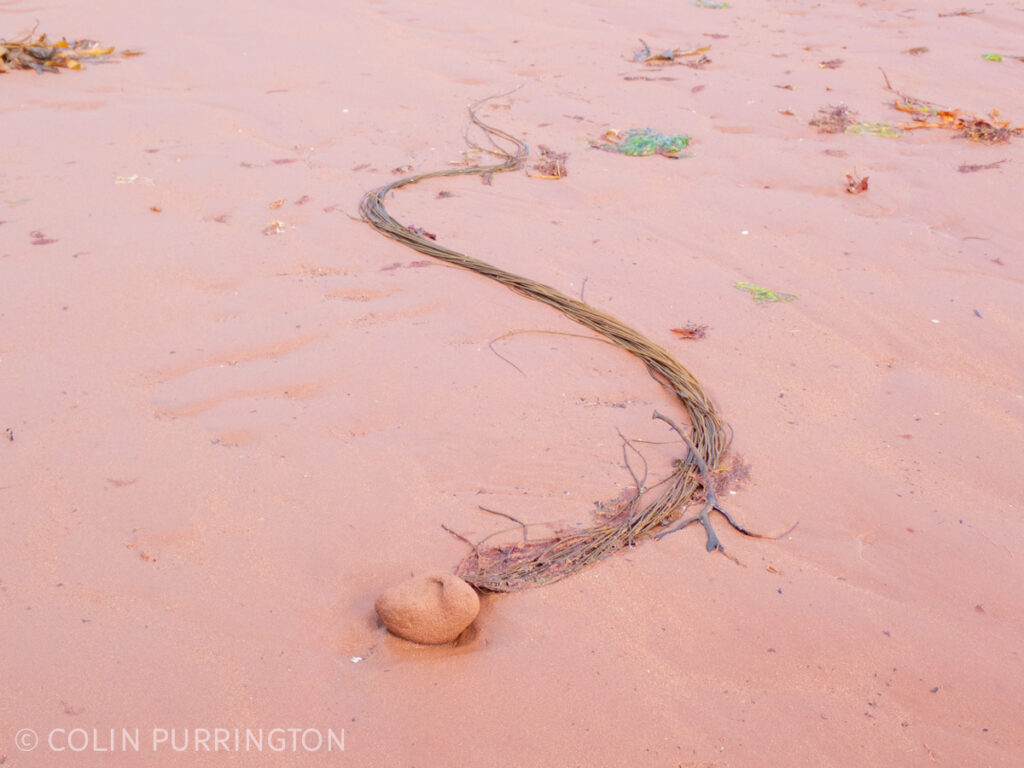
Mermaid’s tresses (Chorda filum) attached to a rock. Fronds can get as long as a school bus. It’s a brown alga.
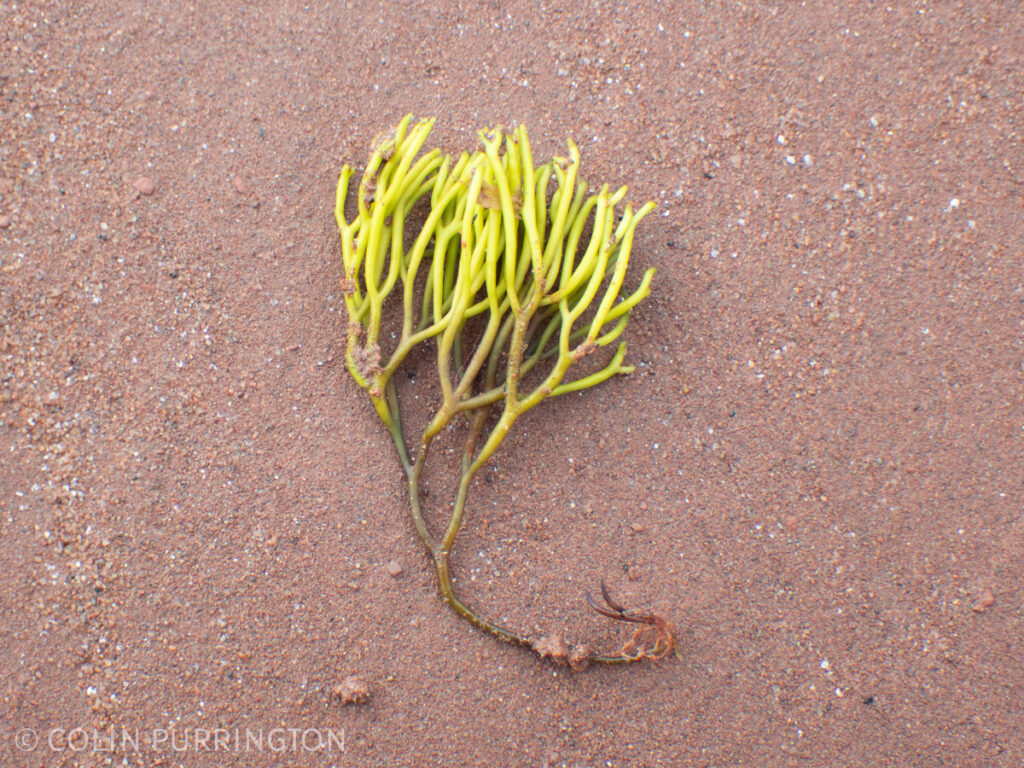
Furcellaria lumbricalis. This is a red alga and the only member of the genus. Apparently loaded with carrageenan. But apparently not as easy to harvest as giant Irish moss (an asexual, hexaploid variant of Chondrus crispus), a red alga that used to be harvested with horses on Prince Edward Island before the population crashed (invasive green crabs and potatoes are on shortlist of culprits). Even the Irish Moss Interpretative Centre has closed.
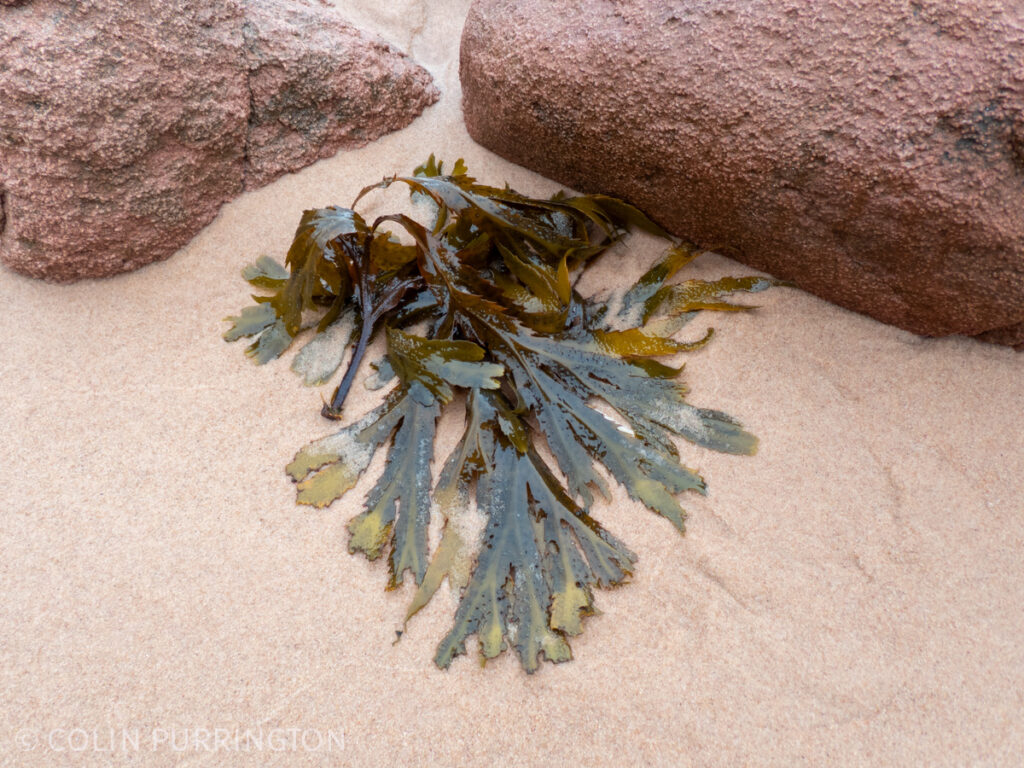
Sea wrack (Fucus serratus). Apparently quite tasty, and it’s an invasive so you should.
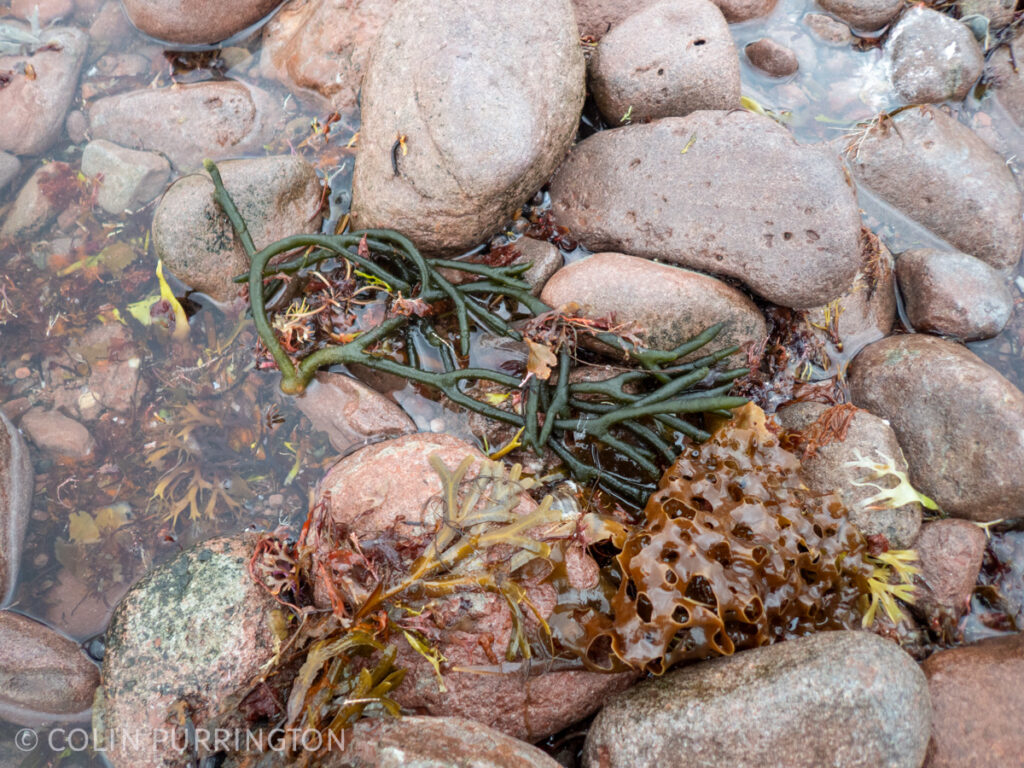
Dead man’s fingers (Codium fragile), another invasive. Often called oyster thief because it attaches to farmed bivalves, which then get washed away by strong waves. Per one source it causes millions of (CAD) dollars of losses every year.
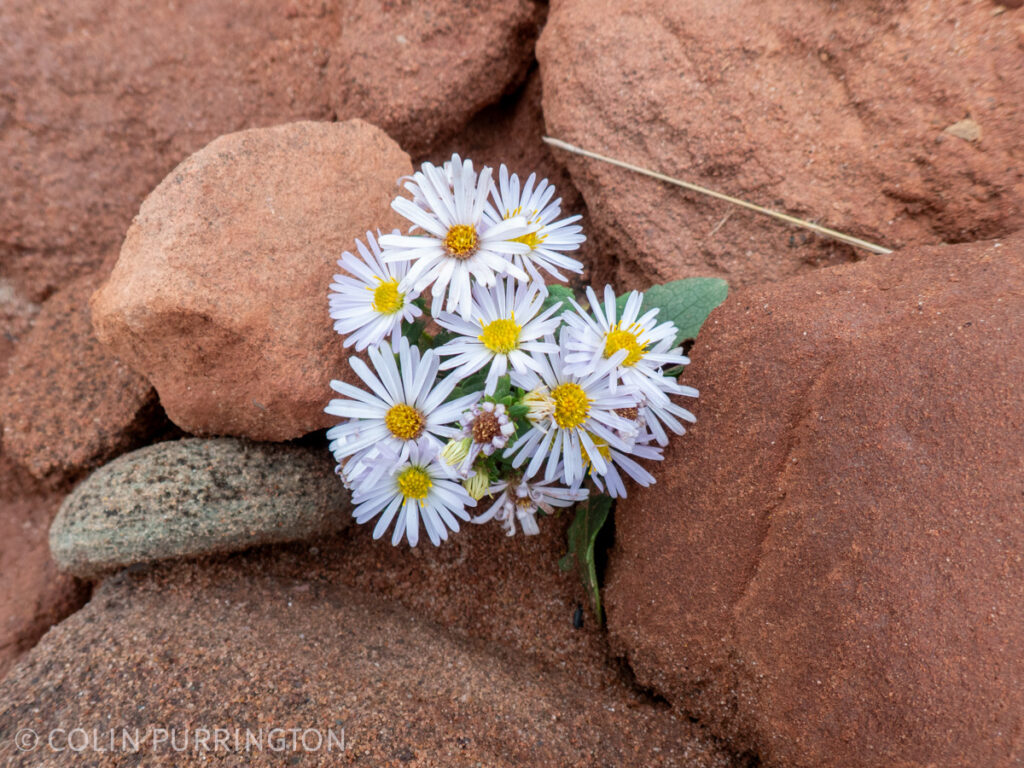
New York aster (Symphyotrichum novi-belgii). This wasn’t in the intertidal but it was close enough so I wanted to include. I’m a sucker for compact plants that are just barely hanging on.
Insects
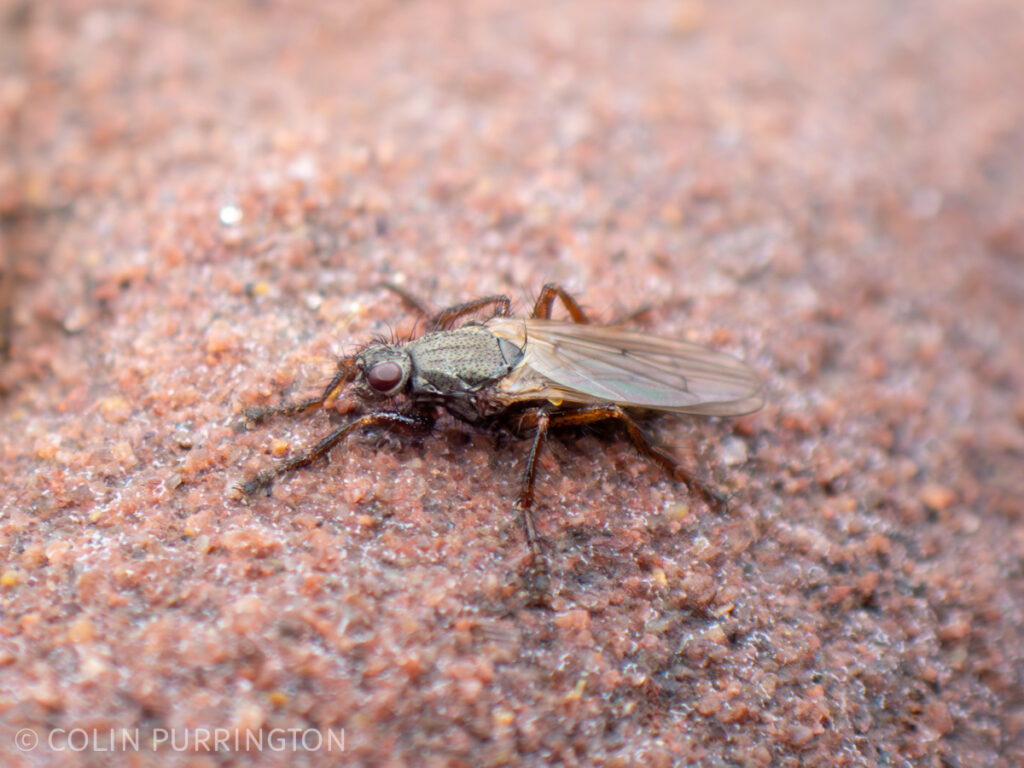
Black kelp fly (Coelopa frigida). There were millions of these but it still took probably 100 tries before I could get a decent image. Small, frenetic, and easily spooked. And only 126 observations on iNaturalist for North America, as a likely result. I would like to go back with my real camera and flash setup. Larvae are said to eat the bacteria that grow on decomposing seaweed.
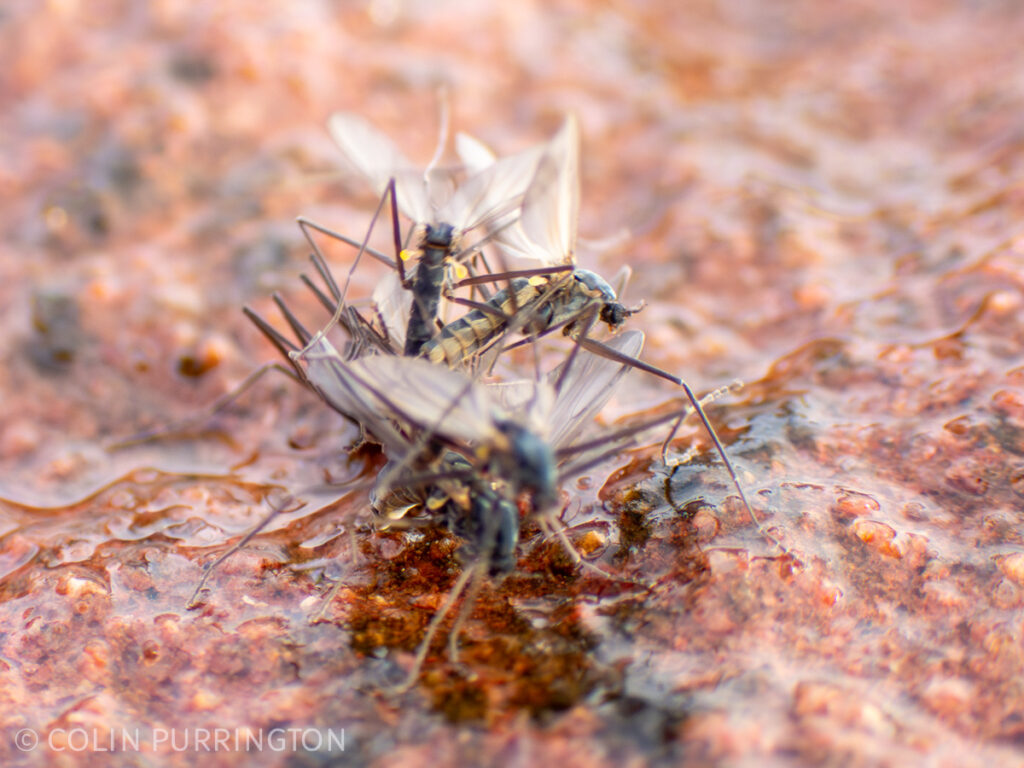
Telmatogeton japonicus. These were even harder than kelp flies to photograph, and that’s my excuse for it being out of focus. And for the sake of full disclosure I’m not positive about the identification. If confirmed, my iNaturalist observation would be the first for Prince Edward Island.
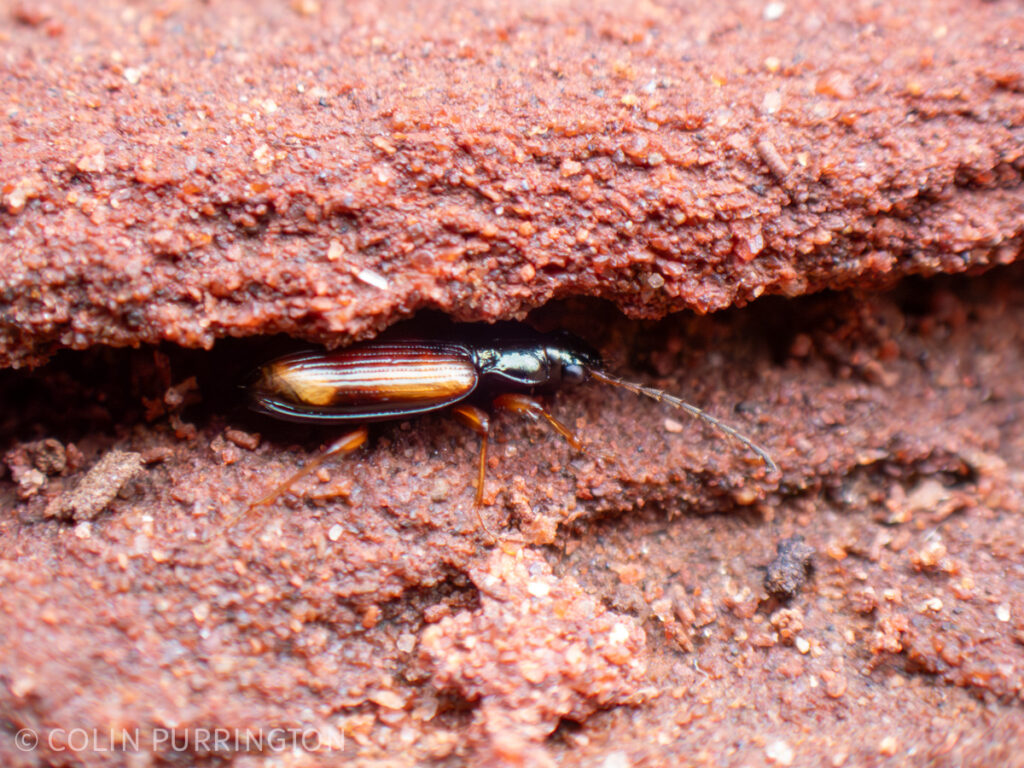
Peryphus sp. This is a subgenus of Bembidion, my father’s favorite carabid. As he often complained, they are really fast and hard to capture. And hard to identify which is probably why my dad liked them.
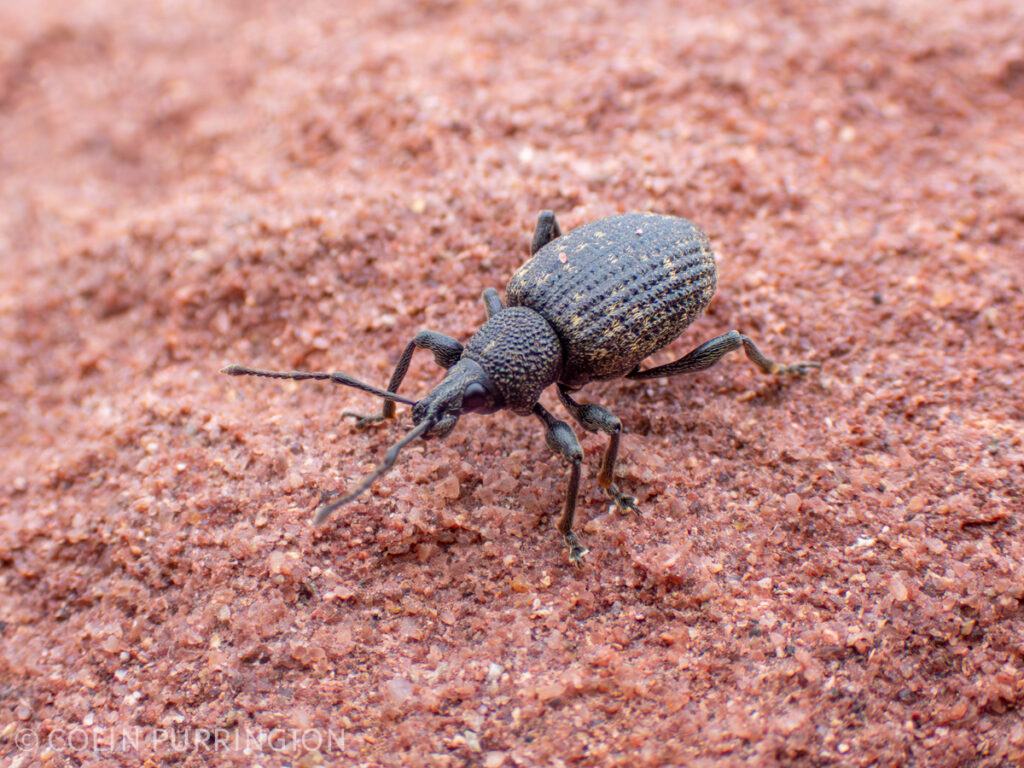
Black vine weevil (Otiorhynchus sulcatus). This is an invasive agricultural pest and I was surprised to see it on the beach. But it turns out that it has a rather wide host range so I guess not unusual.
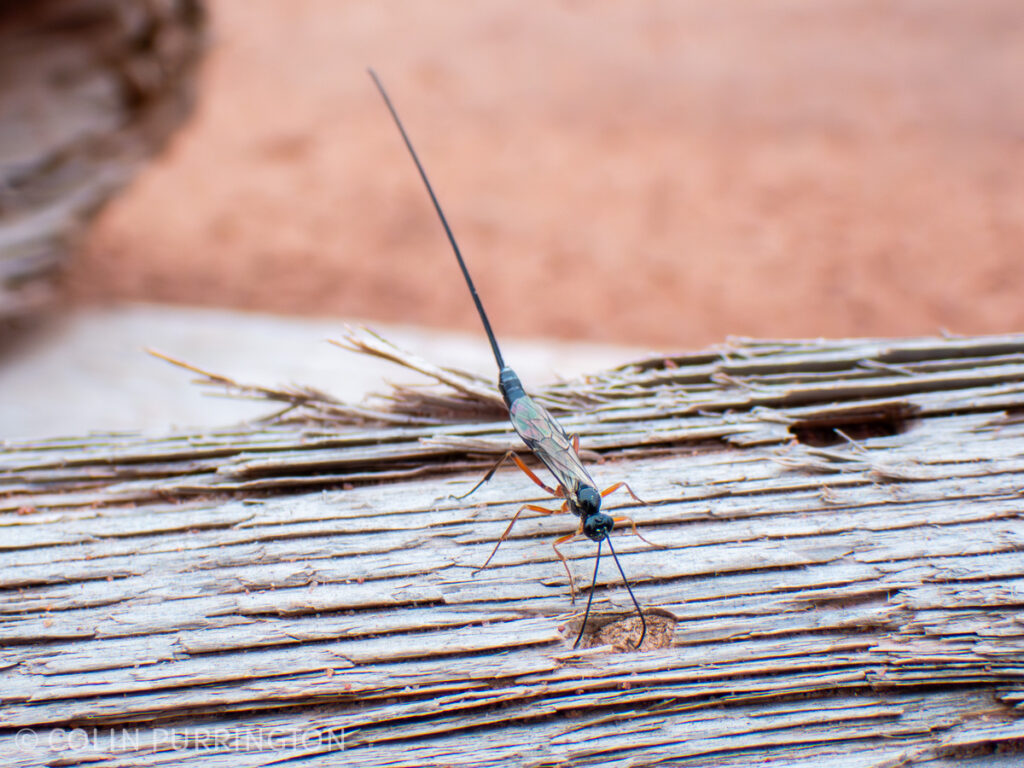
For such a beautiful and large wasp I thought somebody on iNaturalist would offer up an identification. After almost a year, nothing. I’m guessing that it was going after some sort of cavity-nesting bee that uses beetle bore holes in driftwood as nests. All the logs had plugs like this so some bee is really utilizing the wood.
Spiders
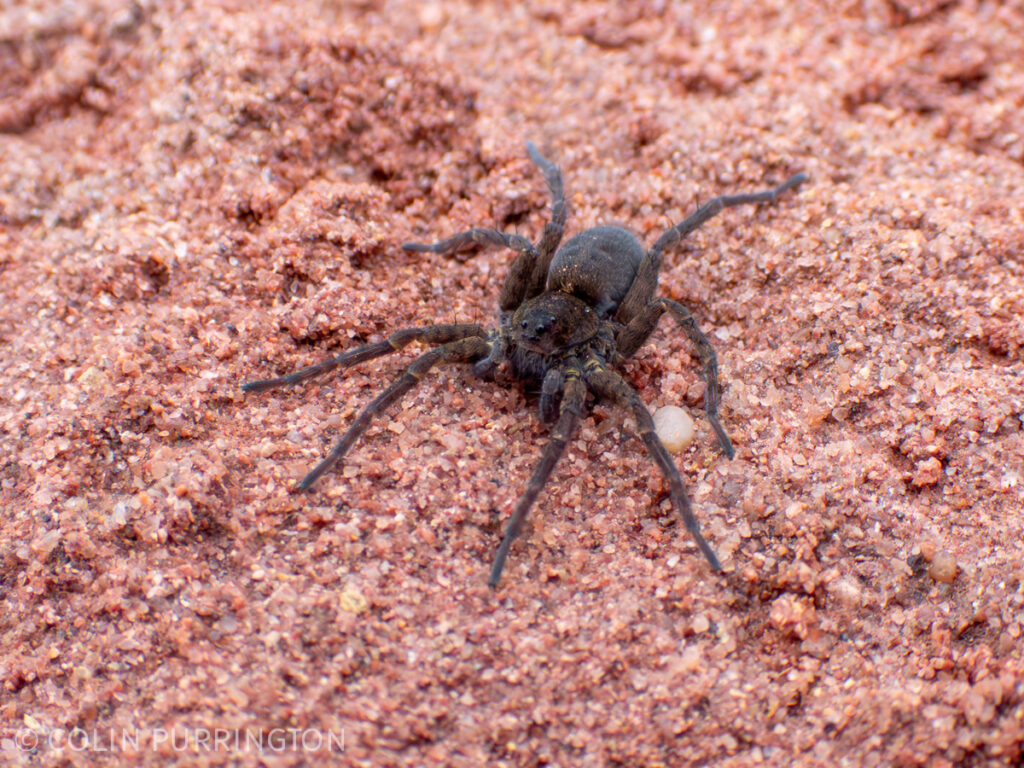
Thin-legged wolf spider (Pardosa sp.) that was under a rock. I’d wager that it was mainly eating kelp flies. Species identification is only possible with dissection.
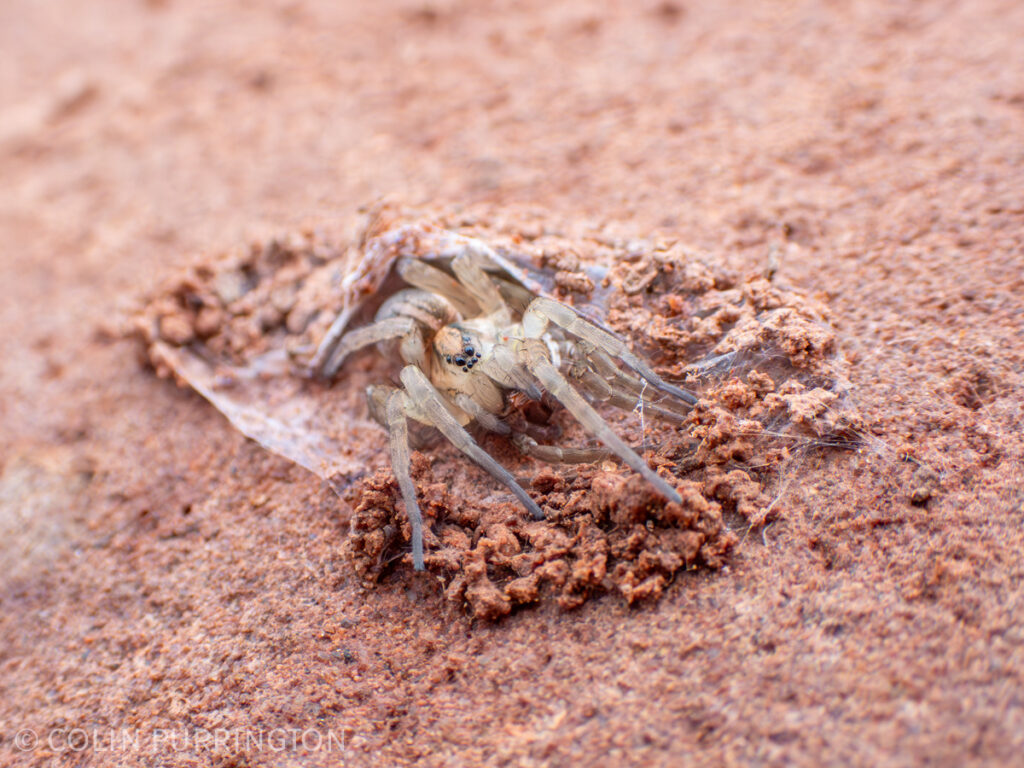
Trochosa sp. that has recently molted. This also can’t be taken to species level because the patterns aren’t visible until after the new exoskeleton ages a bit.
Mysteries
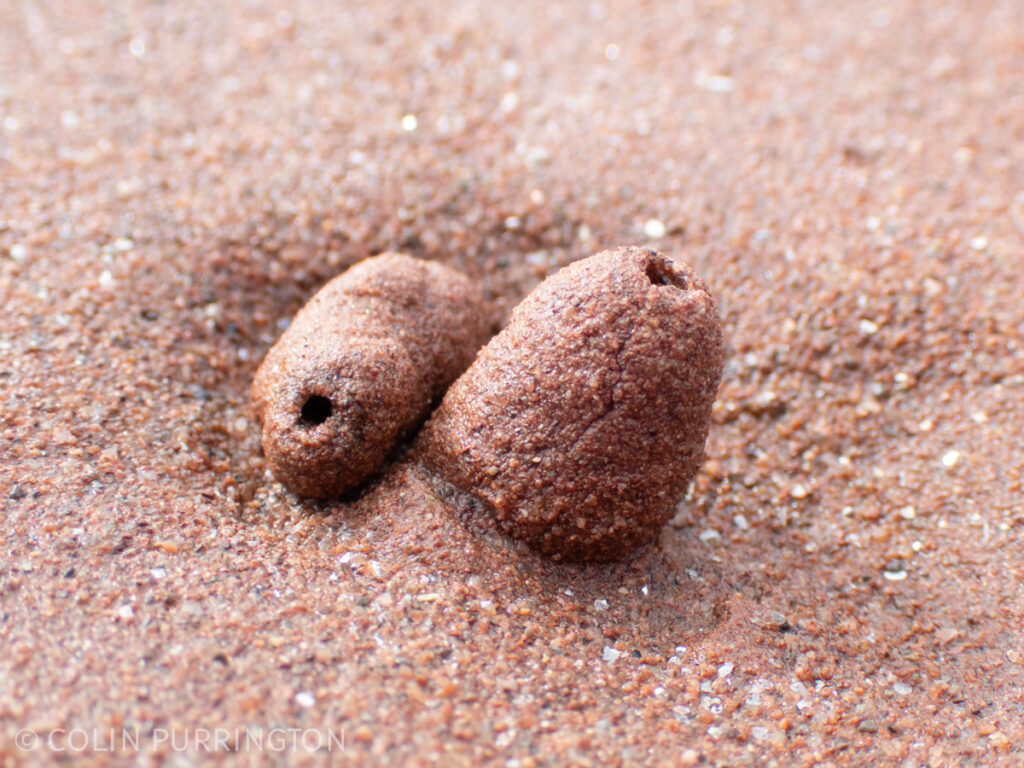
I’m assuming this is some sort of venting product made by a sand-dwelling organism such as a clam, worm, or crab. Here’s the iNaturalist observation if you’d like to weigh in.
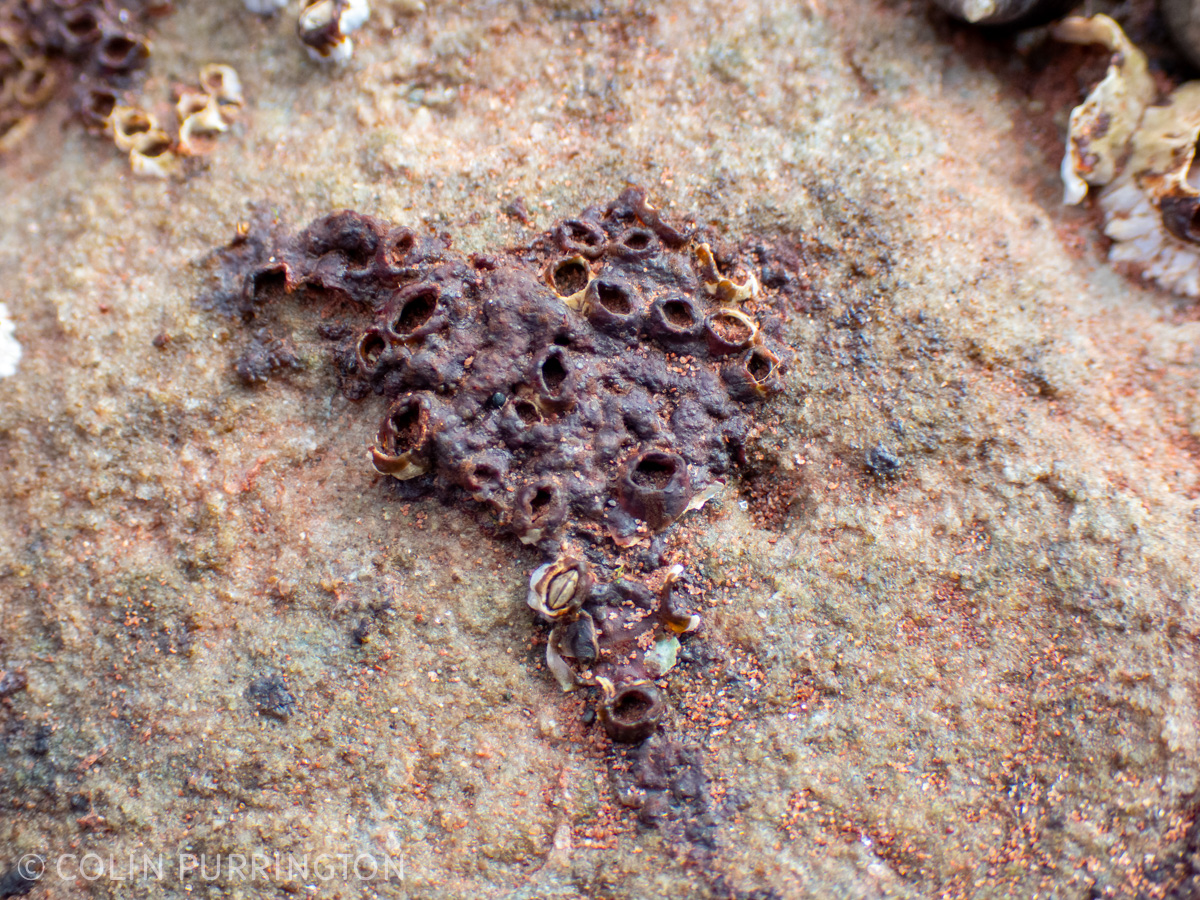
This sort of looks like a sponge (e.g., Clionaidae, Halichondriidae) but I truly have no idea. Definitely creepy, and I wonder whether those barnacles were victims of something slow moving. Here’s my iNaturalist observation if you can help.
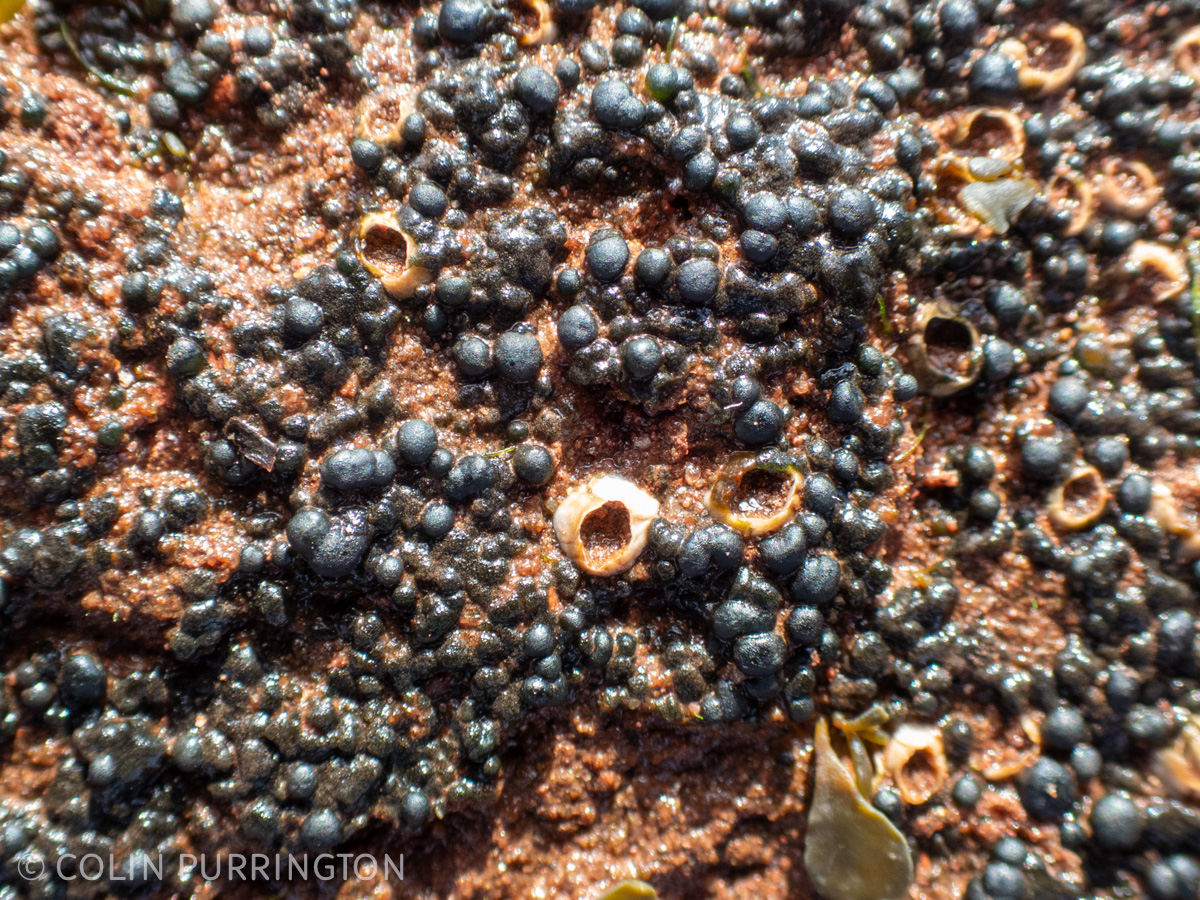
I think this might be some sort of fungus (e.g., Collemopsidium halodytes) or a lichen. It was especially common in depressions in rocks where water might pool. More ideas are on my iNaturalist observation. I would be grateful for suggestions.
As always, if you see a mistake please let me know.
In case you’re a camera nerd, all photographs were taken with an OM TG-7 that I purchased for the trip. It’s waterproof, shoots RAW, does focus-stacking (poorly), and weighs a lot less than the Canon DSLR that I usually lug around with me.