
Photographs from a June visit to Mohonk Mountain House in New Paltz, New York. As always, I’m grateful for ID corrections. If you want to see more pics from Mohonk, here’s the album.
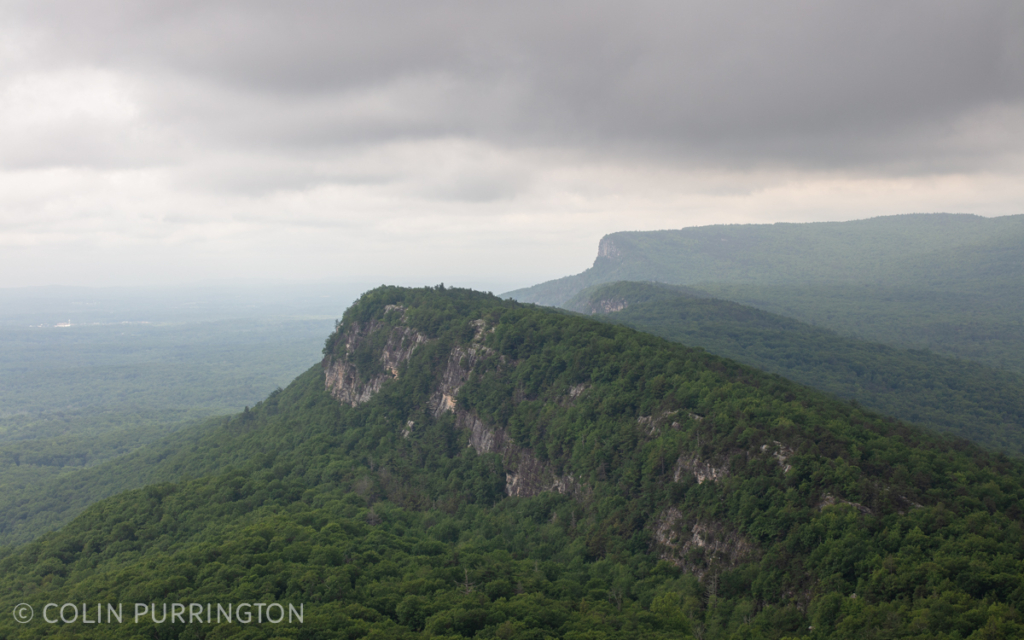
View of bedrock in nearby Shawangunk ridge (the Trapps) popular with rock climbers.
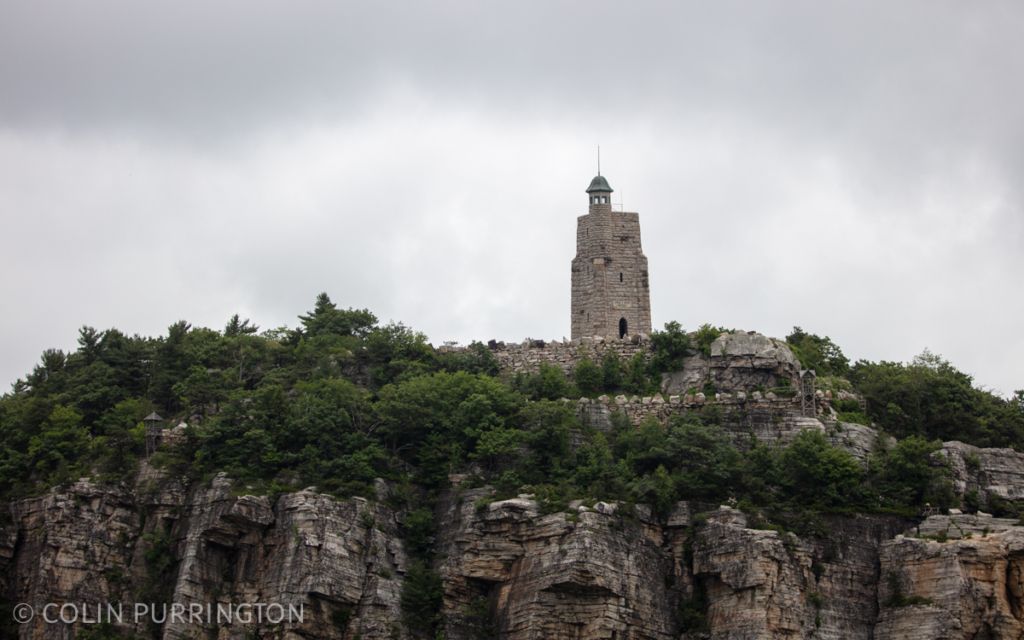
Sky Top folly on a gloomy afternoon. The rock was formed during the Silurian (430 million years ago). Sedimentary conglomerate, sandstone, and shale, all bound together by quartz. It’s mainly quartz and thus super hard.
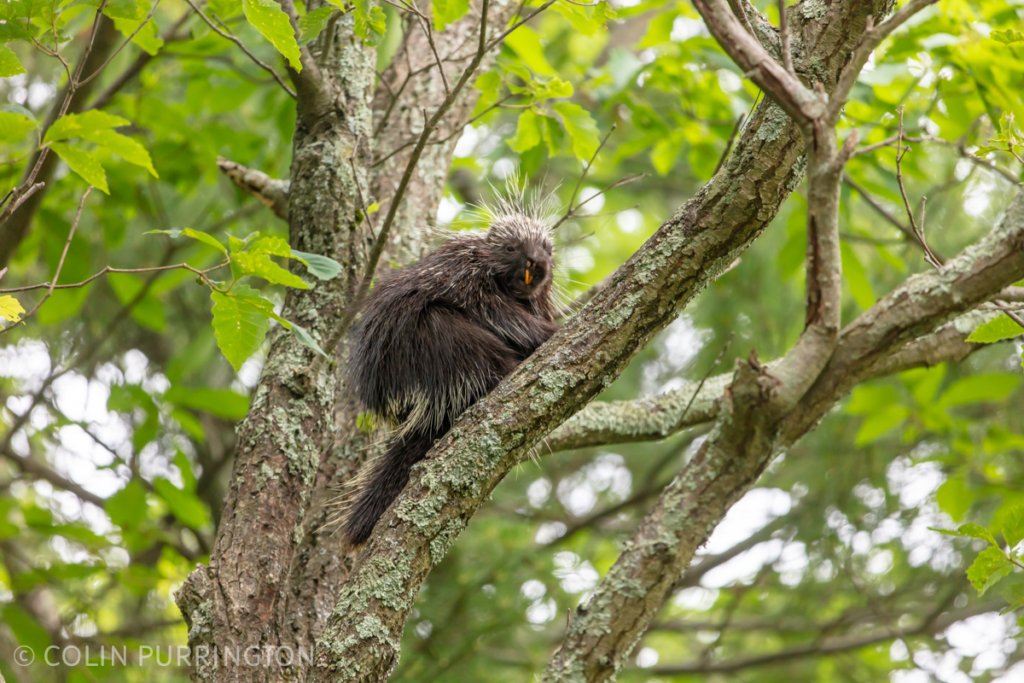
North American porcupine (Erethizon dorsatum) in a tree. At night they travel higher into the canopy to nibble on tender shoots, but apparently fall with some regularity when the small branches snap. This one seems to have a tooth issue that will likely end badly. But seems plump enough for now.
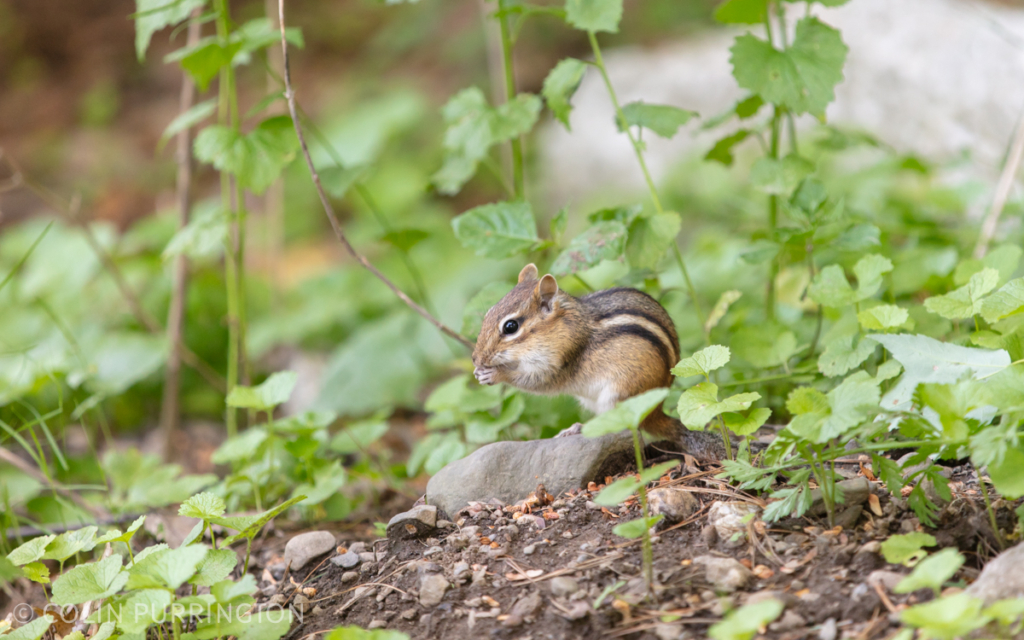
Eastern chipmunk (Tamias striatus) eating conifer seeds.
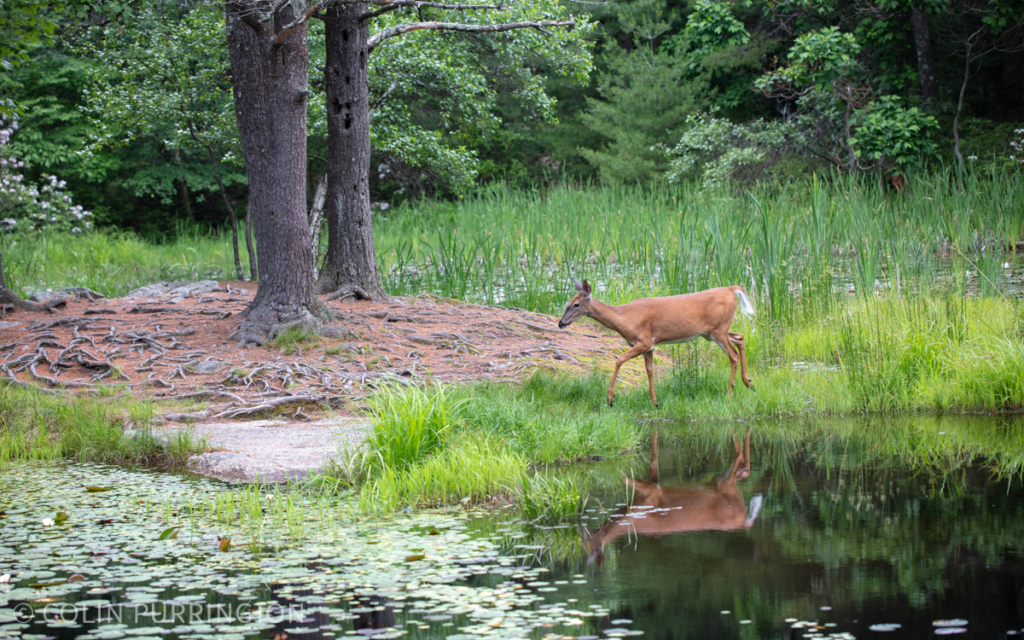
White-tailed deer (Odocoileus virginianus) at the lily pond, one of perhaps several dozen that I encountered on walks and trail runs. It’s hard to imagine that the species nearly went extinct in the late 1800s. During that period Mohonk Mountain House used to stock them in a paddock near the current location of the Garden, then later at a larger site near Copes Lookout Road. Meat was used to feed employees, plus the guests enjoyed feeding the deer. It was taken down in 1947 when “the entertainment value of the deer had decreased” (i.e., when wild deer became common).
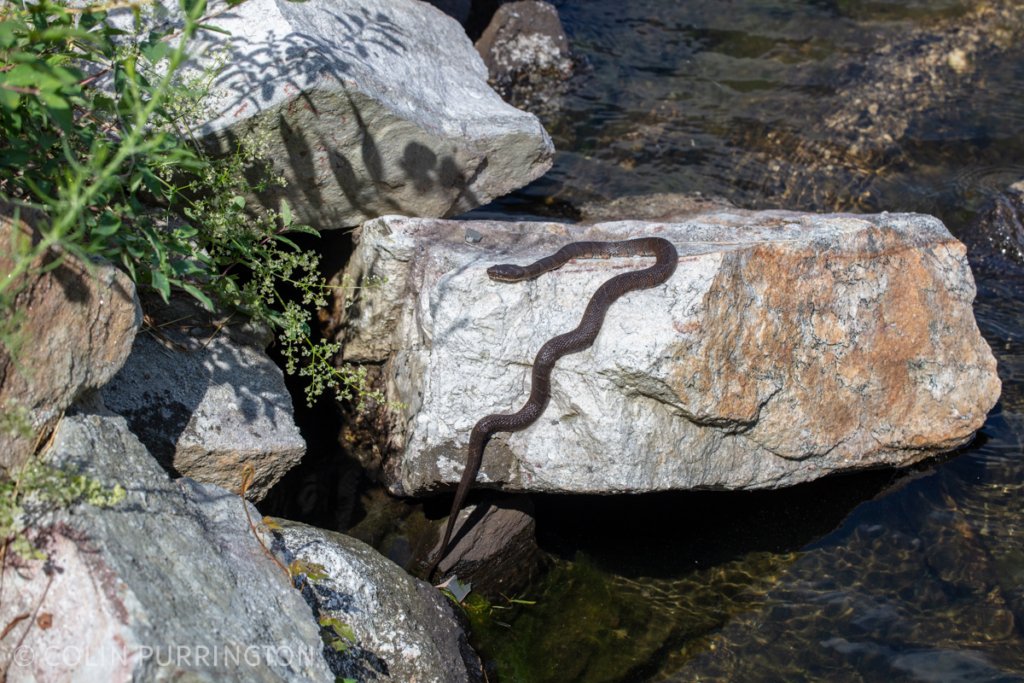
Common (northern) watersnake (Nerodia sipedon) sunning on a rock near Lake Mohonk. Not venomous but apparently known for their “eagerness” to bite. And if that happens you apparently bleed profusely due to the anticoagulant in their saliva.
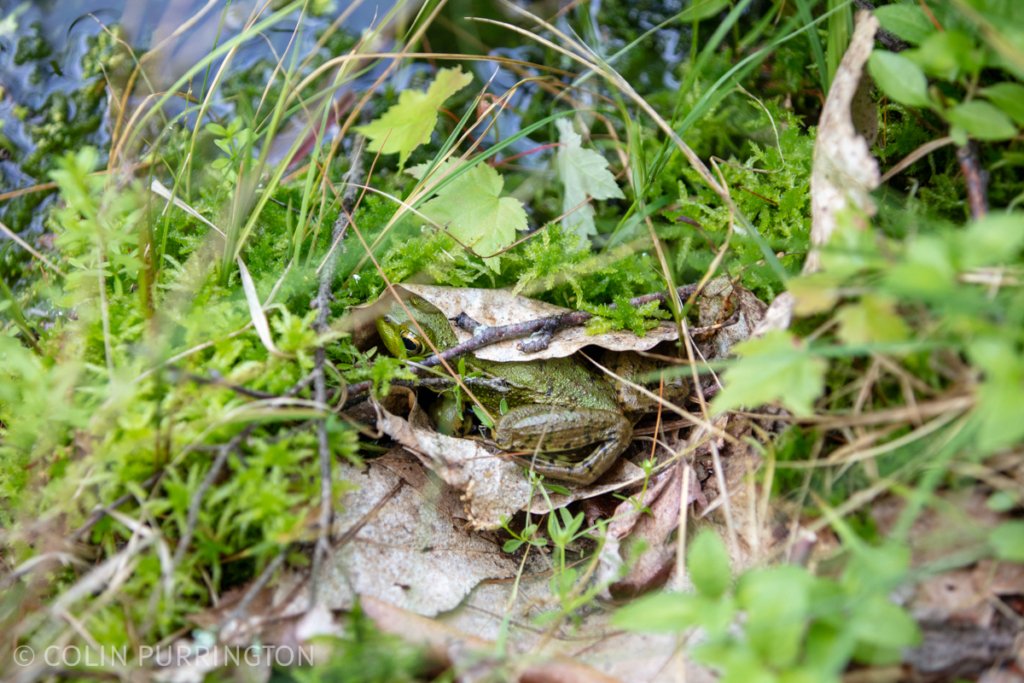
Green frog (Lithobates clamitans) attempting to hide under a leaf. In 2018 somebody found a blue morph at the Duck Pond. The word on the street is that maybe 1-2% (seems high) of green frogs are blue and that it’s genetic. Keep your eyes peeled.
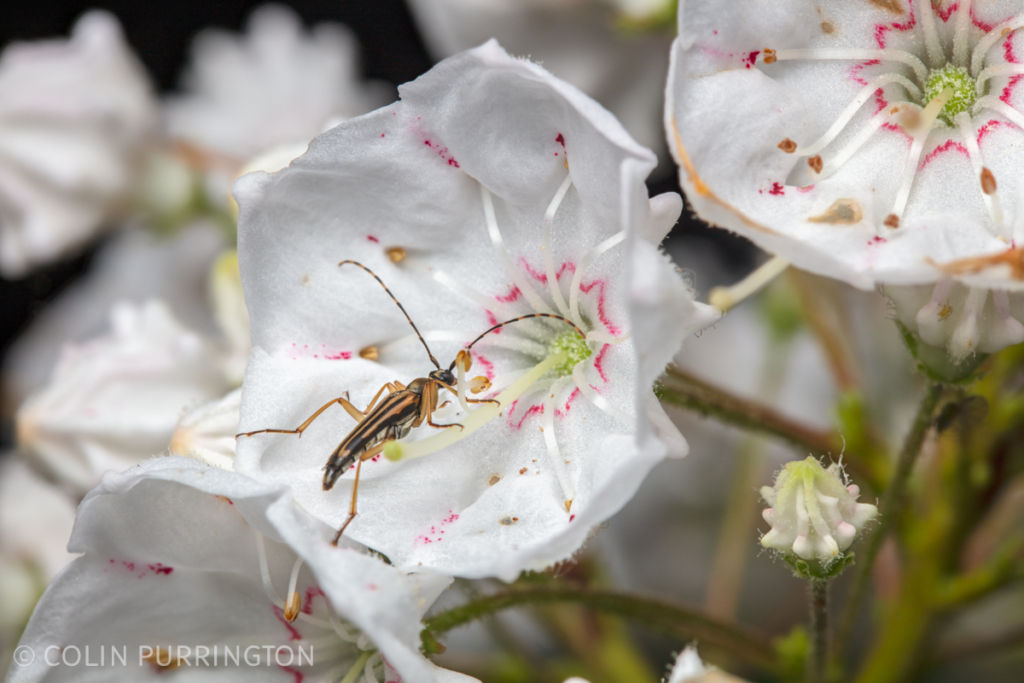
Analeptura lineola eating a mountain laurel flower. Or at least I think it is. Per this page the species is hard to distinguish from flower longhorns (Lepturinae) in other genera. A beautiful insect.
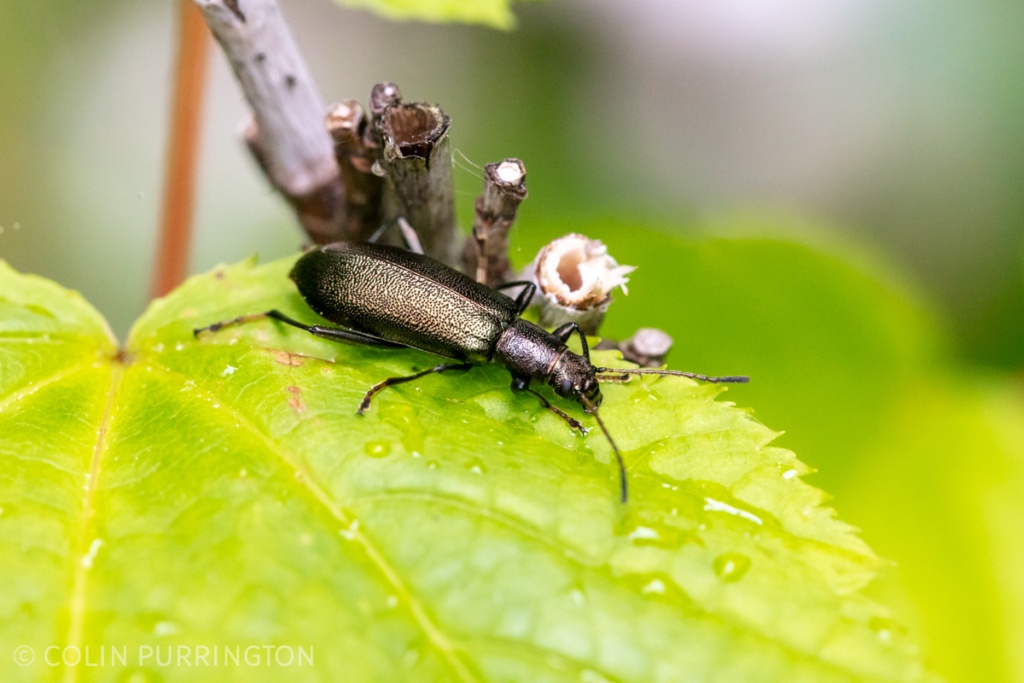
Arthromacra aenea, yet another gorgeous insect that inexplicably has no common name. It’s a darkling beetle (Tenebrionidae), which surprised me, but apparently the subfamily (Lagriinae) used to be a family (Lagriidae). Very odd.
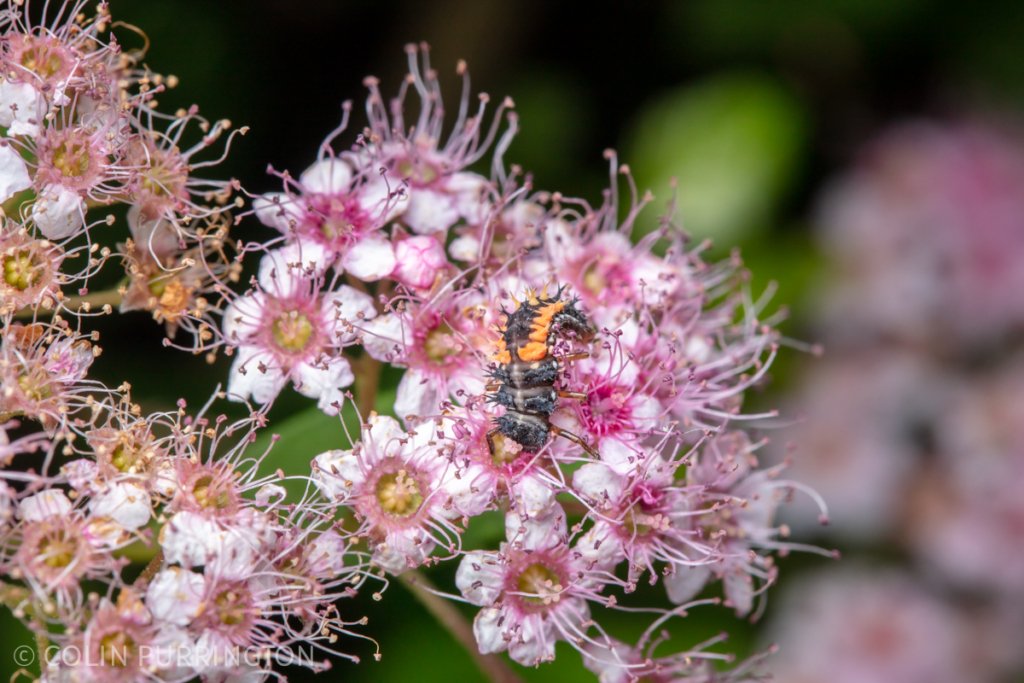
Multicolored Asian lady beetle (Harmonia axyridis) larva eating a flower. They can also bore into fruit on peaches, apples, and such. And they bite. This species was first introduced into the United States in 1916 to control aphids and scale insects and is now so common it’s a health problem for humans — adults overwinter in houses in such large numbers that people develop allergies.
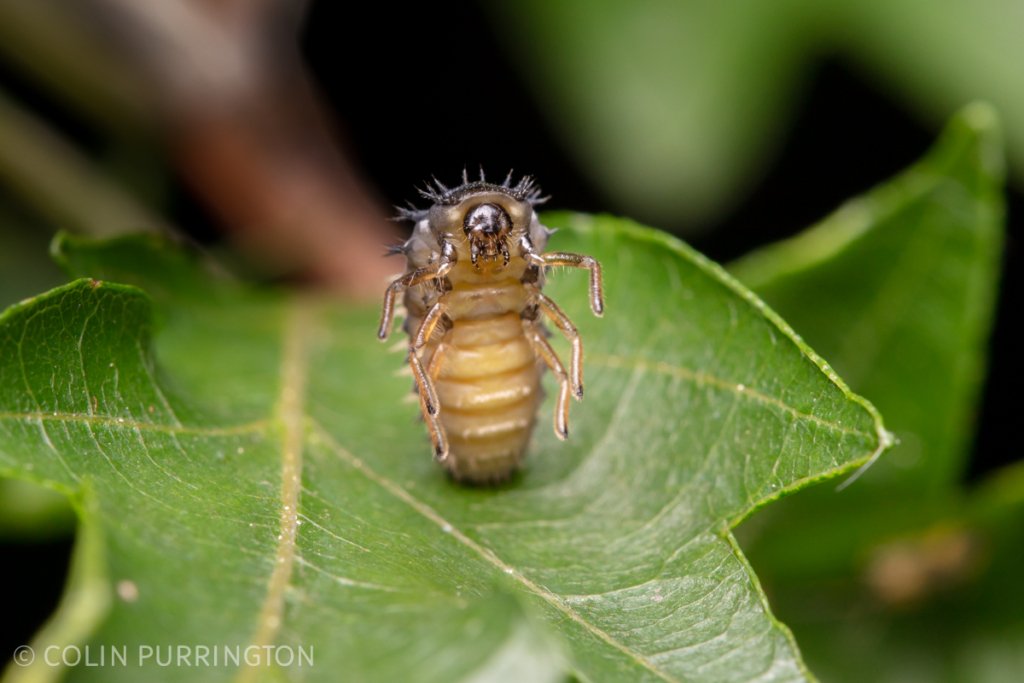
Larva of an Asian lady beetle gearing up to pupate. It’s stuck on the leaf but still has the ability to bob back and forth. Which it did, so getting this pic was hard.
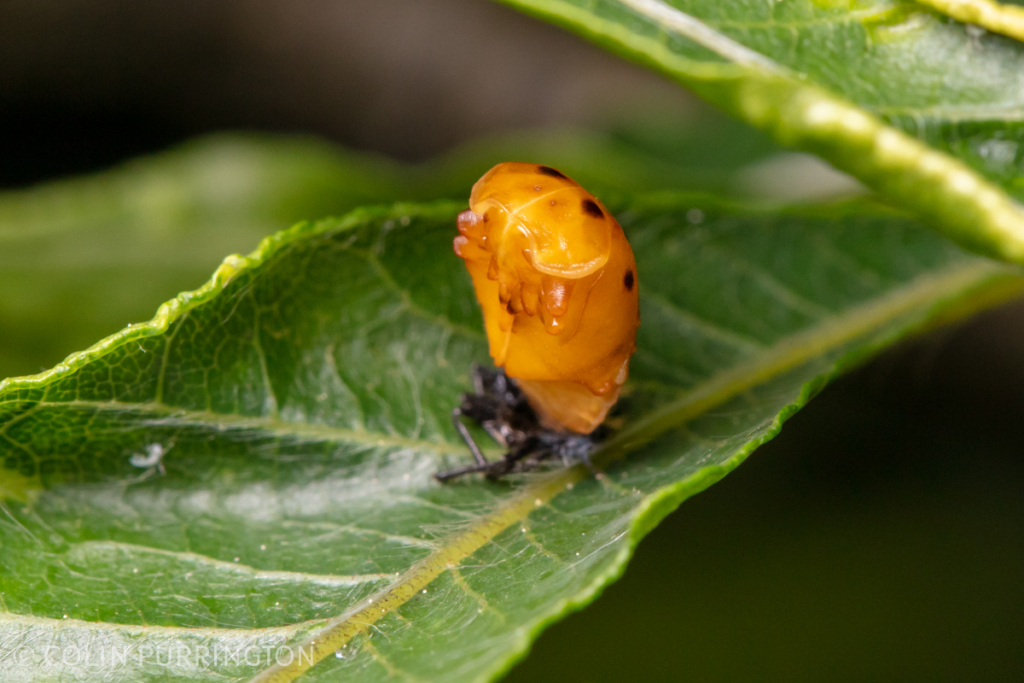
Asian lady beetle pupa. Note the pile of legs that’s dropped off just like clothing.
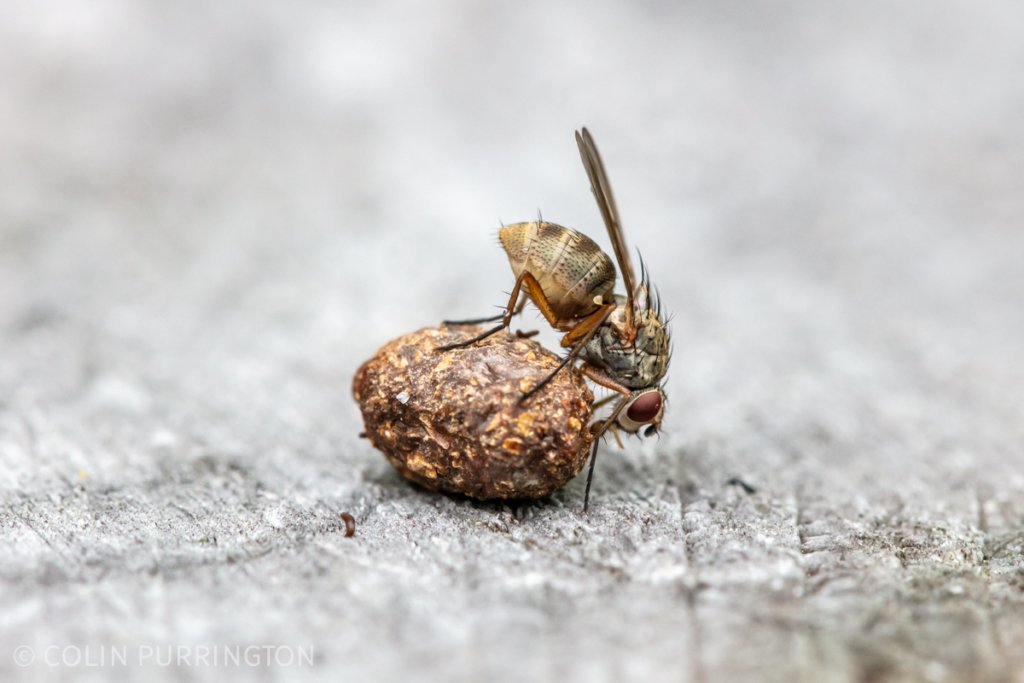
Unidentified fly enjoying some unidentified scat. Don’t judge. If you can help me ID the fly (thanks), here’s the iNaturalist observation.
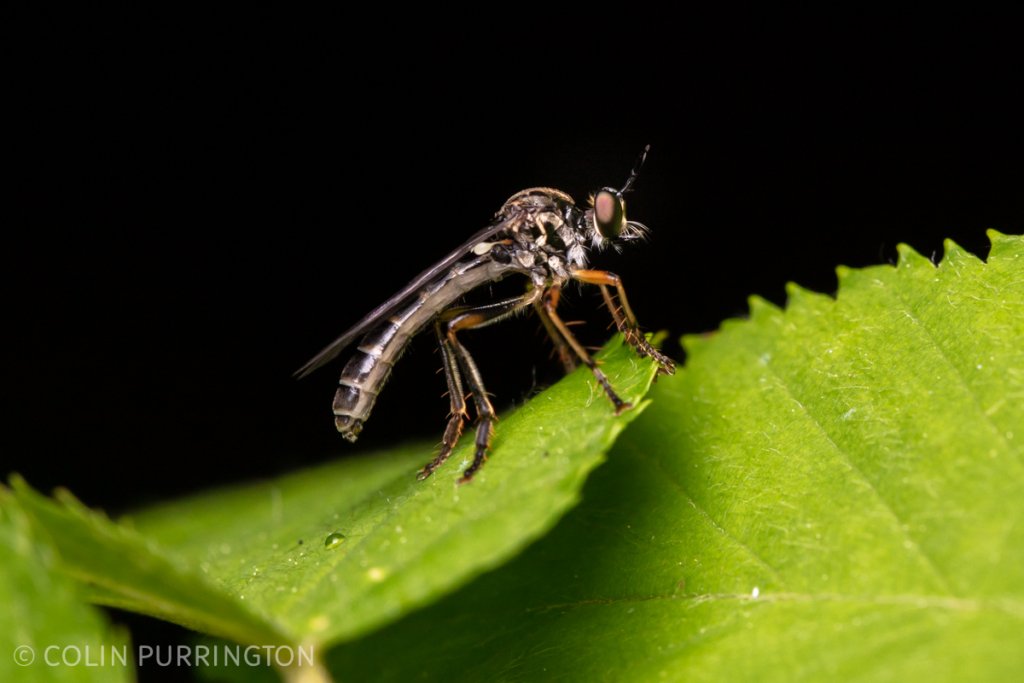
Dioctria hyalipennis. This introduced robberfly is reportedly fond of small wasps and bees.
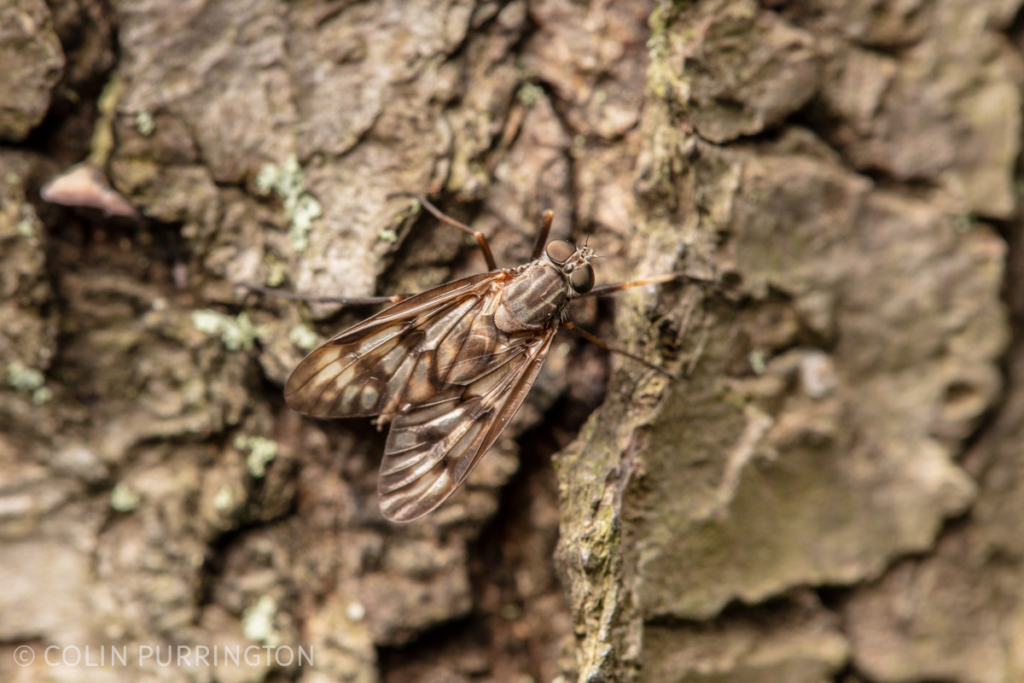
Common snipe fly (Rhagio mystaceus). Also called the down-looker fly because they usually face down when parked on a tree trunk. Maybe I should just rotate the photograph 180 degrees.
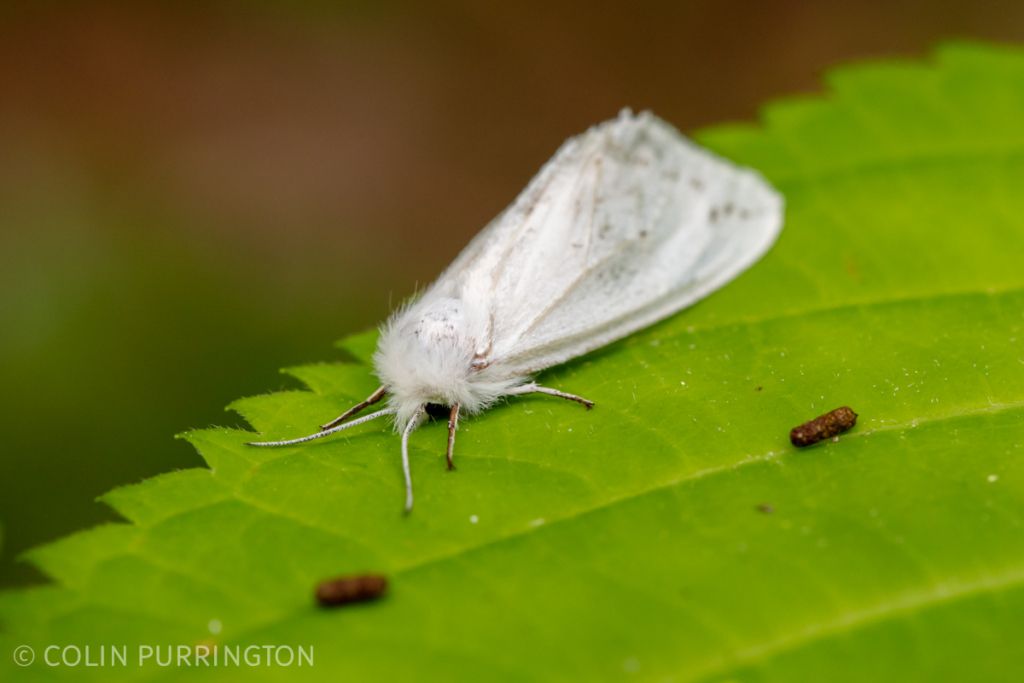
On iNaturalist somebody ID’d this as a fall webworm moth (Hyphantria cunea). It very well could be but the agreeable tiger moth (Spilosoma congrua) is in the area, too, and I don’t know how to tell them apart. The coloration of the forelegs seem more of the latter but I’m likely missing other field marks. In an ideal world I’d have a view of the ventral side. But, alas, this world is not ideal.
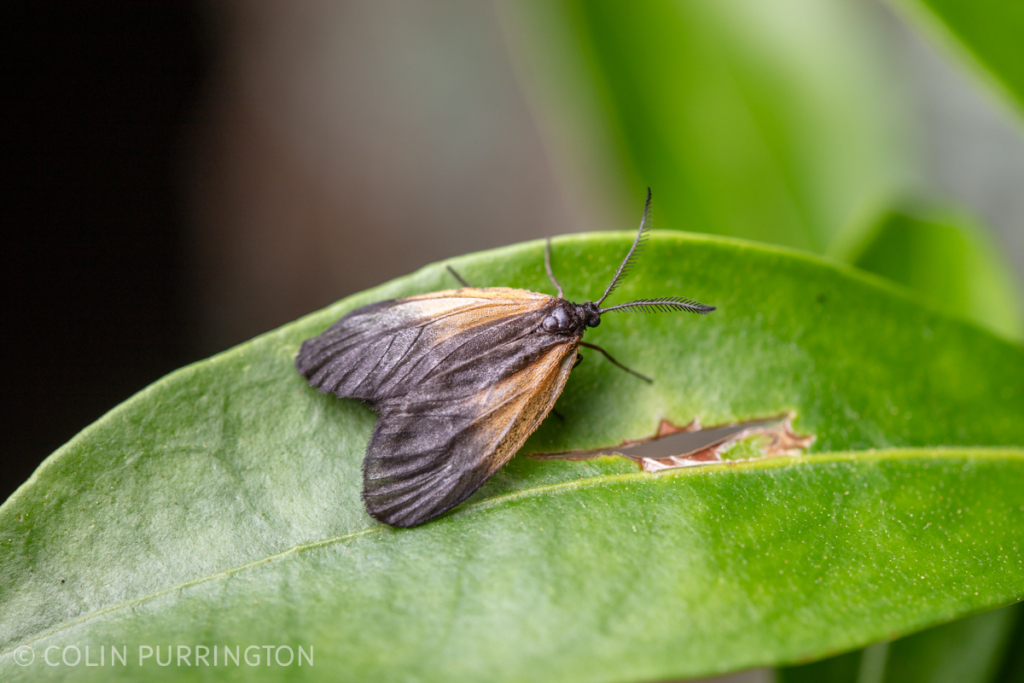
Orange-patched smoky moth (Pyromorpha dimidiata). Per BugGuide these moths have a chemical defenses but also seem to be mimicking Lycid beetles such as Calopteron terminale. More good information on Ted MacRae’s blog.
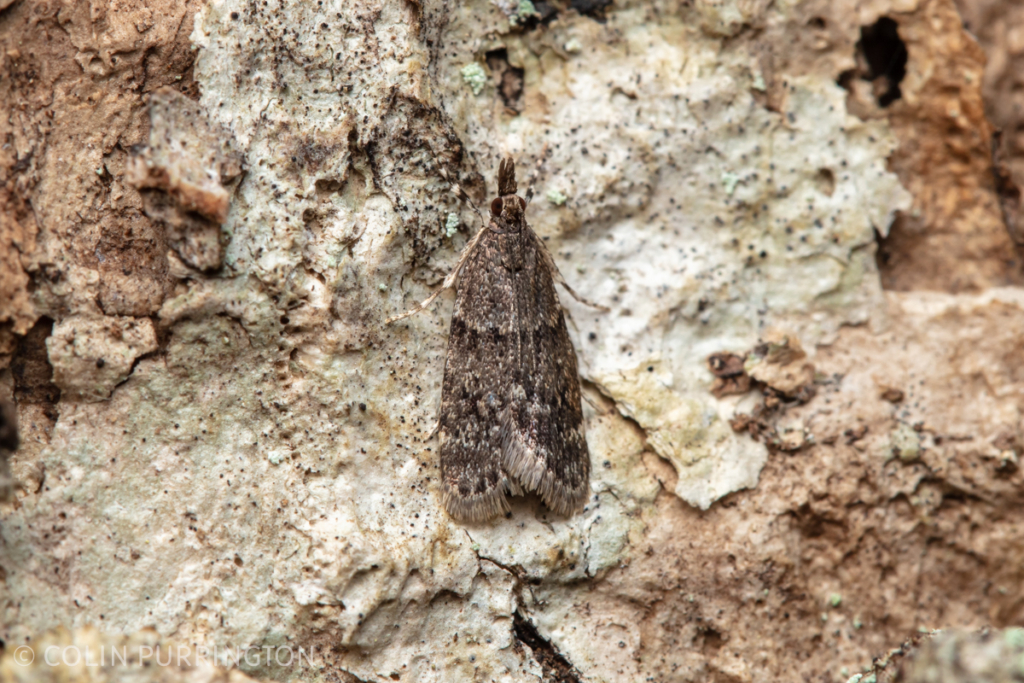
Dark brown Scoparia moth (Scoparia penumbralis). There were hundreds of these around Mohonk and they are super hard to get photographs of due to their small size. The Scopariinae (moss-eating crambid snout moths) are so hard to ID to species that “many people new to moth trapping will often deliberately avoid recording them“.
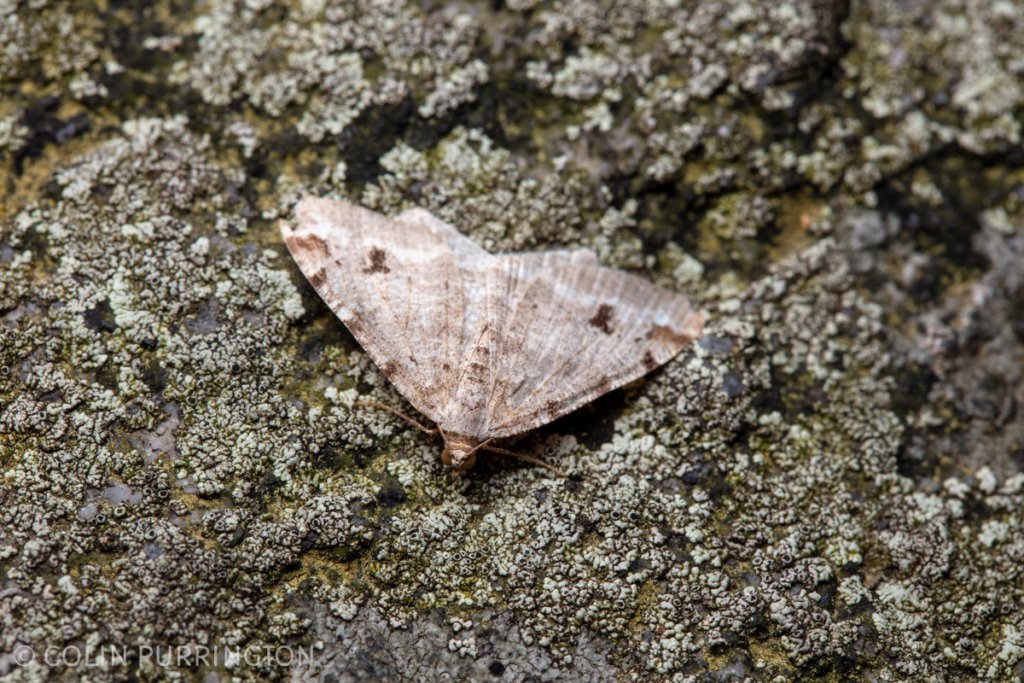
Hemlock angle (Macaria fissinotata) on lichen-covered rock. This also took me hours to identify but hopefully made me a better person. Larvae eat hemlock, balsam fir, and spruce.
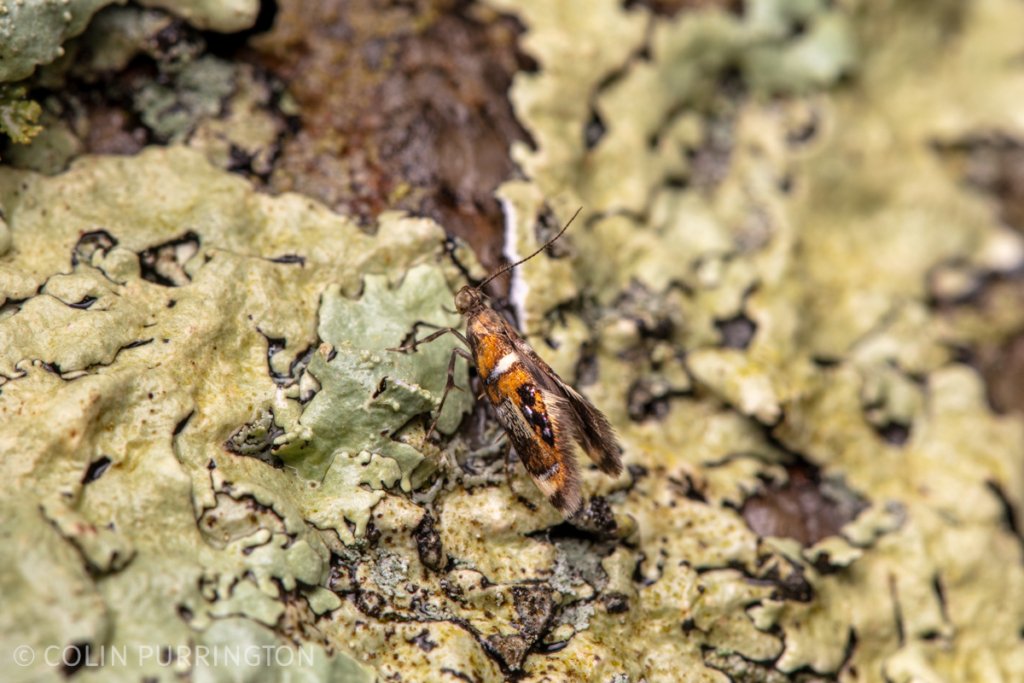
Shaler’s Fabiola moth (Fabiola shaleriella). Another tiny moth that should be much larger so people can better appreciate it. For a great photograph, please see this one by David L. Wagner. Thanks to Jason Dombroskie for ID on iNaturalist.
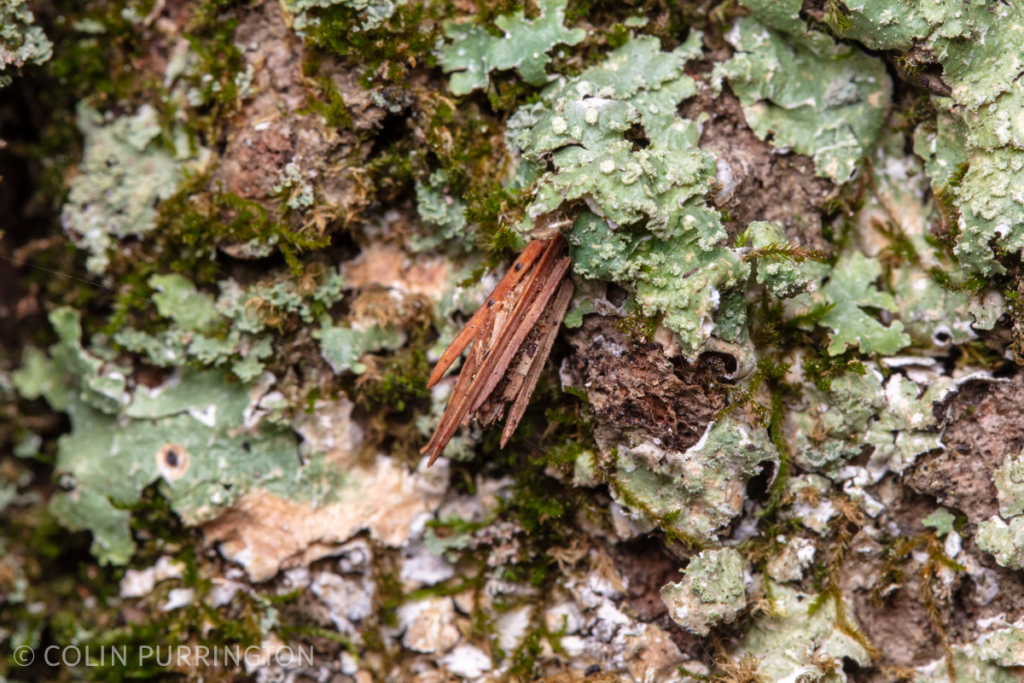
Common bagworm moth (Psyche casta) with case constructed of conifer needles. Larvae are known to eat lichens and mosses, so this individual was well situated. But they can also eat grasses and other plants. Someday when I’m bored I’d like to take apart some of the cases to find a female, which are wingless. Here’s a great site that shows a photograph. Eggs get deposited inside the case. When they hatch, larvae eat mom and then make mini cases out of her original case material. That’s probably TMI.
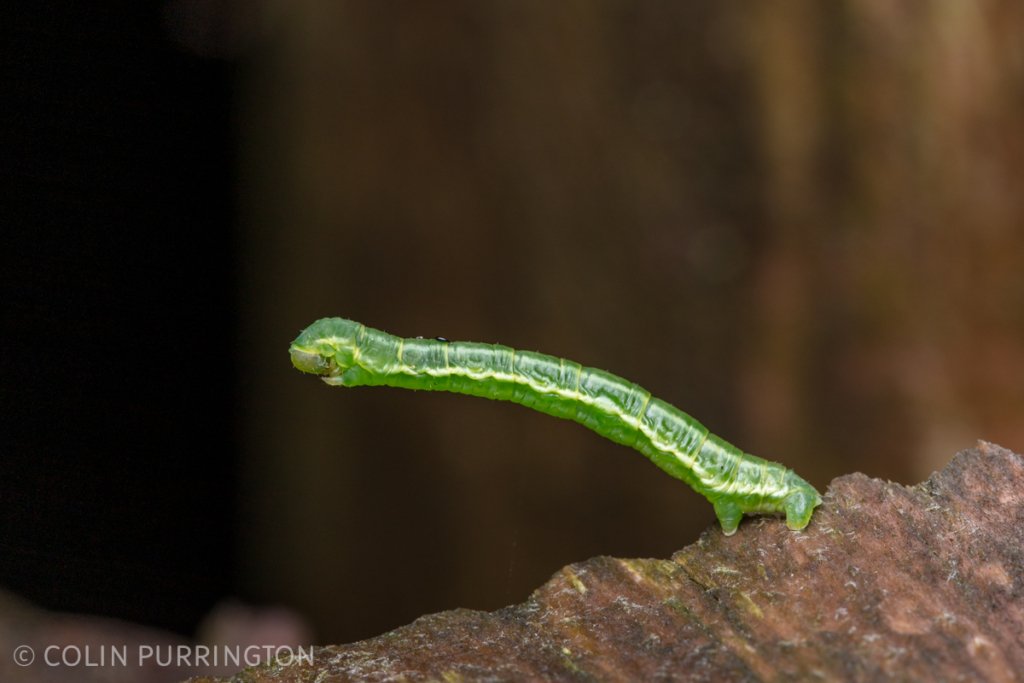
This looks very similar to Itame sulphurea (now Macaria sulphurea?) on page 196 of Wager’s Caterpillars of Eastern North America. But this group is impossible to ID. But I’m also wondering whether it might be a hemlock angle (see pic above of adult); here’s the caterpillar. If you’re on iNaturalist and would care to weigh in, here’s my observation.
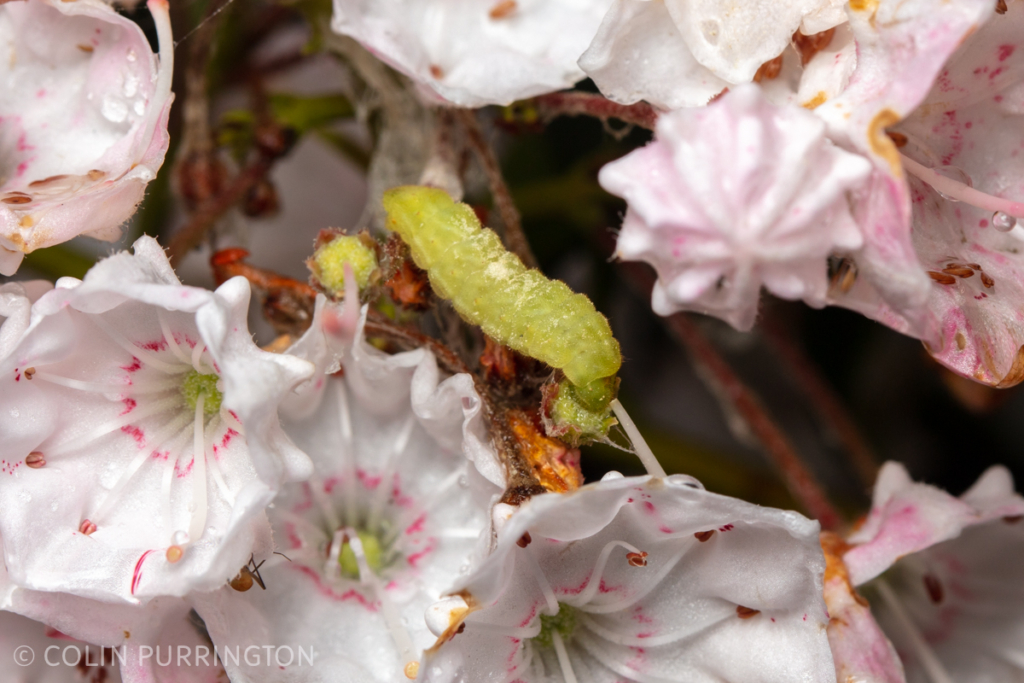
Striped hairstreak (Satyrium liparops) eating a mountain laurel flower. But this is another guess, also based on matching a photograph (page 99 of Wagner’s book). Known to feed on heaths, especially their flowers, so there’s that. More details on BugGuide.
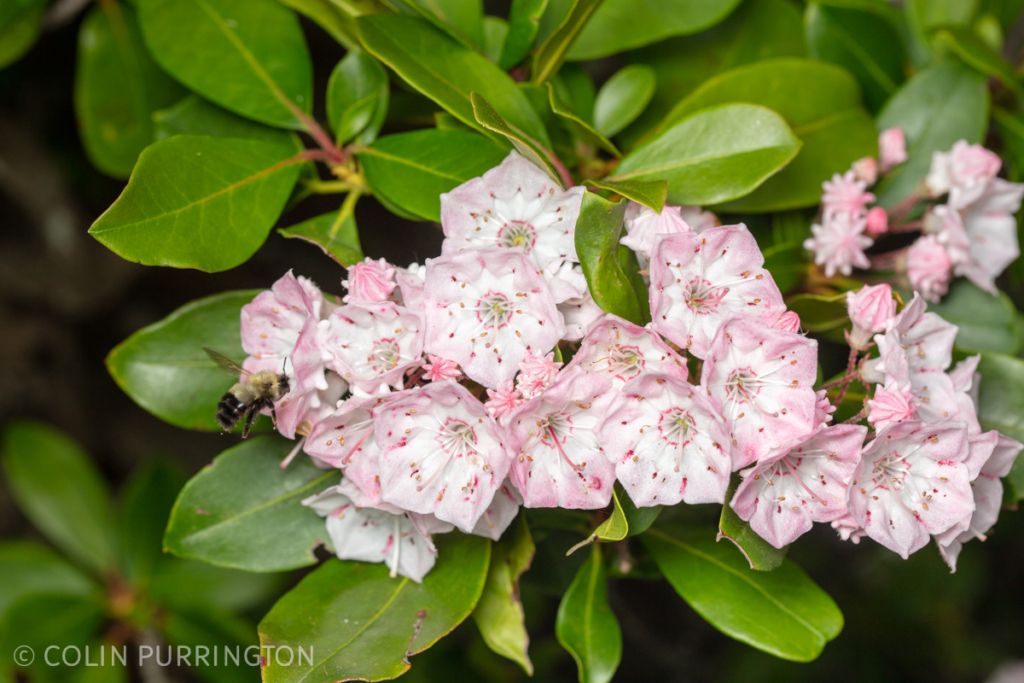
Bumble bee (Bombus sp.) visiting mountain laurel (Kalmia latifolia). The anthers are held under tension and snap onto pollinators. I was initially trying to capture that process but gave up almost immediately.
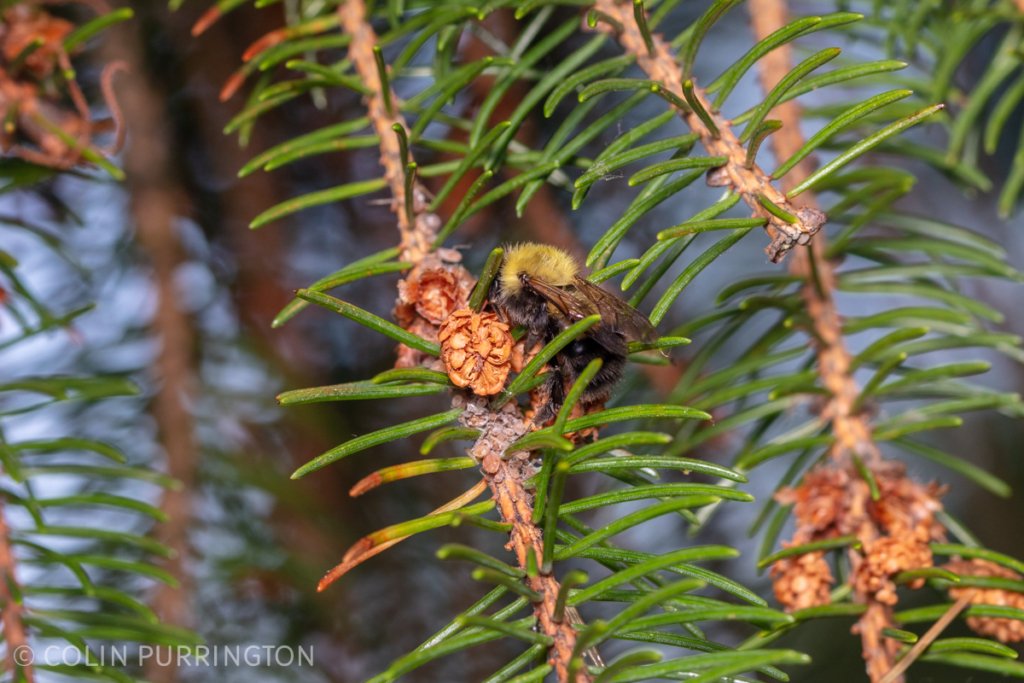
Bumble bee (Bombus sp.) collecting aphid honeydew on a spruce tree. This tree was mobbed with bees that I assumed were collecting pollen, which should not have been happening (not enough protein). But when viewed large on my computer I saw the aphids and I realized what was going on.
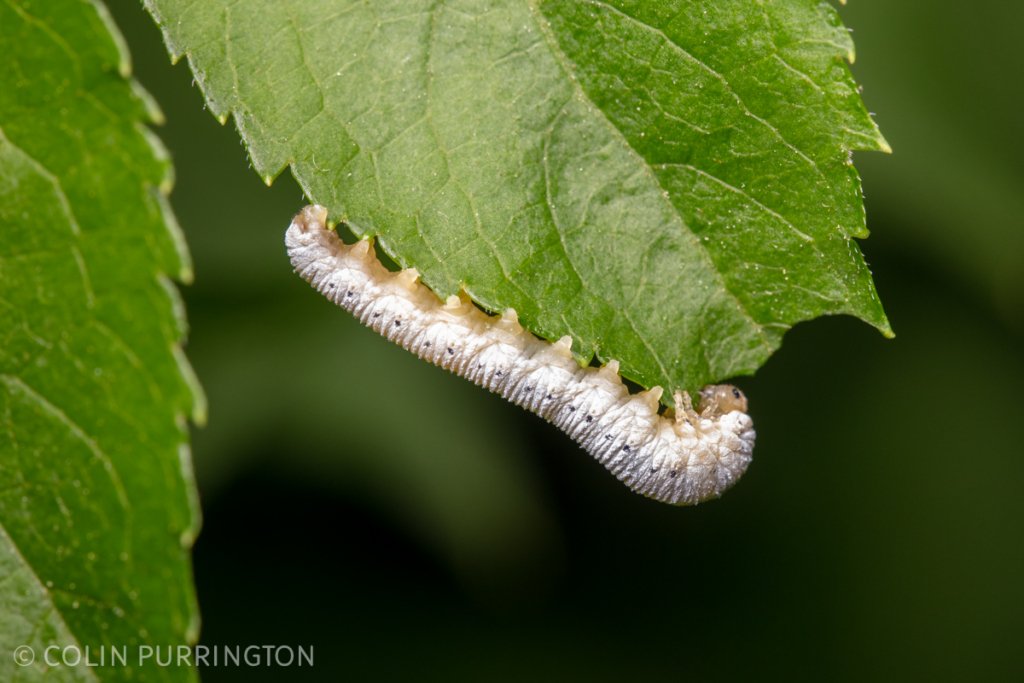
Sawfly larva (Macrophya sp., perhaps) on elderberry. It still amazes me that these are hymenopterans not lepidopterans.
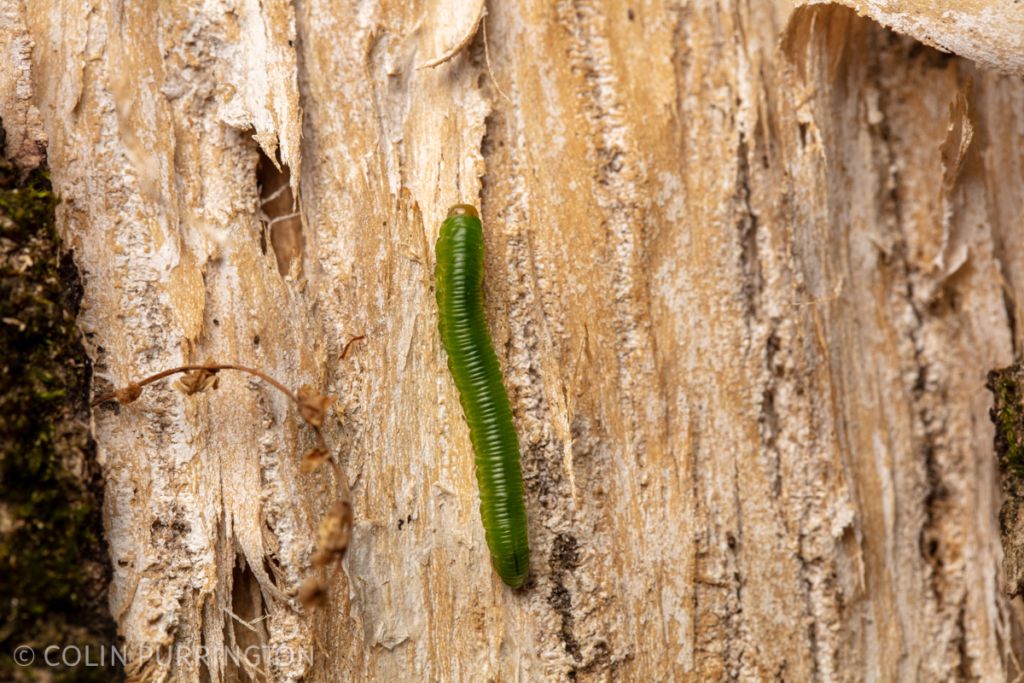
Another sawfly (Tenthredinoidea) but I don’t even have a guess as to genus.
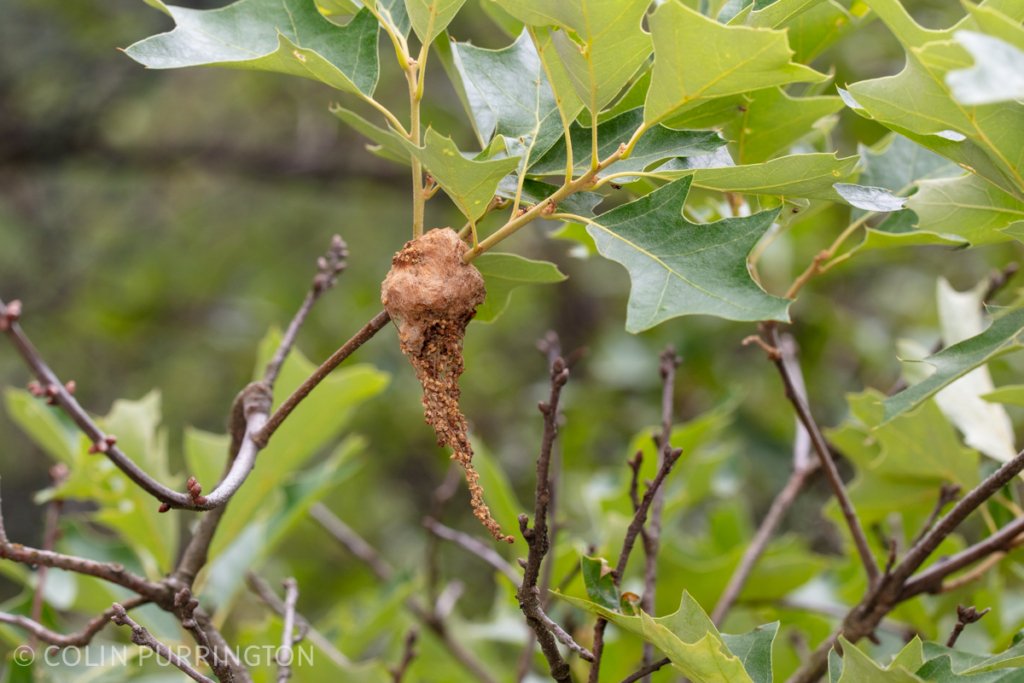
Wooly catkin gall wasp (Callirhytis quercusoperator). These were super abundant but I’d never noticed them before. But that’s true of so many galls — they just blend in. The agamic generation makes a completely different gall that is even better at blending in.
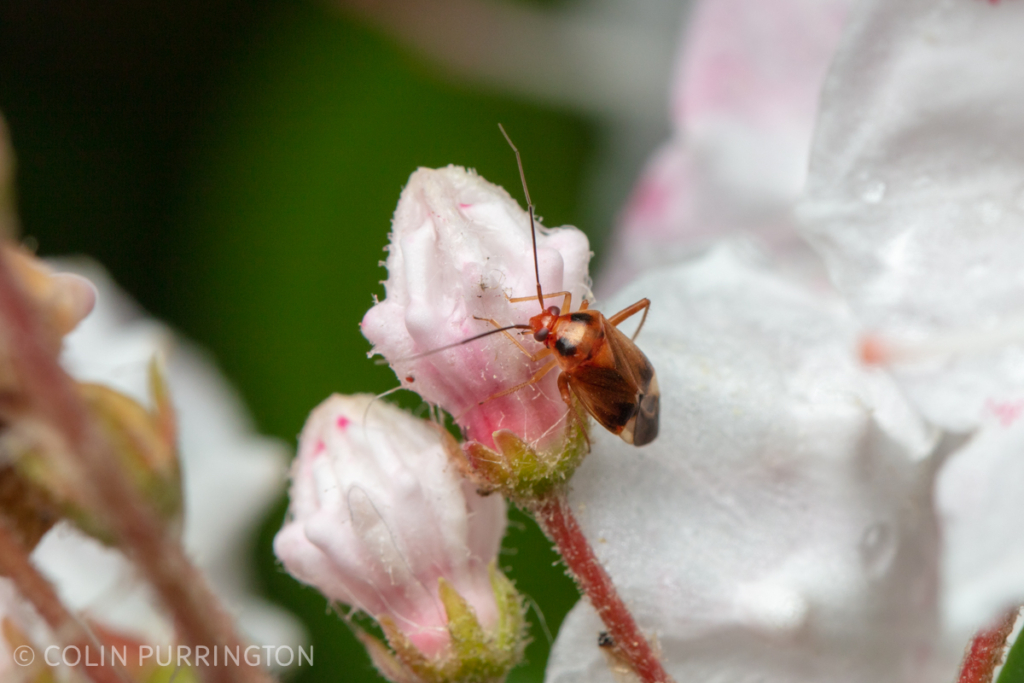
Neolygus sp. on mountain laurel (Kalmia latifolia). ID not confirmed and I know nothing about its natural history. But I take photographs just in case I stumble onto something interesting years later. There’s always hope.
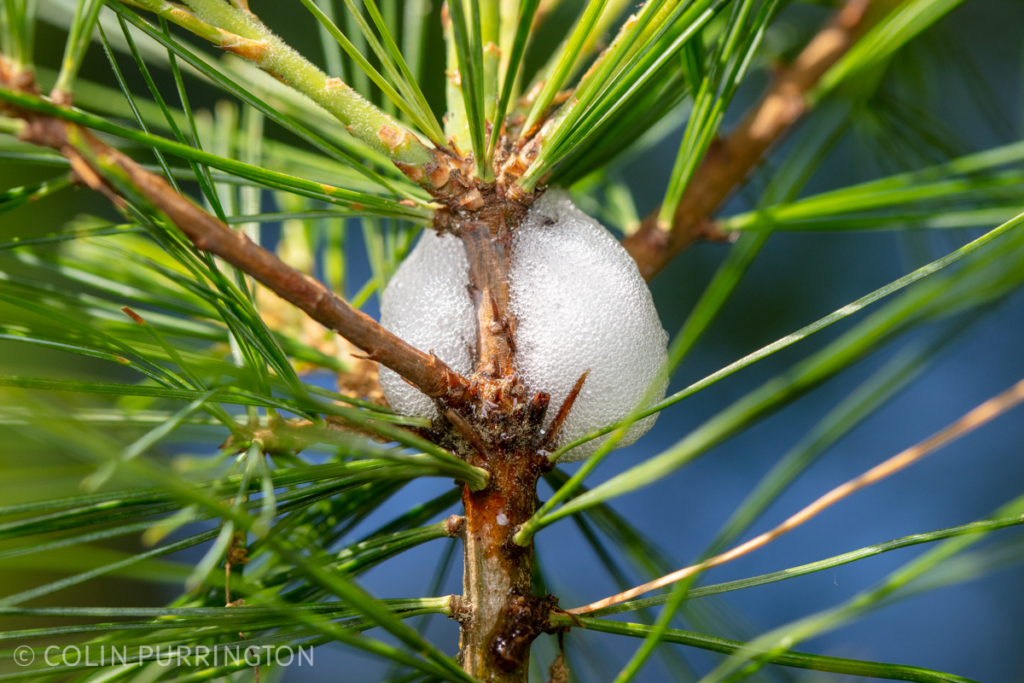
Pine spittlebug (Aphrophora cribrata). Or at least that’s one possibility based on the spittle and the host. If ID is correct, the spittle is repellent to ants.
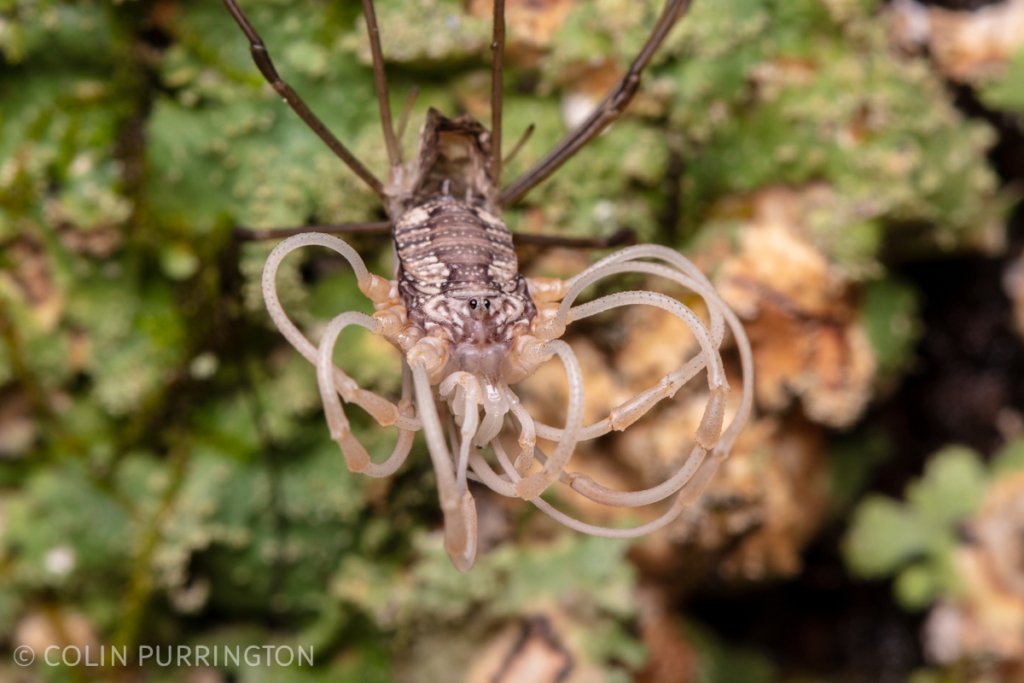
Harvestman (Leiobunum sp.) molting. I posted a video on Twitter:
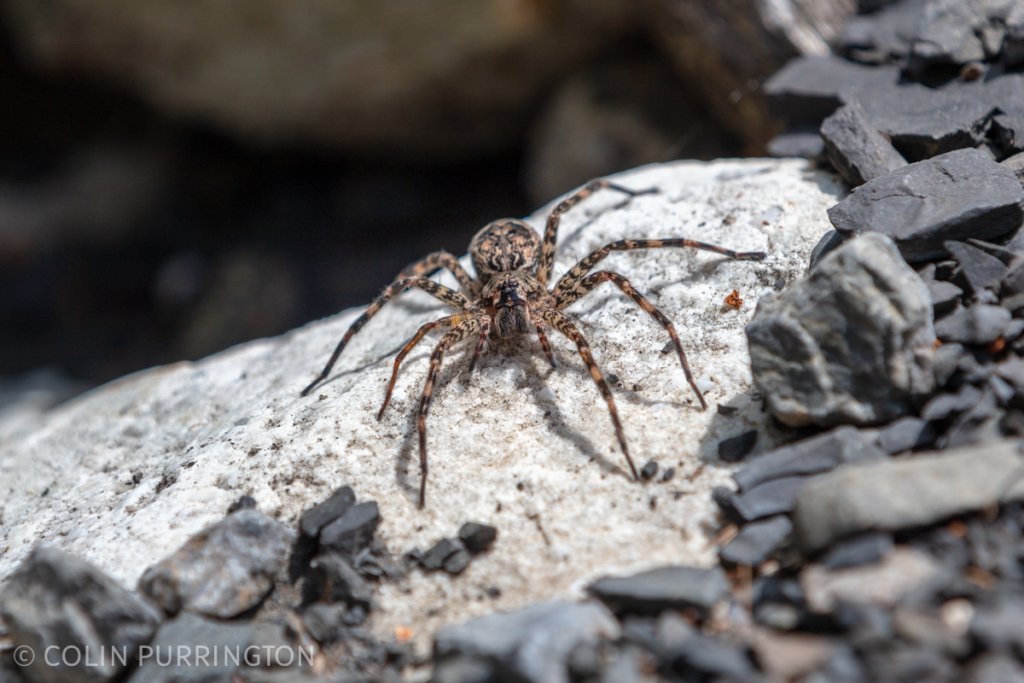
Dark fishing spider (Dolomedes tenebrosus) with regrown R-II leg. This was easily the largest fishing spider I’ve ever seen in my life.
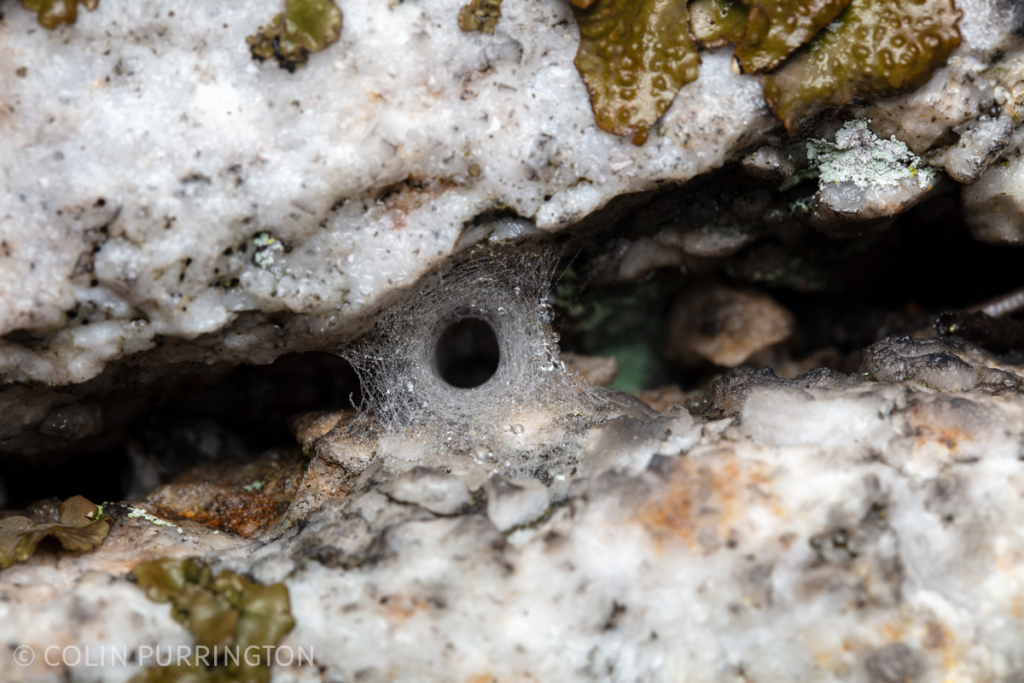
This tunnel is likely made by Ariadna bicolor. Thanks to user @chuuuuung on iNaturalist for identification.
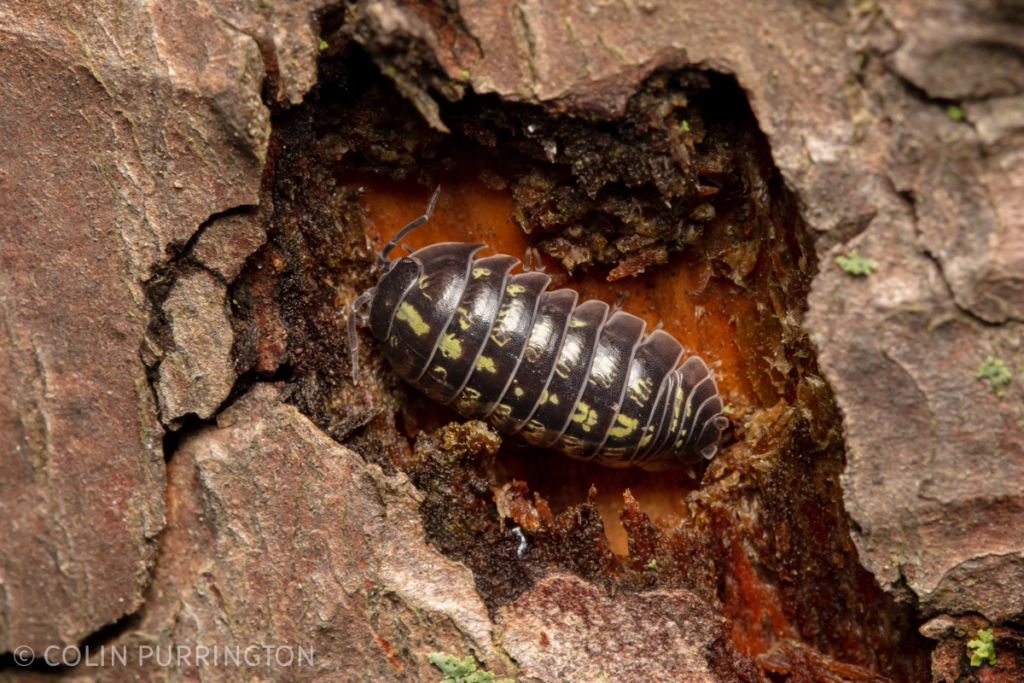
Common pill woodlouse (Armadillidium vulgare) with yellow (pteridine) markings that seem to be common on females.
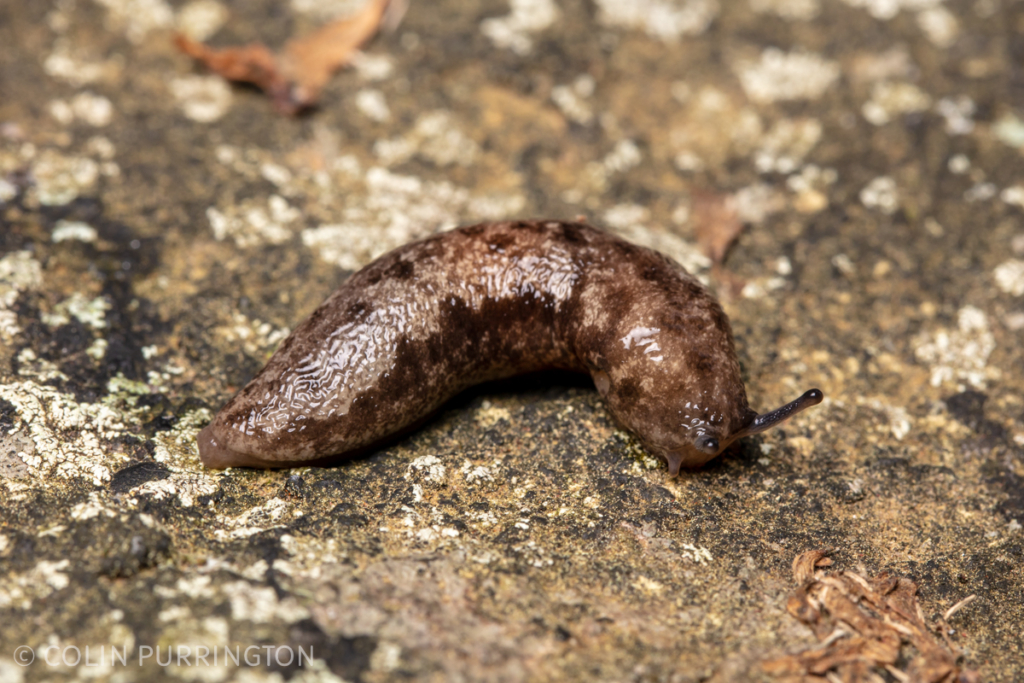
Changeable mantleslug (Megapallifera mutabilis) eating lichen, fungus, or algae. I’m assuming the “changeable” refers to the variable pattern (chevrons on mantle sometimes present, sometimes absent).
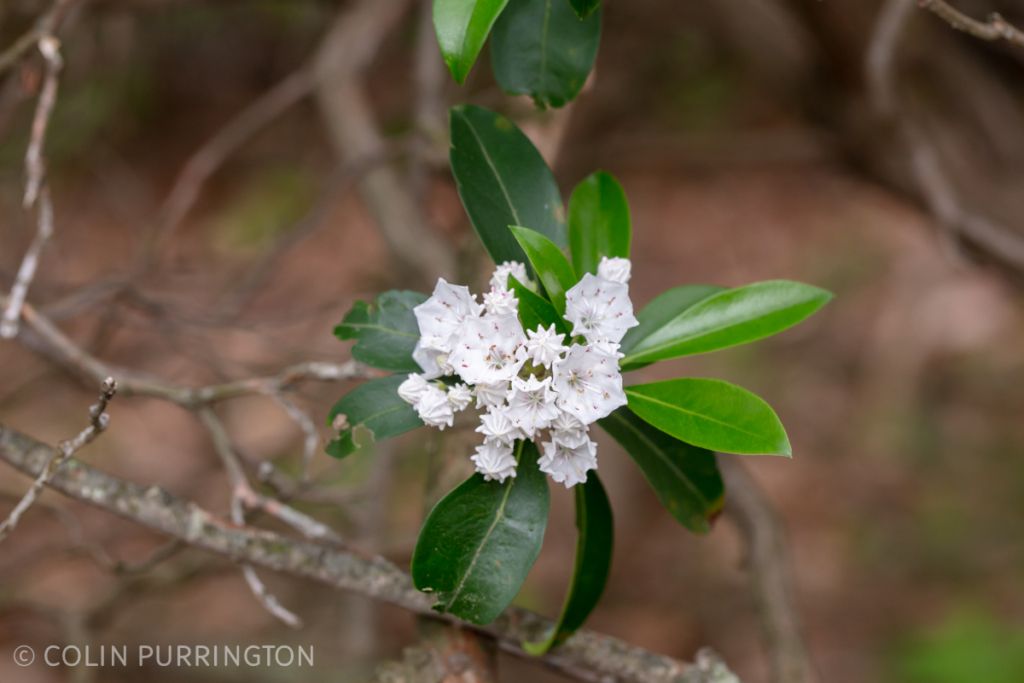
Mountain laurel (Kalmia latifolia) in flower. Because deer will only eat this plant when close to death, it’s a big part of the understory around Lake Mohonk. And thus a big reason why I love to visit in June.
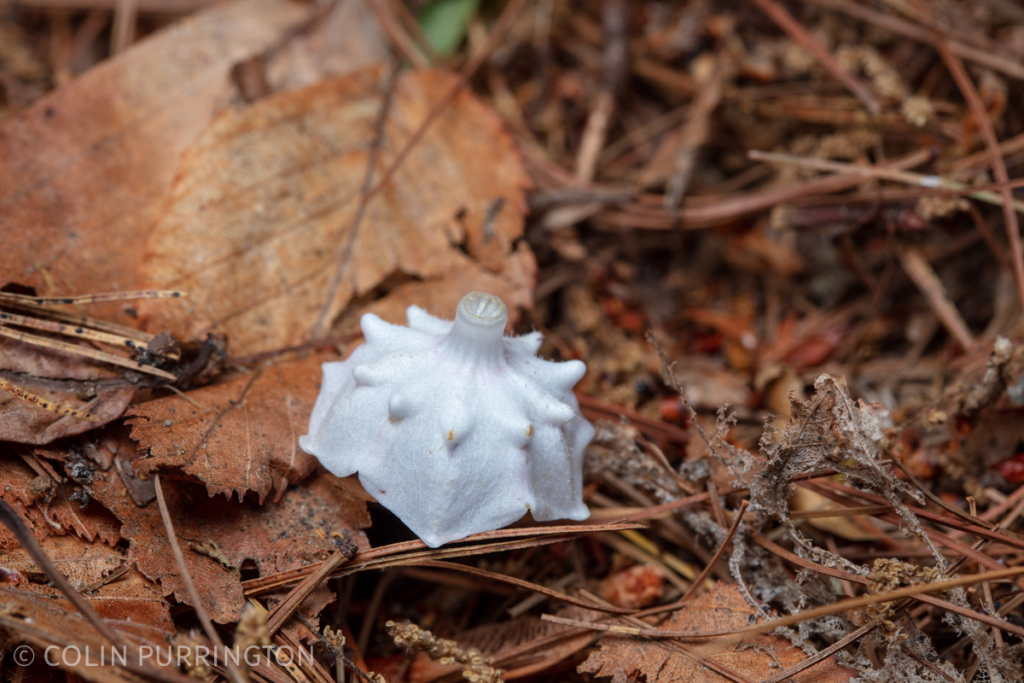
Underside of mountain laurel (Kalmia latifolia) flower. This view shows the little pockets into which the filaments are loaded. They get released when the flower is jostled and launch the anthers onto the pollinator.
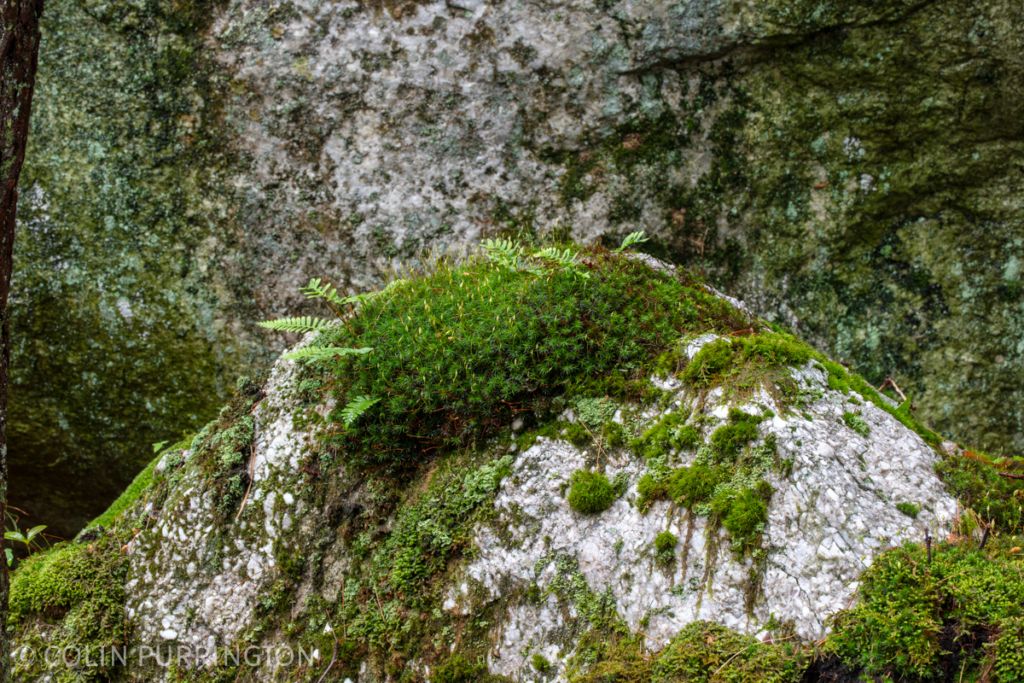
Haircap moss (Polytrichaceae), ferns, and lichens on a boulder.
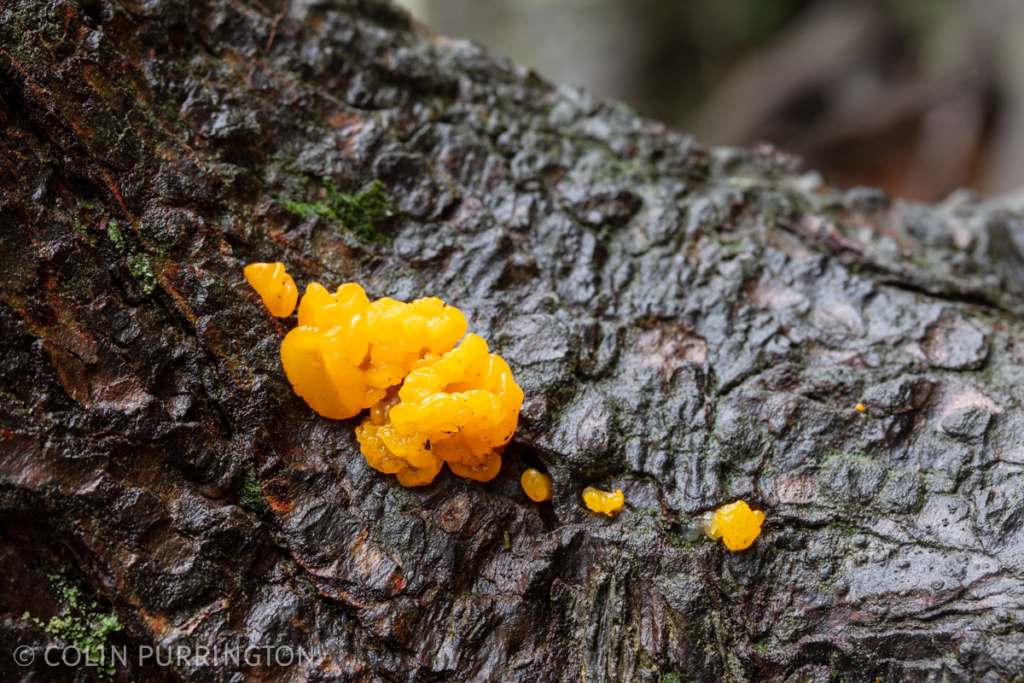
Orange jelly spot (Dacrymyces chrysospermus) at base of conifer tree.
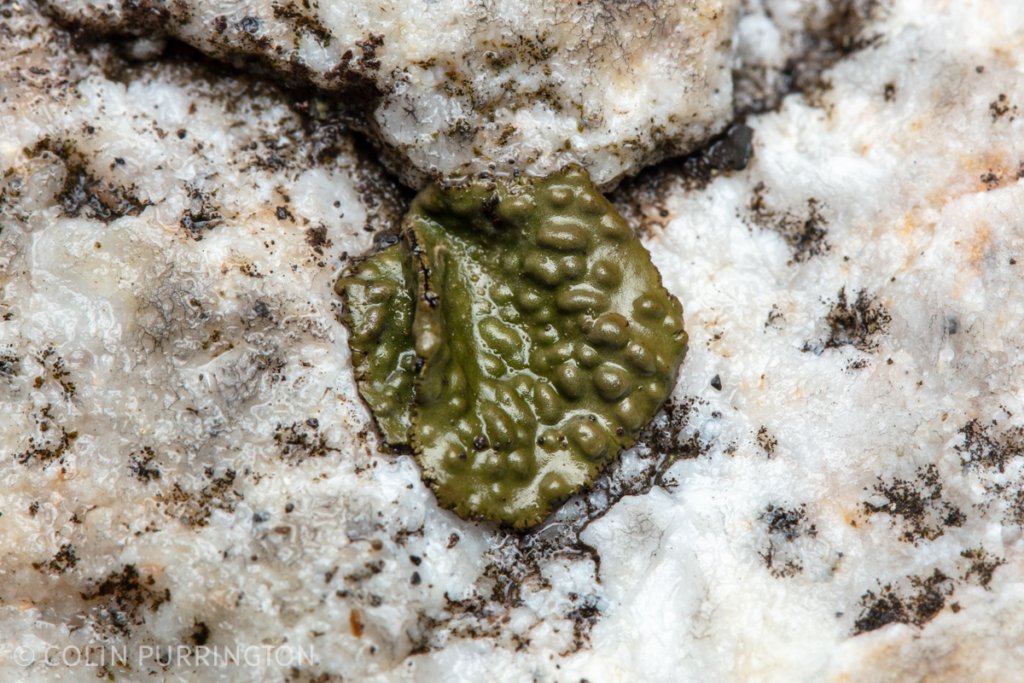
Blistered navel lichen (Lasallia papulosa). ID not confirmed, and might be impossible to confirm without looking at underside. If it’s brown then I’m right. But if black (“necrotic”) it means it’s Lasallia pensylvanica. If by chance you want to read about the lichens on this wall, there’s a paper documenting lichen declines at Mohonk: Smiley, D., and C.J. George. 1974. Photographic documentation of lichen decline in the Shawangunk Mountains of New York. The Bryologist 77:179–187. It’s on JSTOR.
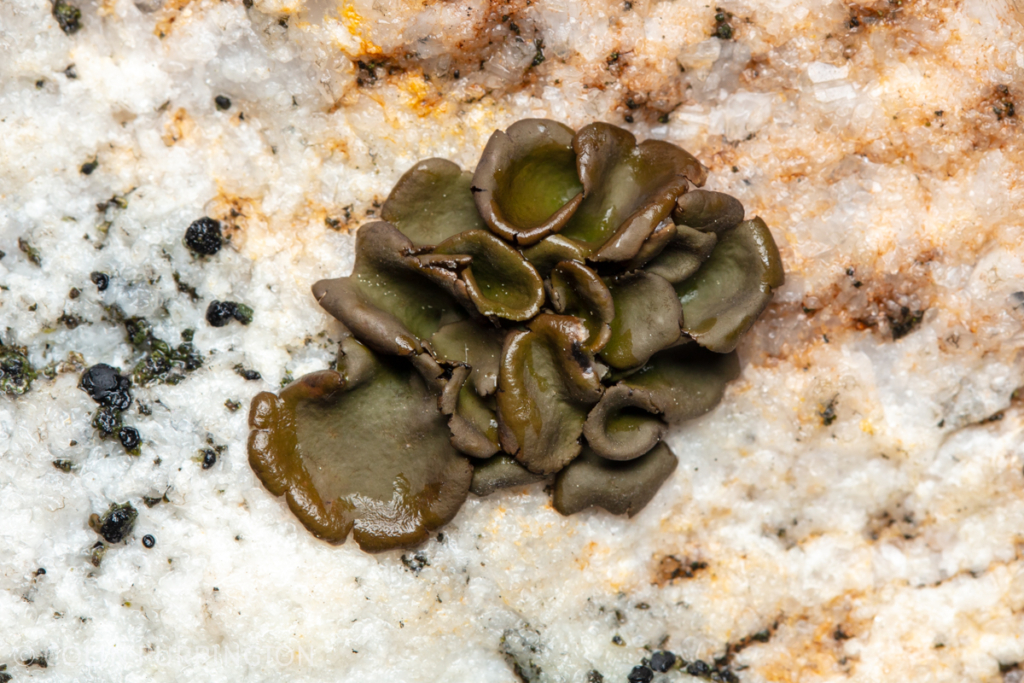
Umbilicaria mammulata. Immature thallus so hard to ID, but the wall is covered with this species (I think).
I’m @colinpurrington on iNaturalist if you’d like to see more nature pics.