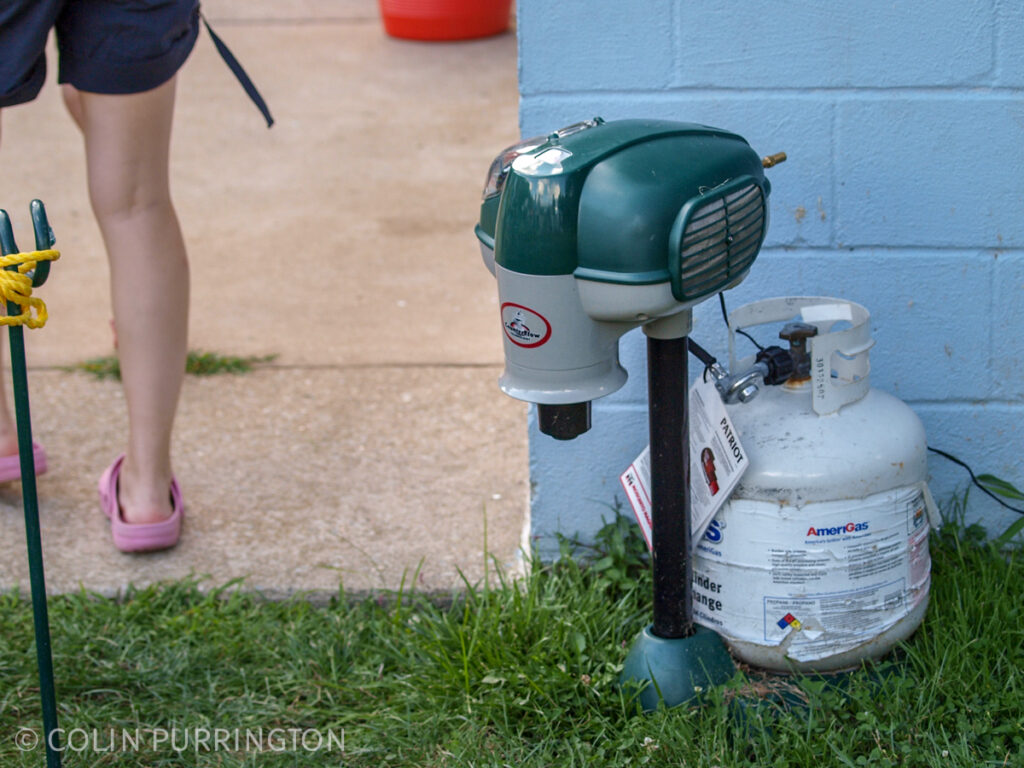
None of the suggestions below will on its own eliminate mosquitoes from your yard but they will all help, especially if you can get others in your neighborhood to participate. Print some copies and bring to the next cookout.
1. Eliminate stagnant water
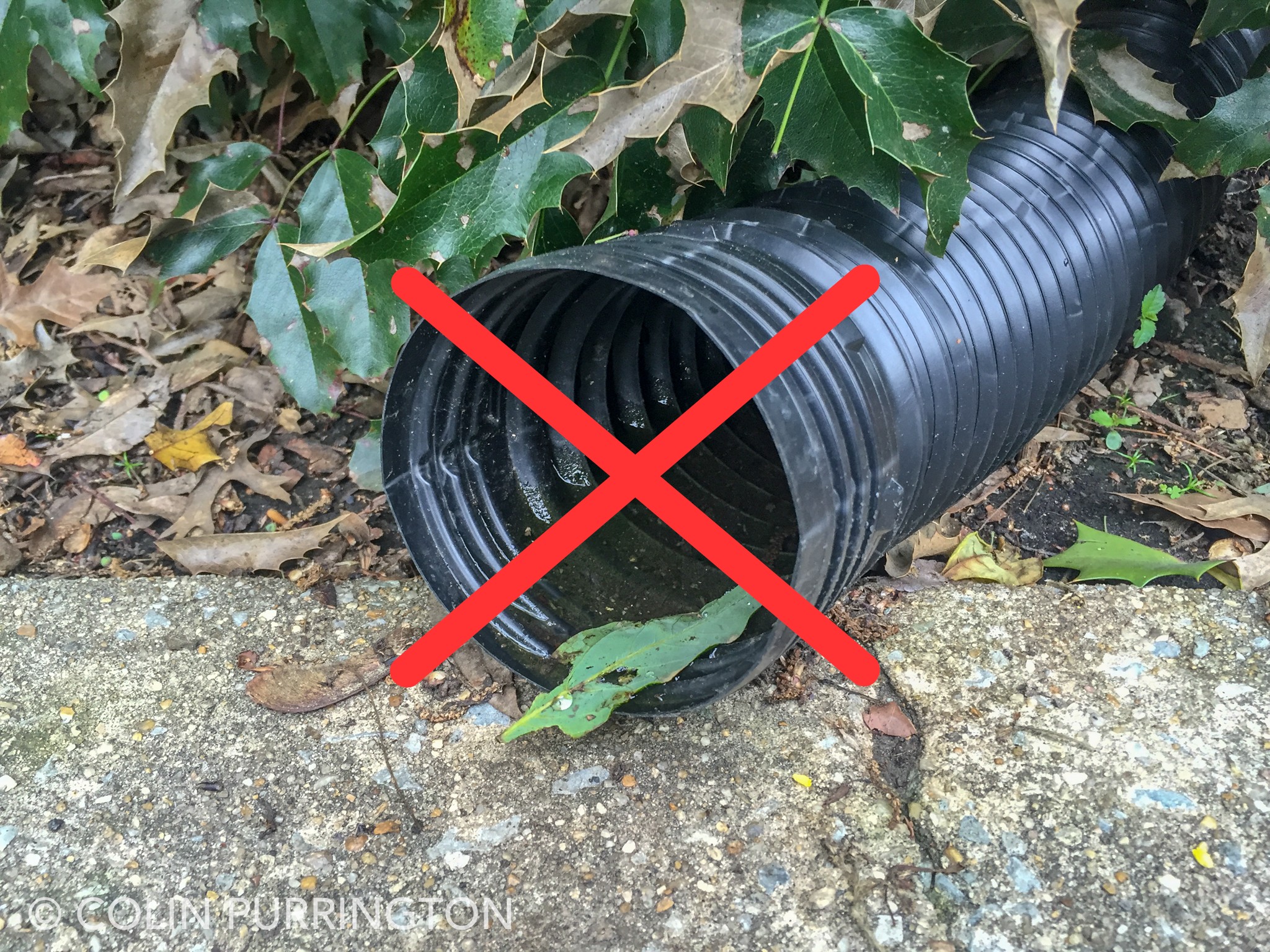
If you purge your yard of all objects that can accumulate water, female mosquitoes will go elsewhere to lay their eggs and their progeny will be somebody else’s problem. Mosquito larvae can develop in as little as 1 teaspoon of water. Flexible downspout extenders are especially bad because most homeowners have no idea they are full of water (and mosquitoes). Here’s a longer list of objects that hold water.
2. Thin out ground cover
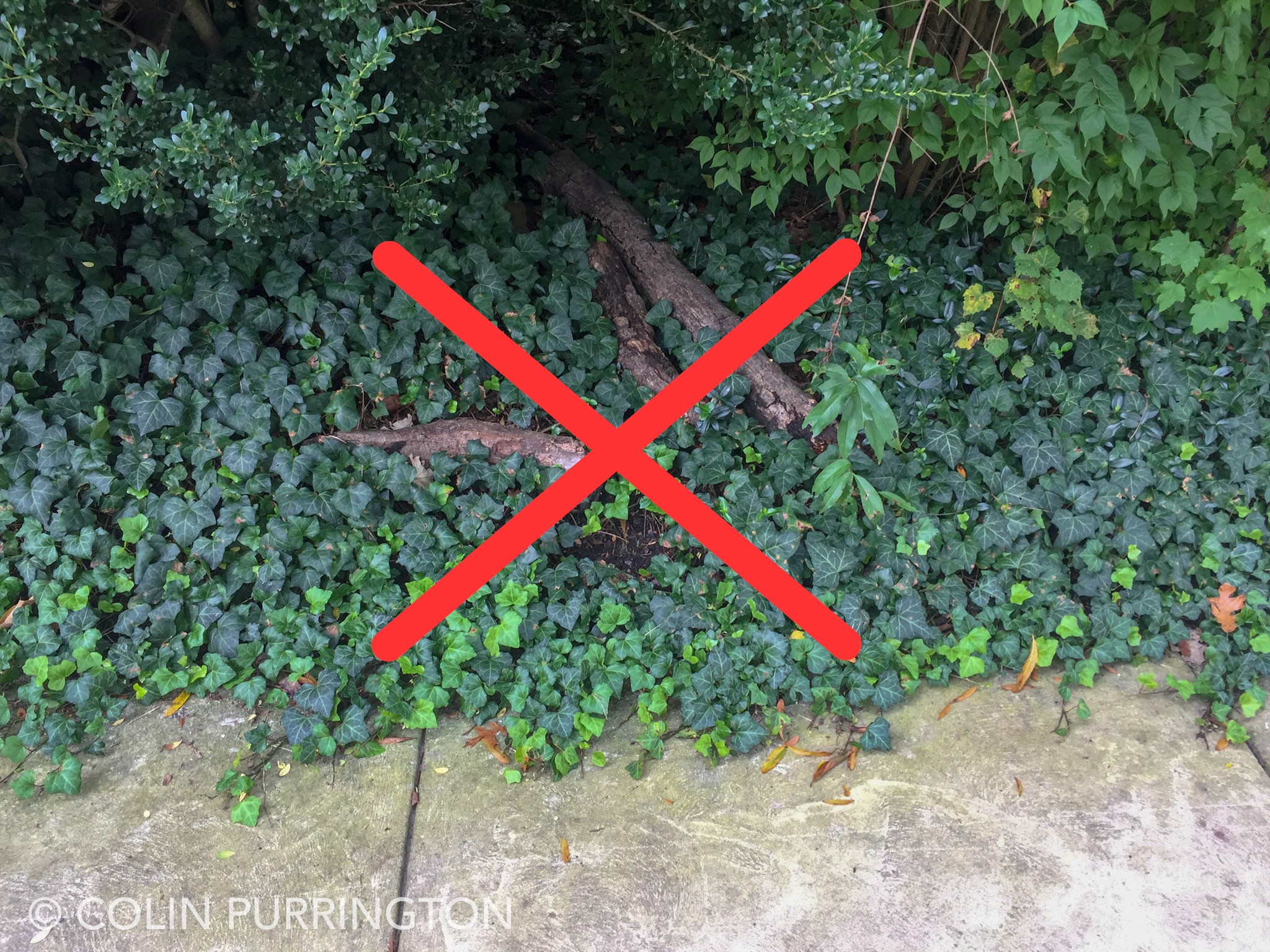
Mosquitoes love to hang out in moist shaded areas during hot days so you can encourage them to leave your yard by thinning out the vegetation. In particular, get rid of English ivy, hosta, pachysandra, etc.
3. Use Mosquito Dunks to kill larvae
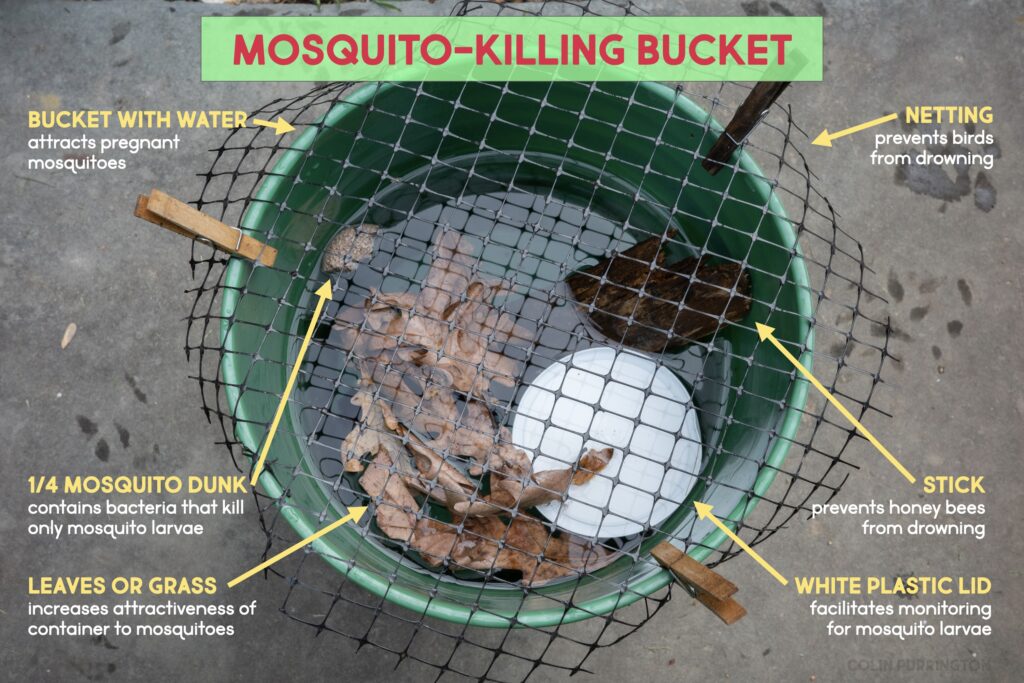
Add Mosquito Dunks (available in the USA) to rain barrels, bird baths, ponds, creeks, etc., every few weeks. The active ingredient is Bacillus thuringiensis var israelensis, a bacterial strain that kills mosquitoe larvae. Here are my instructions for making a mosquito-killing bucket (I have six in my yard).
4. Deploy traps that kill pregnant females
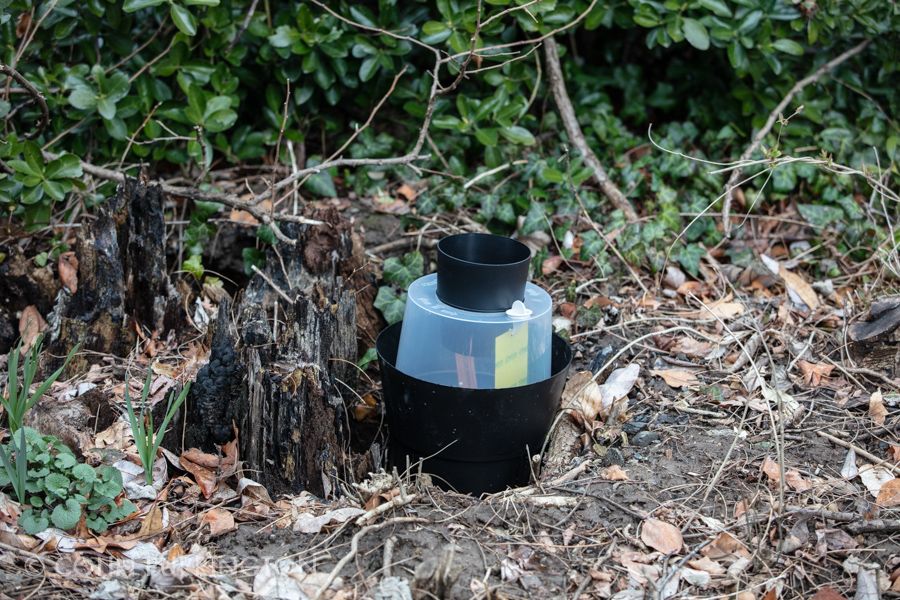
Buy several autocidal gravid ovitraps and set them up in shady spots in your yard. Some brands: Biogents GAT Trap (shown below), Catchmaster Ovi-Catch AGO, Dalen Skeet-O-Trap, Springstar AGO, and Ultimate Mosquito Traps. You can make your own.
5. Make a fan trap to kill foraging females
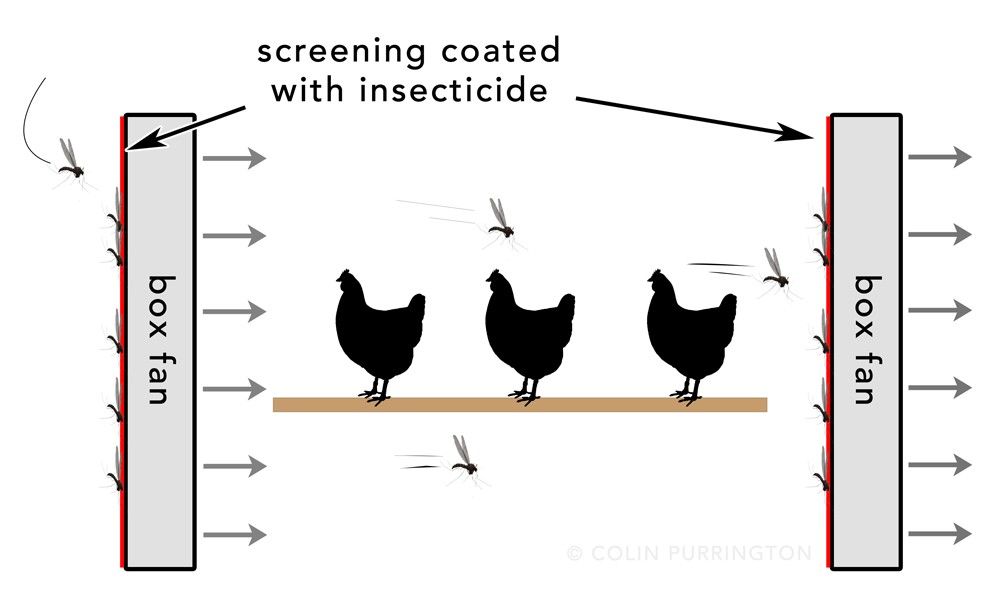
Buy two box fans, cover one side of each fan with window-screening, coat with permethrin, then situate yourself in between them on a comfortable chair with a beverage. I.e., you are the bait. Mosquitoes will arrive and then be blown onto the screens where they’ll die from contact with the insecticide. Works for outside dog beds, too (bonus points for setting up a motion sensor that turns them on automatically). Here’s a diagram showing the concept:
6. Wear clothes treated with permethrin
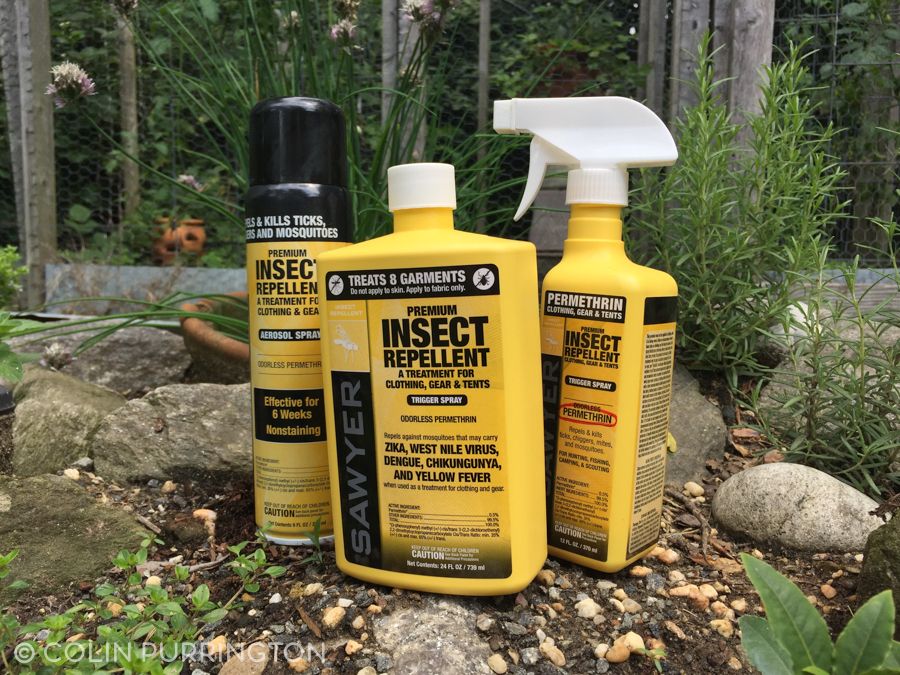
Some outdoor stores carry clothes that are treated with permethrin, a repellent. You can also buy permethrin spray and treat your own clothes. E.g., Sawyer sells it. If that sounds too complicated, send your hiking/yardword clothes to Insect Shield to be treated. The chemical lasts for 6 washings. NB: never spray permethrin on your skin or when cats are present (it’s toxic to them). Bonus: effective for ticks, too.
7. Use EPA-registered repellents
Buy repellents that contain EPA-registered chemicals such as DEET, picaridin, IR2525, oil of lemon eucalyptus, para-methane-diol, or 2-undecanone. All of these have been proven (with experiments) to be both effective and safe. Avoid everything else even if it’s recommended by nice people on Facebook.
8. Buy a spatial emanator
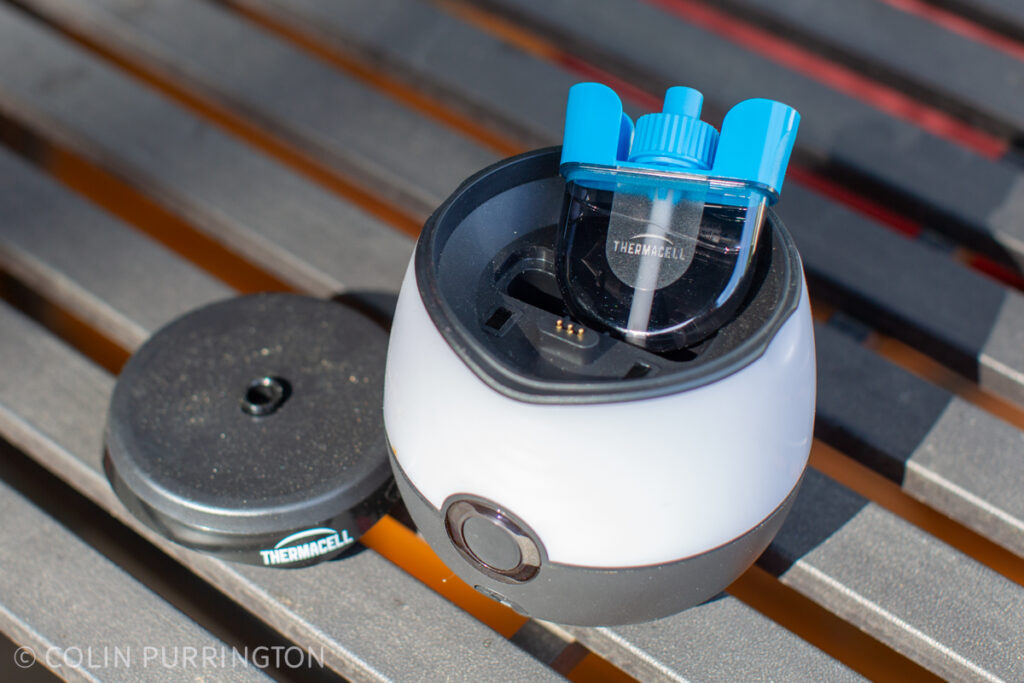
These emit a volatile repellent and work really well for small areas (dinner table on deck) when there is little wind. The downside is that replacement cartridges are expensive and you need to be OK with breathing in pyrethroid vapors. I own the model below as well as a smaller one that attaches to my belt for when I do yard work and am moving around. There are multiple companies selling these devices (e.g., Thermacell, S.C. Johnson OFF!, Tiki). Again, pyrethroids are toxic to cats so keep them away from the area when you are using these. Zone makes one that doesn’t use pyrethroids but I haven’t tried it.
9. Buy a high-velocity fan for your deck
Mosquitoes are very weak fliers so a powerful fan will keep them from landing. But make sure the fan has either a “damp” or “wet” rating, depending on where you are mounting it. Some have built-in misters.
More information
I haven’t yet tried a Mosquito Magnet or a Biogents Mosquitaire. The cost of the devices, replacement tanks (propane and carbon dioxide, respectively), replacement lures, and repairs make it unlikely that I ever will. Plus I’m concerned that although they definitely kill an enormous number of mosquitoes, they might attract an even larger number to a yard. I.e., they might make a mosquito problem worse. It’s hard to read the positive reviews of these systems without wondering whether sunk cost fallacy is at play, with people strongly believing they have fewer mosquitoes just to justify the money they have thrown at the system. It could be the case that convincing your neighbor to set one up is the solution.