

Every year at Thanksgiving, families in the United States sit down to argue about politics and the difference between sweet potatoes and yams. This page details how to tell them apart and explains how the confusion started. Most Americans have never eaten an actual yam.
The sweet potato, Ipomoea batatas, is in the plant family Convolvulaceae (along with morning glories), while yams (there are multiple species that are edible) are in the Dioscoreacea. Although both are angiosperms (i.e., have flowers), they are very distantly related. The potato, for reference, is in a third family, the Solanaceae and is a dicot like sweet potato.
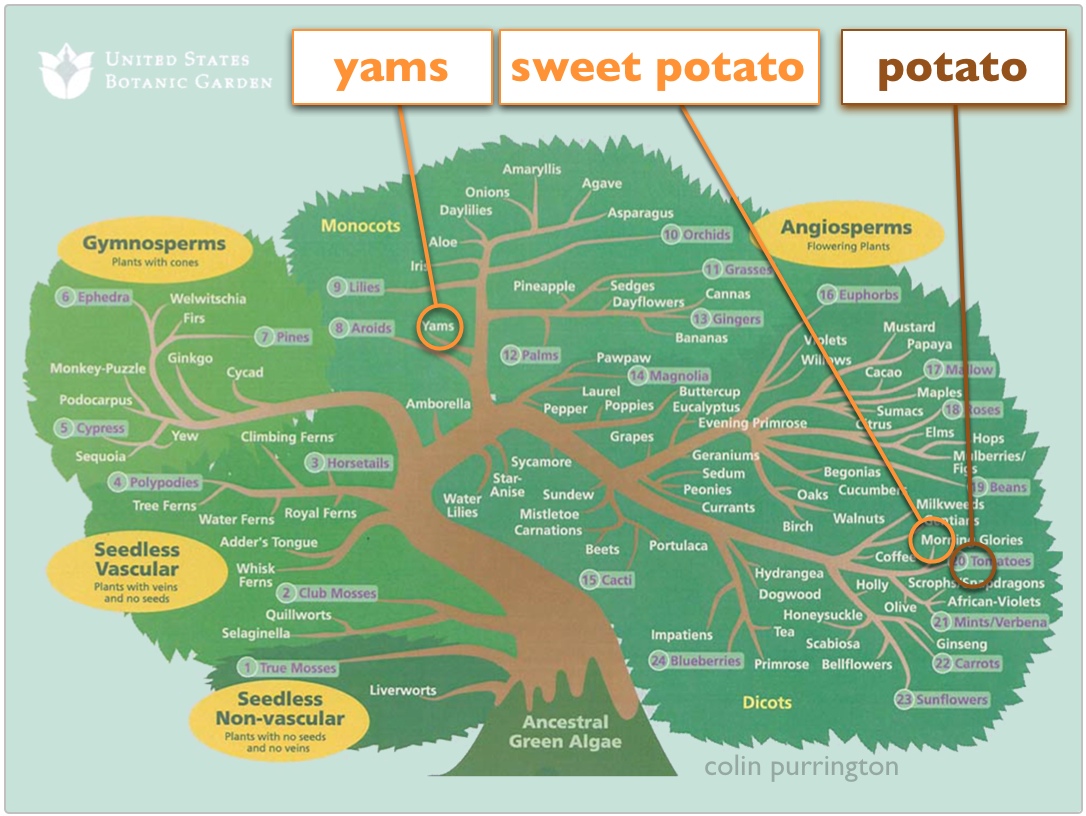
How to tell them apart
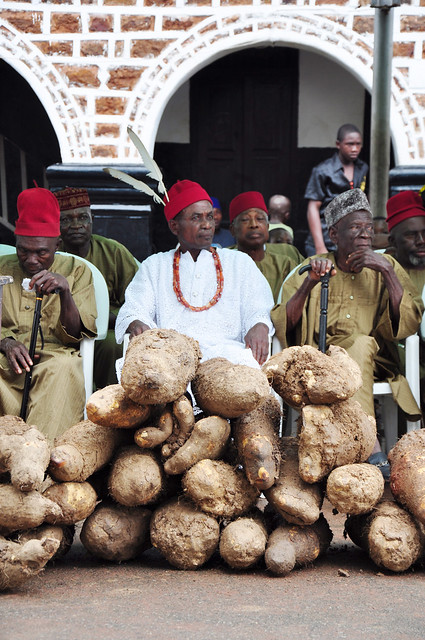
One way to recognize an actual yam is by its large size. Yams can get huge. I found reports of a 304 lb yam in Fiji and a 606 lb one in India. The current world record for a sweet potato seems to be just shy of 82 lbs, but you’ll never see anything that big in a store. By the way, the heaviest potato is ~12 lbs.
Another way to determine whether you have a sweet potato or a yam is to look for oozing latex when you slice it. But note that this works only when they are relatively young.
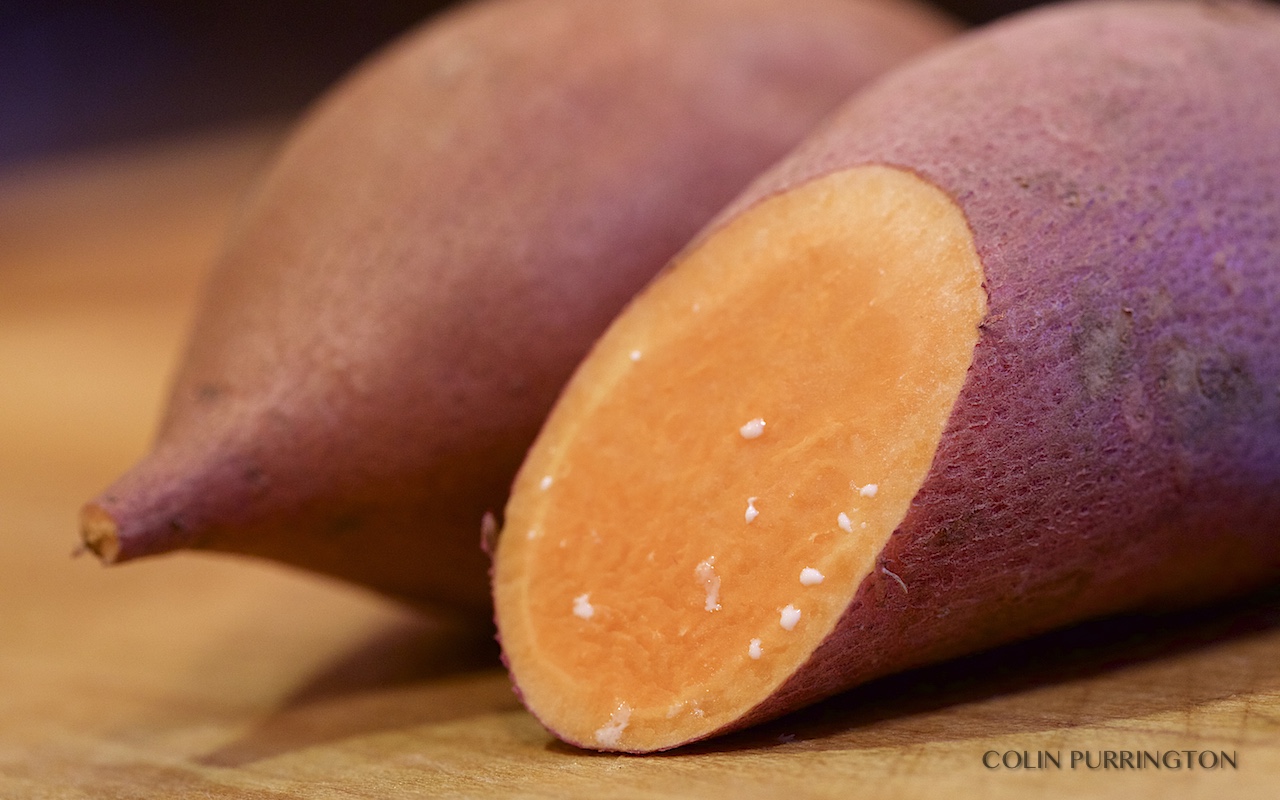
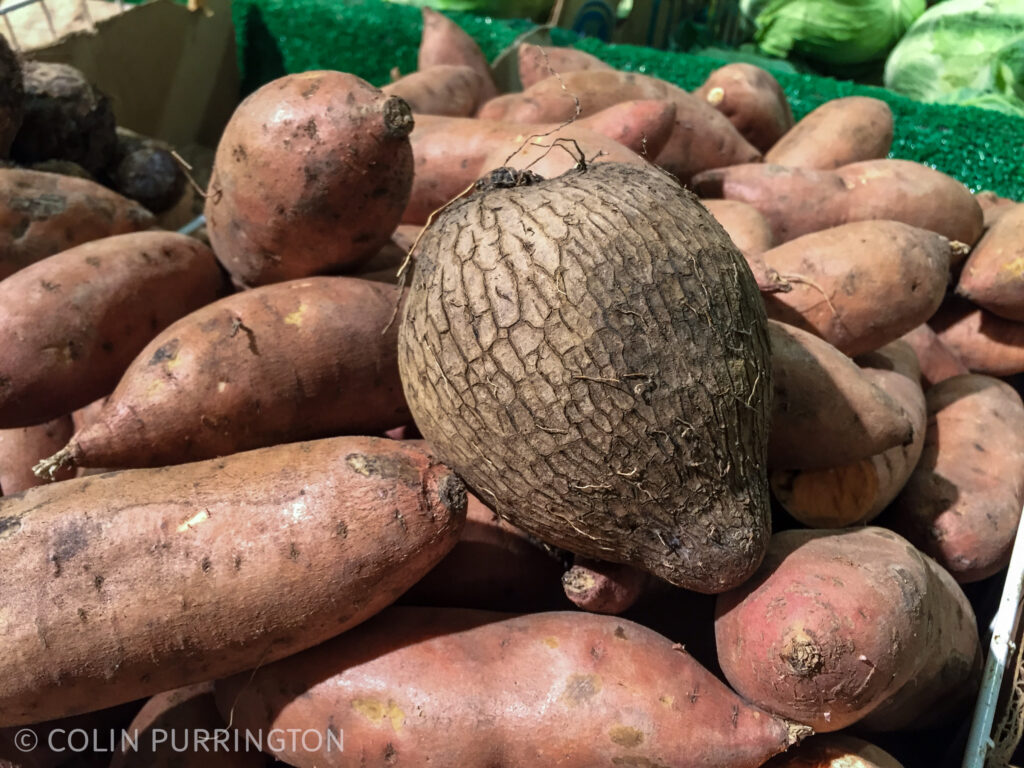
Sweet potatoes also have smoother skin and are usually tapered at both ends.
Source of the confusion
The confusion about yams and sweet potatoes is because Europeans enslaved people from Western Africa. Yam (the word) is West African in origin (anyinam means yam; nyami means “to eat”). When Africans were forcibly taken to areas planted with sweet potatoes, they called the sweet potatoes “yams.”
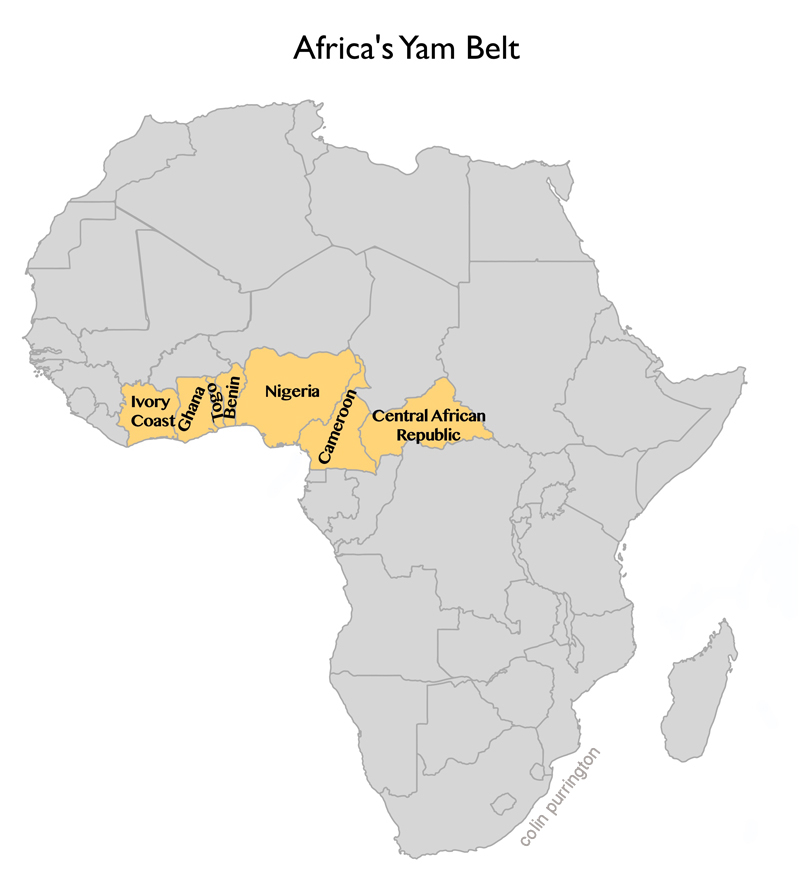
Because of this history, varieties of sweet potatoes were sometimes called “yams” (e.g., see this book from 1900), especially in the South and especially in regards to cultivars that were extra sweet. These varieties were often given racist, offensive names that I won’t mention here. The misnaming caused confusion early on, of course, since people knew they weren’t really yams. Indeed, I dug up a 1921 publication (The Sweet Potato: A Handbook for the Practical Grower) that advised that the habit of referring to sweet potatoes as yams “best be dropped.”
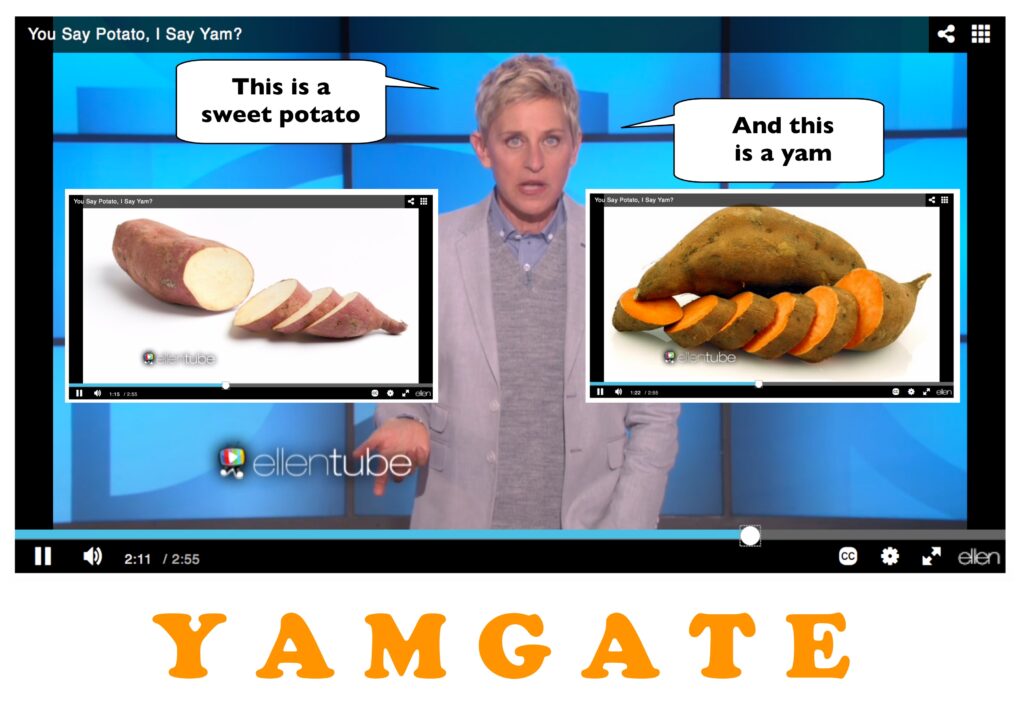
Unfortunately, in 1937, Louisiana embarked on a marketing scheme that involved labeling its sweet potatoes as “yams”. This campaign is the primary reason there’s so much confusion today. For example, please watch this YouTube clip from the Ellen DeGeneres Show. If you’re too busy, below is a screenshot with annotations to give you the gist: she thinks orange sweet potatoes are yams. Ellen is from Louisiana, by the way.
The USDA eventually started to require that boxes indicate that contents are actually sweet potatoes, but growers and distributers usually shrink the font so that it’s not noticeable, or print the words on a side of the box that’s not typically displayed. They do this because Americans will pay more for something labeled as a yam.
Why it matters
Who cares? Allowing companies to label sweet potatoes as yams is like selling prunes as dates. Mislabeled sweet potatoes are also a health problem for people who are allergic to them. I’ve had several people email me to say that, yes, they have this allergy and that mislabeling sweet potatoes truly puts them at risk of dying. A final reason is that many mainstream grocery stores now carry both sweet potatoes and yams, so if you are sent to the store to get some, there’s a very real risk that you might inadvertently come home with the wrong one. Yams are still good with brown sugar and butter, but I bet the family won’t be fooled.
