Tag Archives: mosquitoes

Yeast-and-sugar mosquito control devices

In the United States, three companies — Spartan Mosquito, Aion Products, and Tougher Than Tom — are selling devices that supposedly kill mosquitoes by luring them inside with carbon dioxide. I tested them in my yard last year and they all killed exactly the same number of mosquitoes: zero. Below are details about how they are marketed, why they don’t work, and why people still buy them.

Spartan Mosquito Pro Tech

Company says tubes kill mosquitoes for up to 30 days. Spartan Mosquito (also known as AC2T, Inc.) was the first to commercialize a yeast-and-sugar tube; the other two companies are copying it to some extent. Based in Hattiesburg, Mississippi, and owned by Josephine Tatum Hood. website: spartanmosquito.com

Aion Mosquito Barrier

Company claims device will kill and repel mosquitoes for 90 days. Much of the advertising seems to be AI-generated. The box claims that part of the profits go to saving marine turtles, but I seriously doubt this happens. Based in Memphis, Tennessee, and owned by Wade Whitely. aion-products.com

Tougher Than Tom’s Mosquito TNT

Company claims they work for 30 days. This company spends a lot of money targeting people with cheesy ads on Facebook, Instagram, YouTube, and Tiktok. Based in Austin, Texas, and owned by Zachary Snyder Collins. website: tougherthantom.com

Do they work?

To my knowledge, there’s no evidence that any of these devices kill mosquitoes. I tested all three of them in my yard in Pennsylvania and none was able to even attract mosquitoes. This is not surprising given the small amount of sugar and yeasts that are included. I.e., even though some carbon dioxide will be produced by the yeast, it will never be enough to fool a mosquito. One would likely needs pounds of sugar to produce the necessary volume of carbon dioxide. Moreover, you would need to keep adding sugar daily to maintain the required output. It is pretty obvious, even before testing, that they can’t work as described.

Another reason why mosquitoes are not attracted to these devices is that mosquitoes use more cues than just carbon dioxide to find hosts. For example, most species also use odor, heat, and visual detection.

Although these devices do not control mosquitoes, they do attract and kill other insects such as flies, beetles, wasps, and ants. Many people view these non-target deaths as evidence that the devices are working.

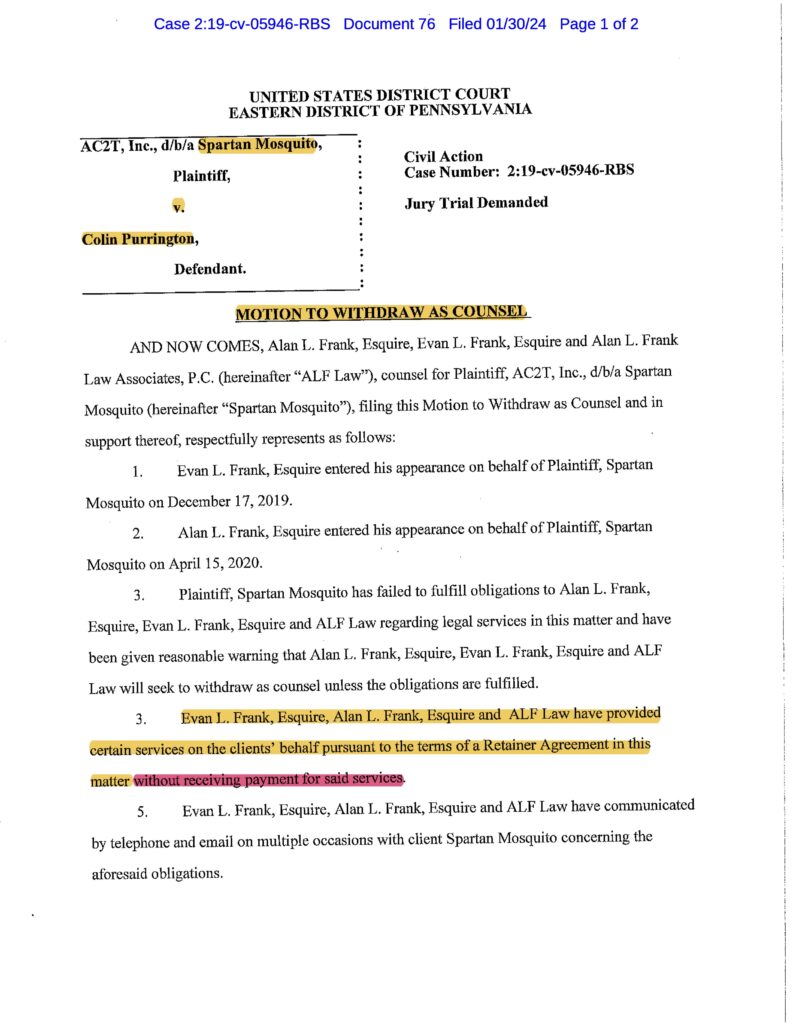
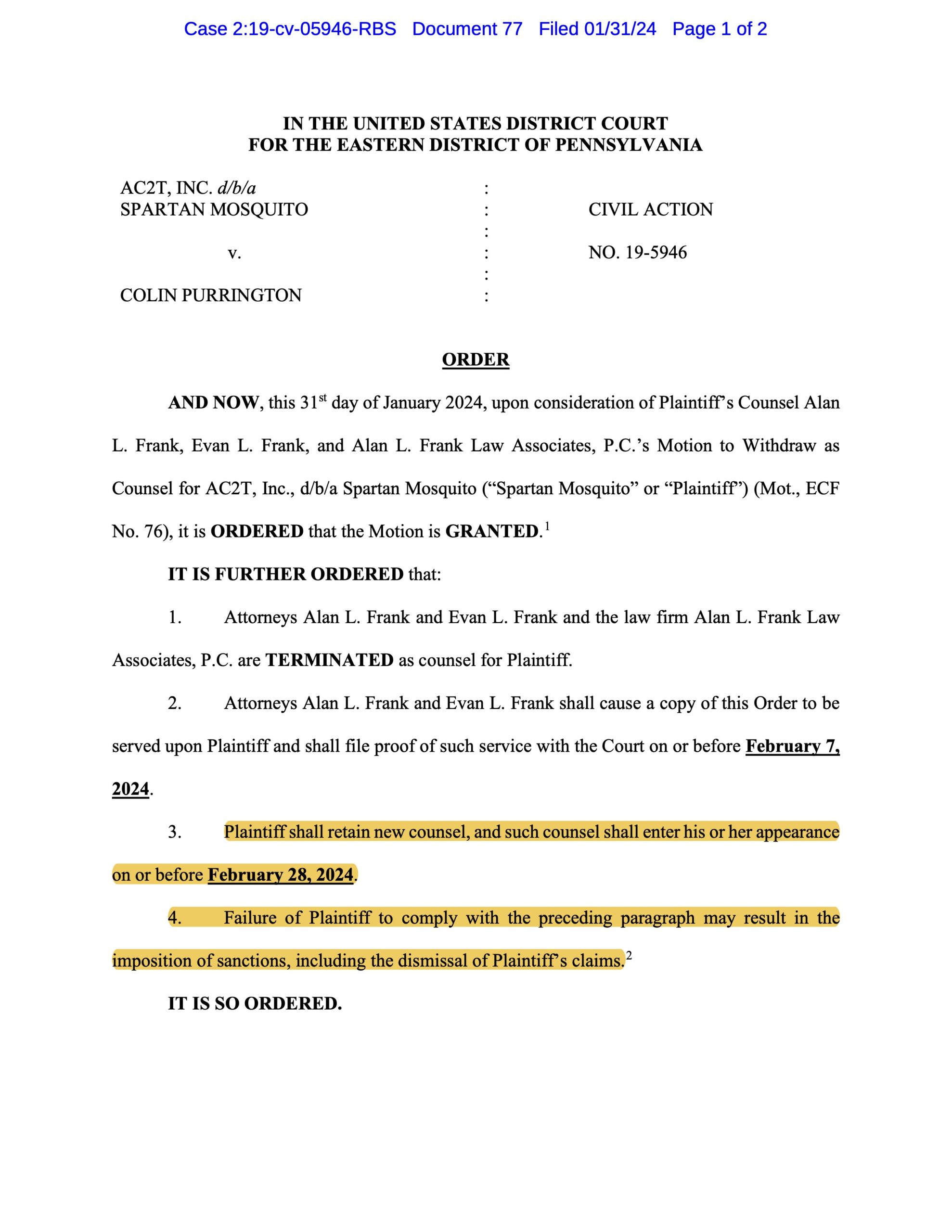
I have full reviews of the Spartan Mosquito Pro Tech and the Tougher Than Tom Mosquito TNT if you need details. For the Aion Mosquito Barrier, please see my review of the device it copies, the Spartan Mosquito Eradicator (per court order it is longer manufactured).

Why are these companies still in business?

Grifters thrive in the United States because state and federal regulators rarely punish businesses that make false claims about pesticides. It’s also sadly true that we have a generally poor level of science education in the country, and that leaves citizens open to being deceived by even obvious scams. And we have a huge population, so there are hundreds of thousands of people each summer who might give one of these products a chance. For a grifter, it doesn’t really matter than 99% of these people will never buy it again — there will always be hundreds of thousands of new (naive) customers next summer.

There are also people who will keep buying a scam year after year. This happens for a variety of reasons:

  1. Towns, municipalities, and regional health departments often spray insecticides from trucks and airplanes, in the middle of the night, without many residents being aware. And if some of those people have yeast-and-sugar tubes hanging in their yards, they might wrongly assume the lack of mosquitoes is related to the tubes. This scenario is probably common because spraying happens pretty much at the exact time of the year that homeowners place the yeast-and-sugar containers around their yards. For those curious about Mosquito Abatement Districts, this article has a nice summary. You can also ask your local government for details on whether your house is being treated.
  2. Sometimes due to sudden and extended drought conditions, mosquito populations plummet. Again, people might not appreciate that the lack of water is preventing mosquitoes from completing their life cycle and will mistakenly attribute the drop to yeast-and-sugar devices they have deployed around their yards.
  3. Many of the companies encourage homeowners to hang the tubes before the start of the mosquito season. It might seem to some that the tubes are keeping the mosquitoes at bay but in reality it’s because the mosquito season hasn’t started.
  4. Finally, some homeowners spray pyrethroid-based insecticides (like those used by Mosquito Shield and the like) in addition to deploying the yeast-and-sugar contraptions. I’ve seen comments on the internet suggesting that these people believe both are necessary even though in reality the tubes are merely decorative.

Once a person becomes convinced that one of these devices works, they are unlikely to abandon that belief even when presented with clear evidence to the contrary. That’s probably especially true if a person tells multiple friends that a device works. I.e., people can become more and more invested in a false belief over time. Indeed, when the tubes fail in future summers (or during gaps in municipal spraying), true fans of these tubes go to great lengths to blame themselves. For example, they might say, “I don’t think I used the correct temperature of water”, “I may have placed them too close to my house”, or “I should have used a few more tubes.” The companies use the same lines in response to consumer complaints, never acknowledging that the failure is with the tubes themselves.

Wine bottle drip irrigator

Instructions for making a drip irrigator out of a wine bottle. In case you’re bored out of your mind during the Covid-19 lockdown.

Wine bottle drip irrigator

Instructions

  1. Cut the bottom off the bottle. The above shows a 750-mL bottle but a 1.5-L works, too. I own a Creator’s bottle cutter kit (it’s fantastic) but there are videos showing other techniques.
  2. Drill a hole through the cork to accommodate 1/4″ tubing.
  3. Cut a length of 1/4″ drip irrigation tubing so that it is 1/2″ longer than the cork. Put a small piece of tape over the opening of one end.
  4. Put a few drops of outdoor glue into the hole. Gorilla Glue is nice because it tends to expand, filling gaps in the cork.
  5. Insert the taped-up end of tubing into hole, pushing until untaped part is flush. Take off tape (that was there to make sure it didn’t get filled with glue).
  6. Once glue is dry, insert cork into bottle so that the 1/2″ overhang is sticking out.
  7. Attach an adjustable valve to the tubing.
  8. Attach a 12″ (or so) length of 1/4″ tubing to the valve.
  9. Attach bottle to a 36″ stake (1×1″ wood, 1/2″ bamboo, or plastic-coated metal) using wire. Make it extremely snug so that when filled with water it won’t drift down.
  10. Crumple up some tulle (or flexible screening) to form a filter plug near cork. Tamp down using a long rod. This prevents hole and valve from clogging.
  11. Attach tulle (or flexible screening) to top with two rubbers bands. One rubber band is fine but the second is backup in case sunlight degrades one. The screening keeps out debris, but also prevents mosquitoes from ovipositing when valve is closed (and bottle is filled).

Here are some closeups:

Once done, situate the irrigator in your garden so that you can easily see the drip and adjust the valve without fighting foliage or stooping. This is why the instructions above call for a short length of tubing rather than something that fully extends into the soil near the plant (where you couldn’t see it). Evaporation from a falling drop of water is probably non-zero but I think the ability to see the drip rate is worth it.

When you water drop by drop, slowly, the soil has time to fully absorb the moisture. Drip irrigated plants thus need far less water, sometimes dramatically less. Another benefit is that water isn’t constantly splashed onto leaves, something that can distribute as well as activate pathogens. Some plants simply don’t like wet leaves (don’t judge). And many plants (such as tomatoes) also benefit from being constantly hydrated, something that is hard to accomplish with normal irrigation. Finally, plants tend to take up fertilizer better when it is slowly delivered.

Spartan Mosquito Eradicator

Scientists conclude Spartan Mosquito Eradicators don’t work

Research conducted in Florida found no evidence that Spartan Mosquito Eradicatiors are effective mosquito-control devices. Below is my reconstruction of the two experiments they conducted. One was in the laboratory, one was outside.

Laboratory experiment

Below is a rough reconstruction of the laboratory experiment they conducted. In each of the cages (BugDorm-2120), 100 male and 100 female tiger mosquitoes (Aedes albopictus) were released, then monitored for mortality at 24, 48, and 72 hours.

Schematic of laboratory experiment based on description in Aryaprema et al. 2020.

Here is a photograph of one of the choice cages:

Below are the cumulative mortality data for the three cages. The Spartan Mosquito Eradicator filled with the provided packet ingredients (treatment) did not result in higher mortality. I.e., there was no evidence the device killed mosquitoes under laboratory conditions.

Field experiment

The researchers also conducted a field experiment using two sites that had large populations of tiger mosquitoes (because of the presence of tires). At each site they deployed five tubes (separated by 4 m), switching whether the tubes were “treatment” or “control” tubes every 2 weeks. A BG-Sentinel trap (without carbon dioxide) was used to quantify mosquito numbers every week.

Schematic of field experiment based on description in Aryaprema et al. 2020.

Below are the weekly numbers of mosquitoes caught in the BG Sentinel traps. Results: there was no evidence that presence of treatment tubes (filled as per company guidelines) reduced the numbers of mosquitoes at the sites.

Conclusions

The scientists concluded that “Both laboratory and field components of our study show that the Spartan Mosquito Eradicator is not effective in reducing abundance of Ae. albopictus.” They speculate that the contents do not attract mosquitoes and that the holes on the device (~3 mm) are too small for mosquitoes to easily reach the fluid inside. They also highlight the need for an experiment to evaluate whether the active ingredient (1% sodium chloride) kills adult mosquitoes. I.e., even if mosquitoes were attracted to Spartan Mosquito Eradicators and could easily get inside, the salt might not be lethal.

Aryaprema, V.S., E. Zeszutko, C. Cunningham, E.I.M. Khater, and R.-D. Xue. 2020. Efficacy of commercial toxic sugar bait station (ATSB) against Aedes albopictus. J. Florida Mosquito Control Association 67: 80-83. PDF

Update: the salt experiment has been conducted. And the result is that salt does not kill mosquitoes.

All of these results are no surprise to anyone. Please see my 2019 review of the Spartan Mosquito Eradicator for details. I also reviewed the Spartan Mosquito Pro Tech, the company’s newest tube. It is just as effective. I.e., they are equally ineffective.